As an Amazon Associate I earn from qualifying purchases.
If you own a portable generator, inverter generator, or other small gasoline-powered generator, choosing the right engine oil is one of the simplest ways to protect the engine and keep it ready when you need it.
SAE 10W-30 generator oil remains a popular choice for many four-stroke gasoline generators because it provides a useful balance between cold-start performance and protection at normal operating temperatures. Honda, for example, lists SAE 10W-30 as a recommended general-use viscosity in generator manuals, while Yamaha documentation also specifies SAE 10W-30 for applicable generator engines.
However, 10W-30 is not automatically the correct oil for every generator. Your owner’s manual should always be the final authority because oil viscosity, API service category, oil capacity, and change intervals vary between engines.
To make your choice easier, we’ve compared five popular 10W-30 oils that can be relevant to generator owners, from dedicated small-engine formulas to conventional automotive motor oils.
Quick Comparison: 10W-30 Generator Oils for 2026
| Product | Type | Best For | Main Advantage |
|---|---|---|---|
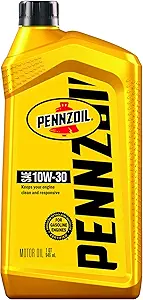
| Pennzoil Motor Oil 10W-30 | Conventional | General-purpose generator use | Deposit and wear protection |
| STP Premium Small Engine 4-Cycle 10W-30 | Synthetic blend | Small engines and generators | Anti-wear and temperature protection |
| Honda Motor Oil 10W-30 | Honda-branded | Honda generators | Manufacturer-branded option |
| Castrol GTX 10W-30 | Conventional | General-purpose use | Sludge and wear protection |
| Yamaha Yamalube 10W-30 | Yamaha-branded | Yamaha power equipment | Yamaha-oriented application |
Important: Product formulations, package sizes, availability, and API classifications can change. Check the current product label and your generator’s owner’s manual before purchasing.
Is 10W-30 Good for a Generator?
Yes, 10W-30 can be an excellent generator oil when the manufacturer specifies it.
The “10W” portion describes the oil’s low-temperature viscosity behavior, while the “30” describes its viscosity at operating temperature. That makes 10W-30 a versatile choice for many gasoline-powered four-stroke engines.
Honda generator documentation specifically recommends SAE 10W-30 for general use on applicable models and explains that other viscosities can be selected according to ambient temperature.
That distinction matters because generator owners sometimes assume that a particular viscosity is universally better.
It isn’t.
A generator designed for 10W-30 should generally use 10W-30 unless the manufacturer provides alternative viscosity recommendations. A different generator may call for 5W-30, SAE 30, or another specification.
Always check the manual before changing viscosity.
1. Pennzoil Motor Oil 10W-30 – A Practical General-Purpose Option
Check Amazon Price: Click Here
Brand: Pennzoil
Viscosity: SAE 10W-30
Oil Type: Conventional motor oil
Best For: General-purpose gasoline engines
Pennzoil 10W-30 is a straightforward option for generator owners whose manuals allow conventional automotive motor oil with the appropriate service classification.
One advantage of using a mainstream motor oil is availability. You can typically find common viscosities such as 10W-30 without having to search specifically for a generator-branded lubricant.
The important point is not the brand name alone. Check the API service information on the bottle and compare it with the requirements listed in your generator manual.
For occasional backup-generator use, this can make sense when the manufacturer permits this type of oil.
Why consider Pennzoil 10W-30?
- Widely available motor-oil formulation
- SAE 10W-30 viscosity
- Suitable for applicable gasoline engines
- Practical choice for general-purpose maintenance
- Available in convenient quart-size packaging
Best for: Generator owners who want a familiar 10W-30 motor oil and whose owner’s manual permits it.
2. STP Premium Small Engine 4-Cycle Oil 10W-30 – Designed for Small Engines
Check Amazon Price: Click Here
Brand: STP
Viscosity: SAE 10W-30
Oil Type: Synthetic blend
Application: 4-cycle small engines
This is one of the more interesting options in the group because it is specifically marketed for four-cycle small engines, including generators.
STP’s current 10W-30 synthetic-blend formulation is described as suitable for generators, lawnmowers, tractors, and snow blowers. The manufacturer lists anti-wear technology, antioxidants, detergents, viscosity-index improvers, and corrosion inhibitors among its features.
That makes it more directly targeted at small-engine applications than a generic automotive oil.
The synthetic-blend formulation is also designed to provide lubrication across a wide temperature range while helping resist thermal breakdown.
Why consider STP 10W-30?
- Specifically marketed for 4-cycle small engines
- Suitable for generators
- Synthetic-blend formulation
- Anti-wear technology
- Detergents help control deposits
- Corrosion inhibitor helps during seasonal storage
Best for: Generator owners who prefer a small-engine-specific 10W-30 rather than a general automotive oil.
3. Honda Motor Oil 10W-30 – A Natural Choice for Honda Generators
Check Amazon Price: Click Here
Brand: Honda
Viscosity: SAE 10W-30
Best For: Honda generators and Honda-powered equipment
Honda is one of the most recognizable names in portable generators, and its branded 10W-30 oil is an obvious option for owners who prefer using a Honda-branded lubricant.
Honda’s generator documentation states that oil is an important factor in engine performance and service life and recommends 4-stroke automotive detergent oil, with SAE 10W-30 recommended for general use on applicable models.
The biggest reason to consider Honda-branded oil isn’t necessarily that another reputable 10W-30 oil cannot work. Rather, it gives Honda owners a simple way to stay within the manufacturer’s recommended viscosity and oil category.
Honda also maintains model-specific owner’s manuals for its generators, which is important because oil requirements and capacities can vary between models.
Why consider Honda 10W-30?
- Honda-branded lubricant
- SAE 10W-30 viscosity
- Convenient choice for Honda generator owners
- Fits the general-use viscosity recommended by Honda on applicable models
- Easy to pair with model-specific maintenance instructions
Best for: Honda generator owners who prefer a manufacturer-branded oil.
4. Castrol GTX 10W-30 – A Familiar Motor Oil for Applicable Engines
Check Amazon Price: Click Here
Brand: Castrol
Viscosity: SAE 10W-30
Oil Type: Conventional motor oil
Best For: Generators whose manuals permit compatible automotive oil
Castrol GTX is another widely recognized motor-oil line. For generator owners, the important consideration is whether the specific 10W-30 formulation meets the service requirements in the generator’s owner’s manual.
Rather than choosing an oil simply because it says “generator” on the bottle, look at the required viscosity and API service category.
This is particularly important when using automotive motor oil in a small engine.
If your generator manufacturer specifies 10W-30 automotive detergent oil and the current Castrol formulation meets those requirements, GTX can be a practical maintenance option.
Why consider Castrol GTX 10W-30?
- Well-known motor-oil line
- SAE 10W-30 viscosity
- Convenient for general maintenance
- Suitable when its current specifications match the generator manufacturer’s requirements
Best for: Owners who already use Castrol products and have a generator that permits compatible automotive 10W-30 oil.
5. Yamaha Yamalube 10W-30 – A Manufacturer-Branded Option for Yamaha Equipment
Check Amazon Price: Click Here
Brand: Yamaha
Viscosity: SAE 10W-30
Best For: Yamaha generators and Yamaha power equipment
Yamaha is another major manufacturer of portable generators, and Yamalube gives owners a manufacturer-branded lubrication option.
Yamaha’s generator guidance specifies SAE 10W-30 for applicable gasoline generator engines and emphasizes following the owner’s manual supplied with the individual model.
That last point is worth emphasizing.
Don’t assume that every Yamaha generator has identical oil capacity or maintenance requirements. The correct amount of oil and service schedule are model-specific.
Why consider Yamalube 10W-30?
- Yamaha-branded lubricant
- SAE 10W-30 viscosity
- Appropriate for applicable Yamaha gasoline equipment
- Convenient choice for owners who prefer manufacturer-branded products
Best for: Yamaha generator owners who want to stay with a Yamaha-branded lubricant.
How to Choose the Best 10W-30 Oil for Your Generator
Choosing generator oil should involve more than comparing brands.
1. Start With the Owner’s Manual
This is the most important step.
Look for:
- Recommended viscosity
- API service category
- Oil type
- Oil capacity
- First oil-change interval
- Normal oil-change interval
- Special recommendations for high or low temperatures
Honda, for example, provides model-specific generator manuals rather than relying on one universal maintenance schedule for every generator.
2. Check the API Service Category
The API information on the oil container helps you determine whether the oil meets the engine manufacturer’s requirements.
Don’t assume that every bottle labeled “10W-30” is automatically interchangeable.
Two oils can have the same viscosity grade while having different formulations and service classifications.
If your owner’s manual specifies a particular API category or says “or later/equivalent,” follow that instruction.
3. Consider Conventional vs. Synthetic Blend vs. Full Synthetic
Conventional oil
Conventional oil can be a sensible choice when your generator manufacturer allows it and you change the oil according to the recommended schedule.
Synthetic blend
A synthetic blend combines conventional and synthetic base oils and can offer a useful middle ground between price and performance.
The STP 10W-30 small-engine formula, for example, is a synthetic blend and is specifically marketed for generators and other four-cycle small engines.
Full synthetic
Full synthetic oil can offer excellent resistance to temperature-related breakdown and may be useful in demanding operating conditions, but do not switch simply because synthetic sounds better.
The generator manufacturer’s specifications still come first.
Can You Use Car Oil in a Generator?
In many cases, yes—but only when the generator manufacturer specifies compatible automotive oil.
This is particularly important because many portable generators use four-stroke gasoline engines that can use detergent motor oil.
Honda documentation, for example, specifically recommends 4-stroke automotive detergent oil and SAE 10W-30 for general use on applicable generators.
However, don’t assume that any automotive oil is appropriate.
Check:
- SAE viscosity
- API service category
- Manufacturer recommendations
- Operating temperature
- Whether the engine is four-stroke
Is Synthetic Oil Better for a Generator?
Not necessarily.
Synthetic oil can have advantages in demanding conditions, particularly where temperature stability and resistance to oil degradation matter.
But the best generator oil is the oil that matches the engine manufacturer’s specifications.
If the manual calls for 10W-30 conventional oil, you should not automatically assume that changing to a different viscosity or formulation will improve the generator.
For a generator used only occasionally for emergency backup power, following the recommended oil type and keeping the oil fresh may be more important than simply buying the most expensive lubricant.
How Often Should You Change Generator Oil?
There is no single oil-change interval that applies to every generator.
The correct schedule depends on the engine design, generator model, operating conditions, and manufacturer’s instructions.
Some generators require an early oil change after the initial break-in period, followed by regular maintenance at specified hour intervals.
Heavy loads, dusty environments, high temperatures, and long operating periods can increase the importance of frequent oil checks and maintenance.
Instead of relying on a universal “50 to 100 hours” rule, follow the maintenance schedule in your generator’s owner’s manual.
Yamaha likewise emphasizes checking the model-specific manual for operation and maintenance procedures.
How to Check Generator Oil Correctly
Checking the oil level takes only a few minutes but can prevent serious engine damage.
Step 1: Turn the generator off
Never check or change engine oil while the generator is running.
Step 2: Place it on a level surface
An uneven surface can give you an inaccurate oil-level reading.
Step 3: Allow the engine to cool as required
Follow the instructions in your owner’s manual.
Step 4: Check the dipstick or filler neck
Different generator engines use different oil-level checking procedures.
Step 5: Add oil slowly
Add only the amount necessary to reach the specified level.
Step 6: Don’t overfill
Too much oil can cause its own problems. Honda manuals specifically warn against overfilling and explain that excess oil can reach the air-cleaner housing and filter.
What Happens If You Use the Wrong Oil?
Using an incorrect viscosity or oil specification can affect lubrication, starting behavior, oil consumption, and long-term engine durability.
Using an oil that is too thick or too thin for the manufacturer’s specified temperature range can also affect how the engine performs during startup and operation.
That’s why the safest approach is simple:
Follow the generator manufacturer’s oil specification before considering brand preferences.
10W-30 Generator Oil Buying Checklist
Before clicking the Buy button, check these five things:
- SAE viscosity: Does the generator call for 10W-30?
- API category: Does the oil meet the engine manufacturer’s requirement?
- Engine type: Is the oil appropriate for the generator’s four-stroke gasoline engine?
- Operating temperature: Will you be using the generator in unusually cold or hot conditions?
- Oil capacity: How much oil does your specific generator require?
The last point is easy to overlook. A quart bottle doesn’t mean your generator needs a full quart.
Some smaller generators use considerably less.
Frequently Asked Questions
What is the best 10W-30 oil for a generator?
The best 10W-30 oil is the one that meets your generator manufacturer’s viscosity and service requirements. Honda and Yamaha both document SAE 10W-30 as an appropriate viscosity for applicable generator engines, but the owner’s manual for your exact model should always take priority.
Can I use 10W-30 car oil in my generator?
You can use automotive 10W-30 in generators whose manufacturer specifies compatible automotive detergent oil. Honda is one example. Always compare the oil’s API service category and viscosity with the generator’s owner’s manual before using it.
Is 10W-30 better than SAE 30 for a generator?
Not universally. 10W-30 can provide better cold-start versatility, but the correct choice depends on the generator manufacturer’s recommendations and operating temperature. Some engines permit multiple viscosities under different temperature conditions.
Can I use synthetic 10W-30 in a generator?
Possibly. If the generator manufacturer permits synthetic oil and the oil meets the required viscosity and service category, synthetic 10W-30 can be an option. Don’t assume synthetic oil is automatically better for every engine.
How much 10W-30 oil does a generator need?
Oil capacity varies substantially by generator model. Check the owner’s manual rather than filling the crankcase based on bottle size. Always check the level and avoid overfilling.
How often should I check generator oil?
Check the oil level before operating the generator and during extended operation according to the manufacturer’s instructions. Generators can consume oil, particularly during prolonged or demanding use.
Does generator oil expire?
Engine oil can degrade over time, particularly after exposure to contamination, moisture, heat, or prolonged storage in the engine. Store unopened oil according to the manufacturer’s recommendations and follow your generator’s maintenance schedule.
Final Verdict: Which 10W-30 Generator Oil Should You Buy?
There isn’t one 10W-30 oil that is automatically best for every generator.
For a small-engine-specific formula, STP Premium Small Engine 4-Cycle 10W-30 is an appealing option because it is specifically marketed for generators and other four-cycle equipment.
For a Honda generator, Honda-branded 10W-30 offers a straightforward manufacturer-branded choice.
For a Yamaha generator, Yamalube 10W-30 is a logical manufacturer-branded option.
Pennzoil and Castrol provide familiar alternatives when their current specifications match the requirements of your generator.
The most important decision, however, happens before you choose a brand: check your owner’s manual.
A high-quality 10W-30 oil cannot compensate for using the wrong viscosity, ignoring the required API category, overfilling the crankcase, or waiting too long between oil changes.
If your generator specifies SAE 10W-30, choosing a quality oil that meets the manufacturer’s requirements—and maintaining the correct oil level—is a simple and inexpensive way to help keep the engine ready for the next power outage, camping trip, or job-site application.