As an Amazon Associate I earn from qualifying purchases.

A compact generator can be a practical source of backup power when the electricity goes out, you’re working away from the grid, or you need portable electricity for a job site, workshop, RV, or remote property.
For 2026, the market includes two very different approaches. Small diesel generators are generally aimed at users who prioritize diesel fuel, long-term durability, and work-oriented applications. Dual-fuel generators give you the convenience of switching between gasoline and propane, which can be useful when fuel availability changes during an extended outage.
The important part is choosing a generator based on the power you actually need rather than simply buying the model with the highest advertised wattage. Running watts, starting watts, fuel capacity, voltage, portability, noise, and safety features all matter.
Below are several compact diesel and dual-fuel options worth considering, along with the features that matter most when shopping for a portable generator in 2026.
Compact Diesel and Dual-Fuel Generators
| Product | Fuel | Best Use |
|---|---|---|
| Futchoy 196CC 4-Stroke Diesel Generator | Diesel | Light-duty portable applications |
| WEN DF1100T 11,000-Watt Dual Fuel Generator | Gasoline/Propane | Home backup and heavy-duty portable power |
| WEN DF6800iX 6,800-Watt Dual Fuel Inverter Generator | Gasoline/Propane | RVs, electronics, workshops, and portable backup |
| POWER PRODUCTS 4-Gallon Diesel Fuel Tank | Diesel fuel storage | Additional fuel capacity for compatible diesel equipment |
The fuel tank is included as an accessory rather than a generator. It can make sense for users who already own a compatible diesel generator and need additional fuel capacity.
Futchoy 196CC 4-Stroke Diesel Generator
Check Amazon Price: Click Here
The Futchoy 196CC 4-Stroke Diesel Generator is aimed at buyers looking for a relatively compact diesel-powered generator rather than a large standby system.
Its 196cc four-stroke diesel engine and open-frame design make it more appropriate for portable, work-oriented applications than for users looking for the quietest generator possible. Diesel engines can be attractive for people who already use diesel fuel for other equipment and want to keep their fuel supply consistent.
One important consideration is that this type of compact diesel generator should not automatically be treated as a whole-house backup system. Before buying, verify the generator’s actual rated and maximum wattage, outlet configuration, voltage, emissions documentation, and the manufacturer’s operating instructions for your intended application.
That matters because generator listings can sometimes emphasize engine displacement without making the actual usable electrical output immediately obvious.
What makes a compact diesel generator useful?
Diesel can make sense for users who regularly operate equipment in locations where diesel fuel is already available. It is particularly relevant for workshops, farms, construction environments, remote properties, and other applications where generator portability matters but ultra-quiet operation is not the primary concern.
For occasional household emergency use, however, a gasoline or dual-fuel inverter generator may be more convenient depending on your required wattage and how often you expect to operate it.
WEN DF1100T 11,000-Watt Dual Fuel Portable Generator
Check Amazon Price: Click Here
The WEN DF1100T is a substantially larger option than the compact diesel models in this guide. It is designed for users who need considerably more power during outages, at jobsites, or in other demanding applications.
According to WEN’s current specifications, the generator produces up to 11,000 surge watts and 8,300 running watts on gasoline. When operating on propane, output is rated at 9,500 surge watts and 7,500 running watts. It uses a 457cc four-stroke OHV engine and has a 6.6-gallon gasoline tank. WEN states that the generator can operate for up to 8.5 hours at half load.
The dual-fuel design is one of its biggest advantages. Gasoline provides higher output, while propane gives you another fuel option when gasoline storage or availability is a concern.
The DF1100T also includes electric start, a 120V/240V selector, four 120V GFCI outlets, a 120V 30A twist-lock outlet, and a 120V/240V 50A NEMA 14-50R outlet.
Who should consider the WEN DF1100T?
This model makes more sense for homeowners who need substantial portable backup power rather than someone simply looking to charge phones and run a refrigerator.
Its 240V capability can also be useful for certain home backup configurations, but connecting a portable generator to household wiring should be done using the appropriate transfer equipment and in accordance with local electrical requirements.
It is also considerably heavier than the small inverter generators discussed below, so “portable” does not mean easy to carry by one person.
WEN DF6800iX 6,800-Watt Dual Fuel Inverter Generator
Check Amazon Price: Click Here
The WEN 6,800-watt dual-fuel inverter platform is a different type of generator from the DF1100T. Current 2026 listings identify the model as the WEN DF6800iX, with inverter technology, a 6,800-watt peak output and 5,100-watt rated output.
The inverter design is important because it produces cleaner electrical power than many conventional open-frame generators. This makes an inverter generator particularly attractive when you’re powering computers, chargers, networking equipment, televisions, and other electronics.
The dual-fuel capability also allows the generator to operate using gasoline or propane.
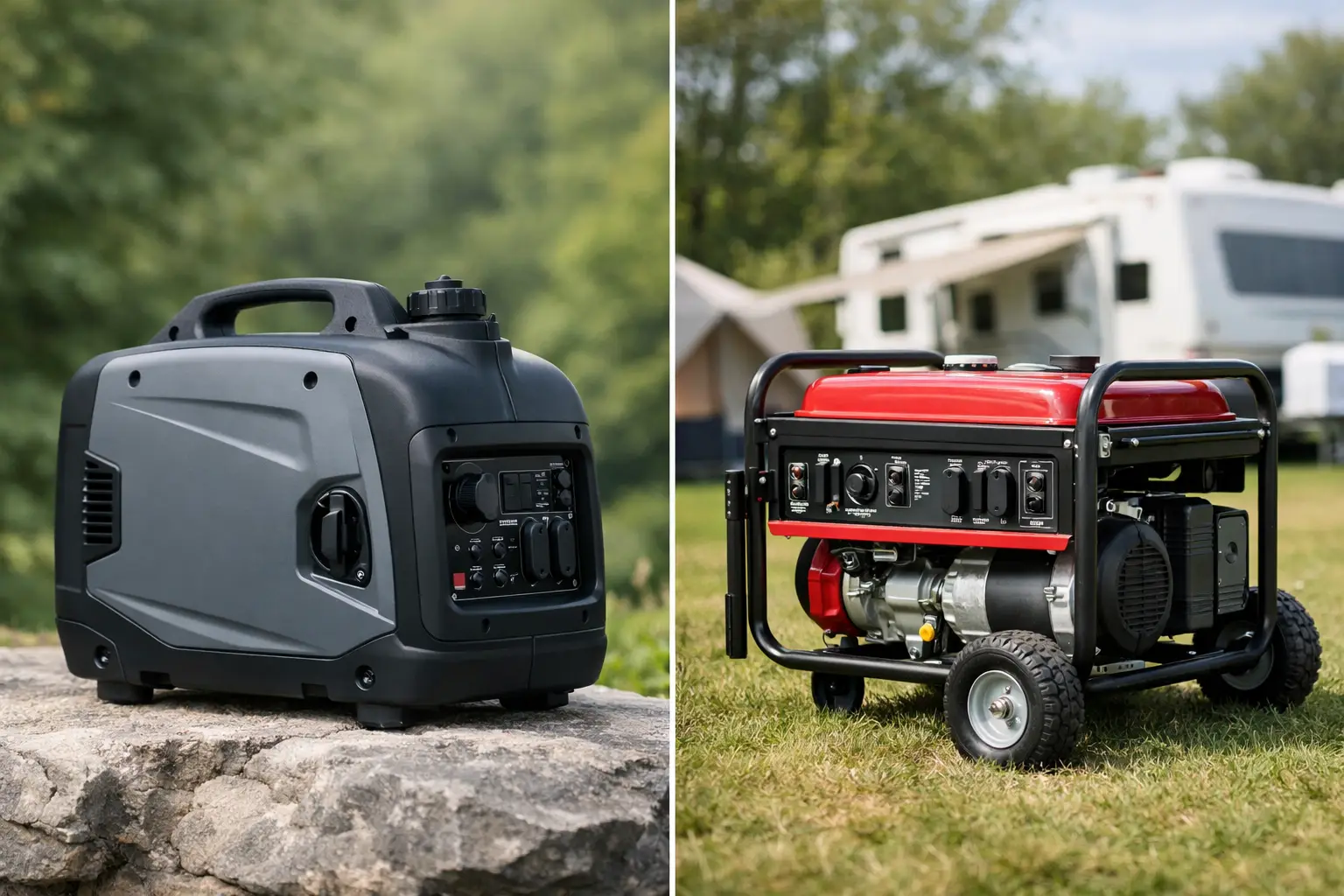
Another advantage is the enclosed design compared with an open-frame construction generator. Enclosed inverter generators are generally better suited to situations where noise is an important consideration, although actual noise levels depend on load, distance, and operating conditions.
Why choose an inverter generator?
An inverter generator is worth considering when your priorities include:
- Cleaner power for sensitive electronics
- Lower noise compared with many open-frame generators
- Portable operation
- RV use
- Home-office equipment
- Variable loads
- Gasoline and propane flexibility
The trade-off is that inverter generators can cost more than conventional generators producing a similar amount of power.
For buyers who regularly operate electronics and don’t need the maximum output of an 11,000-watt conventional generator, this type of design can be a more practical fit.
POWER PRODUCTS 4-Gallon Diesel Fuel Tank
Check Amazon Price: Click Here
The POWER PRODUCTS 4-Gallon Diesel Fuel Tank isn’t a generator, but it can be useful as an accessory for compatible diesel equipment.
The original article treated this tank almost like one of the generator choices, which makes the product comparison confusing. A better way to present it is as an optional accessory for users who already own compatible diesel equipment.
Before purchasing any replacement or auxiliary fuel tank, verify the dimensions, fittings, mounting system, fuel compatibility, and intended application. Do not assume that a universal-looking tank will automatically connect to every diesel generator.
For extended generator operation, fuel storage should also be handled according to local fire-safety requirements and the generator manufacturer’s recommendations.
Diesel vs. Dual-Fuel Generators: Which Type Makes Sense?
Diesel and dual-fuel generators solve somewhat different problems.
Compact Diesel Generators
Diesel models can make sense when:
- You already keep diesel fuel for other equipment.
- The generator will be used for work or off-grid applications.
- Long-term engine durability is important.
- You don’t need the quietest possible generator.
- You prefer diesel over gasoline or propane.
The downside is that compact diesel generators can be heavier and less common in the small consumer-generator market than gasoline and dual-fuel models.
Dual-Fuel Generators
Dual-fuel models provide the convenience of using gasoline or propane.
That can be particularly useful during a prolonged outage. Gasoline is convenient when readily available, while propane can be attractive for longer-term storage because it does not deteriorate in the same way gasoline does.
However, propane operation generally produces less power than gasoline on many dual-fuel generators, so always compare the manufacturer’s ratings for both fuels.
What to Look For in a Compact Generator
Choosing a generator should start with your actual electrical requirements rather than the biggest number printed on the product box.
1. Running Watts
Running watts are one of the most important numbers to check.
This is the power the generator can continuously provide under its rated operating conditions.
For example, the WEN DF1100T provides 8,300 running watts on gasoline and 7,500 running watts on propane.
A generator’s maximum or surge wattage is useful for starting motors, compressors, pumps, refrigerators, and other equipment with higher startup requirements, but it should not be confused with continuous output.
2. Starting or Surge Watts
Some appliances require considerably more power when their motors start.
Common examples include:
- Refrigerators
- Freezers
- Well pumps
- Sump pumps
- Air conditioners
- Compressors
- Power tools
Add the running wattage of the appliances you expect to use and then account for the startup requirements of motor-driven equipment.
This gives you a much better idea of the generator size you actually need.
3. Fuel Type
Fuel availability should be part of your decision.
A diesel generator may make sense for someone who already operates diesel equipment. A dual-fuel model provides more flexibility because it can use gasoline or propane.
For emergency preparedness, having two fuel options can be useful, but remember that propane and gasoline may produce different power ratings and runtimes.
4. Portability
“Portable” covers a wide range of generator sizes.
A 50-pound inverter generator can be moved relatively easily. A 200-pound-plus conventional generator with wheels is technically portable, but moving it over stairs, gravel, or uneven ground can require two people or additional equipment.
Look for:
- Wheel kits
- Folding or telescoping handles
- Lifting points
- Balanced frame design
- Reasonable overall weight
Don’t choose a generator solely because the product listing calls it portable.
5. Noise
Noise can become a major issue if you’re using a generator near your home, campsite, RV, or neighbors.
Inverter generators with enclosed housings are generally designed with noise reduction in mind. Open-frame conventional and diesel generators are usually more focused on durability, airflow, serviceability, and power output.
If noise matters, look for an actual manufacturer-rated decibel measurement and pay attention to the testing conditions.
6. Outlets and Voltage
Check the outlet panel before buying.
Depending on your application, you may want:
- 120V household outlets
- 120V/240V operation
- 30A RV outlet
- 30A twist-lock outlet
- 50A outlet
- GFCI protection
- DC charging capability
The WEN DF1100T, for example, includes 120V and 240V capability along with several outlet configurations.
Having the right outlet is much more useful than simply having a high wattage rating.
Best Uses for Compact Diesel and Dual-Fuel Generators
| Use Case | Generator Type to Consider | Why |
|---|---|---|
| Emergency home backup | Large dual-fuel generator | High output and fuel flexibility |
| RV use | Dual-fuel inverter generator | Cleaner power and portability |
| Electronics and home office | Inverter generator | Cleaner electrical output |
| Construction and tools | Conventional diesel or dual-fuel | High sustained output |
| Off-grid property | Diesel or dual-fuel | Fuel flexibility and extended operation |
| Camping | Compact inverter generator | Lower weight and quieter operation |
| Remote workshop | Diesel or conventional dual-fuel | Useful for tools and heavier loads |
The right choice depends on the equipment you actually need to operate. A large generator isn’t automatically better if your main requirements are a refrigerator, lighting, internet equipment, and a few small appliances.
Generator Safety in 2026
Generator safety deserves more attention than it received in the original article.
Portable fuel-powered generators produce carbon monoxide, an odorless and potentially deadly gas. The EPA recommends operating portable generators outdoors and at least 20 feet away from buildings, while keeping them away from doors, windows, and vents.
Never operate a portable fuel-powered generator:
- Inside the house
- Inside a garage
- Inside a shed
- In a crawlspace
- On an enclosed porch
- Near an open window or door
- In another enclosed or partially enclosed area
Opening a garage door or window does not make indoor generator operation safe.
A portable generator should also be protected from rain and standing water according to the manufacturer’s instructions. The EPA specifically warns against using generators or electrical equipment in wet conditions because of shock and electrocution hazards.
Connecting a Generator to a House
If you want to power household circuits through a generator inlet, use the proper transfer equipment and have the installation performed according to applicable electrical codes.
Do not connect a portable generator directly to a household wall outlet. Improper connections can create dangerous backfeeding conditions.
A transfer switch or other approved connection method separates generator power from utility power and is designed to prevent potentially hazardous backfeeding.
Maintenance Tips for Diesel and Dual-Fuel Generators
A generator can last considerably longer when maintenance is performed according to the manufacturer’s service schedule.
Instead of using one universal oil-change interval for every generator, follow the owner’s manual for the specific engine and model.
Important maintenance tasks include:
Check the Engine Oil
Check the oil level before operation and change the oil at the intervals specified by the manufacturer.
Diesel and gasoline engines have different requirements, so don’t assume that the maintenance schedule for one generator applies to another.
Inspect the Air Filter
A dirty air filter can restrict airflow and affect engine performance.
Generators used in dusty construction environments may require more frequent inspection than generators used occasionally at home.
Maintain the Fuel System
Gasoline can deteriorate during long-term storage. If you expect the generator to sit unused for months, follow the manufacturer’s storage instructions and use fuel stabilizer when appropriate.
Propane has different storage characteristics, while diesel fuel also requires proper storage and handling.
Exercise the Generator
If your generator is intended for emergency use, periodically operate it according to the manufacturer’s instructions.
This gives you an opportunity to discover problems with the battery, starting system, fuel system, or electrical output before an actual outage occurs.
Store It Properly
Keep the generator clean and dry when not in use. Protect it from excessive moisture and follow the manufacturer’s long-term storage procedure.
Accessories Worth Considering
The right accessories can make a portable generator easier and safer to use.
Transfer Switch or Generator Inlet
For home backup, an appropriate transfer switch or generator inlet can provide a safer and more convenient connection method than running extension cords throughout the house.
Have electrical work completed according to local requirements.
Heavy-Duty Extension Cords
If you’re powering individual appliances directly, use appropriately rated outdoor extension cords that can handle the generator’s output and the connected load.
Avoid undersized cords, damaged insulation, and overloaded connections.
Additional Fuel Storage
Diesel generator owners may benefit from additional fuel capacity, provided the tank is actually compatible with their equipment.
The POWER PRODUCTS 4-Gallon Diesel Fuel Tank can be considered as an accessory, but compatibility should be confirmed before purchase.
Wheel Kit
For heavier conventional generators, a wheel kit can make moving the machine across a driveway, workshop, or jobsite considerably easier.
Remember that wheels don’t make a 100-plus-pound generator lightweight.
Frequently Asked Questions
Are small diesel generators good for home backup?
They can be useful for home backup when the generator provides enough running and starting watts for the circuits you need to power. However, many compact diesel generators are better suited to work, off-grid, or commercial applications than occasional residential use. Always compare the generator’s rated output and outlet configuration with your home’s actual electrical requirements.
Is a dual-fuel generator better than a diesel generator?
They serve different purposes. A dual-fuel generator gives you the option of gasoline or propane, while a diesel generator is designed specifically around diesel fuel. Dual fuel can be useful when fuel flexibility is important, while diesel may make more sense for users who already operate diesel equipment or need a work-oriented generator.
Can a portable generator power a whole house?
Some high-output portable generators can supply a substantial number of household circuits, but that does not automatically mean they can run every appliance in the house simultaneously. Central air conditioning, electric water heaters, well pumps, ranges, and other high-demand equipment can require significant capacity. A load calculation is the best way to determine the appropriate generator size.
How many watts do I need during a power outage?
There is no single wattage that works for every home. Start by listing the appliances you consider essential, add their running watts, and then account for startup loads from motors and compressors. Refrigerators, freezers, pumps, and air conditioners can have significantly higher starting requirements than their normal running wattage.
Are inverter generators better for sensitive electronics?
Inverter generators are often a good choice for electronics because they produce a more controlled electrical output than many conventional open-frame generators. However, you should still check the manufacturer’s specifications, especially the stated THD rating, before connecting sensitive equipment.
Can I run a generator in my garage with the door open?
No. A garage is not a safe location for a portable fuel-powered generator, even when the garage door is open. The EPA recommends operating portable generators outdoors and at least 20 feet away from buildings.
Is propane better than gasoline for a dual-fuel generator?
Neither fuel is universally better. Gasoline often provides higher output on dual-fuel generators, while propane offers different storage and fuel-availability advantages. Compare the manufacturer’s wattage and runtime specifications for each fuel before deciding how you plan to operate the generator.
Final Thoughts
The best compact generator for 2026 depends on what you actually need to power.
A small diesel generator can be useful for users who prioritize diesel fuel, durability, and work-oriented operation. A larger dual-fuel generator such as the WEN DF1100T makes more sense when higher output and gasoline/propane flexibility are the priorities. WEN’s current 11,000-watt model provides up to 8,300 running watts on gasoline and 7,500 running watts on propane, along with 120V/240V capability and electric start.
For RV owners, electronics, workshops, and users who care more about inverter technology and portability, the WEN DF6800iX represents a different approach, combining dual-fuel operation with inverter technology and a 6,800-watt peak rating.
The key is not simply choosing the generator with the largest number on the box. Look at running watts, starting watts, fuel type, runtime, voltage, outlets, weight, noise, safety features, and maintenance requirements.
And regardless of which generator you choose, proper placement and operation are essential. A portable fuel-powered generator should always be operated outdoors, away from buildings, doors, windows, and vents, with at least 20 feet of separation from buildings as recommended by the EPA.
For emergency preparedness, job-site power, RV use, or off-grid applications, choosing a generator around your actual electrical load will give you a much better result than simply shopping by peak wattage.