As an Amazon Associate I earn from qualifying purchases.
If you need to weld away from a shop or electrical outlet, a welder generator combo can save you from hauling a separate welder and generator to the job. These engine-driven machines combine a welding power source with auxiliary AC power, making them useful for farm repairs, construction sites, mobile fabrication, maintenance work, and remote projects.
The right machine depends on more than maximum amperage. You also need to look at continuous generator wattage, welding duty cycle, welding process, engine size, fuel capacity, portability, receptacles, and whether the machine can provide auxiliary power while welding.
For light repairs, a compact 120- to 150-amp unit can make sense. For contractors and professional welders, larger engine-driven machines can provide more than 230 amps and roughly 9,500 watts of continuous auxiliary power.
Below are several welder generator options worth considering in 2026, followed by the most important features to compare before buying.
Welder Generator Combo Units
| Welder Generator | Welding Output | Auxiliary Power | Welding Process | Best For |
|---|---|---|---|---|
| Portable 2000 Watt Engine Driven Welder | Up to 130A | 2,000W class | Stick/MMA | Light repairs and basic field work |
| TOMAHAWK 210 Amp Stick/TIG | Up to 210A | 2,000W class | Stick/TIG | Farm and general field repairs |
| TOMAHAWK 120 Amp Stick | Up to 120A | 2,200W class | Stick | Light-duty portable welding |
| Hobart Champion 145 | 40–145A | 4,000W continuous / 4,500W peak | DC Stick | Farm, ranch, maintenance |
| ESAB Ruffian ES 150G | Up to 150A | 4,000W continuous / 4,500W peak | DC Stick | Portable professional repairs |
| Miller Bobcat 230 | 20–230A | 9,500W continuous / 11,000W peak | Stick, MIG/FCAW with feeder | Construction and professional field work |
The original Amazon links are retained below for the products already included in this article.
Portable 2000 Watt Engine Driven Welder (130 Amp MMA)
Check Amazon Price Click Here!
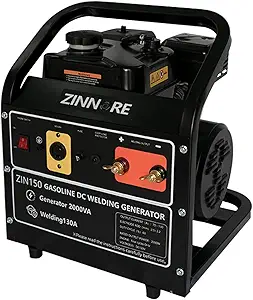
This compact engine-driven stick welder and generator is designed for users who need welding capability without depending on utility power. With a 130-amp welding output and approximately 2,000 watts of generator power, it is aimed at lighter field repairs rather than heavy structural welding.
Its relatively compact design makes this type of machine practical for property maintenance, farm repairs, gates, brackets, equipment fixes, and other jobs where portability matters more than maximum output.
The biggest advantage is simplicity. Instead of transporting a separate generator and welding machine, you have both functions in one gasoline-powered unit.
Who is it for?
This type of 130-amp machine makes the most sense for:
- Farm and ranch repairs
- Fence and gate work
- Light equipment maintenance
- Small fabrication projects
- Remote property repairs
- Occasional stick welding
It is not the type of machine I would choose for continuous production welding or heavy structural work. If you regularly need large electrodes, high amperage, or substantial auxiliary power for grinders and other tools, moving up to a larger engine-driven welder makes more sense.
TOMAHAWK 210 Amp Stick/TIG with 2000 Watt Generator
Check Amazon Price Click Here!
The TOMAHAWK 210 Amp engine-driven welder generator offers substantially more welding output than the smaller 120- to 130-amp machines in this group.
With up to 210 amps of welding output and approximately 2,000 watts of auxiliary generator capacity, it is aimed at users who want more welding capability without stepping into the size and weight of a full-size professional engine-driven welder.
The unit supports stick welding and TIG applications, giving it more flexibility for field repairs where welding quality and process selection matter.
Where it makes sense
A 210-amp machine can be useful for:
- Farm equipment repairs
- Trailer repairs
- General maintenance
- Mobile fabrication
- Construction work
- Remote welding where grid power is unavailable
One important consideration is auxiliary power. A 2,000-watt-class generator is useful for lights, chargers, and smaller tools, but it is not comparable to the 9,500 watts of continuous auxiliary power available from larger professional engine-driven welders.
That distinction matters if you regularly need to run grinders, compressors, saws, or other high-demand equipment.
TOMAHAWK 120 Amp Stick with 2200 Watt Inverter Generator
Check Amazon Price Click Here!
The TOMAHAWK 120 Amp Stick Welder Generator is designed for lighter welding work where keeping the machine relatively portable is more important than maximum welding output.
Its 120-amp welding capacity and approximately 2,200-watt generator output make it suitable for small repairs, maintenance work, property projects, and light fabrication.
The inverter-based welding system is intended to provide controlled DC welding performance while the generator provides auxiliary electricity for smaller tools and equipment.
What I like about this type of unit
The main advantage is portability. You do not need a large truck-mounted engine-driven welder for a simple fence repair or farm maintenance job.
It can be a practical option when your typical welding work involves smaller electrodes and thinner materials.
What to keep in mind
The 2,200-watt generator capacity limits what you can run from the auxiliary outlets. A grinder or small power tool may be appropriate, but this is not the machine to buy if you need substantial electrical power at a busy construction site.
For heavier auxiliary loads, look at the ESAB, Hobart, Miller, or similar full-size engine-driven machines.
Hobart Champion 145 Engine-Driven Welder
Check Amazon Price Click Here!
The Hobart Champion 145 is a significant step up from the smaller 2,000-watt-class machines.
Hobart specifies a 40–145 amp DC welding range, with a rated welding output of 130 amps at a 30% duty cycle. Its auxiliary generator produces 4,500 watts of peak power and 4,000 watts continuously. The machine also has a 6.25-gallon fuel tank and 120V and 240V receptacles.
That combination makes the Champion 145 particularly interesting for farm and ranch work, maintenance, and light fabrication.
It also provides more auxiliary power than the smaller TOMAHAWK units, which is important if you need to operate tools in addition to welding.
Key specifications
| Specification | Hobart Champion 145 |
|---|---|
| Welding range | 40–145A |
| Rated welding output | 130A at 30% duty cycle |
| Generator peak | 4,500W |
| Generator continuous | 4,000W |
| Fuel tank | 6.25 gallons |
| Welding process | DC Stick |
| Maximum electrode size | Up to 5/32 in. |
| Weight with running gear | 222 lb. |
The Champion 145 also includes four 120V GFCI receptacles and a 240V receptacle.
Best use cases
The Champion 145 fits well for:
- Farm and ranch maintenance
- Light fabrication
- Equipment repairs
- Trailer and gate repairs
- General property maintenance
- Portable stick welding
It is still much smaller in capability than a 230- or 265-amp professional engine-driven welder, but it offers a useful middle ground between compact portable machines and large contractor-grade units.
ESAB Ruffian ES 150G Engine-Driven Welder
The ESAB Ruffian ES 150G deserves attention if you want a relatively compact engine-driven machine but still need serious field-welding capability.
ESAB rates it at 150 amps with a 60% duty cycle and specifies 115 amps at 100% duty cycle. Its Kohler 14 HP gasoline engine provides up to 4.5 kW of peak generator power and 4 kW continuous power.
Unlike some smaller units, the Ruffian is designed with features aimed specifically at field welding. It includes adjustable arc force, thermal protection, an engine-hour meter, GFCI-protected 120V outlets, and a 240V outlet.
ESAB also states that the auxiliary generator output is independent of welding current, allowing tools to be used while welding.
Why the Ruffian stands out
The Ruffian ES 150G occupies an interesting position between compact portable welders and large professional engine drives.
Its 150-amp output is enough for many maintenance and repair jobs, while the 60% duty cycle at 150 amps makes it better suited to sustained welding than many lightweight machines.
It is particularly appropriate for:
- Farm equipment repairs
- Maintenance work
- Construction
- Mobile equipment
- Light fabrication
- Remote property work
It weighs about 248 pounds with wheels and handles, so it is portable in the sense of being transportable around a jobsite, but it is not a lightweight machine that most people will casually carry by themselves.
Miller Bobcat 230
If you need substantially more welding and generator capacity, the Miller Bobcat 230 represents a completely different class of engine-driven welder.
The current Bobcat 230 provides 20–230 amps of DC stick output and can also support MIG and flux-cored welding when used with an appropriate wire feeder. Miller rates the single-phase generator at 11,000 watts peak and 9,500 watts continuous.
That large difference in auxiliary power is important for professional users. Instead of being limited to a few small tools, a machine in this class can supply considerably more power for jobsite equipment.
Miller also lists farm/ranch work, construction, fabrication, maintenance and repair, and work trucks among its intended applications.
Key specifications
| Specification | Miller Bobcat 230 |
|---|---|
| Welding range | 20–230A |
| Stick output | 230A at 100% duty cycle |
| Generator peak | 11,000W |
| Generator continuous | 9,500W |
| Engine | Gasoline |
| Fuel tank | 11 gallons |
| Weight | About 376 lb. |
| Processes | Stick, MIG/FCAW with feeder |
This is obviously a much larger investment and is unnecessary for someone who only performs occasional fence or farm repairs.
For a professional contractor or mobile welding operation, however, the additional welding output and auxiliary power can make a major difference.
What to Look For in a Welder Generator Combo in 2026
Buying a welder generator is different from buying either a standalone welder or a conventional portable generator. You need to evaluate both sides of the machine.
1. Welding Amperage
Maximum amperage tells you how much welding output the machine can provide, but it does not tell the whole story.
A 120- to 150-amp machine can be appropriate for light repairs and common stick electrodes. If you routinely weld heavier material or want more flexibility with larger electrodes, a 200- to 265-amp machine may be more appropriate.
Do not choose a machine based only on its maximum amp number. Look at the rated output and duty cycle as well.
2. Duty Cycle
Duty cycle indicates how long a welder can operate at a particular output during a standard 10-minute period before requiring cooling.
For example, a 60% duty cycle at 150 amps means the machine is rated to weld for six minutes and cool for four minutes under the specified test conditions.
A machine rated at 100% duty cycle at a particular amperage can operate continuously at that output under the manufacturer’s specified conditions.
This becomes especially important for professional welding where long periods of continuous work are common.
3. Continuous Generator Wattage
Do not look only at the largest wattage number printed on the machine.
A generator may advertise a higher peak or surge wattage, while the continuous rating is lower.
For example, the Hobart Champion 145 is rated at 4,500 watts peak but 4,000 watts continuous.
For comparison, the Miller Bobcat 230 is rated at 11,000 watts peak and 9,500 watts continuous.
For tools that run for extended periods, the continuous rating is usually the more useful number.
4. Welding Process
Many engine-driven welders are primarily designed for stick welding, while larger machines can support MIG and flux-cored processes with an appropriate wire feeder.
If you primarily weld outdoors, stick is often a practical choice because you do not need a shielding gas cylinder.
If you regularly perform production or structural work, however, the ability to add a wire feeder and use flux-cored or MIG processes may be valuable.
5. Simultaneous Welding and Generator Use
This is one of the most important features to investigate.
Some engine-driven welders are designed to provide auxiliary power independently of welding output. ESAB, for example, specifically states that the Ruffian’s auxiliary generator output is independent of welding current.
However, you should never assume that every welder generator behaves the same way.
Always check the manufacturer’s specifications and owner’s manual before connecting tools while welding.
6. Portability
“Portable” can mean very different things in this category.
A compact 120-amp unit may be manageable for one person. A 150-amp professional machine can weigh around 248 pounds. A Miller Bobcat 230 is around 376 pounds.
For a truck-mounted welding setup, weight may not be a major concern. For someone loading equipment into a pickup regularly, it can be one of the most important factors.
7. Fuel Capacity and Runtime
A larger fuel tank can reduce interruptions during long jobs, but it also increases machine weight.
Think about how you actually work. A small property repair may not justify a large tank. A contractor working all day in the field may appreciate the additional runtime.
Never estimate runtime solely from tank size. Actual fuel consumption depends on engine speed, welding load, auxiliary loads, temperature, and other operating conditions.
8. Receptacles and GFCI Protection
Look at the number and type of AC outlets.
A useful engine-driven welder may include:
- 120V outlets
- 240V outlet
- GFCI protection
- Circuit breakers
- Covered receptacles
- Sufficient continuous wattage for the intended tools
The Hobart Champion 145, for example, includes four 120V GFCI receptacles and a 240V receptacle.
9. Engine and Serviceability
These machines combine a welding power source with an internal-combustion engine, so routine maintenance is part of ownership.
Check:
- Engine oil requirements
- Oil-change intervals
- Air filter access
- Spark plug service
- Fuel system
- Battery requirements, if equipped
- Availability of replacement parts
- Local service support
For a machine that will be used professionally, service availability can be just as important as the initial purchase price.
How Much Generator Power Do You Need for Welding?
There is no single wattage that works for every welding setup.
A small engine-driven welder with around 2,000 to 2,200 watts of auxiliary power can be useful for light-duty work and small tools.
Around 4,000 watts of continuous generator power gives you considerably more flexibility. The Hobart Champion 145 and ESAB Ruffian ES 150G are examples of machines in this range.
Professional engine-driven machines can provide substantially more. The Miller Bobcat 230 reaches 9,500 watts continuous and 11,000 watts peak.
The important point is that welding amperage and generator wattage are separate specifications. A machine can have excellent welding output but relatively limited auxiliary power, or it can provide both high welding output and substantial generator capacity.
Can You Run Power Tools While Welding?
Some welder generator combos are specifically designed for simultaneous welding and auxiliary power, but you should verify this in the manufacturer’s documentation.
The ESAB Ruffian ES 150G, for example, is designed to provide auxiliary generator output independently of welding current.
Other machines can experience changes in available generator output or voltage depending on how they are being operated.
Never assume that a generator’s maximum wattage is available for tools while the machine is welding at maximum amperage. Check the manufacturer’s operating instructions for the specific model.
Best Applications for Welder Generator Combos
Farm and Ranch Repairs
Engine-driven welders are especially useful when equipment needs to be repaired away from a workshop.
Typical jobs include:
- Gates
- Fences
- Trailers
- Farm implements
- Brackets
- Equipment frames
- General steel repairs
For occasional work, a compact 120- to 150-amp unit may be enough. Larger operations may benefit from a 200- to 265-amp machine.
Construction Sites
Construction crews can benefit from having welding capability and auxiliary electrical power in one machine.
A larger unit can provide power for grinders, lights, chargers, and other equipment while also serving as a welding power source.
Mobile Welding
Professional mobile welders generally need more than maximum amperage. They also need dependable auxiliary power, fuel capacity, serviceability, portability, and compatibility with the welding processes they use.
This is where larger engine-driven welders such as the Miller Bobcat series become more relevant.
Remote Property Maintenance
For remote properties, a welder generator can eliminate the need to transport a separate generator and welding machine.
A smaller machine can be particularly convenient when most repairs involve gates, fences, brackets, and equipment maintenance.
Welder Generator Safety Tips
Engine-driven welding equipment combines fuel, electricity, heat, and welding arcs, so safe operation is essential.
Use the Machine Outdoors
Gasoline-powered engines produce carbon monoxide. Never operate an engine-driven welder inside a home, garage, enclosed trailer, basement, or other poorly ventilated space.
Keep the machine away from doors, windows, and air intakes where exhaust could enter an occupied structure.
Follow Welding PPE Requirements
Use appropriate:
- Welding helmet
- Welding gloves
- Flame-resistant clothing
- Safety glasses
- Hearing protection when appropriate
- Proper footwear
Protect nearby workers and bystanders from the welding arc and sparks.
Keep Fuel Away From Heat and Sparks
Refuel only after following the manufacturer’s instructions and allowing the machine to cool when required.
Keep gasoline containers and other combustible materials away from welding sparks, hot surfaces, and open flames.
Use Proper Electrical Protection
Use the appropriate GFCI protection, circuit breakers, extension cords, and receptacles specified by the manufacturer.
Do not overload the generator.
Inspect Leads and Cables
Before welding, check welding leads, electrode holders, grounding connections, power cords, and receptacles for damage.
Replace damaged components before operating the machine.
Follow the Owner’s Manual
The manufacturer’s manual should always take priority over generic advice because generator load limits, welding settings, grounding procedures, maintenance schedules, and operating restrictions vary by model.
Welder Generator Maintenance Tips
A good maintenance routine can help prevent avoidable downtime.
Before Each Job
Check:
- Engine oil
- Fuel level
- Fuel leaks
- Air filter condition
- Welding cables
- Ground clamp
- Electrode holder
- Generator receptacles
- GFCI operation
- Cooling airflow
Follow the Engine Service Schedule
Change engine oil, filters, and spark plugs according to the manufacturer’s recommended intervals.
Do not wait until the engine begins running poorly before servicing it.
Keep the Machine Clean
Dust, grinding debris, mud, and welding residue can accumulate around the engine and electrical components.
Clean the machine according to the manufacturer’s instructions and keep cooling passages unobstructed.
Store It Correctly
When the machine will not be used for an extended period, follow the manufacturer’s storage procedure for fuel, battery maintenance, and engine protection.
A dry storage location can also help prevent corrosion and damage to electrical components.
Welder Generator vs. Separate Welder and Generator
A combo unit is not automatically the right solution for everyone.
Advantages of a Welder Generator Combo
- One engine instead of two
- One machine to transport
- Welding and auxiliary power in one package
- Useful for remote work
- Convenient for farms and construction
- Less equipment taking up truck space
Advantages of Separate Equipment
- Greater flexibility in choosing the welder
- Greater flexibility in generator size
- You can replace one component without replacing both
- A dedicated generator may be better for long-duration electrical loads
- A dedicated welder may provide features unavailable on an engine-driven combo
If you regularly weld and need electrical power at the same jobsite, a combo unit can be very convenient. If your welding and generator needs are completely different, separate machines may make more sense.
Which Welder Generator Size Is Right for You?
The right size depends on the work rather than simply choosing the machine with the highest specifications.
For occasional light repairs:
A 120- to 150-amp engine-driven welder with roughly 2,000–4,500 watts of auxiliary power can cover many basic jobs.
For farm and maintenance work:
A machine around 145–210 amps gives you more flexibility for equipment repairs and heavier electrodes.
For professional field welding:
Look at 200- to 265-amp machines with substantially higher auxiliary generator capacity.
For construction and mobile welding businesses:
A professional engine-driven welder with 9,000+ watts of continuous auxiliary power can make more sense when multiple tools need to be supported at the jobsite.
Frequently Asked Questions
What is a welder generator combo?
A welder generator combo is an engine-driven machine that combines a welding power source with an AC generator. It allows you to perform welding and, depending on the model, power tools and other electrical equipment without access to utility electricity.
Are welder generator combos good for farm repairs?
Yes. They are particularly useful for farm and ranch repairs because they can operate away from electrical outlets. Compact units can handle fences, gates, brackets, and lighter equipment repairs, while larger machines are better suited to heavier farm equipment.
How many amps should a portable engine-driven welder have?
For light repairs, 120–150 amps can be sufficient. If you regularly weld thicker material or use larger electrodes, 200 amps or more provides greater flexibility. Always consider duty cycle along with maximum amperage.
Can a welder generator run power tools?
Many can. The available tool power depends on the generator’s continuous wattage, receptacles, and operating conditions. Always verify the manufacturer’s specifications before connecting high-demand equipment.
Is 2,000 watts enough for a welder generator?
It can be enough for light auxiliary loads such as lights, chargers, and smaller tools. It is not equivalent to a professional engine-driven welder capable of supplying 9,500 watts or more continuously.
What is the difference between peak and continuous generator watts?
Peak or surge wattage is the maximum temporary output available for starting certain electrical loads. Continuous or rated wattage is the output the generator is designed to provide on an ongoing basis. For sustained tool use, the continuous rating is the more important number.
Are inverter welder generators better?
Not necessarily. Inverter technology can provide advantages in welding control, size, and efficiency, but the right choice depends on the application. Compare actual welding output, duty cycle, generator capacity, engine, serviceability, and intended workload rather than choosing solely because a machine uses inverter technology.
Can a welder generator replace a regular portable generator?
It can provide generator power for many applications, but whether it is a good replacement depends on your electrical needs. A welder generator makes the most sense when you actually need welding capability as well as auxiliary power.
Final Thoughts
The best welder generator combo for 2026 depends on how much welding you actually do and how much auxiliary power you need.
A compact 120- to 130-amp machine can be practical for occasional repairs, fences, gates, and light maintenance. Moving up to something like the Hobart Champion 145 or ESAB Ruffian ES 150G gives you more welding capability and around 4,000 watts of continuous auxiliary power.
For professional construction, mobile welding, and demanding field work, larger engine-driven machines such as the Miller Bobcat 230 offer a very different level of capacity, with 230 amps of welding output and 9,500 watts of continuous auxiliary power.
Before buying, compare welding amperage, duty cycle, continuous generator wattage, welding processes, fuel capacity, portability, receptacles, simultaneous-use capability, and service requirements.
Choosing the machine based on the work you actually perform is more important than simply buying the unit with the highest amp rating or largest engine.