As an Amazon Associate I earn from qualifying purchases.
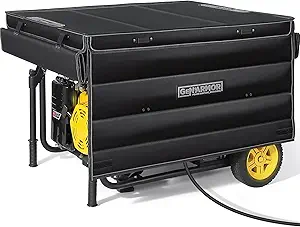
Best Generator Covers While Running in 2026
When a portable generator has to operate during bad weather, protecting it from rain, snow, and wind becomes a practical concern. A conventional storage cover is not designed for this job. Once the generator is running, the cover has to allow enough airflow around the engine and exhaust while keeping rain away from the electrical components.
That is why generator covers while running are different from ordinary outdoor storage covers. Most running covers use a raised frame, reinforced fabric, roll-up panels, or other openings that let the generator breathe while shielding the control panel and other sensitive areas from the weather.
There is one important safety point to understand before buying one: a generator cover does not make indoor operation safe. Portable generators still need to be operated outdoors, away from doors, windows, and ventilation openings. The CDC recommends keeping a portable generator at least 20 feet from these openings and using a battery-powered or battery-backup carbon monoxide detector in the home.
With that in mind, here are five generator running covers worth considering in 2026, followed by the features that matter most when choosing one.
Best Portable Generator Covers for Running in 2026
| Generator Cover | Approx. Generator Range | Main Construction | Best Use |
|---|---|---|---|
| GenArmor Generator Covers While Running | 4,000–13,000W | Heavy-duty tarp + metal frame | Larger portable generators |
| Porch Shield Generator Rain Tent Shelter | 3,500–12,000W | 600D PVC polyester + frame | General weather protection |
| IGAN Ultra Heavy Duty Generator Cover | 3,500–12,000W | Waterproof tarp + metal frame | Frequent outdoor operation |
| GUYISS Generator Cover While Running | Varies by version | 900D + 210D Oxford fabric | Flexible weather protection |
| Jorohiker Waterproof Generator Enclosure | Model dependent | Weather-resistant fabric enclosure | Portable outdoor use |
Important: Always check the actual dimensions of your generator before ordering. A wattage range is only a starting point. Frame shape, fuel tank position, exhaust location, control-panel placement, and overall height can affect compatibility.
1. GenArmor Generator Covers While Running
The GenArmor Generator Cover is designed specifically for portable generators that need protection while operating outdoors. Current product information lists compatibility with many generators in the 4,000W to 13,000W range, making it one of the larger-capacity options in this group.
Its design combines a heavy-duty waterproof tarp with a metal frame. The frame supports the cover above the generator rather than simply wrapping fabric around the equipment. That distinction matters because a running generator needs room around its intake and exhaust areas.
Another useful feature is access to the fuel and control areas without having to completely dismantle the enclosure. However, access to the fuel tank should never be confused with permission to refuel while the engine is running. Always shut the generator down and allow it to cool before adding fuel.
Key Features
- Designed for many 4,000W–13,000W portable generators
- Heavy-duty waterproof tarp construction
- Reinforced metal frame
- Access to the generator’s controls
- Designed for outdoor operation in wet weather
- Useful for larger open-frame generators
What to Check Before Buying
Measure your generator rather than relying only on its wattage. The GenArmor product information specifically recommends checking the generator’s dimensions and compatibility before purchase.
2. Porch Shield Generator Rain Tent Shelter
The Porch Shield Generator Rain Tent Shelter is another running enclosure aimed at medium- and larger-size portable generators. Current product information describes a 600D PVC polyester construction with a pre-assembled frame and a listed size of approximately 36 x 28 x 20 inches.
The PVC-coated fabric is designed to resist rain and other outdoor conditions. The shelter also uses hook-and-loop closures and adjustable ties to help secure the enclosure around the generator.
One advantage of this style of design is that it can be simpler to deploy than a cover that requires extensive frame assembly.
Key Features
- Designed for many 3,500W–12,000W generators
- Heavy-duty 600D PVC polyester
- Pre-assembled support structure
- Water-repellent coating
- Double-stitched seams
- Adjustable attachment points
Best For
This type of enclosure makes sense for homeowners who want a relatively straightforward weather shelter for a portable generator. As always, confirm the dimensions and follow the generator manufacturer’s instructions regarding operation in wet weather.
3. IGAN Ultra Heavy Duty Generator Cover While Running
The IGAN Generator Tent Cover While Running has become one of the more visible running-cover designs in this category. The current manufacturer information lists the standard version for many 3,500W to 12,000W portable generators with tubular or square frames.
The design uses a heavy-duty waterproof tarp supported by a metal frame. IGAN says its frame uses 5/8-inch stainless steel tubing, while the tarp is intended to provide weather protection during operation and can also be used as a storage cover when the generator is not running.
One particularly useful design feature is the way the side flaps can be raised during operation. This helps keep the electrical panel and sensitive areas protected while maintaining airflow around the generator.
IGAN also offers a Pro-Max version with a windproof kit that includes heavy-duty tent stakes and ropes.
Key Features
- Fits many 3,500W–12,000W portable generators
- Heavy-duty waterproof tarp
- Metal support frame
- Tool-free assembly
- Roll-up side panels
- Refueling access
- Can also be used as a storage cover
- Pro-Max version adds stakes and ropes
A Useful 2026 Update
IGAN also sells a separate running cover designed for smaller inverter generators in the 1,000W–2,300W range. This is important because a large-frame generator enclosure is not automatically appropriate for a compact inverter generator.
4. GUYISS Generator Covers While Running
The GUYISS Generator Cover uses a different approach from the rigid-frame designs above. Current listings describe versions made with 900D and 210D Oxford fabrics, with features such as adjustable straps, drawstrings, roll-up sections, and access points.
Some versions are listed in dimensions such as 32 x 24 x 24 inches, while other GUYISS versions have different dimensions. That means you should pay particular attention to the specific size listed on the product page rather than assuming all GUYISS covers have the same fit.
The double-layer construction is intended to provide protection from rain, snow, sunlight, and dust. The design also includes openings or roll-up sections intended to improve ventilation during operation.
Key Features
- 900D + 210D fabric construction on some versions
- Waterproof Oxford fabric
- Adjustable attachment system
- Roll-up sections for ventilation
- Access to controls and generator connections
- Different sizes available
Best For
GUYISS can be worth considering if you prefer a fabric-based enclosure and can find a version that closely matches the dimensions of your generator.
Because there are multiple sizes and versions, check the exact product dimensions before purchasing.
5. Jorohiker Waterproof Portable Generator Enclosure
The Jorohiker Waterproof Portable Generator Enclosure is another option for owners looking for an enclosure that provides weather protection around a portable generator.
The original version of this article described the product as suitable for 5,000W–10,000W generators, but generator-cover compatibility can change between product versions. For that reason, it is better to verify the dimensions and current Amazon listing rather than treating the wattage range as universal.
The enclosure-style design is useful for users who want protection around the generator without relying on a conventional storage-only cover.
Key Features
- Weather-resistant enclosure design
- Access points for generator controls
- Ventilation openings
- Portable construction
- Suitable for outdoor generator setups when the dimensions and manufacturer instructions match
What to Check
Pay close attention to the location of the exhaust, air intake, control panel, and fuel tank. A cover that technically fits over the generator can still be unsuitable if it interferes with airflow or exhaust clearance.
Generator Running Cover vs. Storage Cover: What’s the Difference?
This is one of the most important things to understand before buying a generator cover.
Storage Cover
A standard generator storage cover is intended for a generator that is turned off and completely cool.
Its primary purpose is to protect the machine from:
- Dust
- Sunlight
- Dirt
- Moisture
- Snow
- Outdoor debris
A storage cover should be removed before operating the generator unless the manufacturer specifically says otherwise.
Running Cover
A running cover is designed around the needs of an operating generator. It normally uses a raised structure, openings, roll-up panels, or other ventilation features.
The goal is to protect sensitive areas from precipitation without blocking the generator’s cooling airflow or exhaust.
That does not mean every running cover is compatible with every generator. The cover must still be installed correctly, and the generator manufacturer’s instructions take priority.
Can You Run a Generator in the Rain With a Cover?
This is where you need to be careful.
A purpose-built generator running cover can protect the equipment from rain, but the cover itself does not eliminate electrical or carbon monoxide hazards.
The CPSC says portable generators should be operated outdoors at least 20 feet away from homes, with the exhaust directed away from windows, doors, and vents. CPSC also advises users to follow the generator manufacturer’s instructions regarding electrical shock hazards during wet weather.
Some manufacturers may recommend waiting for rain to stop instead of operating a generator during wet conditions. Generac, for example, states that its portable generators should not be run directly in rain, snow, or other wet conditions.
Therefore, before using a running cover, check:
- Your generator owner’s manual.
- The instructions supplied with the cover.
- The required clearances around the exhaust.
- The required ventilation openings.
- Whether the generator manufacturer permits operation during wet weather.
A cover should supplement the manufacturer’s safety instructions, not replace them.
Generator Cover Safety: The Rules That Matter Most
Keep the Generator at Least 20 Feet From the House
The CDC recommends operating portable generators outdoors more than 20 feet from windows, doors, and vents. The exhaust should be directed away from the home.
A generator cover does not change this requirement.
Do not place the generator:
- Inside the house
- In a garage
- In a basement
- In a shed
- Inside an enclosed structure
- On a porch or carport where exhaust can accumulate
CPSC specifically warns against operating portable generators in enclosed or partially enclosed areas.
Never Refuel a Running Generator
This point deserves special attention because some running covers provide convenient access to the fuel tank.
That access is there so you can reach the fuel system when the generator is shut down and cool, not so you can add gasoline while the engine is running.
CPSC guidance specifically says not to refuel a running generator.
Turn the generator off, allow it to cool, and follow the manufacturer’s refueling instructions.
Keep the Exhaust Clear
Never position a cover so that it blocks or redirects the exhaust.
Hot exhaust gases can damage fabric, create a fire hazard, and contribute to dangerous conditions around the generator.
The generator’s exhaust outlet should remain completely unobstructed.
Maintain Adequate Airflow
A running generator needs combustion air and cooling airflow.
When installing a cover, make sure:
- The air intake remains unobstructed.
- The exhaust remains unobstructed.
- Cooling openings remain clear.
- Fabric cannot collapse against hot components.
- Wind cannot push the cover into the exhaust.
If the cover’s instructions specify particular flap positions for operation, follow those instructions.
What to Look For in a Generator Cover While Running
1. Correct Dimensions
Don’t choose a cover based only on generator wattage.
Measure:
- Overall length
- Overall width
- Overall height
- Handle height
- Wheel position
- Fuel tank location
- Control panel location
- Exhaust location
Then compare those measurements with the actual cover dimensions.
This is especially important with generic covers.
2. Heavy-Duty Fabric
Common materials include PVC-coated polyester, tarpaulin, and Oxford fabrics.
The material should be:
- Water resistant or waterproof according to the manufacturer’s specification
- Tear resistant
- Able to withstand outdoor exposure
- Suitable for the intended temperature range
A higher denier number can indicate a heavier fabric, but denier alone doesn’t tell you how good a generator cover is. Coating, stitching, seams, construction, and the overall design matter too.
3. Strong Frame
A running enclosure needs more structural support than a simple storage cover.
Look for:
- Metal support frames
- Secure attachment points
- Reinforced joints
- Stable connections to the generator
- Additional stakes or tie-downs when supplied
For example, the current IGAN Pro-Max model includes a metal frame and a windproof kit with stakes and ropes.
4. Ventilation
Ventilation is one of the most important design considerations.
A good running cover should provide a way for heat and exhaust to move away from the generator without trapping them underneath the enclosure.
Never assume that simply opening one side is sufficient. Follow the cover’s installation instructions and the generator manufacturer’s requirements.
5. Access to Controls
You should be able to reach:
- Start/stop controls
- Circuit breakers
- Electrical outlets
- Display panels
- Grounding connections where applicable
without having to remove the entire enclosure.
6. Weather Protection
The best running covers are designed to shield the generator from direct rain while still leaving the areas necessary for combustion, cooling, and exhaust open.
Look for reinforced seams, water-resistant coatings, raised structures, and secure attachment systems.
What About Wind?
Wind creates a different problem from rain.
A lightweight cover can act like a sail if it is not secured properly.
If you live in an area that experiences strong winds, look for:
- Reinforced frames
- Tie-down points
- Heavy-duty stakes
- Ropes
- Buckles or straps
- Secure frame connections
The IGAN Pro-Max, for example, currently includes four heavy-duty tent stakes and ropes as part of its windproof kit.
Still, don’t interpret a product’s wind-resistant design as permission to operate a generator through every type of storm. Severe weather can create conditions beyond the design limits of any portable enclosure.
How to Choose the Right Generator Running Cover
Before ordering, work through this checklist.
Step 1: Measure Your Generator
Write down the exact dimensions.
Don’t rely exclusively on a 5,000W, 8,000W, or 10,000W label.
Step 2: Identify the Generator Type
Determine whether you have:
- An open-frame portable generator
- A dual-fuel generator
- A tri-fuel generator
- A portable inverter generator
- A compact inverter generator
Different designs require different covers.
Step 3: Check the Exhaust Position
The cover must not interfere with the exhaust.
This should be one of your first compatibility checks.
Step 4: Check the Air Intake
Make sure the enclosure leaves the intake area adequately open.
Step 5: Look at the Control Panel
The cover should allow you to access the generator’s controls and outlets without creating unnecessary openings for rain.
Step 6: Follow the Generator Manufacturer’s Manual
This step should come before the product listing.
If the generator manufacturer says not to operate the unit during rain or wet conditions, don’t assume that purchasing a running cover overrides that instruction.
Step 7: Consider Your Weather
A homeowner in a dry climate may need different protection from someone who regularly deals with hurricanes, heavy rain, snow, or strong winds.
Are Generator Covers Worth It?
For someone who regularly keeps a portable generator outdoors, a purpose-built cover can be useful.
The key is buying the right type of cover for the job.
If the generator is simply sitting in storage, a conventional storage cover may be sufficient.
If you need protection while operating outdoors during wet weather, look specifically for a cover designed for running operation.
The difference is not just the fabric. The frame, ventilation, exhaust clearance, access panels, and attachment system all become important.
Final Thoughts on Generator Covers While Running in 2026
A generator running cover can be a useful piece of equipment when you need portable power during unpleasant weather. GenArmor, Porch Shield, IGAN, GUYISS, and Jorohiker all represent different approaches to weather protection, from framed tarp enclosures to multi-layer fabric covers.
The most important thing is not simply choosing the thickest fabric or the highest wattage rating. Fit, ventilation, exhaust clearance, frame stability, and compatibility with your specific generator matter more.
For 2026, the buying process should start with the generator itself. Measure it, identify the exhaust and intake locations, read the owner’s manual, and then compare those requirements with the cover’s specifications.
And remember the most important safety rules: keep a portable generator outdoors, maintain at least 20 feet of clearance from doors, windows, and vents, keep the exhaust pointed away from the home, and never refuel a generator while it is running. A cover can help protect equipment from the weather, but it does not remove the hazards associated with carbon monoxide, hot exhaust, fuel, or electricity.
For anyone shopping for a generator cover in 2026, those safety and compatibility checks are more important than simply choosing a product because it claims to be “all-weather.”