As an Amazon Associate I earn from qualifying purchases.
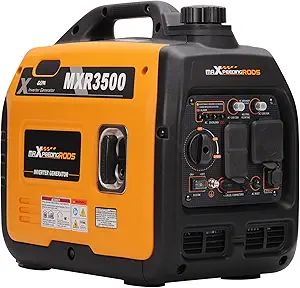
A 3500-watt portable generator sits in a useful middle ground for people who need more power than a small camping generator can provide without moving up to a large, heavy-duty home backup unit.
For 2026, this class includes compact inverter generators as well as a few models slightly above 3500 watts that are worth considering because they offer more running capacity without becoming dramatically larger. Depending on the model, you can use one for RV trips, camping, tailgating, jobsite tools, or selected household essentials during a power outage.
The important thing to understand is that 3500 starting watts does not necessarily mean 3500 running watts. Starting watts are the temporary power available for motors and other equipment when they switch on, while running watts are the continuous output the generator is designed to provide.
That distinction matters when you’re trying to power a refrigerator, sump pump, furnace blower, window air conditioner, microwave, or other appliances at the same time.
For 2026, features such as inverter technology, CO shutoff systems, economy modes, parallel capability, electric starting, and dual-fuel operation make this generator class more versatile than older portable generators.
3500-Watt Portable Generators for 2026
| Generator | Peak / Starting Watts | Running Watts | Fuel | Approx. Weight | Best Use |
|---|---|---|---|---|---|
| MaXpeedingrods 3500W Inverter | 3,500W | 3,000W | Gasoline | 47 lb | Portable backup, camping and RV |
| Champion 3500W Inverter | 3,500W | 2,300W | Gasoline | 57.8 lb | Quiet recreational use |
| Pulsar PGD40iSCO | 4,000W | 3,200W | Gasoline | 47 lb | RV and higher-output portable use |
| Generac iQ3500 | 3,500W | 3,000W | Gasoline | 109.1 lb | Premium inverter features |
| GENMAX GM3500iAD | 3,500W | 3,200W gas / 2,800W propane | Gasoline / Propane | 56.2 lb | Dual-fuel portability |
Specifications can vary by model revision, configuration, and market. Always confirm the specifications and included accessories for the exact model before purchasing.
Quick Take
If portability is your biggest concern, the MaXpeedingrods 3500W and Pulsar PGD40iSCO stand out because they provide substantial output without the weight of some larger inverter generators.
The Champion 3500W is worth considering if you want a relatively compact gasoline inverter generator with Quiet Technology and CO protection.
The Generac iQ3500 takes a different approach. It is substantially heavier, but its feature set includes electric start, a digital display, PowerRush technology, COsense and parallel capability.
For buyers who want the ability to use gasoline or propane, the GENMAX GM3500iAD offers that flexibility in a considerably lighter package.
Detailed Overview of the Best 3500-Watt-Class Generators in 2026
1. MaXpeedingrods 3500 Watt Portable Inverter Generator
The MaXpeedingrods 3500W Portable Inverter Generator is one of the more portable options in this group. It produces 3,500 starting watts and 3,000 running watts, while its 47-pound weight makes it considerably easier to move than many larger generators.
The manufacturer lists up to 8.3 hours of runtime, depending on the load, and an Eco Mode designed to reduce fuel consumption and operating noise. It also uses inverter technology with a claimed THD of 3% or less and includes automatic low-oil and carbon monoxide shutdown features.
That combination makes it particularly interesting for camping, RV use and emergency backup when portability matters.
It also supports parallel operation, allowing two compatible units to be connected when more power is required.
Key advantages:
- 3,500 starting watts and 3,000 running watts
- Lightweight 47-pound design
- Up to 8.3 hours of runtime
- Eco Mode for reduced fuel consumption and noise
- Inverter output suitable for many sensitive electronic devices
- Parallel capability
- CO and low-oil protection
Potential limitation: It is gasoline-only, so buyers looking for propane flexibility will need to consider a dual-fuel alternative.
2. Champion Power Equipment 3500-Watt Portable Inverter Generator
The Champion 3500-Watt Portable Inverter Generator is designed around relatively quiet recreational and backup use. The model associated with the original article produces 3,500 starting watts and 2,300 running watts and uses a 1.2-gallon fuel tank.
Available specifications list up to 10 hours of runtime at 25% load, a noise rating around 58 dBA and a weight of approximately 57.8 pounds. It also incorporates Champion’s Quiet Technology and CO Shield safety system.
One thing to notice is the relatively large difference between its starting and running wattage. With only 2,300 running watts, it should not be treated as equivalent to a generator that continuously produces 3,000 or 3,200 watts.
That makes load planning especially important.
Key advantages:
- 3,500 starting watts
- 2,300 running watts
- Up to 10 hours at 25% load
- Quiet Technology
- CO Shield
- Compact inverter design
- Suitable for camping and recreational applications
Potential limitation: Its 2,300 running-watt rating gives you less continuous capacity than some of the other generators in this guide.
3. Pulsar PGD40iSCO 4,000-Watt Inverter Generator
The Pulsar PGD40iSCO is slightly above the 3500-watt class, but it deserves consideration because it provides 4,000 peak watts and 3,200 running watts while weighing only about 46–47 pounds.
That is an unusually strong combination of output and portability.
The current Pulsar specifications list a 1-gallon gasoline tank, approximately 4.5 hours of runtime at 50% load, a 59 dBA operating volume, recoil starting and a 120V 30A RV outlet. It also includes CO shutdown protection and parallel capability.
For RV owners, the 30A RV outlet is particularly useful. However, the available power still has to be managed according to the generator’s 3,200-watt continuous rating.
Key advantages:
- 4,000 peak watts
- 3,200 running watts
- Approximately 46–47 pounds
- 59 dBA rated noise level
- 30A RV outlet
- CO shutdown
- Parallel capability
- CARB and EPA certified according to the manufacturer
Potential limitation: The 1-gallon fuel tank means runtime is more limited at higher loads than with generators equipped with larger tanks.
4. Generac iQ3500 Portable Inverter Generator
The Generac iQ3500 is one of the more feature-heavy options in this group.
It produces 3,500 starting watts and 3,000 running watts and uses Generac’s PowerRush technology, which the manufacturer says provides more than 50% additional starting capacity for compatible loads.
It also includes COsense carbon monoxide protection, electric start, a digital display, a 30A twist-lock outlet and parallel capability. The current Generac specifications list a 2.6-gallon fuel tank, 8.9 hours of runtime at 50% load and a weight of approximately 109.1 pounds.
The weight is important. Although it is described as portable, this is not a generator most people will casually carry around at 109 pounds.
Instead, its portability is better understood in terms of moving it around with the appropriate handling setup rather than carrying it like a 47-pound suitcase-style inverter.
Key advantages:
- 3,500 starting watts
- 3,000 running watts
- PowerRush technology
- Electric start
- COsense technology
- Digital display
- 2.6-gallon fuel tank
- Parallel capability
- 30A twist-lock outlet
Potential limitation: At more than 100 pounds, it is significantly heavier than the MaXpeedingrods and Pulsar options.
5. GENMAX GM3500iAD Dual Fuel Inverter Generator
The GENMAX GM3500iAD is the option to consider if you want to keep both gasoline and propane available.
On gasoline, the generator produces 3,500 starting watts and 3,200 running watts. On propane, output drops to 3,100 starting watts and 2,800 running watts. It uses a 145cc OHV engine, weighs approximately 56.2 pounds and includes wheels for easier transportation.
The generator also includes CO detection with automatic shutdown, parallel capability and a 120V 30A outlet.
The dual-fuel configuration can be useful during extended outages because propane can be stored for long periods when properly handled, giving you an alternative to gasoline.
Keep in mind that propane operation produces less output than gasoline operation on this particular model.
Key advantages:
- Gasoline and propane operation
- 3,500 starting / 3,200 running watts on gasoline
- 3,100 starting / 2,800 running watts on propane
- Approximately 56.2 pounds
- CO detection and automatic shutdown
- Parallel capability
- 30A outlet
- Wheels for easier movement
Potential limitation: Propane reduces the available output compared with gasoline, so your load calculation should be based on the fuel you actually intend to use.
What Can a 3500-Watt Generator Actually Run?
This is one of the most important questions to answer before buying.
A generator’s wattage rating does not tell you exactly how many appliances you can connect at once. You need to consider both running watts and starting watts.
For example, a refrigerator may consume relatively little power while running but require a much higher surge when its compressor starts.
The same principle applies to:
- Sump pumps
- Well pumps
- Furnaces
- Window air conditioners
- Power tools
- Compressors
- Some refrigerators and freezers
A 3,000-running-watt generator may therefore handle a refrigerator, lights, electronics and several smaller appliances, but adding a high-starting-current appliance can exceed its available capacity.
Before connecting multiple appliances, add their running watt requirements and then account for the largest expected starting surge.
If your calculated demand approaches the generator’s rated output, choosing a larger generator may be safer than trying to operate everything simultaneously.
Is 3500 Watts Enough for Home Backup?
For basic emergency backup, it can be.
A 3500-watt-class generator can be useful for selected essential loads such as a refrigerator, freezer, lights, internet equipment, phones, televisions and some small appliances.
However, it is generally not the same thing as a whole-home generator.
If your goal is to operate central air conditioning, an electric water heater, electric range, multiple large appliances or several high-draw motors simultaneously, you will probably need a significantly larger generator and an appropriate electrical connection.
A 3500-watt portable generator is better viewed as an essential-load backup solution unless your home’s electrical demands are unusually low.
Is a 3500-Watt Generator Good for an RV?
It can be an excellent size for certain RV applications, especially when the generator has a 30A RV outlet.
The Pulsar PGD40iSCO, for example, includes a 120V 30A RV receptacle and produces 3,200 running watts.
That gives you considerably more headroom than a small 2,000-watt-class inverter generator.
Still, you need to account for what else is operating when you start an RV air conditioner. A rooftop AC, microwave, refrigerator, battery charger and other loads can quickly add up.
The generator’s continuous running-watt rating remains the limiting factor.
Why Inverter Technology Matters
Traditional open-frame generators can provide plenty of power, but inverter generators have become popular for camping, RV use and residential backup because they can combine cleaner electrical output with lower operating noise and more compact designs.
The inverter generators in this guide are designed to provide stable power for common electronics such as laptops, televisions, routers and phone chargers.
That does not mean every electronic device can automatically be connected without checking its requirements. Always follow the appliance or equipment manufacturer’s instructions.
Inverter technology can also allow the engine to reduce its speed when demand is lower, which can help reduce fuel consumption and noise.
Gasoline vs. Dual Fuel
Fuel choice is another major difference between these generators.
Gasoline
Gasoline generators are straightforward and widely available. They are usually the simplest choice if you already keep fresh fuel available for emergency use.
The disadvantage is that gasoline requires proper storage and maintenance, especially if the generator will sit unused for long periods.
Dual Fuel
Dual-fuel generators can run on gasoline or propane.
That gives you another option during a prolonged outage, particularly if you already keep appropriately stored propane cylinders.
However, don’t assume that the generator produces the same wattage on both fuels. The GENMAX GM3500iAD, for example, produces 3,200 running watts on gasoline but 2,800 running watts on propane.
Always calculate your expected load using the output available from the fuel you plan to use.
What to Look for When Buying a 3500-Watt Generator
1. Running Watts
This is one of the most important numbers to compare.
Running watts tell you how much continuous electrical power the generator can provide.
2. Starting Watts
Starting watts provide temporary additional capacity for motors and other equipment that require extra power when switched on.
A generator with 3,500 starting watts is not necessarily a 3,500-running-watt generator.
3. Runtime
Check how the manufacturer measured runtime.
“10 hours” at 25% load is very different from 10 hours at 50% load.
Runtime figures are useful for comparison, but they should always be read together with the test load.
4. Noise Level
Noise matters considerably if you’re camping, using the generator near neighbors or operating it around an RV.
Inverter models are generally more attractive for these situations because manufacturers can use enclosed designs and variable engine speeds to reduce noise.
5. Fuel Type
Gasoline is convenient and widely available.
Dual fuel adds propane flexibility but usually comes with different wattage ratings depending on the fuel.
6. Weight
Don’t overlook weight.
A generator that weighs 47 pounds is a very different ownership experience from one weighing more than 100 pounds.
If you’ll frequently load the generator into an SUV or truck, weight should be part of your buying decision.
7. CO Protection
Look for a generator equipped with a carbon monoxide shutoff system.
These systems can add an important layer of protection, but they do not make indoor operation safe.
8. Parallel Capability
Some inverter generators can be connected to a second compatible generator to increase available power.
If you think your power needs could grow later, parallel capability may be worth considering.
9. RV Outlet
If you own an RV, check whether the generator includes the type of outlet your RV requires.
A 30A RV receptacle can make the generator considerably easier to integrate into an RV setup.
10. Warranty and Support
A generator is an engine-driven machine, not a disposable electronic accessory.
Warranty coverage, replacement parts and access to technical support can matter years after the purchase.
3500-Watt Generator Safety: What You Need to Know
Carbon monoxide is one of the most important risks associated with portable fuel-burning generators.
The CDC recommends operating a generator outdoors and more than 20 feet from windows, doors and vents. A generator should never be operated inside a home, garage or other enclosed area.
The CPSC also recommends keeping portable generators at least 20 feet from buildings and directing exhaust away from windows, doors and vents.
A few basic rules are worth remembering:
- Never operate a portable generator inside a home or garage.
- Keep it at least 20 feet away from doors, windows and vents.
- Point the exhaust away from the house and other occupied buildings.
- Keep the generator dry and follow the manufacturer’s instructions for wet-weather operation.
- Never refuel a running or hot generator; shut it down and allow it to cool first.
- Use appropriately rated outdoor extension cords when connecting individual appliances.
- Install battery-powered or battery-backup carbon monoxide detectors inside the home.
- Read the owner’s manual before operating the generator.
A built-in CO shutoff is an important safety feature, but it should never be treated as permission to place the generator closer to the house.
3500 Watts vs. 4500 Watts: Which Size Makes More Sense?
If you are deciding between a 3500-watt-class generator and something closer to 4500 watts, the main question is how much electrical headroom you actually need.
A 3500-watt-class inverter generator makes sense when portability, moderate power requirements and fuel efficiency are priorities.
Moving into the 4,000–4,500-watt range can give you additional running and starting capacity for larger RV loads, pumps, air conditioners and combinations of household appliances.
Current 2026 comparison guides are increasingly separating these categories because once you add a well pump, sump pump, second refrigerator or larger air conditioner, the extra capacity can become important.
The trade-off is usually greater size, weight, fuel consumption or cost.
Instead of choosing a generator solely because it has a higher peak-watt number, calculate the appliances you actually need to run.
Final Thoughts
The best 3500-watt-class generator for you depends on how you plan to use it.
The MaXpeedingrods 3500W is especially interesting if low weight and portability are priorities. It provides 3,000 running watts in a 47-pound package.
The Champion 3500W offers a compact inverter design, Quiet Technology and CO Shield, but its 2,300-running-watt rating means you have less continuous capacity to work with.
The Pulsar PGD40iSCO steps above the nominal 3500-watt category while remaining very portable, providing 3,200 running watts and a 30A RV outlet.
The Generac iQ3500 is aimed at buyers who value features such as electric start, PowerRush, COsense, a digital display and parallel capability, although its approximately 109-pound weight makes it much less convenient to carry.
The GENMAX GM3500iAD adds gasoline/propane flexibility while keeping the unit around 56 pounds, although propane operation reduces its available output.
Before buying, focus less on the headline wattage and more on running watts, starting watts, runtime at a stated load, fuel type, noise, weight, outlet configuration, CO protection and warranty support.
For emergency preparedness, also remember that a portable generator is only useful if it can safely handle the loads you actually need. Make a list of those appliances before purchasing and calculate their combined running and starting requirements.