As an Amazon Associate I earn from qualifying purchases.
If you want an alternative to a diesel generator for home backup, RV use, or demanding outdoor work, fuel choice matters almost as much as wattage. Gasoline and propane dual-fuel models can give you more flexibility than a gasoline-only generator, while tri-fuel models add the option of natural gas when a suitable connection is available.
The models below cover several different use cases rather than trying to make every generator fit the same job. I’ve compared their rated output, fuel options, portability, runtime, safety features, and connection options so you can see which type makes sense for your particular power needs.
One important distinction: the generators in this guide are not diesel-powered. They are gasoline, propane, or tri-fuel portable generators that can serve as alternatives to diesel equipment for certain residential, RV, emergency, and jobsite applications.
Best Diesel-Alternative Portable Generators for 2026
| Generator | Fuel Type | Rated Output | Best For |
|---|---|---|---|
| WEN DF680iX | Gasoline / Propane | 5,100W gas / 4,500W propane | RVs, backup essentials, quieter portable power |
| Westinghouse 14500 Tri-Fuel | Gasoline / Propane / Natural Gas | Up to 11,500W gas | Large-home backup and high-demand loads |
| Champion 4000W Inverter | Gasoline | 3,000W | Camping, RVs, and basic backup |
| Westinghouse WGen10500DFc | Gasoline / Propane | 10,500W gas / 9,500W LPG | Home backup and heavy-duty loads |
| DuroStar DS13000MX | Gasoline / Propane | 10,500W gas / 9,975W propane | Home backup and demanding jobsites |
In-Depth Reviews of the Best Diesel-Alternative Generators
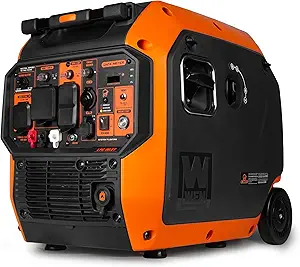
1. WEN DF680iX 6800-Watt Dual-Fuel Inverter Generator
The WEN DF680iX is a dual-fuel inverter generator designed for buyers who want more power than a typical camping inverter without moving into the size of a large open-frame home-backup generator.
Its 224cc engine produces 6,800 starting watts and 5,100 rated watts on gasoline, while propane output is rated at 6,000 starting watts and 4,500 running watts. WEN also lists a bonded-neutral 120/240V configuration, a 30-amp L14-30R receptacle, an RV-ready TT-30R outlet, electric start, and a CO Watchdog shutdown sensor.
The DF680iX is also quieter than many conventional open-frame generators, with WEN listing operation at about 64 dBA at quarter load. Its fuel-shutoff feature uses the remaining fuel in the carburetor before shutdown, which can be useful when the generator will be stored between outages.
Who it makes sense for: RV owners, homeowners who need to run essential circuits, and users who want a relatively compact dual-fuel inverter with 240V capability. It is not a substitute for a high-output whole-home generator when your load includes several large electric appliances at the same time.
2. Westinghouse 14500 Peak-Watt Tri-Fuel Portable Generator
The Westinghouse 14500 Tri-Fuel is aimed at buyers who need substantially more output than a typical RV or camping generator. It can operate on gasoline, propane, or natural gas, giving homeowners another fuel option during a prolonged outage.
On gasoline, the generator is rated for 11,500 running watts and 14,500 peak watts. Westinghouse also lists a 550cc engine, remote electric start, low-THD output, and a large fuel tank capable of providing up to 19 hours of runtime under light-load conditions.
That combination makes this type of generator more appropriate for large homes, workshops, and demanding jobsite applications than for casual camping. However, the actual appliances you can run at the same time depend on their running and starting watt requirements. A high peak-wattage number should never be treated as the generator’s continuous capacity.
Who it makes sense for: homeowners who need high-output portable backup power and want gasoline, propane, and natural gas flexibility.
3. Champion Power Equipment 4000-Watt Inverter Generator
The Champion 4000-Watt Inverter Generator is the smallest and most portable option in this lineup. It produces 4,000 starting watts and 3,000 running watts from a 149cc gasoline engine and weighs less than 49 pounds. Champion rates it at 64 dBA from 23 feet and up to 10 hours of runtime at 25% load.
It also produces inverter power with less than 3% total harmonic distortion, includes a 120V 30-amp RV-ready TT-30R outlet, and has CO Shield automatic carbon monoxide shutdown protection. The unit is parallel-ready if you need additional output with a compatible Champion inverter.
One important limitation is its size. This generator is intended for camping, RV use, and powering a few basic home items rather than serving as an emergency whole-home backup generator.
Who it makes sense for: campers, RV owners, tailgaters, and anyone who values low weight and portability more than high output.
4. Westinghouse WGen10500DFc 13,500-Watt Dual-Fuel Generator
The Westinghouse WGen10500DFc is a gasoline-and-propane portable generator built around higher power requirements. It produces 13,500 peak watts and 10,500 rated watts on gasoline, while propane output is rated at 9,500 watts.
The generator includes remote and electric start, a 50-amp outlet, CO sensor technology, and transfer-switch readiness. Westinghouse also lists up to 19 hours of runtime at 25% load, although actual runtime will vary significantly with the electrical load and fuel used.
This is a much different class of generator from the Champion inverter above. It is heavier and less convenient to move frequently, but the additional output makes it more practical for home backup and demanding tools.
Who it makes sense for: homeowners who need high-output portable backup power but do not require the natural-gas option offered by a tri-fuel model.
5. DuroStar DS13000MX 13,000-Watt Dual-Fuel Generator
The DuroStar DS13000MX is a heavy-duty dual-fuel generator designed for home backup and demanding work environments. Its 500cc OHV engine produces 13,000 peak watts and 10,500 running watts on gasoline. On propane, output is rated at 12,350 peak watts and 9,975 running watts.
DuroStar lists up to 17 hours of runtime at 25% load on gasoline and up to 13 hours at the same load on propane. The generator also includes push-button and remote starting, a 50-amp transfer-switch-ready outlet, low-oil shutdown, and CO Alert technology.
The main advantage here is straightforward: substantial continuous output combined with the ability to switch between gasoline and propane. Its size and weight make it much less suitable for casual camping than the Champion or WEN inverter models.
Who it makes sense for: homeowners who need substantial portable backup capacity, contractors who use high-draw tools, and users who prefer a rugged open-frame generator over a smaller inverter.
What to Look for in a Diesel-Alternative Portable Generator in 2026
1. Fuel Flexibility
Dual-fuel generators can run on gasoline or propane, while tri-fuel models add natural gas. That flexibility can be useful during extended outages because the most convenient fuel source may change depending on your location and available supplies.
However, fuel flexibility does not mean every fuel produces the same amount of power. Manufacturers normally publish separate output ratings for gasoline, propane, and natural gas, so check the rated watts for the fuel you actually expect to use.
Also, propane or natural gas does not make a portable combustion generator safe for indoor use. All of the fuel-powered generators in this guide must be operated outdoors according to the manufacturer’s instructions.
2. Rated Power vs. Starting Power
When comparing generators, pay more attention to rated or running watts than to the largest number in the product name.
Starting or peak watts are available for a short period to handle motor startup demands. Rated watts are the amount of power the generator is designed to provide continuously.
For example, the DuroStar DS13000MX is marketed as a 13,000-watt generator, but its continuous gasoline rating is 10,500 watts. The WEN DF680iX provides 5,100 rated watts on gasoline, while the Champion 4000W inverter provides 3,000 running watts.
Before buying, add the running wattage of the appliances you expect to use and account for the additional starting demand of equipment such as refrigerators, pumps, compressors, and air conditioners.
3. Carbon Monoxide and Electrical Safety
Carbon monoxide protection should be one of the first things you check when shopping for a portable generator. Several models in this guide use automatic CO shutdown systems, including WEN Watchdog, Champion CO Shield, and DuroStar CO Alert. These systems can shut the engine down when dangerous CO levels are detected, but they are not a substitute for safe placement and operation.
The U.S. Consumer Product Safety Commission recommends operating portable generators outside and at least 20 feet away from homes and buildings, with the exhaust directed away from windows, doors, and vents. A garage, basement, shed, porch, or carport is not an appropriate operating location.
For home backup, also pay attention to the electrical connection. A generator should be connected to a home’s electrical system only through equipment and procedures appropriate for that installation, such as a properly installed transfer switch. Never attempt to backfeed a home’s wiring through a standard wall outlet.
4. Runtime and Fuel Consumption
Advertised runtime figures need context. A generator that runs for 19 hours at 25% load will not necessarily run for 19 hours while powering a central air conditioner, electric water heater, refrigerator, and other large appliances.
For a useful comparison, look at the manufacturer’s stated load condition, fuel type, tank capacity, and rated output. The DuroStar DS13000MX, for example, is rated for up to 17 hours at 25% load on gasoline and 13 hours on propane.
Your actual runtime will depend on the electrical load, fuel, weather, maintenance condition, and operating mode.
5. Portability and Ease of Use
Portability becomes less important as generator output increases. A sub-50-pound inverter such as the Champion 4000W is designed to be moved frequently, while a 10,000-watt-plus open-frame generator is primarily portable in the sense that it can be moved around a property or transported when necessary.
Look for wheels, handles, electric start, remote start, accessible fuel controls, and a suitable outlet configuration. For RV users, an RV-ready 30-amp outlet may matter more than a very high peak-wattage rating. For home backup, a 50-amp connection and transfer-switch compatibility may be more useful.
How Much Generator Power Do You Actually Need?
The right generator size depends on what you plan to run at the same time. Start by listing the appliances and equipment that must remain operational during an outage.
For basic backup, you may only need enough capacity for a refrigerator, lights, Wi-Fi equipment, a few outlets, and a small window AC or similar appliance. An inverter generator in the 3,000- to 5,000-running-watt range may be enough for this type of load.
Larger homes may need considerably more power, especially if the backup plan includes a well pump, sump pump, central air conditioning, electric water heater, electric range, or multiple large appliances.
Do not size a generator based only on peak watts. Add the running wattage of the equipment you expect to operate and then account for motor-starting loads. If you are unsure about the required capacity or plan to connect a generator to household wiring, consult a qualified electrician.
Conclusion: Choosing a Diesel-Alternative Portable Generator in 2026
A gasoline, propane, or tri-fuel portable generator can be a practical alternative to diesel equipment when you need backup power for a home, RV, workshop, or jobsite. The important thing is matching the generator’s rated wattage, fuel options, runtime, outlet configuration, and safety features to the actual load you need to support.
The Champion 4000W inverter is focused on portability and lighter-duty applications, while the WEN DF680iX provides more continuous output and dual-fuel flexibility in a quieter inverter design. For substantially higher power requirements, the Westinghouse WGen10500DFc and DuroStar DS13000MX move into the high-output home-backup category. The Westinghouse 14500 Tri-Fuel adds natural gas capability for users who want three fuel options.
Before buying, calculate your expected running and starting loads rather than relying on the generator’s peak-wattage marketing number. Also make sure you have a safe outdoor location and the correct electrical connection for your intended use.
Most importantly, treat carbon monoxide safety as non-negotiable. The CPSC recommends operating portable generators outdoors, at least 20 feet from homes and buildings, with exhaust directed away from occupied areas.
A good diesel alternative is not necessarily the generator with the biggest number on the box. It is the one that provides enough continuous power for your actual loads while giving you the fuel flexibility, portability, and connection options you will realistically use.