As an Amazon Associate I earn from qualifying purchases.
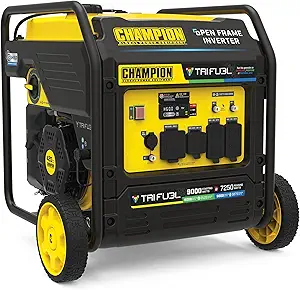
A tri-fuel inverter generator gives you three fuel options—gasoline, propane, and natural gas—in one machine. That can be useful during a long power outage, when gasoline is difficult to find, or when you want to use an existing natural gas connection for home backup.
The important distinction is that not every tri-fuel generator is an inverter generator. Inverter models are designed to produce stable electrical power with low harmonic distortion, while conventional tri-fuel generators can offer much higher wattage without using inverter technology.
In this 2026 guide, I’m focusing on the differences that actually matter when choosing one: running and starting watts, fuel-specific output, THD, noise, outlets, CO protection, runtime, and home-backup compatibility.
Current tri-fuel inverter models also offer features such as electric or remote start, CO monitoring, 120/240V outlets, low-idle operation, digital displays, and transfer-switch compatibility. However, these features vary considerably between models, so comparing the specifications is more useful than assuming every tri-fuel generator offers the same capabilities.
Tri-Fuel Inverter Generators at a Glance
| Model | Fuel Options | Gasoline Peak/Running Watts | Generator Type | Best Fit |
|---|---|---|---|---|
| Champion 9000-Watt Tri-Fuel | Gas / Propane / Natural Gas | 9,000 / 7,250W | Open-frame inverter | Home backup and high-output inverter power |
| Pulsar PGD105TiSCO | Gas / Propane / Natural Gas | 10,500 / 8,500W | Inverter | Home, RV and mobile applications |
| GENMAX GM10500XiT | Gas / Propane / Natural Gas | 10,500 / 7,800W | Open-frame inverter | Home backup with inverter power |
| DuroMax XP15000HXT | Gas / Propane / Natural Gas | 15,000 / 12,000W | Conventional | Maximum output, not inverter |
| Westinghouse WGen14500TFc | Gas / Propane / Natural Gas | 18,000 / 14,500W | Conventional | Heavy-duty home backup |
Important: The DuroMax XP15000HXT and Westinghouse WGen14500TFc are included as tri-fuel alternatives, but they are not inverter generators.
Understanding Tri-Fuel Generator Technology in 2026
A tri-fuel generator can operate on gasoline, propane, or natural gas. That does not mean each fuel produces the same amount of power. In many models, gasoline provides the highest rated output, while propane and natural gas produce lower wattage.
The advantage is flexibility. Gasoline can be useful when maximum portable output is needed, propane can be stored for extended periods, and natural gas can be convenient for home backup when a suitable utility connection is available.
The key point is that fuel flexibility and inverter technology are two separate features. A generator can be tri-fuel without being an inverter, which is why shoppers should check the generator type before comparing models.
Champion 9000-Watt Tri-Fuel Inverter Generator
The Champion 9000-Watt Tri-Fuel Open Frame Inverter Generator is one of the more interesting options for buyers who want high output without giving up inverter technology. It runs on gasoline, propane, or natural gas and includes Champion’s CO Shield system, electric start, Quiet Technology, and Economy Mode.
On gasoline, it produces 9,000 starting watts and 7,250 running watts. Output changes when using other fuels: propane is rated at 9,000 starting watts and 6,525 running watts, while natural gas produces 9,000 starting watts and 5,875 running watts.
Champion also specifies less than 3% THD on its clean-power inverter output, which makes the generator more appropriate for electronics than many conventional portable generators. At about 72 dBA, however, it should not be confused with a small enclosed camping inverter.
For a homeowner, the main attraction is the combination of three fuels, substantial running wattage, 120/240V capability, and inverter technology. Its open-frame design and roughly 166-pound weight also mean that it is better suited to home backup or occasional transport than frequent carrying.
Pulsar PGD105TiSCO
The Pulsar PGD105TiSCO is a 10,500-watt tri-fuel inverter generator designed for buyers who need substantial output along with gasoline, propane, and natural gas flexibility.
Pulsar lists 10,500 peak watts and 8,500 running watts on gasoline, with lower output on propane and natural gas.
The published fuel-specific ratings are 9,500 peak and 8,000 running watts on propane, and 8,400 peak and 6,800 running watts on natural gas. It also supports 120/240V operation and includes remote, electric, and recoil starting.
Pulsar lists a 62 dB operating volume, a 7-gallon fuel tank, up to 9 hours of runtime at 50% load, parallel capability, USB-A and USB-C ports, and automatic carbon monoxide shutdown. The generator is also listed as both EPA and CARB certified.
This makes the PGD105TiSCO particularly interesting for buyers who want a true inverter generator with more output than the typical 2,000- to 4,500-watt portable inverter.
DuroMax XP15000HXT: High-Power Tri-Fuel Alternative
The DuroMax XP15000HXT is worth considering if maximum output matters more than inverter technology. It is a tri-fuel portable generator that runs on gasoline, propane, or natural gas, but it is not an inverter generator.
On gasoline, DuroMax rates it at 15,000 peak watts and 12,000 running watts. Propane output is 14,250 peak and 11,400 running watts, while natural gas output is 12,825 peak and 10,260 running watts.
The XP15000HXT includes electric and remote start, a 670cc engine, low-idle operation, and less than 5% THD. DuroMax also lists a 5-year warranty and includes a natural gas hose, propane regulator, remote control, wheel and handle kit, and other accessories.
For large home loads, this model is more about raw capacity than inverter performance. That distinction makes it a useful alternative to compare, but it should not be described as one of the actual tri-fuel inverter models.
GENMAX GM10500XiT
The GENMAX GM10500XiT is a true tri-fuel open-frame inverter generator with a published 10,500-watt peak output and 7,800-watt rated output.
GENMAX lists gasoline, LPG, and natural gas operation, along with THD of 3% or less. Its combination of inverter technology and tri-fuel capability makes it a useful option for homeowners who want clean power without limiting themselves to gasoline.
The model also includes a CO sensor and ATS-related functionality, which can make it relevant to more permanent backup installations.
One thing to verify before buying is the exact installation and automatic-start requirements for your intended setup. A generator being ATS-compatible does not mean it can be connected directly to a home’s electrical system without the appropriate equipment and installation.
For buyers who want a relatively high-output inverter generator, the GM10500XiT deserves consideration alongside Champion and Pulsar.
Westinghouse WGen14500TFc: Heavy-Duty Tri-Fuel Alternative
The Westinghouse WGen14500TFc is another important comparison point, but like the DuroMax XP15000HXT, it is not an inverter generator. It is a high-output conventional tri-fuel generator designed primarily for heavy-duty home backup.
Westinghouse rates it at 18,000 peak watts and 14,500 running watts on gasoline. On propane, the published ratings are 16,000 peak and 13,000 running watts, while natural gas produces 14,400 peak and 11,600 running watts.
The generator has a 713cc engine, electric and remote start, a 10.5-gallon fuel tank, transfer-switch readiness, a CO sensor with automatic shutdown, and a published noise level as low as 74 dBA. Westinghouse also specifies less than 5% THD.
At roughly 348 pounds, this is a substantially different type of machine from a portable camping inverter. It makes more sense for homeowners looking for high-capacity backup power than for people who frequently move a generator around.
What to Look for in a Tri-Fuel Inverter Generator in 2026
1. Compare Running Watts, Not Just Peak Watts
Peak watts describe the temporary surge available for starting certain motor-driven appliances. Running watts are more important when estimating how much equipment the generator can continuously support.
For example, the Champion 9000 produces 9,000 starting watts but 7,250 running watts on gasoline. The Pulsar PGD105TiSCO produces 10,500 peak and 8,500 running watts on gasoline.
2. Check Output on All Three Fuels
Don’t assume that a generator produces the same power on gasoline, propane, and natural gas.
Most tri-fuel models have different output ratings for each fuel. The difference can be substantial, particularly when operating on natural gas. The Pulsar, for example, drops from 8,500 running watts on gasoline to 6,800 running watts on natural gas.
3. Look at THD and Inverter Technology
If you plan to power computers, televisions, networking equipment, medical electronics, or other sensitive devices, check the manufacturer’s THD specification rather than relying only on the word “inverter.”
The Champion 9000 is specified at less than 3% THD, while the Westinghouse WGen14500TFc specifies less than 5% THD despite being a conventional generator.
4. Consider Noise and Weight
High-output tri-fuel generators are considerably larger than the small inverter generators commonly used for camping.
For example, Pulsar lists the PGD105TiSCO at 62 dB, while Champion lists its 9000W model at 72 dBA. The Westinghouse WGen14500TFc can weigh about 348 pounds.
Noise and weight can therefore be just as important as wattage depending on where you plan to use the generator.
5. Check CO Protection and Installation Requirements
CO sensors and automatic shutdown systems add an important safety layer, but they do not make indoor operation safe.
Portable fuel-burning generators should be operated outdoors and positioned according to the manufacturer’s safety instructions. A transfer switch or other connection to household circuits should also be installed according to applicable electrical requirements.
Who Should Consider a Tri-Fuel Inverter Generator?
Home Backup
A tri-fuel generator can be useful for homeowners who want multiple fuel options during extended outages. Before buying, calculate the running wattage of the appliances and systems you actually need to operate rather than choosing a generator based only on its peak wattage.
Areas With Natural Gas Service
Natural gas can be convenient for a home backup system because it does not require storing large quantities of gasoline. However, the generator still needs to be compatible with the available gas supply, and the installation must meet applicable requirements.
RV and Outdoor Applications
Large tri-fuel inverter generators can provide considerably more power than typical camping inverters, but their size and weight make them less convenient for casual portability. Check RV electrical requirements and generator outlet configuration before purchasing.
Extended Power Outages
Fuel flexibility becomes particularly useful during longer outages. Having access to more than one fuel source gives you additional options if gasoline becomes difficult to obtain or if you prefer to use stored propane.
Tri-Fuel vs. Dual-Fuel Generators
A dual-fuel generator normally operates on gasoline and propane, while a tri-fuel generator adds natural gas as a third option.
The main advantage of tri-fuel operation is flexibility rather than automatically higher performance. If your home already has a suitable natural gas connection, the third fuel may be especially useful during a long outage. If you don’t have natural gas available, a dual-fuel generator may provide enough flexibility for your situation.
The decision should therefore depend on which fuels are actually available to you, how much power you need, and whether the generator will be used primarily for emergency home backup, an RV, outdoor activities, or job-site equipment.
How Much Generator Power Do You Need?
Before buying a tri-fuel generator, make a list of the equipment you expect to run simultaneously.
A refrigerator, freezer, lights, internet equipment, sump pump, furnace blower, and selected kitchen appliances can have very different power requirements. Appliances with electric motors may also require additional starting watts.
Do not simply add the advertised starting wattage of every appliance. Instead, identify which loads will run simultaneously and account for the starting surge of equipment that needs it.
For whole-home backup, an electrician can help determine the appropriate generator size, transfer equipment, and circuits based on your home’s electrical system.
Frequently Asked Questions About Tri-Fuel Inverter Generators
Are tri-fuel inverter generators worth it?
A tri-fuel inverter generator can make sense if you want gasoline, propane, and natural gas flexibility while also wanting inverter-generated power. The extra fuel option is most useful when you have access to natural gas or want several backup-fuel choices during an extended outage.
Does a tri-fuel generator produce the same watts on every fuel?
No. Most models have different output ratings for gasoline, propane, and natural gas. Always check the manufacturer’s running and starting wattage for each fuel before deciding what appliances the generator can support.
Is a tri-fuel inverter generator better than a conventional generator?
They serve different priorities. An inverter generator can provide low-THD power and may operate more efficiently at lighter loads, while conventional generators can offer very high output. The right choice depends on the required wattage, noise, portability, and type of equipment you need to power.
Can a tri-fuel generator run a whole house?
Some high-output tri-fuel generators can support many household circuits, but that does not mean every appliance can run simultaneously. Generator sizing should be based on the home’s actual electrical loads and the generator’s running wattage.
Can you run a tri-fuel generator indoors?
No. Fuel-burning portable generators produce carbon monoxide and must be operated outdoors in accordance with the manufacturer’s safety instructions. CO shutdown technology does not make indoor operation safe.
Final Thoughts on Tri-Fuel Inverter Generators in 2026
A tri-fuel inverter generator can be a practical solution for buyers who want the flexibility of gasoline, propane, and natural gas without giving up inverter technology.
The Champion 9000-Watt Tri-Fuel combines high output with inverter technology and multiple fuel options, while the Pulsar PGD105TiSCO offers 10,500 peak watts, 8,500 running watts on gasoline, and a broad set of features. The GENMAX GM10500XiT is another true inverter option with 10,500 peak watts and 7,800 rated watts.
The DuroMax XP15000HXT and Westinghouse WGen14500TFc are worth comparing when maximum output is more important, but both should be treated as conventional tri-fuel generators rather than inverter models.
Before buying, compare running watts, output on each fuel, THD, noise, weight, CO protection, outlet configuration, runtime, and transfer-switch requirements. Those details will tell you much more about whether a generator fits your home than peak wattage alone.