As an Amazon Associate I earn from qualifying purchases.
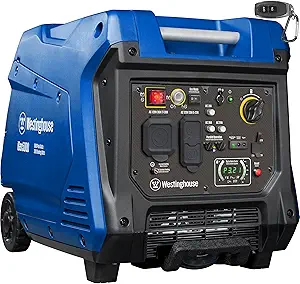
If you need backup power without the constant roar of a traditional generator, quiet portable generators can make a big difference. They are especially useful for camping, RV trips, tailgating, outdoor work, and short power outages when you want dependable electricity without excessive engine noise.
Inverter generators are often a good choice when noise matters because many models can automatically reduce engine speed when the electrical load is lower. However, choosing a quiet generator is not simply about finding the lowest advertised decibel number. You also need to consider running watts, starting watts, runtime, weight, fuel type, portability, and carbon monoxide safety features.
For this guide, I compared several quiet portable generators and one battery-powered alternative based on the specifications that matter most when noise is a priority. These include power output, published noise ratings, portability, fuel or battery type, and safety features.
Keep in mind that manufacturers may measure noise under different loads and conditions. Because of that, dBA ratings should be used as a useful reference rather than as a perfect apples-to-apples comparison.
Quiet Portable Generators and Power Stations for 2026
| Generator or Power Station | Output | Noise | Weight | Power Source |
|---|---|---|---|---|
| Westinghouse 5000 Peak Watt Inverter Generator | 5,000 peak / 3,900 running watts | 52 dBA* | 104.7 lb | Gasoline |
| GENMAX GM2200i | 2,200 peak / 1,800 running watts | 58 dBA | 41.9 lb | Gasoline |
| PowerSmart 2500-Watt Inverter Generator | 2,500 peak / 1,900 running watts | 52–69 dBA* | 39.7 lb | Gasoline |
| OUPES Mega 1 | 2,000W / 4,500W surge | No engine noise | 27.8 lb | Battery |
| AMERISUN 2500-Watt Inverter Generator | 2,500 peak / 1,900 rated watts | 69 dBA | 39.7 lb | Gasoline |
*Noise ratings can vary depending on load, distance, operating mode, and test conditions.
1. Westinghouse 5000 Peak Watt Inverter Generator
The Westinghouse 5000 Peak Watt Inverter Generator is aimed at users who need considerably more power than a small camping generator can provide.
It produces up to 5,000 peak watts and approximately 3,900 running watts, making it suitable for larger appliances, recreational vehicles, tools, and backup applications where a compact 2,000-watt generator would not be enough.
Its inverter design is also important. Instead of operating like a conventional open-frame generator, it is designed to provide cleaner power while allowing the engine to adjust its speed according to electrical demand.
The published noise level is around 52 dBA under the manufacturer’s stated conditions. Actual noise will depend on how heavily the generator is loaded and where it is operating.
At approximately 104.7 pounds, this is not a lightweight generator. Its larger output comes with a significant increase in size and weight, so it makes more sense for home backup, RV use, or applications where you do not need to move it frequently.
Why consider it: Higher power output, inverter technology, and a relatively low published noise rating for its power class.
Potential drawback: Its weight makes it less convenient for frequent carrying or backpack-style camping.
2. GENMAX GM2200i
The GENMAX GM2200i is a much smaller option for people who prioritize portability.
It provides up to 2,200 starting watts and 1,800 running watts. That makes it better suited to smaller appliances, electronics, camping equipment, and other moderate electrical loads than large home appliances.
The generator weighs about 41.9 pounds, making it considerably easier to transport than a 5,000-watt model.
GENMAX lists a noise level of approximately 58 dBA. Its Eco Mode can reduce engine speed when the electrical demand is lower, which can help reduce fuel consumption and unnecessary engine noise.
The GM2200i also includes carbon monoxide protection, low-oil protection, and parallel capability. Parallel operation can be useful if you eventually need more power and have a compatible second generator.
Why consider it: Compact size, manageable weight, Eco Mode, and enough output for many camping and recreational applications.
Potential drawback: With 1,800 running watts, it cannot handle the same loads as larger generators.
3. PowerSmart 2500-Watt Portable Inverter Generator
The PowerSmart 2500-Watt Portable Inverter Generator is another compact gasoline option for users who want a balance between portability and power.
It produces approximately 2,500 starting watts and 1,900 running watts. At about 39.7 pounds, it is relatively easy to move compared with larger conventional generators.
The generator includes Eco Mode, which can reduce engine speed when less power is required. Its published noise figures can vary depending on the test conditions and load, so it is worth checking the manufacturer’s current specifications before comparing it directly with another model.
It also includes features such as carbon monoxide protection, overload protection, low-oil protection, and parallel capability.
For camping, RV trips, outdoor projects, or emergency equipment, this type of generator can provide a useful middle ground between a very small inverter and a much heavier high-output machine.
Why consider it: Portable design, useful output for its size, and several built-in protection features.
Potential drawback: Noise can increase significantly when the generator is operating under heavier loads.
4. OUPES Mega 1 Portable Power Station
The OUPES Mega 1 is different from the gasoline generators in this comparison because it is a battery-powered portable power station rather than an engine-driven generator.
It uses a 1,024Wh LiFePO4 battery and can provide up to 2,000 watts of continuous AC output, with a higher short-term surge capacity.
Because there is no gasoline engine running, there is no engine exhaust and no engine noise during normal operation. This makes a battery power station particularly attractive for indoor emergency use, provided the connected equipment and manufacturer’s instructions allow it.
The Mega 1 weighs approximately 27.8 pounds and can also be expanded with additional battery capacity, depending on the configuration.
The major limitation is that it does not continuously produce electricity from fuel. Once the battery is depleted, you need to recharge it. That can be done from an appropriate AC source, solar equipment, or another compatible charging method.
Why consider it: Extremely quiet operation, no gasoline engine, no exhaust during operation, and relatively low weight.
Potential drawback: Available energy is limited by battery capacity and recharging conditions.
5. AMERISUN 2500-Watt Gas Powered Inverter Generator
The AMERISUN 2500-Watt Inverter Generator provides approximately 2,500 starting watts and 1,900 rated watts.
At around 39.7 pounds, it falls into the same general portability category as several other compact gasoline inverter generators.
It includes features such as Eco Mode, carbon monoxide detection, and parallel capability. These features can be useful when the generator is used for camping, recreational activities, or emergency backup.
Its published noise level is around 69 dBA. That means it should not be considered as quiet as some of the lower-dBA options in this comparison, particularly when operating under heavier loads.
Still, the combination of compact size and useful power output may make it suitable for users who care about portability but do not require the lowest possible noise level.
Why consider it: Portable design, useful 1,900-watt rated output, and built-in safety features.
Potential drawback: Its published noise rating is relatively high compared with some competing inverter generators.
How to Choose Quiet Portable Generators
The quietest-looking number on a product listing does not necessarily mean the generator will be the best fit for your situation. Consider these factors before buying.
Noise Level
Noise is usually measured in decibels, or dBA. Because decibels use a logarithmic scale, a small numerical difference can represent a noticeable change in perceived sound.
However, always check the conditions behind a manufacturer’s noise rating.
A generator tested at a low electrical load may produce considerably less noise than the same generator operating close to its maximum output.
For that reason, look at the testing distance, load, operating mode, and whether the rating applies to Eco Mode.
Running Watts vs. Starting Watts
One of the most important specifications is the difference between running watts and starting watts.
Running watts describe the power the generator can continuously provide.
Starting watts provide additional short-term power for appliances and equipment that require a surge when their motors start.
For example, a refrigerator may consume relatively little electricity once it is running but require considerably more power for a moment when its compressor starts.
Choosing a generator based only on its maximum peak wattage can therefore lead to problems. Pay attention to the running-watt rating and the starting requirements of the equipment you plan to operate.
Runtime
Runtime depends on fuel capacity, engine efficiency, electrical load, and operating mode.
A generator running at a light load may operate much longer than the same model powering several high-demand appliances.
Eco Mode can help by allowing the engine to reduce its speed when full output is not necessary.
If you are buying a generator for emergency backup, consider how long you realistically need to run it rather than relying only on the manufacturer’s maximum runtime figure.
Weight and Portability
Weight becomes especially important for camping and RV use.
A 40-pound inverter generator can be manageable for one person, while a 100-pound generator may be better treated as a semi-permanent backup unit.
Consider whether you will regularly carry the generator, load it into a vehicle, or move it around your property.
Wheels and handles can make a large difference with heavier models.
Fuel Type
Gasoline remains common among portable generators because it provides high energy density and allows quick refueling.
Battery power stations are quieter and produce no engine exhaust during operation, but their runtime is limited by battery capacity.
Some generators also support propane or multiple fuels. Dual-fuel and tri-fuel generators can provide additional flexibility during extended outages, although they may not be as compact or lightweight as smaller gasoline inverter generators.
Carbon Monoxide Safety
Carbon monoxide is one of the most important safety concerns when operating a fuel-powered portable generator.
Look for models with built-in carbon monoxide detection and automatic shutdown, but never treat that feature as permission to operate the generator indoors.
Safety features are a second layer of protection. Correct placement and ventilation remain essential.
Power Quality
If you plan to operate sensitive electronics, an inverter generator can be useful because inverter technology is designed to produce stable, cleaner electrical power.
Look for the manufacturer’s total harmonic distortion specification when it is available.
Do not confuse THD with noise. THD describes the quality of the electrical waveform, while dBA describes sound level.
How Quiet Are Portable Generators?
There is no single noise level that defines a quiet portable generator.
Small inverter generators commonly have lower published noise ratings than large open-frame models, but the actual sound depends on engine speed and electrical load.
For example, a generator that measures relatively quietly at a light load can become noticeably louder when powering equipment close to its maximum capacity.
The surrounding environment also matters. Hard surfaces can reflect sound, while open outdoor areas can make the generator seem less intrusive.
When comparing models, look beyond a single dBA number and consider how you intend to use the generator.
Quiet Portable Generators for Camping
Camping is one of the situations where low noise matters most.
A loud generator can disturb other campers and make conversations difficult, especially in quiet campgrounds.
For this type of use, a compact inverter generator is often more practical than a large conventional generator.
Weight is also important. If you have to carry the generator frequently, a model weighing around 40 pounds can be considerably easier to handle than a unit weighing more than 100 pounds.
A battery power station can be even quieter because it does not have a gasoline engine running. However, you need to plan around its battery capacity and available charging options.
Quiet Portable Generators for Home Backup
Home backup requires a different approach.
Instead of focusing only on noise, calculate how much electricity your essential appliances actually require.
A refrigerator, freezer, internet equipment, lights, fans, and small electronics may be manageable with a smaller inverter generator. Larger loads such as central air conditioning, electric water heaters, well pumps, or electric ranges can require substantially more power.
Never connect a portable generator directly to a household wall outlet to energize your home. If you want to power household circuits, use a properly installed transfer switch or other approved connection method installed according to local requirements.
Portable Generator Safety
A quiet generator is still a gasoline-powered engine if it uses fuel, and it must be operated outdoors.
Never run a fuel-powered portable generator inside a house, garage, basement, shed, or other enclosed or partially enclosed space.
Keep the generator at least 20 feet away from buildings and direct the exhaust away from windows, doors, and other openings.
Allow the engine to cool before refueling, and follow the manufacturer’s instructions for fuel storage, grounding, extension cords, maintenance, and operation.
Carbon monoxide can build up quickly and can be fatal. A carbon monoxide detection and automatic-shutdown system is useful, but it does not replace proper generator placement.
Frequently Asked Questions About Quiet Portable Generators
What are quiet portable generators?
Quiet portable generators are portable power sources designed to reduce operating noise compared with louder conventional generators. Inverter generators are common in this category because they can adjust engine speed according to electrical demand. Battery power stations are another option when completely engine-free operation is preferred.
What is the quietest type of portable generator?
Battery power stations are generally the quietest option because they do not use a combustion engine during normal operation. Among fuel-powered models, compact inverter generators are often quieter than traditional open-frame generators, although actual noise depends on the model, load, and operating conditions.
Are inverter generators quieter than regular generators?
In many cases, yes. Inverter generators can reduce engine speed when the electrical demand is low, which can reduce both fuel consumption and noise. However, the actual difference varies by model and load, so published noise ratings should always be checked carefully.
Can I run a quiet portable generator inside a garage?
No. A gasoline-powered portable generator should never be operated inside a garage, even if the garage door is open. Carbon monoxide from the exhaust can accumulate to dangerous levels. Operate fuel-powered generators outdoors and keep them at least 20 feet away from buildings, with exhaust directed away from openings.
Is a battery power station quieter than a gasoline generator?
Yes. A battery power station does not have a gasoline engine running, so it does not produce engine noise or exhaust during normal operation. Its main limitation is battery capacity and the need to recharge after the stored energy has been used.
How many watts do I need from a quiet portable generator?
That depends on the appliances and equipment you want to operate. Add their running-watt requirements and account for the higher starting power required by equipment with electric motors. Choosing a generator with some additional capacity can also reduce the chance of operating it continuously at its maximum output.
Final Thoughts
The right quiet portable generator depends on how you plan to use it.
A larger inverter generator can make more sense when you need several thousand watts for an RV or home backup, while a compact inverter model may be more practical for camping and smaller loads.
If minimizing noise is the highest priority, a battery power station such as the OUPES Mega 1 offers a different approach because there is no gasoline engine running during normal operation.
Before buying, compare running watts, starting watts, noise ratings, weight, runtime, fuel or battery capacity, and safety features rather than choosing solely by the lowest advertised dBA number.
Most importantly, follow safe operating practices every time you use a fuel-powered generator. Proper placement, adequate distance from buildings, and carbon monoxide precautions are more important than how quiet the generator sounds.