As an Amazon Associate I earn from qualifying purchases.

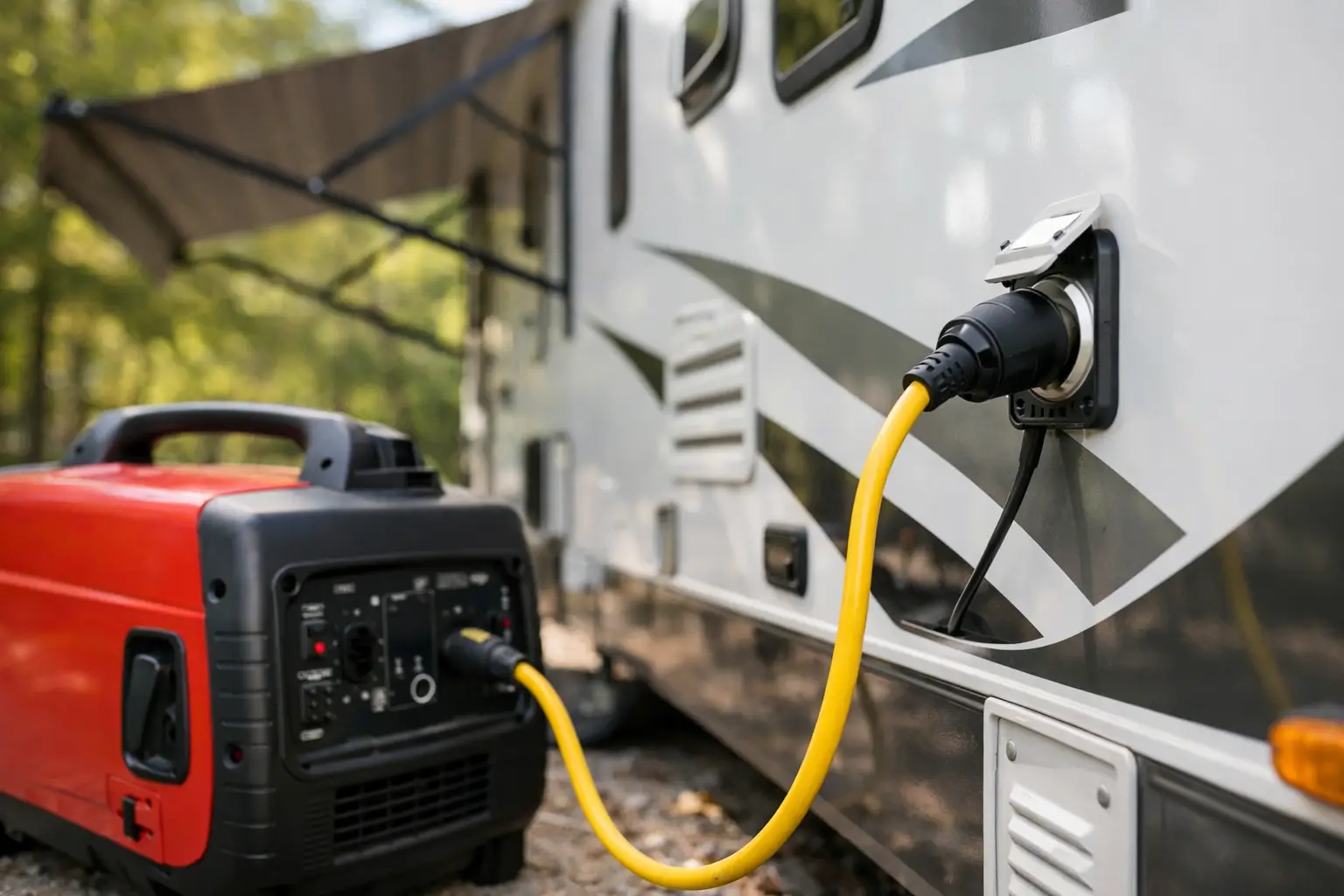
Portable inverter generators are designed for people who need dependable electricity without the size and noise of many conventional generators. These portable inverter generators can be useful for RV trips, camping, tailgating, outdoor work, and temporary backup during a power outage. The right model depends less on the highest advertised wattage and more on how much power your equipment actually needs, how quietly you want the generator to run, and whether gasoline, propane, or battery power makes the most sense for your situation.
An inverter generator produces electricity differently from a traditional open-frame generator. The engine produces electrical power that is processed through the inverter system before being delivered as AC power. This allows the generator to provide a more stable electrical output, and many inverter models advertise total harmonic distortion (THD) below 3%. That can be useful for electronics that are sensitive to power quality. However, you should always check the specifications and owner’s manual before connecting medical equipment or other critical loads.
Another advantage is variable engine speed. Instead of running at a fixed speed all the time, an inverter generator can adjust engine speed according to electrical demand. At lighter loads, this can reduce fuel consumption and operating noise.

Best Portable Inverter Generators for 2026
| Generator | Power Class | Fuel | Best Suited For |
|---|---|---|---|
| Westinghouse 12,000 Peak Watt Dual Fuel Portable Inverter Generator | High-output | Gasoline / Propane | Larger backup loads |
| Champion 4000-Watt RV Ready Inverter Generator | 4,000W peak / 3,000W running | Gasoline | RVs, camping and essential loads |
| EGO POWER+ Nexus Escape 400W Inverter | 400W continuous / 800W peak | EGO 56V battery | Electronics and light-duty backup |
| Champion 4500-Watt RV Ready Inverter Generator | 4,500W peak / 3,500W running | Gasoline | RVs and camping |
| Westinghouse 4000 Peak Watt Dual Fuel Super Quiet Inverter Generator | 4,000W peak / 3,300W running | Gasoline / Propane | RVs and portable backup |
| Brand & Model | |
|---|---|
| Westinghouse 12,000 Peak Watt Dual Fuel Portable Inverter Generator | Check Amazon Price |
| Champion Power Equipment 4000-Watt RV Ready | Check Amazon Price |
| EGO POWER+ 400W Portable Inverter | Check Amazon Price |
| Champion 4500-Watt RV Ready Portable | Check Amazon Price |
| Westinghouse 4000 Peak Watt Dual Fuel Super Quiet | Check Amazon Price |
If your main use is a travel trailer or RV, you can also compare these models with the generator options discussed in our travel trailer generator guide.
Portable Inverter Generator Comparison for 2026
Choosing a portable inverter generator starts with three questions: how much power do you need, where will you use it, and which fuel type makes sense for you? The models below cover very different use cases, so the highest-wattage generator is not automatically the right choice.
Westinghouse 12,000 Peak Watt Dual Fuel Portable Inverter Generator
- Power Class: 12,000 peak watts
- Fuel Type: Gasoline and propane
- Key Features: Dual-fuel operation, electric start, remote start, CO sensor and transfer-switch-ready design
This is the high-output option in this lineup. Its larger power capacity makes it more appropriate for users who need to run several higher-demand appliances rather than simply charge electronics or power a small RV.
Before using a high-output portable generator for home backup, calculate the actual running and starting loads of the appliances you intend to operate. A generator should be sized around the loads you actually need, not simply a generic whole-home wattage recommendation.
For more information about matching generator capacity to appliances and circuits, see our generator load management guide.
Champion Power Equipment 4000-Watt RV Ready Inverter Generator
- Power Output: 4,000 starting watts / 3,000 running watts
- Fuel Type: Gasoline
- Noise Level: 64 dBA at 23 feet
- Run Time: Up to 10 hours at 1/4 load
- Clean Power: Less than 3% THD
- Safety: CO Shield automatic carbon monoxide shutoff
- RV Outlet: 120V 25A TT-30R
This Champion is aimed at buyers who want a relatively light inverter generator with enough output for an RV, camping equipment, or a few essential household loads. Its 3,000 running watts are more important than the 4,000-watt starting figure when estimating what it can power continuously.
Champion lists the model at 64 dBA from 23 feet and up to 10 hours of runtime at 25% load. Its inverter system also provides less than 3% THD according to the manufacturer.
EGO POWER+ Nexus Escape 400W Inverter
- Power Output: 400W continuous / 800W peak
- Power Source: EGO 56V ARC Lithium battery
- Output: Pure sine wave
- AC Output: 120V
- USB: USB-C, USB-C PD and USB-A

This product is different from the gasoline-powered generators in this guide. The EGO Nexus Escape is a compact battery-powered inverter rather than a traditional engine-driven generator.
It provides 400W of continuous power and 800W peak output and uses EGO 56V ARC Lithium batteries. The Amazon listing for the linked model also states that the battery and charger are not included.
Its smaller output makes it better suited to laptops, phones, lights, cameras and other electronics than to high-wattage household appliances. It is not a replacement for a 4,000W or larger generator when you need to run equipment such as an air conditioner, electric water heater or large pump.
If you are comparing battery-based backup systems with traditional generators, our solar generator comparison guide explains the difference between portable power stations and fuel-powered generators.
Champion 4500-Watt RV Ready Portable Inverter Generator
- Power Output: 4,500 starting watts / 3,500 running watts
- Fuel Type: Gasoline
- Noise Level: 61 dBA at 23 feet
- Run Time: Up to 14 hours at 1/4 load
- Clean Power: Less than 3% THD
- RV Outlet: 120V 29.2A TT-30R
- Safety: CO Shield automatic carbon monoxide shutoff
The Champion 4500W model provides more running capacity than the 4,000W model while remaining focused on RV, camping and portable backup use.
Champion lists this generator at 61 dBA from 23 feet, with up to 14 hours of runtime at 25% load. The manufacturer also specifies less than 3% THD.
CO Shield adds an automatic carbon monoxide shutoff feature, but it does not make the generator safe to operate indoors. Portable combustion generators must be operated outdoors and at least 20 feet from buildings, with exhaust directed away from doors, windows and vents.
Westinghouse 4000 Peak Watt Dual Fuel Super Quiet Inverter Generator
- Power Output: 4,000 peak watts / 3,300 running watts
- Fuel Type: Gasoline and propane
- Noise: As low as 52 dBA
- Safety: CO shutdown
- Portability: Wheels and telescoping handle
- RV Use: RV-ready configuration
The main advantage of this model is the combination of 3,300 running watts, dual-fuel operation and a relatively low published noise rating for its power class. That makes it particularly relevant for RV use, camping and portable backup where gasoline and propane flexibility are both useful.
How to Choose a Portable Inverter Generator in 2026
1. Choose the Right Fuel Type
Gasoline is widely available and generally gives gasoline-rated generators their highest output.
Dual-fuel generators give you the option of using gasoline or propane, which can be useful during extended outages when fuel availability changes. Propane also has different storage characteristics than gasoline, although generator output and runtime can change depending on the fuel.
Battery-powered inverters are a different category. They produce no engine exhaust during operation and are particularly useful for electronics, lighting and smaller loads. Their limitation is energy capacity: a 400W inverter cannot replace a 4,000W gasoline generator simply because both are portable.
2. Calculate Running and Starting Watts
Do not choose a generator based only on its peak wattage. Running watts are the amount of power the generator can supply continuously, while starting watts provide additional short-term capacity for appliances with motors or compressors.
Add the running watts of the appliances you expect to use at the same time, then account for startup requirements. Refrigerators, sump pumps, well pumps, air conditioners and other motor-driven equipment can have significantly higher starting demands.
For whole-home backup, there is no universal wattage number that works for every house. The correct generator size depends on which circuits you want to power and whether you use a transfer switch or another approved connection method.
Our generator load management guide goes into more detail about running watts, starting loads and prioritizing essential circuits.
3. Compare Noise Ratings Carefully
Noise ratings are only useful when you compare generators using the same measurement conditions. Look for the manufacturer’s stated dBA rating and check the distance used for the measurement.
For example, Champion lists its 4,000W inverter at 64 dBA from 23 feet, while its 4,500W enclosed inverter is rated at 61 dBA from 23 feet.
A generator can also become louder as the electrical load increases. If quiet operation matters for an RV campsite or residential neighborhood, look at both the published noise rating and the generator’s ability to reduce engine speed at lighter loads.
4. Consider Weight and Portability
A generator that looks portable on paper can still be difficult to move once fuel and accessories are included. Check the dry weight, wheel design, handle configuration and overall dimensions before buying.
Smaller 2,000W-class inverters are generally easier to lift, while 4,000W and larger models may be easier to transport with wheels and telescoping handles rather than by carrying them.
5. Check CO Safety Features and Emissions Compliance
A portable generator with a carbon monoxide sensor and automatic shutoff provides an additional safety feature, but it does not eliminate the risk of carbon monoxide poisoning.
The CPSC recommends operating portable generators outdoors at least 20 feet from homes and buildings, with the exhaust directed away from doors, windows and vents. Generators should never be used inside a home, garage, basement, crawlspace or shed, even when doors or windows are open.
Buyers should also check EPA and, where applicable, CARB compliance. If you live in California, verify that the specific generator configuration you are considering meets current California requirements.
Inverter Generator vs. Conventional Generator
Inverter generators and conventional portable generators are designed for different priorities.
An inverter generator can be useful when lower noise, portability and stable electrical output are important. Its engine can also vary speed according to load, which can reduce fuel consumption and noise during lighter use.
A conventional open-frame generator may make more sense when maximum output and purchase price are the main considerations. However, these generators are often larger and louder.
The important point is not that one technology is always better. The right choice depends on the loads you need to run and where you plan to operate the generator.
What Size Inverter Generator Do You Need for an RV?
RV owners should pay particular attention to the generator’s running watts and outlet configuration. A generator with a 30-amp TT-30R outlet can be convenient for many travel trailers, but the available wattage still determines which appliances can run at the same time.
A 4,000–4,500W inverter generator can be useful for an RV with a single air conditioner and typical appliances, but startup loads matter. Microwave ovens, air conditioners, refrigerators and other motor-driven equipment can compete for available power.
Before buying, check the wattage requirements of your RV air conditioner, microwave, refrigerator, converter, lights and other equipment and determine which loads you actually need simultaneously.
Related RV Power Guide
If you regularly use a generator with an RV, also consider electrical protection. Our guide to generator surge protectors for RVs and home backup covers 30-amp and 50-amp RV protection and explains why surge protection is separate from generator sizing.
When a Battery Inverter Makes More Sense
A small battery-powered inverter is useful when your main goal is silent, portable electricity for electronics rather than running household appliances.
The EGO Nexus Escape 400W, for example, provides 400W of continuous power and 800W peak output and uses EGO 56V ARC Lithium batteries.
That makes it a fundamentally different product from a 4,000W gasoline inverter generator. It is easier to use for small electronics, but its much lower continuous output limits the appliances it can power.
What Does THD Mean on an Inverter Generator?
THD stands for total harmonic distortion. It describes the amount of distortion present in an AC electrical waveform.
Many inverter generators advertise THD below 3%, which is generally presented as clean power for electronics. For example, Champion lists less than 3% THD on several of its current inverter generators.
If you plan to run sensitive electronics, look for the manufacturer’s actual THD specification rather than relying only on marketing terms such as “clean power.”
Frequently Asked Questions About Portable Inverter Generators
What are portable inverter generators used for?
Portable inverter generators can provide electricity for RVs, camping, outdoor work, temporary backup and selected household loads during an outage. The appropriate size depends on the equipment you need to operate and its running and starting wattage requirements.
Are inverter generators quieter than conventional generators?
Many inverter generators are designed to operate more quietly than traditional open-frame portable generators, especially at lighter loads. However, noise varies by model and load, so compare the manufacturer’s dBA rating and measurement distance.
Are inverter generators safe for sensitive electronics?
Many inverter generators are designed to provide stable AC power and advertise low THD. Some current models specify less than 3% THD. Always check the generator’s specifications and the requirements of the equipment you plan to connect.
Can you run an inverter generator inside a garage?
No. A gasoline or propane portable generator should never be operated inside a garage, home, basement, shed or other enclosed space. The CPSC recommends operating portable generators outdoors at least 20 feet from buildings, with exhaust directed away from doors, windows and vents.
Is a 4,000-watt inverter generator enough for an RV?
It can be enough for many RV setups, but the answer depends on the appliances you want to run simultaneously. Air conditioners and other motor-driven equipment can have high startup demands, so check both running and starting wattage before choosing a generator.
Is a battery inverter the same as an inverter generator?
No. A battery inverter converts stored battery power into AC electricity, while a gasoline or propane inverter generator uses an engine to generate electricity. A 400W battery inverter is therefore a much smaller power source than a 4,000W-class fuel-powered generator.
What is THD on a portable inverter generator?
THD means total harmonic distortion. It measures distortion in the AC electrical waveform. Many inverter generators advertise THD below 3%, but buyers should check the manufacturer’s actual specification rather than relying only on the phrase “clean power.”
Can a portable inverter generator power a whole house?
Some high-output portable generators can supply selected household circuits, but there is no universal wattage requirement for every home. The required capacity depends on the appliances and circuits you want to operate, their starting loads and the electrical connection method. A transfer switch or other approved equipment may be required.
Final Thoughts
Portable inverter generators cover a wide range of needs, from small battery-powered inverters for electronics to high-output dual-fuel models capable of handling much larger loads.
The most useful way to narrow down your options is to start with your actual power requirements. Calculate the running watts of the equipment you want to use, account for startup loads, decide whether you need gasoline, propane or battery power, and then compare noise, outlet configuration, portability and safety features.
For RV and camping use, a 4,000–4,500W inverter can provide useful capacity for many setups. For smaller electronics, a battery-powered inverter can be more convenient. For larger home-backup requirements, a high-output portable generator may make more sense, but the electrical connection and load calculation need more careful planning.
Whatever model you choose, follow the manufacturer’s instructions and current safety guidance. A quiet inverter generator can make portable power considerably more convenient, but quiet operation does not change the basic safety requirements for fuel-burning equipment.