As an Amazon Associate I earn from qualifying purchases.
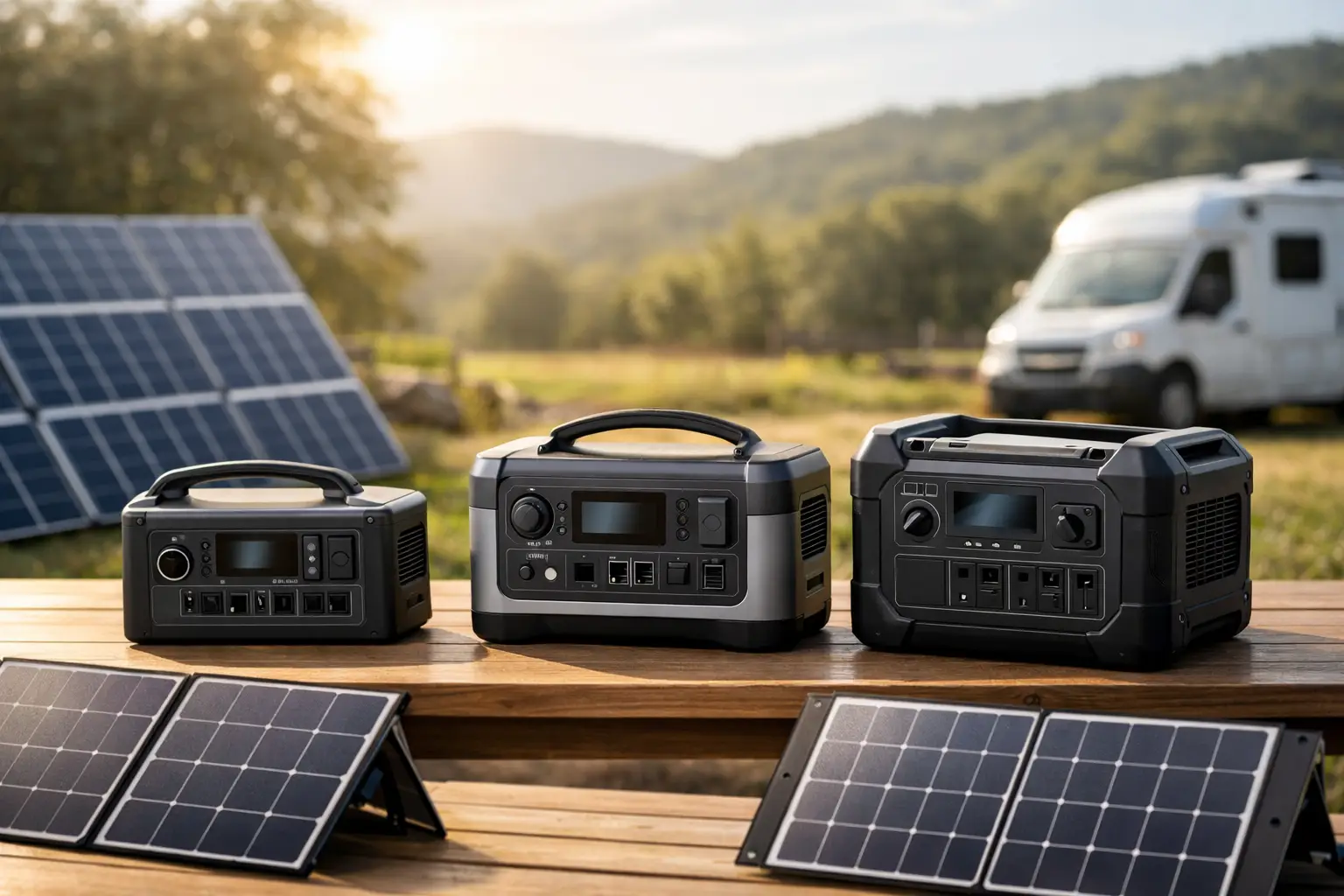
A good solar generators comparison starts with a correction: most products called solar generators do not generate electricity on their own. They are portable power stations that store energy in a battery, then recharge from solar panels, a wall outlet, a vehicle outlet, or sometimes a gas generator. That distinction matters when you are planning for an outage, running an RV, or keeping tools powered away from an outlet.
The best unit is not automatically the largest one. A 2,000Wh power station may be an excellent fit for a refrigerator and communications during a short outage, yet still be the wrong choice for a central air conditioner, a deep well pump, or a jobsite compressor. Compare the loads you actually need to run, the time you need to run them, and the connections required to do it safely.
Best Solar Generators Compared
Quick Answer: What Is the Best Solar Generator for Most People?
For most buyers, the best solar generator is not necessarily the model with the largest battery. A practical choice should provide enough watt-hours for your essential devices, enough inverter output for their startup demands, useful solar input, and the ports you actually need. For emergency home backup, a model with expandable LiFePO4 battery capacity and strong inverter output can be more useful than a smaller camping-focused power station.
Solar Generator Comparison at a Glance
Use Case Recommended Capacity Inverter Output What to Prioritize Camping and phones 300–700Wh 500–1,000W Low weight, USB-C CPAP and overnight backup 700–1,500Wh 1,000W+ Quiet operation, long battery life RV weekend trips 1,000–2,000Wh 1,500W+ 12V, solar input Refrigerator backup 1,500–3,000Wh 1,500–3,000W Surge capacity, pure sine wave Home emergency backup 2,000Wh+ 2,000W+ Expandability, solar input Heavy tools 2,000Wh+ 3,000W+ High surge output
Solar Generators Comparison: Start With Your Power Needs
Two specifications do most of the work: battery capacity and inverter output. Battery capacity is measured in watt-hours (Wh) and tells you how much energy the station stores. Inverter output is measured in watts (W) and tells you how much power it can deliver at one time.
Think of watt-hours as the size of the fuel tank and watts as the engine’s pulling strength. A station with a 1,000Wh battery may run a 100W load for roughly eight to nine hours after normal conversion losses. But if its inverter is limited to 1,000W, it cannot power a 1,500W space heater at all, even with a full battery.
For a realistic estimate, multiply the appliance’s running watts by the number of hours you expect to use it. Then add a margin for inverter losses, variable appliance cycles, and cold-weather battery performance. A refrigerator rated around 150W does not draw 150W continuously, but its compressor can need a higher startup surge. Check both running and surge ratings before assuming a power station will handle it.
| Use case |Typical planning range| What to prioritize | |—|—:|—| | Phone charging, lights, CPAP, camping | 300-700Wh | Low weight, USB-C output, quiet operation | | Weekend RV or off-grid travel | 1,000-2,000Wh | 12V output, solar input, 1,500W-plus inverter | | Refrigerator and essentials backup | 1,500-3,000Wh | Pure sine wave inverter, expansion battery options | | Tools or heavier home circuits | 2,000Wh and up | High surge rating, 120/240V capability where needed |
Simple Runtime Formula
Estimated runtime ≈ Battery capacity (Wh) × 0.8 ÷ Appliance load (W)
For example, a 1,000Wh power station powering a constant 100W load might provide roughly 8 hours of usable runtime after accounting for typical conversion losses. Actual runtime varies by battery condition, temperature, inverter efficiency, and appliance cycling.
These are planning ranges, not guarantees. A 700W microwave, electric kettle, hair dryer, and portable heater can drain a battery quickly. Resistive heating appliances are usually poor solar-generator loads because they consume a great deal of energy for relatively short use.
How Many Watt-Hours Do You Really Need?
Start by listing the devices you want to run during an outage and estimate their running wattage and daily runtime. Add the loads together rather than choosing a power station by battery capacity alone. For appliances with motors, such as refrigerators and pumps, also check startup or surge requirements.
Compare Battery Capacity and Expandability
Compact stations such as the Jackery Explorer 1000 v2 or EcoFlow DELTA 2 make sense for travel, camping, and limited emergency power. Their capacity is manageable, their weight is more reasonable than large systems, and they can support lights, devices, a modem, a CPAP, and selected kitchen appliances.
For a homeowner protecting a refrigerator, freezer, internet equipment, and a few lights, larger stations such as the BLUETTI AC180, EcoFlow DELTA 2 Max, or Anker SOLIX F2000 are often more practical. The important comparison point is not just their base capacity. Look at whether the model accepts add-on batteries, how much total capacity it supports, and whether expansion batteries can be added later without replacing the main unit.
Expansion can be a smart value decision when outages are occasional. Buy enough inverter output for the appliances you need now, then add battery capacity if your backup plan grows. However, an expandable system is not automatically better. Extra batteries increase cost, storage space, and carrying weight. If you need only a day of light camping use, a single, simpler power station is easier to live with.
Battery chemistry also affects ownership. Lithium iron phosphate, commonly called LiFePO4 or LFP, is widely favored for its long cycle life and thermal stability. It is generally heavier than some alternatives at a similar capacity, but it is a strong fit for buyers who expect frequent use or want a station kept ready for emergency backup.
EcoFlow DELTA 2 — Best Balance for Home Backup
Why it stands out: expandable capacity, strong inverter output, and a practical balance between portability and emergency backup capability.
Inverter Output, Surge Power, and 120/240V Service
Most portable solar generators provide standard 120V household outlets. This works for many appliances, but it is not the same as whole-home power. Large 120V loads may be workable if the inverter is strong enough. Split-phase 240V loads are a separate issue.
A typical 240V well pump, electric range, central HVAC system, or large shop tool needs a compatible 120/240V power solution. Do not assume two 120V outlets create 240V service. Some higher-capacity power stations offer native 120/240V output or a pairing feature that creates it with two matched units, but the setup must be specifically designed and rated for that purpose.
Motor-driven equipment deserves added caution. Well pumps, sump pumps, refrigerators, circular saws, and air compressors can draw several times their running wattage briefly at startup. The manufacturer may list starting watts, locked-rotor amps, or a surge requirement. If those details are unavailable, choose a larger inverter margin rather than shopping solely by the continuous-watt rating.
For critical water systems, also confirm whether the pump is 120V or 240V, its starting demand, and whether it needs a pressure tank or control box to operate. A large battery alone cannot solve an incompatible voltage or startup-power requirement.
Can a Solar Generator Power a 240V Appliance?
Only if the power station is specifically designed to provide the required 240V output. A standard 120V portable power station cannot safely power a 240V appliance simply by using an adapter. Check the manufacturer’s voltage, continuous output, surge rating, and connection requirements before attempting to power equipment such as a well pump, electric range, or central HVAC system.
Solar Charging: How Fast Can a Solar Generator Recharge?
Fast AC charging is convenient before a storm, and many newer power stations can recharge from a wall outlet in roughly one to two hours. That is valuable, but solar performance is different. A station may advertise 500W, 800W, or higher solar input, yet your panels will rarely produce their nameplate rating all day.
Panel angle, shade, temperature, cloud cover, wiring losses, and season all affect output. A 400W panel array may average considerably less than 400W across a typical day. Treat solar as a way to extend runtime and restore power over time, not as an instant replacement for utility service.
When comparing solar panels, check their rated output, connector type, voltage range, and whether the station includes the adapter you need. Many systems use MC4 connectors on the panel side, while the power station may use a proprietary input, XT60, Anderson-style connector, or another connection. Compatibility should be verified before purchase, not after panels arrive.
Portable folding panels are convenient for RV trips and campsites because you can reposition them as the sun moves. Rigid panels are often a better value per watt for a fixed shed, cabin, or home backup setup. Either type needs direct sun. Even a small shadow across part of a panel can reduce output sharply.
| Solar Input | Best Use | What to Consider |
|---|
| 200–400W | Camping | Portable setup |
| 400–800W | RV / moderate backup | Faster recharge |
| 800–1,600W+ | Home backup | Larger battery systems |
Solar input is a maximum rating, not a guaranteed daily production figure. Actual production depends on sunlight, panel orientation, temperature, shading, and the system’s charging limits.
Can You Use a Solar Generator as a Home Backup Generator?
Yes, but the setup depends on the power station, the appliances you want to operate, and how the home’s circuits are connected. A portable power station can directly power individual appliances with suitable cords, while selected systems can work with a properly installed transfer switch or other manufacturer-approved connection method. Never assume that a portable power station can feed household circuits through a standard wall outlet.
Ports, Cords, and Inlet Boxes Matter More Than They Seem
A power station’s outlet panel determines what it can do without adapters. Look for enough AC outlets for essential loads, USB-C ports with sufficient wattage for modern laptops, 12V outputs for travel gear, and an RV-style outlet only if you need one. Do not choose a station based on outlet count alone. Total inverter capacity remains the limiting factor.
For home backup, the safest approach is usually to power appliances directly with appropriately rated extension cords or use a professionally installed transfer arrangement designed for the power source. Never plug a solar generator into a wall outlet, dryer outlet, or home receptacle to energize household circuits. That can backfeed power and create a serious shock and fire hazard.
If your backup plan includes a manual transfer switch or inlet box, make sure the inlet rating, plug configuration, and cord match the station’s actual output. A 30-amp twist-lock generator cord, for example, is not automatically useful with a power station that only has 15-amp household outlets. Adapters can change connector shapes, but they do not increase the power available or create 240V capability.
Keep cords short enough to limit voltage drop, but long enough to place the power station in a dry, ventilated location. Inspect plugs and adapters before each use. A loose connection can create heat, damage equipment, and waste limited battery energy.
Solar Generators for Home Power Outages
Solar generators are quiet, fume-free at the point of use, and suitable for indoor operation when used according to the manufacturer’s instructions. That makes them especially useful for apartments, overnight medical-device support, campsites with noise restrictions, and short outages where a gasoline generator would be excessive.
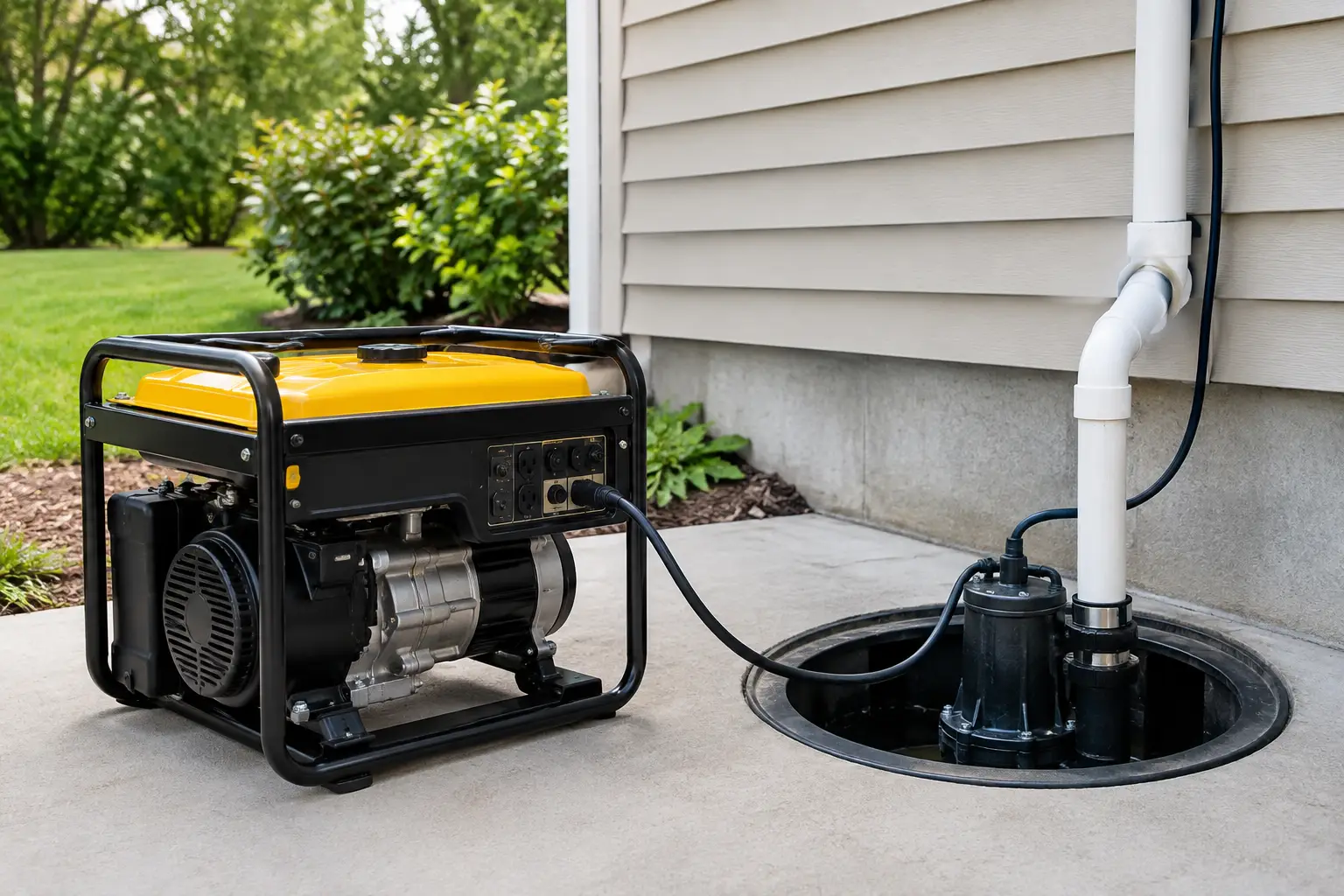
Their trade-off is energy storage. A gas generator can keep running as long as you have fuel, while a solar power station must recharge. For multi-day outages with heavy loads, many households are better served by a fuel generator, a solar generator for indoor essentials, or a planned combination of both. A conventional generator can recharge a power station during limited run periods, while the battery handles quieter loads overnight.
Before buying, write down your essential circuits and appliances, their running and starting watts, and the hours you need them. Then compare the battery, inverter, solar input, ports, compatible cords, and home connection method as one system. The right power station is the one that keeps your most important equipment working without asking it to do a job it was never built to handle.
Solar Generator vs Gas Generator
| Feature | Solar Generator | Gas Generator |
|---|---|---|
| Fuel required | No gasoline | Gasoline/other fuel |
| Exhaust emissions at point of use | None | Yes |
| Indoor use | Follow manufacturer instructions | Generally not suitable |
| Noise | Very low | Higher |
| Runtime | Limited by battery/recharging | Limited by available fuel |
| Maintenance | Lower | Higher |
| Refueling | Solar/AC charging | Fuel |
| Long outages | More limited for heavy loads | Often better suited |
| Portability | Depends on battery size | Depends on model |
Solar Generator vs Portable Powe Station: What’s the Difference?
The terms are often used interchangeably. A portable power station is essentially a battery-based energy storage system with an inverter and multiple outputs. When it can accept solar-panel input, retailers and manufacturers often market it as a solar generator. The important specifications are the battery capacity, inverter output, charging options, and available connections—not the name on the box.
How Long Will a Solar Generator Run?
Runtime depends on the battery capacity, the appliance’s actual power draw, inverter efficiency, and whether the appliance cycles on and off. A refrigerator, for example, does not normally consume its rated running wattage continuously because the compressor cycles. For accurate planning, use measured or manufacturer-provided energy consumption whenever possible rather than multiplying the nameplate wattage alone.
Frequently Asked Questions About Solar Generators
What is the best solar generator for home backup?
The best model depends on the appliances you need to run, the required runtime, inverter output, battery capacity, and whether you need 120V or 240V power.
Can a solar generator run a refrigerator?
Yes, provided the power station has enough continuous and surge output and sufficient battery capacity for the required runtime.
Can a solar generator power a house?
Some high-capacity systems can support selected household circuits when installed and connected according to the manufacturer’s specifications. A portable power station should not be connected to household wiring through an ordinary wall outlet.
How long does a solar generator last?
Runtime depends on battery capacity and load. Battery lifespan also depends on chemistry, cycle count, temperature, and how the battery is maintained.
Are solar generators worth it?
They can be particularly useful for quiet emergency backup, camping, RVs, and powering selected essential devices without running a fuel-burning engine.
Can a solar generator run an air conditioner?
Some high-output systems can run certain portable or window air conditioners, but central HVAC typically requires much more power and may require 240V capability.
Can a solar generator run a well pump?
It depends on the pump’s voltage, running wattage, startup demand, and the power station’s continuous and surge output.
How Many Solar Panels Do You Need?
The number of panels depends on the power station’s maximum solar input, the wattage of each panel, and available sunlight. A system accepting 800W of solar input may be paired with several panels whose combined rated output approaches that limit, but the actual production will vary throughout the day. Always stay within the manufacturer’s voltage, current, and connector limits.
The best solar generator depends on what you actually need to power. For camping and light loads, a compact 500–1,000Wh power station may be enough. For refrigerator backup, RV use, or longer outages, a larger expandable system with a stronger inverter and greater solar input can make more sense.
Before buying, compare battery capacity, continuous and surge output, solar charging limits, ports, expansion options, warranty, and the connection method you plan to use. A higher-capacity power station is not automatically better if you never need the extra energy. The best choice is the one that matches your real loads and backup plan.