As an Amazon Associate I earn from qualifying purchases.
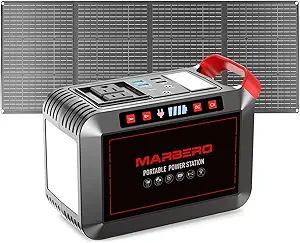
If you want backup power without spending thousands of dollars, a portable solar power station can be a practical option for camping, road trips, RV use, remote work, and short power outages.
The market has changed considerably in 2026. Affordable power stations are no longer limited to tiny lithium batteries with a basic AC outlet. Depending on the model, you can now find compact units with pure sine wave inverters, USB-C charging, solar input, battery management systems, and LiFePO4 battery chemistry.
The important thing is choosing a power station that matches what you actually need to run. A 150Wh or 200Wh unit can be excellent for phones, cameras, lights, and other small electronics, while a 1,000Wh-class station is much more useful for refrigerators, CPAP machines, laptops, TVs, and longer emergency backup.
Below are five budget-friendly solar generators and portable power stations worth considering in 2026, followed by a practical buying guide to help you choose the right capacity and output.
Quick Comparison: Budget Solar Generators and Power Stations for 2026
| Model | Capacity | AC Output | Battery Type | Solar Charging | Best For |
|---|---|---|---|---|---|
| MARBERO M823 | 237Wh | 300W | Lithium-ion | Yes | Camping and small electronics |
| Jackery Solar Generator 1000 v2 | 1,070Wh | 1,500W | LiFePO4 | Yes | Emergency backup and longer trips |
| Apowking Solar Generator | 146Wh | 100W rated / 200W peak | Lithium-ion | Yes | Ultralight travel |
| GRECELL 230.88Wh | 230.88Wh | 330W / 600W surge | Lithium-ion | Yes | USB-C devices and camping |
| ZeroKor 300W | 280Wh | 300W | Lithium-ion | Yes | Basic emergency and outdoor use |
1. MARBERO M823 237Wh Solar Generator – Best for Compact Camping
Check Amazon Price: Click Here
The MARBERO M823 is designed for people who want a small power station that can handle everyday electronics without the size and weight of a larger 1,000Wh unit.
Its 237Wh battery provides enough stored energy for phones, tablets, cameras, lights, laptops, and other relatively low-power equipment. The station has a 300W rated AC output with a 375W peak, so it is considerably more capable than a basic power bank, but it is still not designed for high-wattage heating appliances.
The M823 weighs about 4.6 pounds and has a compact design, making it convenient for camping, fishing, road trips, and other situations where portability matters.
MARBERO M823 Key Specifications
- Battery capacity: 237Wh
- AC output: 300W rated, 375W peak
- Battery chemistry: Lithium-ion
- Solar charging: Yes
- Solar panel option: 60W kit available
- Weight: Approximately 4.6 lbs
- AC outlets: 2
- USB-C: 18W PD
- Other outputs: USB-A and DC
- Emergency lighting: Built-in flashlight with multiple modes
The current M823 specification confirms the 237Wh capacity, 300W output and 375W peak output. MARBERO also offers the model bundled with a 60W solar panel.
What Can the MARBERO M823 Power?
This type of station makes the most sense for smaller loads such as:
- Smartphones
- Tablets
- Cameras
- LED lights
- Small fans
- Laptops
- Wireless accessories
- Other electronics below its output limit
It is not the right choice for electric heaters, hair dryers, coffee makers, or other appliances that require several hundred watts continuously.
Best for: Campers and travelers who prioritize low weight and simple portable power.
2. Jackery Solar Generator 1000 v2 – Best for Higher-Power Budget Backup
Check Amazon Price: Click Here
If you need substantially more capacity than the compact stations above, the Jackery Solar Generator 1000 v2 moves into a different class.
The Explorer 1000 v2 provides 1,070Wh of capacity and 1,500W of continuous AC output, with a 3,000W surge rating. It also uses a LiFePO4 battery, which is one of the biggest reasons it stands apart from the smaller lithium-ion models in this comparison. Jackery specifies 4,000 cycles to at least 70% remaining capacity.
The unit weighs approximately 23.8 pounds, which is considerably heavier than the MARBERO or Apowking, but it also stores several times more energy.
Jackery Solar Generator 1000 v2 Key Specifications
- Battery capacity: 1,070Wh
- Battery chemistry: LiFePO4
- AC output: 1,500W continuous
- Surge output: 3,000W
- Weight: Approximately 23.8 lbs
- Solar input: Up to 200W through a single solar input configuration
- USB-C: Up to 100W on the high-output USB-C port
- AC outlets: 3
- Cycle rating: 4,000 cycles to 70%+ capacity
- Warranty: Up to 5 years under Jackery’s current warranty offering
Jackery also lists an emergency Super Charge mode capable of charging the unit from 0% to 100% in about one hour under its specified AC charging conditions.
What Can the Jackery 1000 v2 Power?
A 1,070Wh station gives you considerably more flexibility for:
- Laptops
- CPAP machines
- TVs
- Small refrigerators
- Cameras
- Networking equipment
- Fans
- Lights
- Phones and tablets
- Other moderate-power electronics
Keep in mind that actual runtime depends on the device’s wattage, inverter losses, operating conditions, and whether the appliance cycles on and off.
For example, a device consuming 100W continuously would theoretically use 100Wh per hour. Real-world runtime will be lower than a simple capacity divided by wattage calculation because power stations are not 100% efficient.
The Jackery’s combination of LiFePO4 chemistry, 1,070Wh capacity, 1,500W output, and relatively low weight for its class also makes it competitive with other mid-size power stations in 2026. Current 2026 reviews continue to highlight its portability and straightforward operation while noting that some competing 1,000Wh-class models offer higher AC output.
Best for: Buyers who need significantly more capacity for emergencies, camping, RV use, or longer off-grid periods.
3. Apowking 146Wh Solar Generator – Best Ultralight Option
Check Amazon Price: Click Here
The Apowking is aimed at a completely different type of buyer.
Instead of trying to compete with 1,000Wh power stations, this compact unit focuses on low weight and basic portable power. It has a 146Wh battery, 100W rated AC output, and 200W peak output, and the package includes a 40W solar panel.
At approximately 3.3 pounds, it is one of the easiest units in this group to carry in a backpack, vehicle, or small camping setup.
Apowking Key Specifications
- Battery capacity: 146Wh
- AC output: 100W rated
- Peak output: 200W
- Solar panel: 40W included
- Weight: Approximately 3.3 lbs
- Output ports: 7
- Battery chemistry: Lithium-ion
- Built-in lighting: Yes
The manufacturer’s current specifications clearly distinguish the 100W rated output from the 200W peak output. That distinction matters because appliances that continuously require more than 100W should not be treated as suitable loads simply because the unit advertises a 200W peak.
What Can the Apowking Power?
This station is best suited to low-power electronics such as:
- Smartphones
- Tablets
- Cameras
- Drones
- LED lights
- Small fans
- Charging accessories
- Some laptops
It is not designed for appliances such as coffee makers, electric kettles, space heaters, or hair dryers.
The included 40W solar panel adds useful flexibility when you’re away from electrical outlets, although solar charging speed depends heavily on sunlight, panel orientation, temperature, and weather.
Best for: Backpackers, road trippers, photographers, and anyone who values minimum weight over maximum capacity.
4. GRECELL 230.88Wh Portable Power Station – Best for USB-C Charging
Check Amazon Price: Click Here
The GRECELL 230.88Wh power station occupies the middle ground between the smallest travel units and larger 1,000Wh systems.
One of its most useful features for modern electronics is its 60W USB-C Power Delivery output, which makes it more convenient for charging compatible laptops, tablets, phones, cameras, and other USB-C devices.
The station provides a 330W AC output with a 600W surge rating and uses a pure sine wave inverter.
GRECELL Key Specifications
- Battery capacity: 230.88Wh
- AC output: 330W
- Surge output: 600W
- USB-C PD: 60W
- Solar charging: Yes
- Solar charging option: 100W panel support
- Battery chemistry: Lithium-ion
- Pure sine wave: Yes
- Flashlight: Yes
- Charging methods: AC, car, and solar
GRECELL’s current product information confirms that the 230.88Wh station can be recharged with a solar panel and supports three charging methods. The manufacturer also lists overload, overcharge, and short-circuit protection through its battery management system.
There is also a current version sold with a 40W foldable solar panel, making it possible to purchase the power station as a complete solar charging package rather than buying the panel separately.
Why USB-C PD Matters
USB-C charging can reduce the need for bulky AC adapters. If your laptop supports USB-C charging and requires less than the station’s USB-C output limit, you may be able to charge it directly from the power station without running the AC inverter.
That can be useful because avoiding unnecessary AC conversion can reduce energy losses.
Best for: Travelers, photographers, students, remote workers, and campers carrying several USB-C devices.
5. ZeroKor 300W Solar Generator – Best for Basic Emergency Preparedness
Check Amazon Price: Click Here
The ZeroKor 300W power station is another compact option designed for basic backup power and outdoor use.
It provides approximately 280Wh of battery capacity and 300W of AC output, making it suitable for electronics and other relatively low-power equipment.
Some versions are sold with a foldable 60W solar panel, giving users a way to recharge the battery when grid power is unavailable.
ZeroKor Key Specifications
- Battery capacity: 280Wh
- AC output: 300W
- Solar panel: 60W on bundled versions
- AC voltage: 110V
- Pure sine wave: Yes
- USB outputs: Multiple
- DC output: Yes
- Flashlight: Yes
- SOS mode: Yes
- Battery chemistry: Lithium-ion
Available product information lists 13–23V solar input with a maximum current of 2.4A for this configuration, while bundled versions include a 60W folding solar panel.
What Is It Good For?
The ZeroKor makes the most sense for:
- Emergency lighting
- Phones
- Tablets
- Laptops
- Cameras
- Small fans
- Camping electronics
- Communication equipment
The manufacturer and product listings caution against using devices above the station’s 300W output rating, particularly appliances with heating elements or compressors.
Best for: Basic emergency kits and occasional outdoor use where 280Wh of storage is sufficient.
How to Choose a Budget Solar Power Station in 2026
Buying a solar generator based solely on its advertised wattage is one of the easiest ways to end up with the wrong product.
Here are the specifications that matter most.
1. Start With Battery Capacity in Watt-Hours
Battery capacity is measured in watt-hours (Wh).
Think of Wh as the amount of energy stored in the battery.
For example, a 1,000Wh power station theoretically stores about ten times as much energy as a 100Wh battery.
However, you should not assume that a 1,000Wh station will deliver exactly 1,000Wh to an AC appliance. Energy is lost during DC-to-AC conversion and through the electronics inside the power station.
For basic planning, smaller capacities work well for:
- Phones
- Lights
- Cameras
- Tablets
- Small electronics
Around 1,000Wh becomes much more useful when you want longer runtimes for:
- Refrigerators
- CPAP machines
- TVs
- Routers
- Laptops
- Fans
- Multiple electronic devices
2. Check Continuous Watts, Not Just Peak Watts
The continuous AC output tells you how much power the inverter can deliver during normal operation.
Peak or surge wattage is different.
Some appliances require a brief surge when their motors or compressors start. Refrigerators and certain power tools are common examples.
A station advertised as 300W peak does not mean you can continuously run a 300W appliance indefinitely.
This is especially important with compact models such as the Apowking, which has a 100W rated output and 200W peak output.
3. Look at Battery Chemistry
Battery chemistry has become a major differentiator in the portable power station market.
LiFePO4
Lithium iron phosphate batteries are now common in newer mid-range and high-capacity power stations because they can provide long cycle life and good thermal stability.
The Jackery Explorer 1000 v2, for example, uses LiFePO4 cells and is rated for 4,000 cycles to at least 70% capacity.
Lithium-Ion
Traditional lithium-ion stations can still be attractive because they may be lighter and less expensive, particularly in small-capacity products.
For a compact station used occasionally for phones, lights, cameras, and short trips, lithium-ion can still make sense.
4. Check the Solar Input
A station isn’t automatically useful as a solar generator just because the product description uses the word “solar.”
Look for the actual solar input specification.
Important details include:
- Maximum solar input wattage
- Supported voltage range
- Maximum input current
- Connector type
- Whether an MPPT controller is included
- Whether the solar panel is included
A higher solar input can reduce recharge time under good sunlight.
For example, the Jackery Explorer 1000 v2 supports up to 200W of solar input under its specified single-port configuration, while its dual-input configuration can support higher total DC input under the manufacturer’s specifications.
5. Consider USB-C Power Delivery
USB-C PD has become increasingly useful because many modern laptops and electronics can charge directly through USB-C.
A 60W or 100W USB-C port can eliminate the need to run the AC inverter for compatible devices.
This is one reason the GRECELL is particularly interesting for travelers and remote workers: its current specifications include a 60W USB-C PD output.
6. Pay Attention to Weight
Capacity and portability usually move in opposite directions.
A 146Wh station weighing about 3.3 pounds is easy to carry.
A 1,070Wh station weighing around 23.8 pounds stores much more energy but is better suited to a vehicle, campsite, RV, or home emergency kit.
Before buying, consider where you will actually use the station.
If you need to carry it several hundred yards to a remote campsite, weight matters.
If the station will sit in your home and only move during an outage, capacity may be more important.
7. Think About Your Actual Appliances
Make a list of the devices you expect to power and check their wattage.
For example:
| Device | Typical Power Range |
|---|---|
| Smartphone charger | 5–30W |
| LED light | 5–20W |
| Wi-Fi router | 10–30W |
| Laptop | 30–100W |
| Small fan | 20–60W |
| TV | 50–150W |
| CPAP | Varies considerably |
| Mini refrigerator | Varies considerably |
| Coffee maker | Often 800W+ |
| Space heater | Often 1,000W+ |
These are general examples, not guaranteed consumption figures. Always check the actual rating on your appliance.
If an appliance exceeds the power station’s continuous output, the station is not the appropriate choice regardless of its battery capacity.
How Long Will a Solar Generator Run?
A simple estimate is:
Runtime ≈ Battery Capacity (Wh) × Efficiency ÷ Device Power (W)
For example, suppose you have a 1,000Wh station and want to run a 100W device.
A theoretical calculation would be:
1,000Wh ÷ 100W = 10 hours
But real-world runtime will be shorter because of inverter losses and the station’s own power consumption.
This is why you should treat watt-hour calculations as estimates rather than guarantees.
Are Budget Solar Generators Good for Power Outages?
They can be very useful, but expectations matter.
A compact 200–300Wh power station can keep communication devices, lights, laptops, and other small electronics running during a short outage.
A 1,000Wh-class unit gives you substantially more flexibility and can be useful for refrigerators, CPAP machines, networking equipment, and other moderate loads, provided their starting and continuous power requirements are within the inverter’s capabilities.
However, portable power stations are not automatically replacements for whole-house standby generators.
If your goal is to run central air conditioning, electric water heaters, large well pumps, electric ranges, or other high-demand household systems, you need a much larger system specifically designed for those loads.
Solar Generator vs. Gas Generator: Which Is Different?
A portable solar generator does not have an internal combustion engine.
Instead, it stores electricity in a battery and uses an inverter to provide AC power.
That means:
Solar power stations:
- Produce no exhaust during operation
- Are very quiet compared with gas generators
- Can be used indoors when the manufacturer permits it
- Can recharge from solar panels
- Require no gasoline storage
- Work well for electronics and moderate loads
Gas generators:
- Can operate for long periods with additional fuel
- Often provide much higher continuous output
- Can be refueled quickly
- Are useful for high-demand appliances
- Must be operated outdoors because of carbon monoxide emissions
For camping and electronics, a portable power station can be much more convenient.
For extended high-power emergency backup, a conventional generator may still be more appropriate.
Are Small Solar Generators Worth Buying in 2026?
For the right use case, yes.
The key is not to confuse a small portable power station with a whole-home backup system.
A 146Wh or 230Wh unit can be extremely useful if your primary goal is keeping phones, cameras, lights, laptops, and other electronics charged.
A 1,000Wh-class station is a more serious backup solution and provides significantly more flexibility.
The portable power station market has also become more competitive in 2026, with major brands offering LiFePO4 batteries, faster charging, larger inverters, and better solar integration at prices below traditional high-capacity backup systems. Current 2026 buying guides from TechRadar and other publications reflect this broader shift toward portable battery systems for camping, outages, and off-grid use.
Frequently Asked Questions
What is the best budget solar generator for camping?
The right choice depends on how much equipment you need to power. Compact models such as the MARBERO, Apowking, GRECELL, and ZeroKor are easier to carry and work well for electronics. A larger Jackery 1000 v2 makes more sense if you need substantially more stored energy and higher AC output.
How many watt-hours do I need?
For phones, lights, cameras, and small electronics, 100–300Wh can be enough for short trips. For longer backup periods or appliances such as refrigerators and CPAP machines, moving toward 1,000Wh or more provides considerably more flexibility.
Can a solar generator power a refrigerator?
Some can. You need to check both the refrigerator’s running wattage and its startup surge. A power station with enough continuous and peak output may handle a small refrigerator, but runtime will depend on how often the compressor runs and the station’s usable energy.
Can I use a solar generator while it is charging?
Many power stations support pass-through charging, but the exact behavior varies by model. Check the manufacturer’s specifications and manual before relying on this feature for critical equipment.
Is LiFePO4 better than lithium-ion?
LiFePO4 batteries generally offer a longer cycle life and are increasingly common in modern portable power stations. Traditional lithium-ion batteries can still provide good performance, particularly in lightweight and lower-capacity models. The better choice depends on the intended use, weight, cost, and expected charging frequency.
Can I charge a solar generator without sunlight?
Yes. Most portable power stations can also be charged from an AC wall outlet and many can be charged from a vehicle. Solar charging is an additional option rather than the only charging method.
Can I run a space heater from a portable solar generator?
Usually not with a small budget power station. Space heaters commonly consume around 1,000W or more, which can quickly exceed the output of compact 200–300W units and drain even larger batteries rapidly.
Final Thoughts
The best budget-friendly solar power station is not necessarily the one with the biggest battery or the highest advertised wattage.
The better approach is to start with your actual needs.
If portability is the priority, the Apowking 146Wh is designed for very small loads and weighs only about 3.3 pounds.
If you want a compact camping station with more output, the MARBERO M823 offers 237Wh and 300W of rated AC power.
The GRECELL 230.88Wh is particularly useful for people carrying modern USB-C devices, while the ZeroKor 280Wh provides another compact option for basic backup and outdoor use.
For substantially more capacity, the Jackery Solar Generator 1000 v2 moves into the 1,000Wh class, with a 1,070Wh LiFePO4 battery, 1,500W continuous output, and solar charging capability.
Before buying, compare the battery capacity, continuous output, surge capability, battery chemistry, solar input, USB-C charging, weight, and the actual wattage of the devices you plan to use.
That simple checklist can help you avoid paying for capacity you don’t need—or buying a small solar generator that cannot handle the equipment you want to power.
All of the products covered here fit within the broader Generators & Accessories micro-niche and are available through Amazon US, making portable solar power stations a useful category for shoppers looking for compact backup and off-grid energy solutions in 2026.