As an Amazon Associate I earn from qualifying purchases.
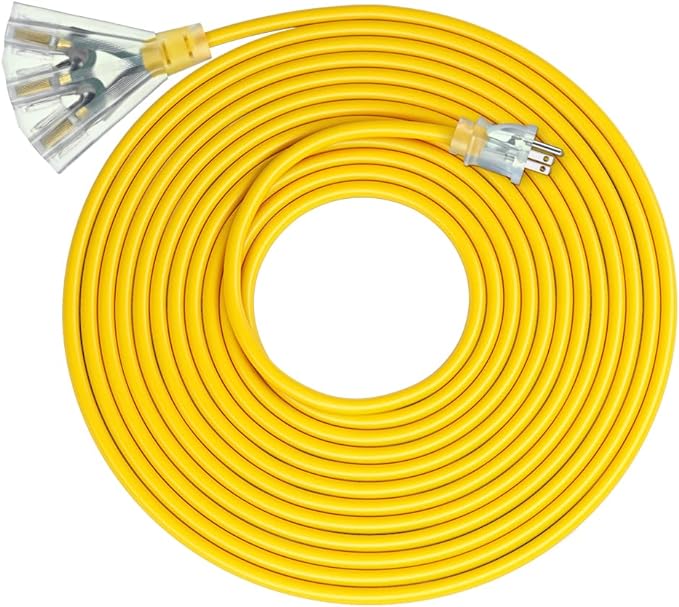
A generator can produce plenty of power, but getting that power safely to your refrigerator, lights, tools, RV, or other equipment depends on using the right cord.
The best generator extension cord is not necessarily the thickest, longest, or most expensive option. It needs to match the generator’s outlet, the electrical load, the required distance, and the way you plan to use the generator. A 15-amp outdoor extension cord, for example, is designed for a very different job than a 30-amp L14-30 generator cord used with a transfer switch or power inlet.
For 2026, our focus is on those differences. The five cords below cover light-duty outdoor power, 30-amp generator connections, and longer runs where a heavier-gauge cable makes more sense.
Important: Always check the outlet configuration and electrical rating printed on your generator and cord before connecting anything. A connector that looks similar may have a different voltage or wiring configuration.
Best Generator Extension Cords for 2026
| Product | Best Use | Length | Key Specification |
|---|---|---|---|
| DEWENWILS 25 FT 14/3 Tri-Tap Splitter | Lights, chargers and lighter loads | 25 ft | 14/3, 15A, 125V |
| S7 25 FT Heavy Duty Generator Adapter | 30A generator connections | 25 ft | 10 AWG, 30A |
| Champion 25 FT 30A Generator Cord | Generator-to-equipment connections | 25 ft | 30A configuration |
| PlugSaf 25FT 30A 4-Prong Extension Cord | L14-30-style generator connections | 25 ft | 10 AWG, 30A |
| Iron Forge Cable 50 FT 12/3 Heavy Duty Cord | Longer light-to-medium-duty runs | 50 ft | 12/3, 15A, 125V |
Check Amazon Price:
DEWENWILS 25 FT 14/3 Tri-Tap Splitter
S7 25 FT Heavy Duty Generator Adapter
Champion 25 FT 30A Generator Cord
PlugSaf 25FT 30A 4-Prong Extension Cord
Iron Forge Cable 50 FT 12/3 Heavy Duty Cord
Why the Right Extension Cord Matters With a Generator
A generator extension cord carries electrical current continuously while your equipment is running. If the cord is undersized for the load or used beyond its rating, it can become excessively warm and contribute to voltage drop.
The American Wire Gauge system can be confusing at first because a lower AWG number means a thicker conductor. In general, 10 AWG wire is thicker than 12 AWG, and 12 AWG is thicker than 14 AWG.
The correct choice also depends on length. As the cable gets longer, electrical resistance increases. That is one reason a 50-foot run can require more attention to wire gauge than a short 15- or 25-foot run.
For outdoor generator use, look for a cord specifically rated for outdoor service and check the manufacturer’s electrical rating rather than relying only on the phrase “heavy duty.” Cords intended for outdoor use commonly carry designations such as SJTW or STW.
1. DEWENWILS 25 FT 14/3 Tri-Tap Splitter
Check Amazon Price: Click Here
The DEWENWILS 14/3 Tri-Tap Extension Cord is better suited to lighter-duty applications than to connecting a high-output generator to a home’s electrical inlet.
Its three-outlet design is useful when you need to run several smaller devices from one location, such as work lights, chargers, small electronics, or other equipment that remains within the cord’s rating.
Key Specifications
- Voltage: 125V
- Amperage: 15A
- Wire Gauge: 14 AWG
- Configuration: 14/3
- Length: 25 feet
- Outlets: Tri-tap design
- Use: Outdoor and light-duty applications
The important point here is the 15-amp rating. This is not the cord to choose simply because your generator is capable of producing more power. Your connected load and the cord’s rating must remain within safe limits.
For small loads, however, the 25-foot length and multiple outlets can make this type of cord convenient during an outage, camping trip, yard work, or temporary outdoor setup.
Best for: Light-duty equipment and multiple smaller loads.
2. S7 25 FT Heavy Duty Generator Adapter
Check Amazon Price: Click Here
The S7 25-foot heavy-duty generator adapter moves into a different category from the DEWENWILS cord. Its advertised 10-gauge construction and 30-amp configuration make it more appropriate for higher-current generator applications.
Key Specifications
- Wire Gauge: 10 AWG
- Amperage: 30A
- Length: 25 feet
- Application: Generator power connection
- Construction: Heavy-duty outdoor-oriented design
A 10-gauge conductor is commonly used for 30-amp generator cords because the larger conductor helps handle higher current with less resistance than a smaller-gauge cable.
Before ordering, however, verify the exact plug and receptacle configuration on the current product listing and compare it with your generator. Generator outlets are not universal, and an adapter is only useful when both ends are compatible.
For a generator feeding a transfer switch or exterior power inlet, connector configuration is just as important as wire gauge.
Best for: Users who need a heavier 30-amp generator connection and have confirmed connector compatibility.
3. Champion Power Equipment 25 FT 30A Generator Cord
Check Amazon Price: Click Here
Champion Power Equipment offers several generator cord configurations, so checking the connector style is particularly important before purchasing.
The model associated with this listing is intended for generator power distribution and is designed around a 30-amp connection.
Key Specifications
- Length: 25 feet
- Rating: 30A
- Brand: Champion Power Equipment
- Application: Portable generator power distribution
- Use: Outdoor generator setups
A 25-foot cable is often a practical compromise. It provides enough distance to position a portable generator away from occupied areas while avoiding some of the additional voltage-drop concerns associated with unnecessarily long cables.
The exact connector configuration should always be confirmed against the current Amazon listing and your generator’s outlet. For example, NEMA L5-30 and L14-30 are not interchangeable. An L5-30 connection is a 125V configuration, while an L14-30 connection provides 125/250V service through a four-wire configuration.
That distinction matters if you are connecting a portable generator to a transfer switch or inlet designed for 120/240V power.
Best for: Buyers who want a 30-amp Champion generator cord and have confirmed the connector configuration they need.
4. PlugSaf 25FT 30A 4-Prong Extension Cord
Check Amazon Price: Click Here
The PlugSaf 25-foot 30A four-prong generator cord is the most directly relevant option in this list for users looking for a heavier-duty four-prong generator connection.
The four-prong configuration is particularly important because a four-wire generator connection can provide two hot conductors, a neutral, and a grounding conductor when properly configured.
Key Specifications
- Length: 25 feet
- Amperage: 30A
- Wire Gauge: 10 AWG
- Connector: Four-prong generator configuration
- Application: Portable generator connections
- Use: Outdoor and backup-power applications
The combination of 10 AWG and 30A makes this type of cord substantially different from a standard household extension cord.
If your generator has an L14-30 outlet and your inlet or transfer equipment is designed for the same connection, this is the type of cable to consider.
Do not assume that every four-prong generator connector has identical electrical characteristics. Confirm the NEMA configuration and voltage printed on the equipment before making the connection.
A secure locking connection is also useful for generator applications because the cable can be exposed to movement, foot traffic, wind, and other conditions that can pull on a conventional connection.
Best for: 30-amp four-prong generator connections and backup-power setups where the connectors match.
5. Iron Forge Cable 50 FT 12/3 Heavy Duty Cord
Check Amazon Price: Click Here
The Iron Forge Cable 50-foot 12/3 extension cord is a different type of product from the 30-amp generator cords above.
According to the manufacturer’s specifications for its 50-foot 12/3 outdoor cord, the cable is rated at 15A, 125V, and 1,875 watts. It is designed for outdoor use and features a grounded three-prong plug.
Key Specifications
- Length: 50 feet
- Wire Gauge: 12 AWG
- Configuration: 12/3
- Rating: 15A, 125V
- Maximum listed wattage: 1,875W
- Plug: Three-prong grounded
- Jacket: Outdoor-rated SJTW construction
- Features: Lighted end and reinforced construction
The extra length is useful when the equipment is farther from the generator, but the 15-amp rating remains the limiting factor.
That means this cord should not be treated as a substitute for a 30-amp L14-30 generator cord. Its strength is in providing a longer, heavier-gauge extension for equipment that can safely operate within its listed rating.
Best for: Outdoor tools, lights, appliances, and other 15-amp loads where a 50-foot reach is useful.
How to Choose the Best Generator Extension Cord
Choosing a generator extension cord becomes much easier when you look at five things: amperage, wire gauge, length, connector type, and outdoor rating.
1. Check the Generator Outlet First
Before looking at the cord, look at the generator.
Common generator outlets include:
- 5-20R: Standard 120V household-style receptacle
- L5-30R: 30A, 125V twist-lock
- L14-30R: 30A, 125/250V four-wire twist-lock
- 14-50R: 50A configuration on some larger generators
The plug on the extension cord must match the generator outlet or be specifically designed as a compatible adapter.
Do not choose a cord based only on the number of amps advertised. The connector configuration and voltage matter just as much.
2. Choose the Correct Wire Gauge
The basic rule is simple:
Lower AWG number = thicker wire.
For example:
- 10 AWG: Heavy-duty generator and 30A applications
- 12 AWG: Medium-duty applications and longer 15/20A runs
- 14 AWG: Lighter-duty applications
- 16 AWG: Generally intended for lighter household loads
These are general guidelines rather than a substitute for the cord manufacturer’s rating. The actual load, distance, temperature, and application all matter.
The Electrical Safety Foundation International also provides different ampacity guidance based on cord length and wire gauge, reinforcing why a longer run should not automatically use the same cable as a short run.
3. Don’t Buy More Length Than You Need
A longer cord is not automatically better.
Every additional foot adds resistance. If you only need 25 feet, there is usually little reason to buy a 100-foot cable simply because it offers more reach.
For many portable-generator applications, 25 feet is a practical starting point. A 50-foot cable can make sense when the layout requires additional distance, provided the wire gauge and amperage rating are appropriate.
4. Understand 10/3 vs. 10/4
This is one of the most important details when shopping for generator cords.
A 10/3 cable has three conductors, while a 10/4 cable has four.
A typical L14-30 generator connection uses four conductors:
- Hot
- Hot
- Neutral
- Ground
That configuration is different from a three-wire 120V connection.
If you are buying a cable for a transfer switch or power inlet, do not guess. Match the cable to the wiring configuration specified by the generator and the equipment.
5. Look for an Outdoor-Rated Jacket
Portable generators are normally operated outdoors, so the cord should be suitable for outdoor conditions.
Common designations include:
- SJTW
- STW
- Other manufacturer-approved outdoor-rated cable types
The “W” designation is associated with outdoor use, while other letters identify construction characteristics such as service type, thermoplastic insulation, or oil resistance.
Also look for a recognized safety certification where appropriate. UL, ETL, and CSA are examples of independent testing organizations used for electrical products.
Generator Extension Cord Safety Tips for 2026
The cord is only one part of a safe generator setup.
Keep the generator outside
Never operate a portable generator inside a home, garage, basement, shed, or other enclosed or partially enclosed space. Carbon monoxide from the engine exhaust can accumulate quickly.
The CPSC specifically advises using portable generators outside and away from the home.
Never backfeed a house
Do not plug a generator into a household wall outlet to energize your home.
If you want to power selected household circuits from a portable generator, the appropriate setup normally involves equipment such as a properly installed transfer switch or power inlet and should comply with applicable electrical requirements.
OSHA warns about the dangers associated with backfeeding generator power into electrical systems.
Never use a male-to-male extension cord
This deserves special attention in 2026.
The CPSC issued multiple warnings in 2026 concerning dangerous male-to-male extension cords. With exposed male prongs, one end can become energized when the other end is connected to a power source, creating an electrocution and fire hazard.
A generator cord should have the correct plug and receptacle configuration for the intended application. Never improvise a connection with a cord that has two male ends.
Inspect the entire cord
Before every significant use, inspect the cable for:
- Cuts
- Crushed sections
- Damaged insulation
- Loose plugs
- Burn marks
- Exposed conductors
- Damaged strain relief
A damaged cord should be replaced rather than repaired with tape and returned to heavy-duty generator use.
Keep connections dry
Outdoor-rated does not mean you should intentionally place electrical connections in standing water.
Keep plugs and receptacles protected from rain, puddles, and wet surfaces, and follow the manufacturer’s instructions for outdoor operation. OSHA specifically warns that wet cord connectors can create leakage-current hazards.
Which Generator Extension Cord Is Right for You?
There is no single extension cord that works for every generator.
For light-duty equipment
The DEWENWILS 14/3 Tri-Tap is a practical choice when your equipment stays within its 15A, 125V rating and you want multiple outlets from one cord.
For a 30A generator connection
The S7 25-foot heavy-duty cord is worth considering if its connector configuration matches your generator and the rest of your setup.
For a Champion generator setup
The Champion 25-foot 30A cord is a logical option for owners who have confirmed that its plug configuration matches their generator and intended equipment.
For an L14-30-style connection
The PlugSaf 25-foot 30A four-prong cord is aimed at users who need a heavier 10-gauge, four-prong generator connection.
For a longer 15A outdoor run
The Iron Forge Cable 50-foot 12/3 makes more sense when you need extra reach but your connected equipment remains within the cord’s 15A/125V rating.
Check Iron Forge Cable on Amazon
Final Thoughts: Buy the Cord for the Job, Not Just the Wattage
The best generator extension cord is the one that matches your actual electrical setup.
For a small load, a 14/3 or 12/3 outdoor extension cord may be perfectly appropriate. For a 30-amp generator connection, however, you generally need a purpose-built heavy-duty cord with the correct connector and conductor configuration.
Before buying, check these five things:
- Generator outlet type
- Cord amperage rating
- Wire gauge
- Cord length
- Plug and receptacle configuration
If you’re connecting a portable generator to a home’s electrical system, don’t rely on a generic extension cord or an improvised adapter. Use the appropriate power inlet and transfer equipment, and follow the manufacturer’s instructions and applicable electrical requirements.
Most importantly, never sacrifice safety for a few dollars in cord cost. A properly matched generator cord helps you get the power you paid for while keeping your backup-power setup organized and within the equipment’s intended limits.
The right cord isn’t simply the biggest one you can buy. It’s the one that matches the generator, the load, the distance, and the connection.