As an Amazon Associate I earn from qualifying purchases.
If you need backup power without the noise and bulk of a traditional open-frame generator, an inverter generator can be a practical option. For 2026, there are portable models covering everything from lightweight camping and RV use to higher-output emergency backup. The important part is matching the generator’s running watts, fuel type, noise level, outlets, and safety features to the loads you actually need to power.
Inverter generators are designed to produce stable AC power with lower harmonic distortion than many conventional portable generators, making them well suited to electronics such as laptops, TVs, routers, and other household devices. They are also typically quieter and more fuel-efficient at lighter loads because the engine can adjust its speed to match demand.
Inverter Generators on Amazon US – 2026
| Generator | Fuel | Peak Watts | Running Watts | Noise | Best For |
|---|---|---|---|---|---|
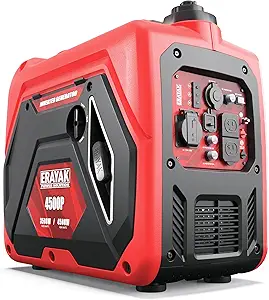
| ERAYAK 4500W Portable Inverter Generator | Gasoline | 4,500W | 3,500W | 60.5 dBA | Camping, RVs, essential backup |
| WEN DF680iX | Gasoline / Propane | 6,800W / 6,000W | 5,100W / 4,500W | 64 dBA | RVs and higher-demand backup |
| Champion Power Equipment 4000W Inverter Generator | Gasoline | 4,000W | 3,000W | 64 dBA | Camping and RV use |
| Westinghouse iGen11000DFc | Gasoline / Propane | 11,000W / 10,000W | 9,000W / 8,100W | 64 dBA | Larger home backup loads |
| AMERISUN 2500W Portable Inverter Generator | Gasoline | Verify current listing | Verify current listing | Verify current listing | Lightweight portable power |
Product specifications and Amazon availability can change, so verify the current listing before purchasing.
Why Choose an Inverter Generator in 2026?
Whether you need power for a campsite, RV, home office, or emergency situation, an inverter generator can offer several advantages over a conventional open-frame generator. The main benefits include lower noise, portable designs, efficient operation at lighter loads, and stable electrical output.
However, no single generator is right for every situation. A compact 2,500W model may be easier to transport but cannot power the same loads as an 11,000W unit. Likewise, a dual-fuel generator offers more fuel flexibility, but it may weigh more and cost more than a basic gasoline-only model.
The sections below explain the main factors to consider before buying.
1. Quiet Operation
Check Current Amazon Availability
Noise is one of the biggest reasons people choose an inverter generator instead of a conventional open-frame model. However, “quiet” does not mean silent. Noise ratings should always be compared using the same measurement distance and load conditions.
For camping, RVs, and residential use, a lower dBA rating can make a noticeable difference.
- The ERAYAK 4500P is currently listed at 60.5 dBA and provides 4,500 peak watts and 3,500 running watts.
- The Champion 4000W inverter is rated at 64 dBA from 23 feet and produces 4,000 starting watts and 3,000 running watts.
- The WEN DF680iX is rated at approximately 64 decibels at quarter load.
- The Westinghouse iGen11000DFc is also listed at 64 dBA, despite offering considerably more output than the smaller generators.
Actual noise can vary depending on load, distance, terrain, and surrounding structures.
2. Fuel Flexibility with Dual-Fuel Models
Check Current Amazon Availability
Dual-fuel generators can operate on gasoline or propane, giving users another option when one fuel is unavailable or inconvenient.
The main advantage of dual fuel is flexibility rather than unlimited runtime. Gasoline is widely available, while propane can be convenient for longer-term storage because it does not degrade in the same way gasoline does. Actual runtime and available wattage depend on the fuel and load.
The WEN DF680iX is a dual-fuel inverter generator rated at 5,100 watts on gasoline and 4,500 watts on propane. Its maximum output is 6,800 watts on gasoline and 6,000 watts on propane.
The Westinghouse iGen11000DFc provides up to 9,000 running watts on gasoline and 8,100 running watts on propane, with peak output of 11,000 and 10,000 watts respectively.
For emergency preparedness, having two fuel options can be useful, particularly if you already store propane for other equipment.
3. Portability and Overall Size
Check Current Amazon Availability
Portability becomes increasingly important as generator output rises. A compact 2,500W unit can be much easier to move than an 11,000W inverter generator, but the smaller model will also power fewer appliances.
Instead of choosing solely by price or weight, consider how often you will move the generator and what equipment you need to run.
The Champion 4000W inverter weighs less than 49 pounds and is designed specifically around portable use. It produces 4,000 starting watts and 3,000 running watts.
The ERAYAK 4500P weighs approximately 55 pounds and provides 4,500 peak watts and 3,500 running watts.
By comparison, the Westinghouse iGen11000DFc weighs about 187.4 pounds, making it a substantially different type of portable generator. Its high output comes with considerably more size and weight.
The AMERISUN 2500W should be considered a smaller portable option, but shoppers should verify the current Amazon listing for its exact weight, noise rating, and output specifications before purchasing.
4. Clean Power for Sensitive Electronics
Check Current Amazon Availability
Inverter generators are designed to provide stable electrical output, but shoppers should still look for a manufacturer-published THD specification rather than assuming that every inverter generator has identical power quality.
For example, Champion lists less than 3% THD for its 4000W inverter generator.
Westinghouse lists ≤3% THD for the iGen11000DFc.
This type of specification can be useful when choosing a generator for computers, televisions, networking equipment, chargers, and other electronics.
For medical equipment such as a CPAP machine, follow the equipment manufacturer’s power requirements rather than relying solely on the generator’s “inverter” label.
5. Running Watts vs. Peak Watts
Check Current Amazon Availability
When comparing generators, pay closer attention to running or rated watts than peak watts when estimating what the generator can power continuously.
Starting watts are also important for appliances with motors or compressors, including refrigerators, sump pumps, some air conditioners, and certain power tools.
For example, the ERAYAK 4500P is rated at 3,500 running watts and 4,500 peak watts.
The Champion 4000W inverter provides 3,000 running watts and 4,000 starting watts.
The WEN DF680iX provides 5,100 rated watts on gasoline and 4,500 rated watts on propane.
The Westinghouse iGen11000DFc offers 9,000 running watts on gasoline and 8,100 on propane, making it the highest-output model in this comparison.
Do not assume that a generator can run an appliance simply because its peak wattage appears high enough. Check the appliance’s actual starting and running requirements.
Generator Use Case Scenarios
A. Emergency Home Backup
For emergency backup, focus on running watts, starting watts, voltage, fuel capacity, and connection options.
Smaller inverter generators are generally better suited to essential loads such as a refrigerator, lights, router, chargers, or selected appliances.
Higher-output 120/240V models such as the Westinghouse iGen11000DFc can support substantially larger loads. The iGen11000DFc provides 120/240V output and is transfer-switch ready.
If you want to connect a generator to household wiring, use the connection method specified by the manufacturer and applicable electrical requirements. Permanent generator connections should be installed by a qualified professional.
B. Camping and Tailgating
Compact inverter generators are particularly useful for camping, tailgating, and RV trips because they are easier to transport and generally quieter than conventional open-frame models.
The Champion 4000W inverter, for example, is rated at 64 dBA from 23 feet and weighs less than 49 pounds.
Always check campground, RV park, HOA, or local noise restrictions before operating a gasoline generator.
C. Jobsites and Remote Work
For jobsites and remote work, portability and available running watts matter more than peak wattage alone.
Check the starting requirements of compressors, saws, pumps, and other motor-driven tools before relying on a portable inverter generator.
A generator that works well for lights and battery chargers may not have enough starting capacity for a large compressor or power saw.
D. Home Offices and Digital Work
For a home office or remote-work setup, an inverter generator can provide power for computers, monitors, networking equipment, and chargers during an outage.
For uninterrupted operation, however, a UPS can provide short-term battery backup while the generator starts or if the generator temporarily drops offline.
This combination can be particularly useful for routers, computers, and other equipment where even a short interruption can be inconvenient.
Key Considerations When Buying a Generator in 2026
1. Running Watts vs. Starting Watts
Do not choose a generator based only on its advertised peak wattage.
Add the running wattage of the devices you expect to use at the same time, then account for the additional starting power required by appliances with motors or compressors.
2. Noise Rating
Compare noise ratings using the same measurement distance and operating condition.
A generator rated at 60–65 dBA may be noticeably quieter than many open-frame models, but actual sound levels vary with load, distance, and surroundings.
3. Fuel Availability
Gasoline is widely available, but propane can be useful for long-term storage and fuel flexibility.
If you choose a dual-fuel generator, check the rated output and runtime for each fuel separately. The generator may produce different wattage depending on whether it is running on gasoline or propane.
4. Portability
If you expect to move the generator frequently, pay attention to total weight, handles, wheels, and overall dimensions.
A high-output generator may provide more power but can be significantly more difficult to transport.
5. Starting Mechanism
Starting methods vary considerably.
The WEN DF680iX includes keyless electric start with a recoil starter as backup.
Smaller generators may use recoil starting to reduce weight, complexity, and cost.
6. Warranty and Support
Check the warranty for the exact model rather than relying on a general industry range.
Champion, for example, lists a 3-year limited warranty for its 4000W inverter generator and free lifetime technical support.
Also consider whether replacement parts, manuals, and service centers are readily available.
Generator Maintenance Tips for Longevity
- Follow the manufacturer’s maintenance schedule for oil changes, spark plugs, air filters, and other service items.
- Use fresh fuel and follow the manufacturer’s storage recommendations when the generator will sit unused for an extended period.
- Use fuel stabilizer when appropriate and follow the stabilizer manufacturer’s instructions.
- Inspect the generator before use, including oil level, fuel lines, electrical connections, air intake, and signs of damage.
- Keep the generator clean and well ventilated and make sure cooling air passages are not blocked.
- Exercise the generator only according to the owner’s manual. Some manufacturers recommend periodic operation, but the correct interval, duration, and load can vary by model.
- For long-term storage, follow the specific fuel-draining or fuel-shutoff procedure in the owner’s manual rather than using a universal storage rule.
Generator Safety: What to Know Before Using One
Portable generators must be operated outdoors in a well-ventilated location and away from doors, windows, and other openings where exhaust could enter the home.
Never use a gasoline or propane generator inside a house, garage, basement, crawl space, or enclosed porch.
Carbon monoxide from generator exhaust can become dangerous without obvious warning, so proper placement and ventilation are essential.
If you want to connect a generator to household wiring, use the connection method specified by the generator and electrical equipment manufacturer and follow applicable electrical requirements. Never attempt to backfeed a home’s electrical system through a standard wall outlet.
Keep the generator dry, allow adequate cooling space, and follow the owner’s manual for extension cords, grounding, fuel storage, and electrical loads.
How Much Generator Power Do You Need?
The right generator depends on the appliances you want to operate at the same time.
Start by listing the running watts of each device and adding them together. Then consider the additional starting watts required by appliances with motors or compressors.
For example, a smaller inverter generator may be enough for lights, a refrigerator, a Wi-Fi router, chargers, and a few small appliances.
A larger 120/240V generator may be necessary if you also want to operate a well pump, sump pump, central air-conditioning system, electric water heater, or multiple high-demand appliances.
Do not assume that a generator’s peak-watt rating represents the amount of power it can continuously supply. Running or rated watts are the more important figure for sustained loads.
Final Thoughts
The right budget-friendly inverter generator depends on what you need to power, how often you will move the unit, and whether you want gasoline-only or dual-fuel operation.
Smaller models can make sense for camping, tailgating, RV use, and basic emergency loads, while higher-output models are better suited to larger backup requirements.
When comparing models, pay attention to running watts, starting watts, noise level, fuel type, runtime, outlet configuration, weight, warranty, and safety features.
Do not choose a generator solely because it has the highest peak-watt number or the lowest advertised price.
Most importantly, verify the current specifications and availability before purchasing because generator models, accessories, and Amazon pricing can change over time.