As an Amazon Associate I earn from qualifying purchases.

The Westinghouse WGen14500DF is a high-output dual fuel portable generator designed for large-home backup, job sites, RV use, and other situations where substantial portable power is required. It can operate on gasoline or propane and produces up to 18,000 peak watts and 14,500 running watts on gasoline, or 16,000 peak watts and 13,000 running watts on propane.
For homeowners preparing for extended power outages, generator capacity is one of the most important factors to consider. A generator needs enough running wattage to support connected equipment and enough starting wattage to handle the temporary surge from appliances with electric motors, such as air conditioners, refrigerators, sump pumps, and well pumps.
The WGen14500DF is built around a 713cc OHV V-Twin engine and uses a 10.5-gallon gasoline tank. Westinghouse rates it for up to 16 hours of runtime at 25% load on gasoline, while a 20-pound propane tank provides up to 6 hours at 25% load.
One of the main reasons to consider this model is its dual-fuel capability. Being able to use gasoline or propane gives homeowners more flexibility when planning for outages, while the electric and remote-start systems make the generator easier to operate.
Westinghouse WGen14500DF Specifications
| Feature | Westinghouse WGen14500DF |
|---|---|
| Brand | Westinghouse |
| Model | WGen14500DF |
| Fuel Type | Gasoline and Propane (LPG) |
| Gasoline Peak Watts | 18,000 W |
| Gasoline Running Watts | 14,500 W |
| Propane Peak Watts | 16,000 W |
| Propane Running Watts | 13,000 W |
| Engine | 713cc OHV V-Twin |
| Engine Speed | 3,600 RPM |
| Start Type | Electric and Remote Start |
| Recoil Start | No |
| Fuel Tank Capacity | 10.5 gallons (40 L) |
| Gasoline Runtime at 25% Load | Up to 16 hours |
| Gasoline Runtime at 50% Load | Up to 9 hours |
| Propane Runtime at 25% Load | Up to 6 hours with a 20 lb. tank |
| Propane Runtime at 50% Load | Up to 4 hours with a 20 lb. tank |
| Voltage | 120/240V |
| Frequency | 60 Hz |
| Total Harmonic Distortion | ≤5% |
| Noise Level | As low as 74 dBA |
| Transfer Switch Ready | Yes |
| ST Switch Ready | Yes |
| RV Ready | Yes |
| Parallel Capable | No |
| VFT Meter | Yes |
| Smart Idle | Yes |
| Automatic Low-Oil Shutdown | Yes |
| Overload Protection | Yes |
| CO Sensor | No |
| EPA Compliant | Yes |
| CARB Compliant | No |
| Residential Warranty | 3-Year Limited |
| Commercial Warranty | 1-Year Limited |
| Weight | 352 lb. |
| Wheel Size | 12 inches |
| Dimensions | 34 x 31 x 35 inches |
Westinghouse’s current specifications list the WGen14500DF at 18,000 peak/14,500 running watts on gasoline and 16,000 peak/13,000 running watts on propane. The manufacturer also lists electric and remote start, no recoil starter, a 10.5-gallon fuel tank, and a dry weight of 352 pounds.
What Can the WGen14500DF Power?
The 14,500 running watts available on gasoline give the WGen14500DF enough capacity for many demanding backup-power applications. Its 18,000-watt peak rating provides additional capacity for temporary starting loads.
On propane, the generator produces 13,000 running watts and 16,000 peak watts.
This amount of output can make the WGen14500DF suitable for combinations of household equipment such as refrigerators, freezers, lighting, sump pumps, well pumps, selected HVAC equipment, entertainment equipment, and other electrical loads.
However, the generator’s maximum wattage should not be interpreted as a guarantee that every appliance in a home can operate simultaneously.
Before connecting high-demand equipment, homeowners should determine both the running wattage and starting wattage of each appliance. Central air conditioners, pumps, compressors, refrigerators, and other motor-driven equipment can require considerably more power when starting than when operating normally.
For whole-home backup, the actual amount of equipment that can run at once depends on the home’s electrical demand, starting loads, and the circuits connected to the generator.
Gasoline vs. Propane Performance
One of the biggest advantages of the WGen14500DF is the ability to choose between gasoline and propane.
Gasoline provides the generator’s higher rated output, with 14,500 running watts and 18,000 peak watts.
Propane provides 13,000 running watts and 16,000 peak watts.
The gasoline tank holds 10.5 gallons, and Westinghouse rates the generator for up to 16 hours at 25% load or up to 9 hours at 50% load. With a 20-pound propane tank, the listed runtime is up to 6 hours at 25% load or up to 4 hours at 50% load.
Actual runtime can vary depending on the connected load, operating conditions, fuel quality, temperature, and other factors.
Having two fuel options can be useful during extended outages because homeowners are not limited to a single fuel source.
Key Features of the Westinghouse WGen14500DF
1. Dual Fuel Capability
The WGen14500DF is designed to run on both gasoline and propane.
This gives users flexibility when choosing how to operate the generator during an outage, at a job site, or in another location where portable power is required.
Gasoline provides the higher rated output, while propane offers an alternative fuel option for users who prefer to keep propane available as part of their emergency-preparedness supplies.
2. High Power Output
The generator’s 18,000 peak watts and 14,500 running watts on gasoline put it firmly in the high-output portable-generator category.
When using propane, output drops to 16,000 peak watts and 13,000 running watts.
This makes the WGen14500DF considerably more capable than smaller portable generators for users with multiple high-demand electrical loads.
However, higher wattage does not eliminate the need for proper load management. Users should stay within the generator’s rated capacity and account for startup demands before connecting major appliances.
3. Electric and Remote Start
The WGen14500DF uses push-button electric start and remote start.
The current Westinghouse specifications do not list a recoil starter for this model.
Remote start can be particularly convenient when the generator is positioned outside the home and the owner wants to start or stop it without standing directly beside the control panel.
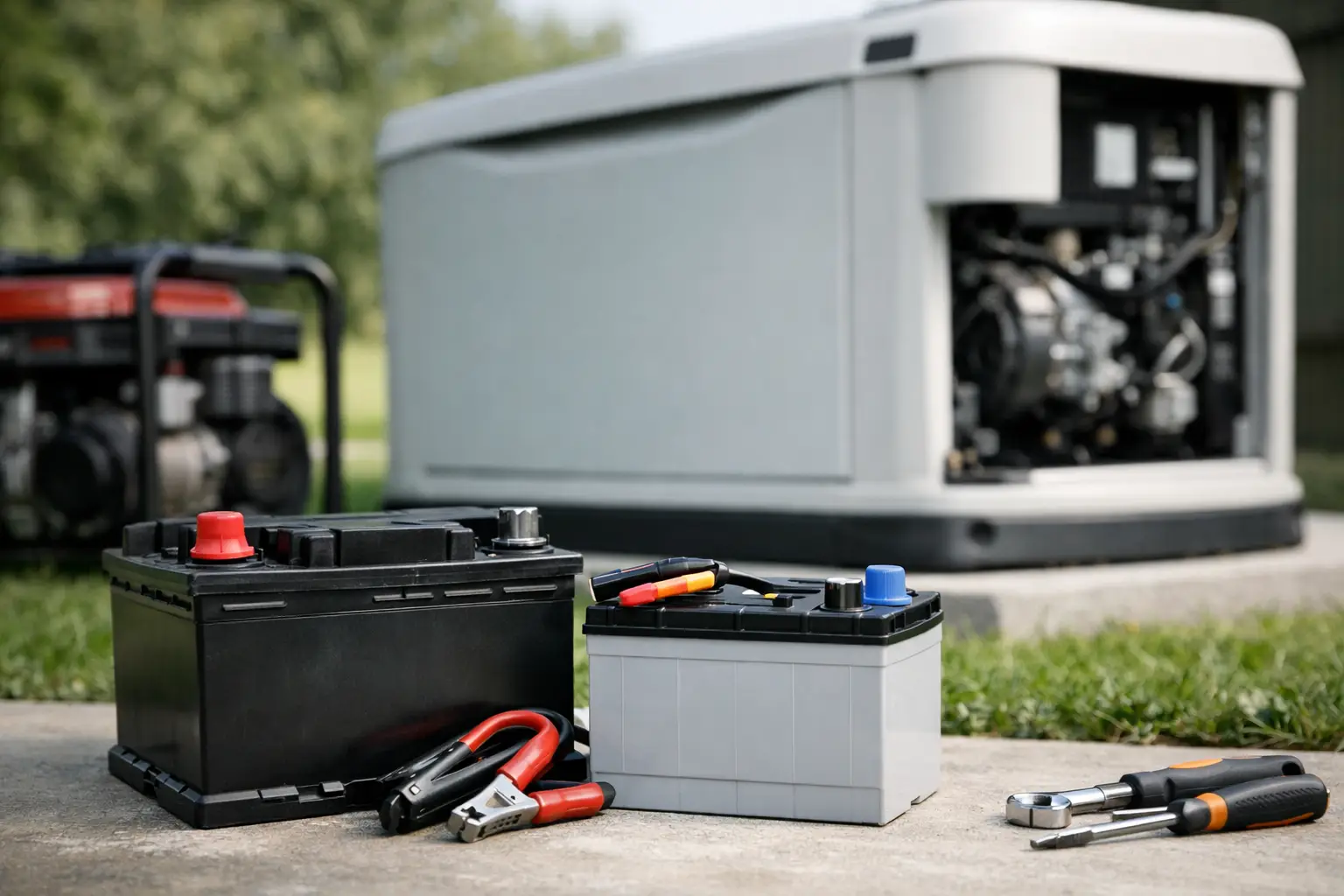
Because the generator relies on a battery for its electric-start system, keeping the battery properly maintained is an important part of preparation.
4. Transfer Switch and Interlock Ready
The WGen14500DF includes both a 120/240V 50A 14-50R outlet and a 120/240V 30A L14-30R outlet. Westinghouse lists the generator as transfer-switch and interlock-kit ready.
This allows the generator to be integrated into an appropriate home backup configuration when the required electrical equipment is properly installed.
A transfer switch or approved interlock setup can allow selected household circuits to receive generator power without relying on multiple extension cords.
Installation should be performed according to applicable electrical requirements and local code. A portable generator should never be connected directly to household wiring without appropriate transfer equipment.
5. VFT Data Center
The WGen14500DF includes a VFT data center that displays voltage output, frequency, and lifetime operating hours.
This provides useful information while the generator is running and can help owners keep track of operating time for maintenance.
Monitoring operating hours is particularly useful when a generator is used during a prolonged outage because maintenance intervals become easier to track.
6. Low Total Harmonic Distortion
Westinghouse lists the WGen14500DF at ≤5% total harmonic distortion (THD).
This is relevant for households that may need to operate modern electronics during an outage, including televisions, computers, phones, routers, and other electronic equipment.
THD is only one consideration when evaluating generator power quality, but it is a useful specification to check when comparing conventional portable generators.
7. Smart Idle
The WGen14500DF includes Smart Idle, which allows the engine to operate at a lower speed under lighter-load conditions.
Reducing engine speed when full generator output is not required can help reduce unnecessary fuel consumption and engine operation at higher RPM.
The manufacturer lists a normal engine speed of 3,600 RPM and a low-idle speed of approximately 2,900 RPM.
8. GFCI Outlets and Protection Features
The generator includes two GFCI-protected 120V 5-20R household duplex outlets, along with overload protection and automatic low-oil shutdown.
The outlets are equipped with rubber covers for additional protection when they are not being used.
The automatic low-oil shutdown is designed to help protect the engine if the oil level becomes too low.
WGen14500DF Safety and CO Protection
There is an important distinction that buyers should understand when comparing Westinghouse generator models.
The standard WGen14500DF does not have a carbon monoxide (CO) sensor. Westinghouse lists its CO Sensor specification as “No.”
Westinghouse also sells the WGen14500DFc, which is a separate model with a CO sensor and CO shutdown system.
Therefore, buyers should carefully check the model number before ordering.
Regardless of the model, a portable generator must be operated outdoors and away from doors, windows, and other openings where exhaust could enter an occupied structure.
A CO safety system should be considered an additional protection feature, not a replacement for correct generator placement and ventilation.
Is the WGen14500DF CARB Compliant?
The standard WGen14500DF is EPA compliant but not CARB compliant, according to the current Westinghouse specifications.
This is an important consideration for buyers in California and other locations where California emissions standards may apply.
Do not assume that every Westinghouse WGen generator has the same emissions certification. Different models can have different certifications.
Anyone subject to CARB requirements should verify the exact model and current local requirements before purchasing.
Noise Level and Portability
The WGen14500DF is a large portable generator.
Westinghouse lists the operating volume as as low as 74 dBA, although actual sound levels can vary depending on load and operating conditions.
At 352 pounds, this is not a lightweight generator that most people will want to move frequently.
The unit does include 12-inch wheels, steel handles, and a lift bracket to make movement easier around a property.
Its size makes it better suited to a prepared location, such as a garage storage area with an appropriate outdoor operating location nearby, rather than situations where the generator needs to be carried regularly.
Home Backup Applications
The WGen14500DF is designed for emergency backup of larger homes and can provide substantial portable power during outages.
It can potentially support combinations of:
- Refrigerators
- Freezers
- Sump pumps
- Well pumps
- Lighting
- Selected HVAC equipment
- Televisions
- Computers
- Routers and networking equipment
- Kitchen appliances
- Garage equipment
- Other household electrical loads
The exact combination depends on the total running and starting wattage of the connected equipment.
For a home backup installation, it is useful to make a list of the appliances that need to remain operational during an outage and calculate their electrical requirements before purchasing the generator.
Construction and Job Site Use
The WGen14500DF can also be used for construction sites, workshops, and other applications where substantial portable power is required.
The available output can support tools, lighting, compressors, and other equipment, provided the combined running and starting requirements remain within the generator’s capabilities.
Its 120/240V outlets also make it useful for equipment requiring different voltage configurations.
Because the generator weighs 352 pounds, however, transportation around a job site requires more planning than it would with a smaller portable generator.
RV and Travel Trailer Use
Westinghouse lists the WGen14500DF as RV Ready.
The 120/240V 14-50R receptacle can be useful for compatible RV setups, although RV owners should verify their specific electrical requirements before connecting the generator.
The generator’s size and weight also make it more appropriate for larger RVs or stationary camping setups than for users who need a compact generator that can be easily lifted into a vehicle.
Emergency Preparedness
The dual-fuel design can be useful as part of an emergency-preparedness plan.
Having access to gasoline and propane gives users another fuel option if one source is temporarily unavailable.
Before an emergency occurs, owners should test the generator, check the oil level, maintain the battery, inspect the fuel system, and make sure they understand how the transfer equipment or connection method works.
It is also useful to determine in advance which appliances will receive priority during an outage.
Maintenance and Longevity Tips
Regular maintenance is essential for a generator of this size.
Westinghouse’s owner’s manual provides maintenance intervals based on operating hours or calendar time, whichever occurs first, with more frequent service recommended under demanding conditions.
Important maintenance practices include:
- Check the engine oil before operation according to the owner’s manual.
- Use the specified 10W-30 engine oil unless the manual calls for a different oil based on operating conditions.
- Change the engine oil according to the manufacturer’s maintenance schedule.
- Clean the air filter at the recommended interval and more frequently when operating in dusty conditions.
- Inspect and clean the spark arrestor as specified.
- Inspect the spark plug according to the maintenance schedule.
- Replace the fuel filter and other service components at the intervals specified by Westinghouse.
- Use fuel stabilizer when storing gasoline for an extended period.
- Follow the owner’s manual when preparing the generator for long-term storage.
- Keep the battery charged and maintained so the electric and remote-start functions remain available.
- Store the generator in a dry location when it is not operating.
The owner’s manual specifically notes that air-filter service should be increased in dusty environments and that oil changes may need to be more frequent when operating under heavy loads or in high temperatures.
Things to Consider Before Buying the WGen14500DF
The WGen14500DF offers a lot of electrical capacity, but it is not the right type of generator for every buyer.
It Is Heavy
At 352 pounds, the WGen14500DF is a substantial machine.
The wheels and handles make it easier to move, but users should not expect the portability of a compact inverter generator.
It Is Not CARB Compliant
Westinghouse currently lists the WGen14500DF as EPA compliant but not CARB compliant.
This is particularly important for buyers who live in California or another jurisdiction where CARB compliance affects generator sales or use.
It Does Not Have a CO Sensor
The standard WGen14500DF does not include a built-in carbon monoxide sensor.
Westinghouse’s separate WGen14500DFc does include a CO sensor and CO shutdown system.
This difference should be considered before ordering.
It Is Not Parallel Capable
Westinghouse lists the WGen14500DF as not parallel capable.
That means buyers should not expect to connect another compatible generator to this model to increase total output.
It Is a Conventional High-Output Portable Generator
The WGen14500DF is built around a large 713cc V-Twin engine and provides substantial power, but buyers prioritizing very low noise, low weight, or compact dimensions may prefer a different type of generator.
Who Is the WGen14500DF Best Suited For?
The WGen14500DF can make sense for users who need high-output portable power and want the flexibility of gasoline and propane operation.
Potential users include:
- Homeowners preparing for extended outages
- Owners of larger homes with significant electrical loads
- Contractors and construction crews
- Workshop owners
- Rural property owners
- RV and travel-trailer users
- Emergency-preparedness planners
- Users who need 120/240V portable power
It may be less suitable for buyers who prioritize lightweight portability, very quiet operation, parallel capability, or built-in carbon monoxide monitoring.
Westinghouse WGen14500DF FAQ
How many watts does the Westinghouse WGen14500DF produce?
The WGen14500DF produces 18,000 peak watts and 14,500 running watts on gasoline. On propane, it produces 16,000 peak watts and 13,000 running watts.
Can the WGen14500DF power a whole house?
The WGen14500DF has enough output for many large-home backup applications, but whether it can power an entire home depends on the home’s electrical loads and the starting requirements of major appliances. A proper load calculation is recommended before connecting household circuits.
Is the WGen14500DF dual fuel?
Yes. The WGen14500DF operates on gasoline and propane.
How long can the WGen14500DF run on gasoline?
Westinghouse rates it for up to 16 hours at 25% load using its 10.5-gallon gasoline tank. At 50% load, the listed runtime is up to 9 hours.
How long does the WGen14500DF run on propane?
With a 20-pound propane tank, Westinghouse lists up to 6 hours at 25% load and up to 4 hours at 50% load.
Does the WGen14500DF have a CO sensor?
No. The standard WGen14500DF does not include a carbon monoxide sensor. The separate WGen14500DFc includes a CO sensor and shutdown system.
Is the WGen14500DF CARB compliant?
No. Westinghouse lists the WGen14500DF as EPA compliant but not CARB compliant.
Does the WGen14500DF have remote start?
Yes. It includes electric start and remote start. It does not have a recoil-start system according to the current specifications.
How much does the WGen14500DF weigh?
The WGen14500DF has a dry weight of approximately 352 pounds.
How loud is the WGen14500DF?
Westinghouse lists the operating volume as as low as 74 dBA. Actual noise can vary depending on operating conditions and electrical load.
Is the WGen14500DF parallel capable?
No. Westinghouse lists the WGen14500DF as not parallel capable.
Conclusion
The Westinghouse WGen14500DF is a high-output dual fuel portable generator designed for homeowners, contractors, RV users, and other buyers who need substantial portable power.
Its main strength is its combination of high output and fuel flexibility. On gasoline, it produces 18,000 peak watts and 14,500 running watts, while propane operation provides 16,000 peak watts and 13,000 running watts.
The 10.5-gallon fuel tank can provide up to 16 hours of runtime at 25% load, while the electric and remote-start systems make the generator easier to operate. It also includes transfer-switch readiness, GFCI outlets, a VFT display, Smart Idle, overload protection, and automatic low-oil shutdown.
There are several limitations to keep in mind. At 352 pounds, this is a heavy portable generator. It is also not parallel capable, it is not CARB compliant, and the standard WGen14500DF does not include a carbon monoxide sensor.
Buyers who specifically want built-in CO monitoring should compare it with the separate WGen14500DFc before making a purchase.
For anyone considering the WGen14500DF for home backup, the most important step is to calculate the running and starting wattage of the appliances that need to remain operational. That calculation will provide a much more useful indication of whether this generator fits a particular home than the peak-wattage number alone.