As an Amazon Associate I earn from qualifying purchases.
In 2026, a portable generator can be useful for everything from short power outages and RV trips to camping, tailgating, and emergency preparedness. But power output is only part of the equation. If you plan to use a generator around a home, campsite, or RV, noise level, portability, fuel options, runtime, and carbon monoxide safety are just as important.
Modern portable generators now offer features such as inverter technology, electronic or remote starting, digital monitoring, dual-fuel capability, RV-ready outlets, and automatic carbon monoxide shutdown. However, those features vary considerably by model. A generator that is quiet and easy to carry may not provide enough power for a refrigerator, sump pump, or larger RV, while a high-output model may be considerably heavier and louder.
Quiet Portable Generators Worth Considering in 2026
| Generator | Amazon |
|---|---|
| Westinghouse 5000 Peak Watt | Check Amazon Price |
| Westinghouse 11000 Peak Watt Dual Fuel | Check Amazon Price |
| PowerSmart 3600-Watt Generator | Check Amazon Price |
| Honda EU2200i 2200 Watt Generator | Check Amazon Price |
| WEN Quiet 4800-Watt Dual Fuel Generator | Check Amazon Price |
Why Choose a Quiet Portable Generator in 2026?
A quiet portable generator can make a noticeable difference when you’re camping, staying in an RV, working outdoors, or dealing with a power outage in a residential area. Lower noise can make conversations easier and reduce disruption, but noise ratings should always be compared under the same testing conditions because a generator’s sound level changes with load.
1. Noise Level for Home and Outdoor Use
Noise is one of the most important factors when a generator will be used near people. Inverter generators are often designed with enclosed engines, variable engine speeds, and sound-reducing enclosures to help keep operating noise down.
The Honda EU2200i, for example, is rated at 48 dBA at 25% load and 57 dBA at rated load. Honda describes it as quieter than normal conversation, but generator noise varies with electrical load and measurement conditions.
When comparing generators, don’t look only at the lowest advertised dBA number. Check the load and distance used for the measurement as well.
2. Portability and Size
Portability depends heavily on the generator’s power class. Smaller inverter generators can often be carried by one person, while 4,000- to 5,000-watt models may require wheels, a telescoping handle, or two people for easier movement.
Check the actual dry weight and dimensions before buying, especially if you plan to transport the generator frequently.
For example, the PowerSmart 3600-watt inverter generator is around 50 pounds and includes an integrated handle, making it considerably easier to move than many larger conventional generators.
3. Fuel Flexibility
Dual-fuel generators can run on gasoline and propane, giving owners another fuel option during an extended outage or while traveling.
The advantage is flexibility. Gasoline is widely available, while propane can be convenient to store for emergency use when handled correctly. The trade-off is that output can differ between gasoline and propane, so check the rated and starting wattage for both fuels rather than assuming they are identical.
4. Carbon Monoxide Safety
Carbon monoxide protection is an important feature on modern portable generators. Some models use sensors that automatically shut the engine down when dangerous CO levels are detected.
However, a CO shutdown system does not make a generator safe for indoor or enclosed use.
The U.S. Consumer Product Safety Commission recommends operating portable generators outdoors, at least 20 feet from the home, with the exhaust directed away from the house, doors, windows, and vents. Generators should never be operated inside a home, garage, basement, crawlspace, shed, or other enclosed area.
In-Depth Portable Generator Overviews
Westinghouse 5000 Peak Watt Generator
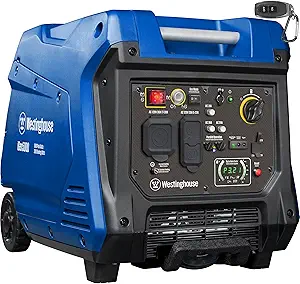
The Westinghouse 5000-watt inverter generator is designed for buyers who want more output than a small 2,000-watt-class inverter generator can provide. The iGen5000 version is rated at 5,000 peak watts and 3,900 running watts and offers features such as remote starting, an LED information display, and an RV-ready outlet.
Its larger power capacity makes it useful for heavier RV loads and emergency backup, although its weight is significantly higher than that of compact inverter generators.
Best for: RV use, outdoor power, and moderate home backup
Power Range: Moderate to high
Westinghouse 11000 Peak Watt Dual Fuel Generator
The Westinghouse 11000-watt dual-fuel generator is aimed at users who need substantially more power than a compact inverter can provide. The model is rated for up to 11,000 starting watts and 9,000 running watts on gasoline, with lower output available when operating on propane.
Its high output makes it suitable for demanding residential backup applications, and its transfer-switch-ready configuration can be useful when the generator is connected to a home’s electrical system by a properly configured installation.
However, “whole-home backup” should not be assumed simply because of the generator’s wattage. Whether it can power an entire home depends on the home’s electrical demand, the loads being used simultaneously, and the transfer equipment.
Best for: Higher-output residential backup
Power Range: High
PowerSmart 3600-Watt Generator
The PowerSmart 3600-watt inverter generator produces 3,600 starting watts and 3,200 running watts. It is rated at 59 dBA from 23 feet at 25% load and becomes louder as the load increases.
The unit also includes Eco Mode, overload protection, low-oil shutdown, parallel capability, and automatic CO shutdown. Its 30-amp RV outlet makes it a practical option for campers and RV owners who need more output than a small 2,000-watt inverter generator.
Best for: Camping, RVs, tailgating, and moderate backup loads
Power Range: Moderate
Honda EU2200i 2200 Watt Generator
The Honda EU2200i produces 2,200 watts maximum and 1,800 watts rated, making it better suited to smaller loads than the higher-output generators in this guide.
Honda lists noise levels of 48 dBA at 25% load and 57 dBA at rated load. The generator also includes CO-MINDER, Eco Throttle, and parallel capability. Its 47.4-pound dry weight makes it much easier to move than many larger generators.
The EU2200i is a good fit when low noise, portability, and stable inverter power matter more than maximum wattage.
Best for: Camping, electronics, small backup loads, and quiet environments
Power Range: Low to moderate
WEN Quiet 4800-Watt Dual Fuel Generator
The WEN DF480iX is a 4,800-watt dual-fuel inverter generator with 4,000 rated watts on gasoline. Its inverter design provides cleaner power for electronics, while the RV-ready configuration makes it useful for camping and travel trailers.
The generator includes electric start, fuel shutoff, and CO Watchdog protection. Its published specifications also distinguish between gasoline and propane output, so buyers should check the appropriate figures before planning their electrical load.
Best for: RVs, camping, and moderate emergency backup
Power Range: Moderate
What to Consider When Choosing a Portable Generator
Before purchasing a generator, match the generator’s capabilities with your actual electrical requirements, noise expectations, fuel preferences, and intended use.
1. Wattage Requirements
Never size a generator based only on its advertised peak wattage.
Add the running wattage of the appliances you expect to use and account for the additional starting wattage required by motor-driven equipment such as refrigerators, sump pumps, well pumps, and some HVAC equipment.
For example, a generator that can provide 3,200 running watts may be suitable for several essential loads, but that does not mean every appliance in a home can run simultaneously.
2. Noise Level
If low noise is a priority, compare generators with published dBA ratings and check the load and distance used for the measurement.
A generator rated below 60 dBA at a light load can become considerably louder when heavily loaded. The PowerSmart 3600, for example, is listed at 59 dBA from 23 feet at 25% load and about 70 dBA at full load.
3. Fuel Type
If you want the flexibility of gasoline and propane, a dual-fuel generator may be worth considering.
Gasoline can be convenient for short-term use, while propane can provide another fuel option for emergency preparedness. Always store and handle either fuel according to applicable safety instructions and local requirements.
4. Safety and Compliance
Check the emissions and safety information that applies to your location. EPA requirements apply broadly in the United States, while California has additional CARB requirements for applicable small off-road engines and equipment.
Also look for useful safety features such as automatic CO shutdown, low-oil shutdown, overload protection, and clearly labeled electrical outlets.
Most importantly, follow the manufacturer’s operating instructions.
5. Portability Needs
If you expect to move the generator frequently, look at the actual weight, wheel configuration, handles, dimensions, and lifting points.
A 100-pound generator may be manageable with wheels but impractical to carry, while a roughly 50-pound inverter generator can be much easier to transport by hand.
How to Maintain a Portable Generator
Regular maintenance can help ensure that a generator is ready when you need it. Follow the maintenance schedule in the owner’s manual because service intervals vary by model and engine.
- Check the engine oil before operating and change it according to the manufacturer’s schedule.
- Inspect the air filter and clean or replace it as specified by the manufacturer.
- Use fresh fuel and follow the manufacturer’s recommendations for fuel stabilizer and storage.
- Inspect the spark plug and replace it at the recommended service interval.
- Check extension cords, plugs, outlets, fuel lines, and the generator itself for visible damage before use.
- Exercise the generator according to the owner’s manual rather than relying on a one-size-fits-all schedule.
- Store the generator properly in a dry and appropriate location when it is not being used.
- Never operate the generator in an enclosed storage area, even temporarily.
The CPSC also recommends regular maintenance and following all labels, instructions, and warnings supplied with the generator.
Portable Generator Safety Tips
Noise and portability are important, but safe operation should always come first.
A portable generator should be operated outdoors and at least 20 feet away from the home, with the exhaust directed away from the building. Never operate it inside a house, garage, basement, crawlspace, shed, or similar enclosed area. Opening doors or windows does not provide adequate protection from carbon monoxide.
Keep the generator on a stable, dry surface and follow the manufacturer’s instructions for wet-weather operation. Electrical shock is another potential hazard, particularly when generators or cords are exposed to water.
If a CO alarm sounds or anyone develops symptoms that could indicate carbon monoxide exposure, move to fresh air immediately and seek emergency assistance.
Final Thoughts
Choosing a portable generator in 2026 is less about finding the generator with the biggest wattage number and more about matching the machine to the way you actually plan to use it.
For quieter applications, inverter generators such as the Honda EU2200i and PowerSmart 3600 offer a useful combination of portability and lower operating noise at lighter loads. Larger options such as the Westinghouse 5000 and WEN 4800 provide more power for RVs and backup applications, while the Westinghouse 11000 dual-fuel is designed for substantially heavier electrical loads.
Before buying, compare rated and starting watts, actual noise measurements, fuel type, weight, runtime, outlets, CO protection, and the manufacturer’s safety instructions. Most importantly, remember that even a quiet generator with automatic CO shutdown must still be operated outdoors and well away from the home.
The right choice depends on your required power, how often you will move the generator, how sensitive you are to noise, and which appliances or equipment you need to keep running.