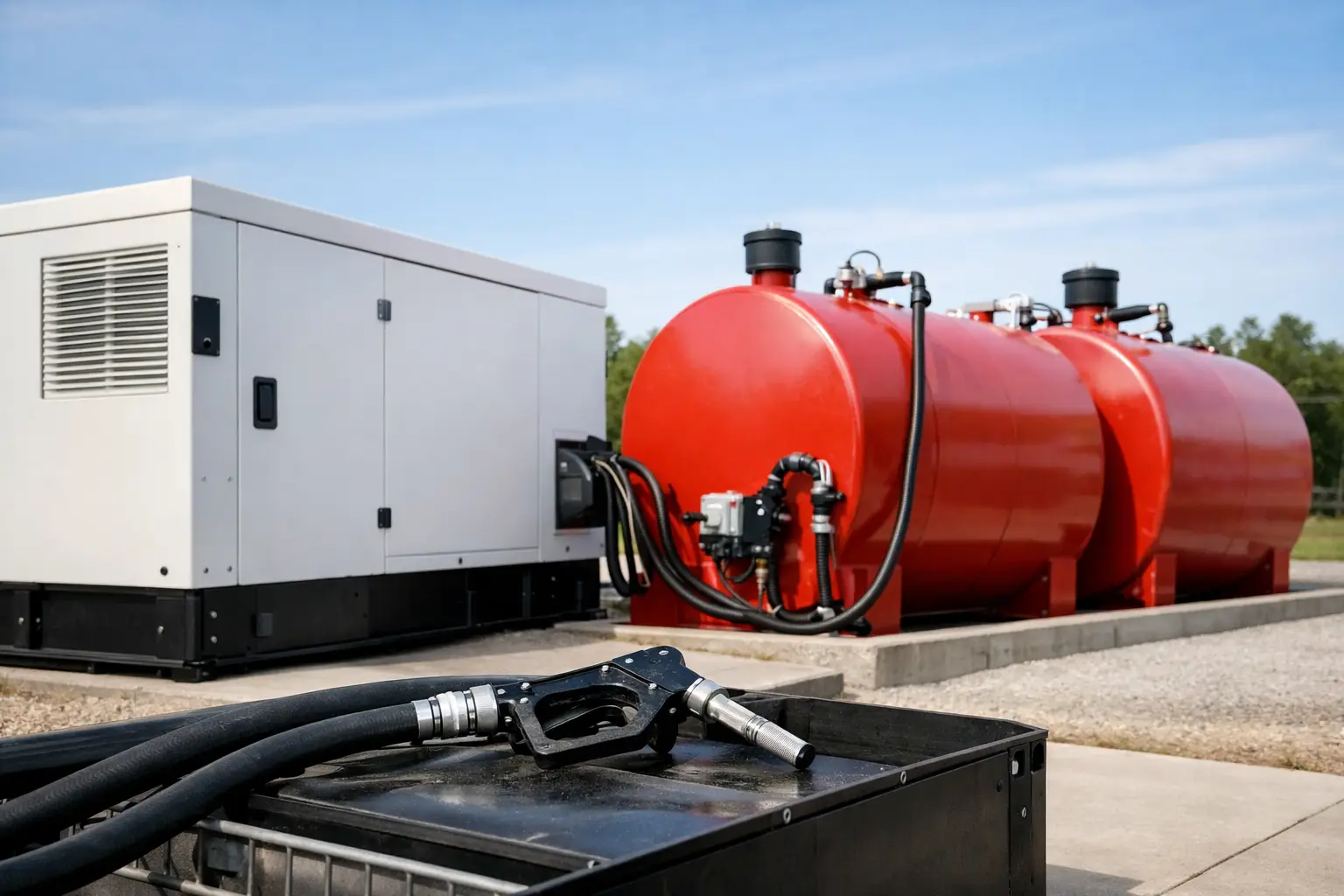
A generator that ran perfectly during its last test can still fail when the power goes out if the fuel has degraded, leaked, or become inaccessible. Generator fuel storage is not simply a matter of buying a few cans and filling them up. The fuel type, storage location, container quality, rotation schedule, and local fire rules all affect whether your backup power plan works when you need it.
For most homeowners, the practical goal is straightforward: keep enough usable fuel to cover likely outages without creating an unnecessary fire or maintenance problem. The right approach differs for a portable gasoline generator, a dual-fuel inverter model, an RV generator, and a standby unit connected to propane or natural gas.
Start With the Fuel Your Generator Actually Uses
Gasoline remains common for portable generators because it is easy to find and delivers strong power output for its volume. Its drawback is shelf life. Untreated gasoline can begin losing its best qualities within a few months, especially when exposed to heat, air, and moisture. Ethanol-blended gasoline can also attract water, which may lead to hard starting, rough operation, or carburetor deposits.
If you own a gasoline generator, buy fuel in quantities you can realistically rotate. A homeowner who runs a 5,000-watt portable generator only during occasional outages may be better served by a modest supply of fresh, stabilized fuel than by a large stockpile that sits untouched for a year. Use a quality
fuel stabilizer when storing gasoline, follow the stabilizer label for treatment ratios, and label every container with the purchase date.
Propane is often easier to manage for long-term emergency planning. It does not go stale like gasoline, and standard barbecue-style cylinders are readily available. Many
dual-fuel generators can run on either gasoline or propane, giving owners flexibility when one fuel source is unavailable. The trade-off is that a generator typically produces slightly less power on propane, and cold weather can reduce vapor pressure and runtime performance.
Diesel is more common for larger equipment, agricultural use, and certain jobsite or standby applications. It is efficient and generally safer to ignite than gasoline, but it still requires careful storage. Diesel can accumulate water and support microbial growth in long-stored tanks. For most small-scale buyers, diesel storage makes sense only when the generator is designed for it and will be exercised regularly.
Natural gas is different from stored fuel. A home standby generator connected to a utility gas line can run for extended outages without refueling, provided gas service remains available. That convenience comes with higher installation costs and a need for professional sizing, permitting, and transfer-switch work.
Generator Fuel Storage Containers Matter
The container is part of the fuel system, not an afterthought. Use approved containers made for the specific fuel you are storing. For gasoline, that usually means a certified plastic or metal fuel can with a secure cap and clear labeling. Never store gasoline in milk jugs, drinking-water containers, unmarked bottles, or any container not designed for fuel.
A basic portable fuel can works well for small supplies, but frequent generator owners may prefer a higher-quality safety can with a flame arrester and controlled pour spout. Metal safety cans cost more than standard plastic cans, yet they can be a worthwhile upgrade in workshops, job trailers, and other settings where fuel is handled often. If spills are a concern, choose a can with a reliable nozzle rather than assuming every “no-spill” design performs equally well.
Propane cylinders need equal attention. Check the cylinder for corrosion, dents, valve damage, or an expired certification date before relying on it for emergency use. Keep the protective valve cap in place when applicable, transport cylinders upright and secured, and never leave them in a hot enclosed vehicle.
For larger fuel reserves, purpose-built tanks, cabinets, and fuel caddies may be appropriate, but bigger is not automatically better. A large gasoline tank introduces more potential loss if fuel ages, leaks, or becomes contaminated. It may also trigger local code, insurance, or homeowner association requirements. Check your local fire authority and applicable regulations before expanding beyond a small residential supply.
Where to Store Fuel Safely
Fuel belongs in a cool, dry, well-ventilated location away from flame, sparks, direct sunlight, and ignition sources. That excludes the area beside a furnace, water heater, clothes dryer, electrical panel, or generator itself. It also means not keeping gasoline in a living space, basement, or attached garage if a safer detached storage option is available.
A detached shed can be a practical location when it stays reasonably cool, has ventilation, and does not contain ignition sources. Keep containers off the ground if flooding or moisture is possible, protect them from physical damage, and avoid placing them where lawn equipment, tools, or vehicles can strike them. Fuel should also be inaccessible to children and clearly identified so no one mistakes it for another liquid.
Propane cylinders are generally stored outdoors in an upright position. Do not store them indoors, in a basement, or in an enclosed shed because propane is heavier than air and can collect at floor level if it leaks. Keep cylinders away from building openings, heat sources, and combustible materials.
Do not refuel a running or hot generator. Shut it down, allow the engine to cool, move fuel carefully, and clean up any spill before restarting. This simple habit prevents many generator fires.
Size Your Supply Around Runtime, Not Guesswork
Before buying containers, look at your generator’s
runtime specification at a realistic load. A unit that runs for 10 hours on a 5-gallon tank at 25% load may run far less time when powering a refrigerator, well pump, sump pump, lights, internet equipment, and a window air conditioner. Generator runtime charts are useful, but your connected load determines the result.
A good planning exercise is to list the appliances you would actually run during an outage and estimate the generator load. Then calculate how many gallons or propane cylinders cover one day, three days, or a weekend. This often reveals that reducing electrical demand is more practical than storing dramatically more fuel. Running large appliances in shifts, using LED lighting, and avoiding electric heat can extend available fuel substantially.
For camping and RV use, your needs are usually different. A compact inverter generator may sip fuel while charging batteries and running small appliances, but air conditioning changes the equation quickly. Carry only the amount of fuel you can safely transport and use during the trip, then refill at appropriate stops rather than treating an RV compartment as long-term fuel storage.
Rotate Fuel Before It Becomes a Problem
Fuel rotation is what turns stored fuel into dependable fuel. Mark each gasoline can with the date filled and use the oldest container first. If the gasoline has been stabilized and stored correctly, use it in compatible vehicles or equipment within the timeframe recommended by the stabilizer and fuel manufacturer, then refill the can with fresh fuel.
Run your portable generator periodically according to its owner’s manual. Exercise confirms that the engine starts, the fuel system works, and the generator produces power before an emergency exposes a problem. For gasoline models, many owners also run the carburetor dry before extended storage, but follow the manufacturer’s instructions because procedures vary by engine and fuel system.
Inspect fuel cans and propane cylinders at the same time you test the generator. Look for cracked plastic, swollen containers, damaged seals, rust, fuel odor, loose caps, and unreadable labels. Replace questionable containers rather than trying to get one more season from them.
Match the Plan to Your Generator Type
A gasoline-only portable generator is often the lowest-cost entry point, but it demands the most active fuel management. A dual-fuel generator adds propane flexibility and can reduce concerns about gasoline sitting too long. For a home that experiences frequent multi-day outages, a professionally installed standby generator with a properly sized propane tank or natural-gas connection may justify its higher upfront cost.
There is no single best fuel arrangement. The best one is the system you can store safely, rotate consistently, and operate confidently. Keep your supply organized, test your equipment before storm season, and treat fresh, well-managed fuel as part of the generator purchase itself – not an accessory to think about after the lights go out.