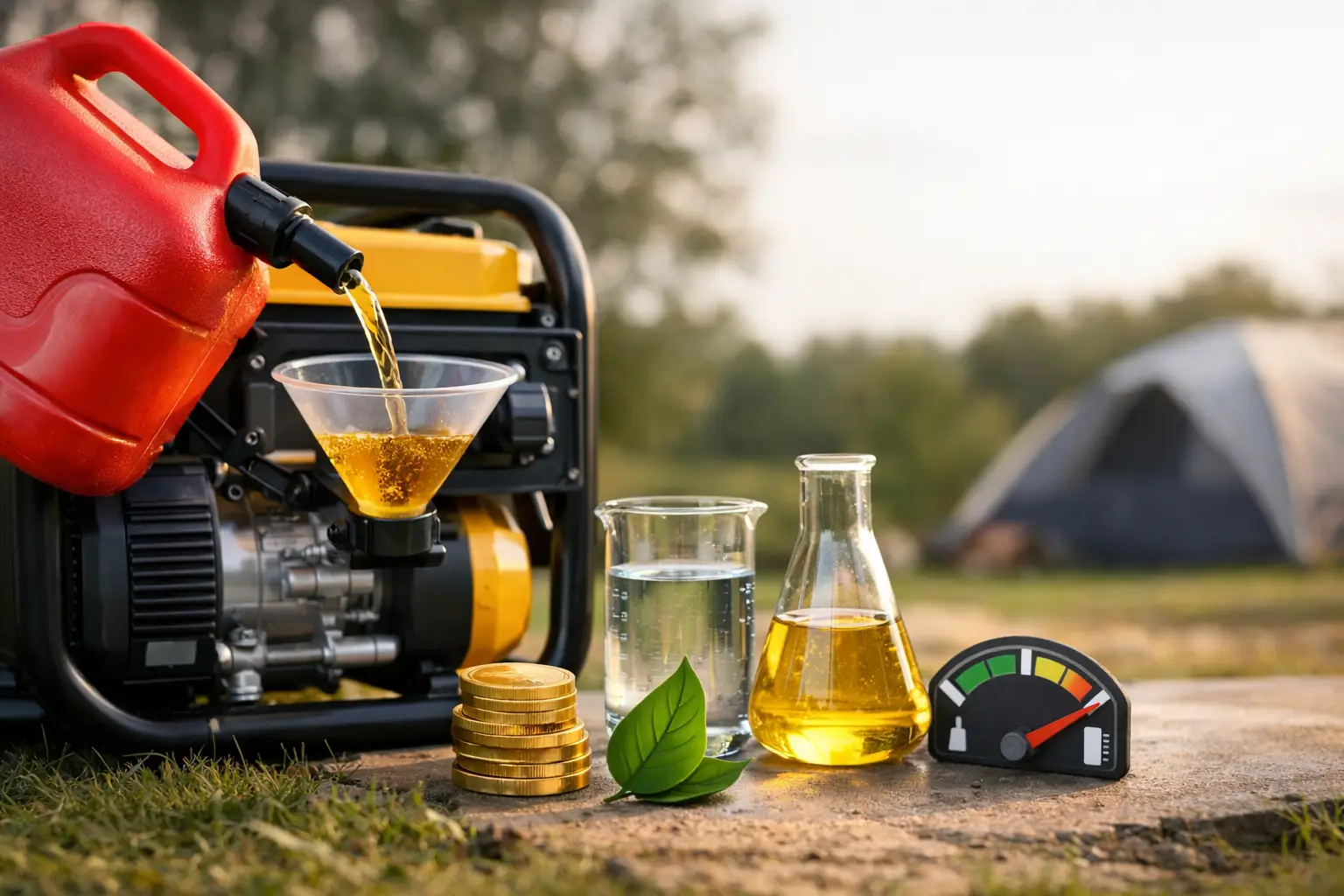
A generator that burns through a tank faster than expected usually teaches the same lesson twice – once at checkout and again during an outage. Portable generator fuel efficiency matters because it affects runtime, fuel costs, refueling frequency, and even how practical a unit feels when you actually need it. For homeowners, RV users, campers, and jobsite buyers, it is one of the clearest signs of whether a generator is a smart long-term purchase or just a cheap upfront one.
The tricky part is that fuel efficiency is not shown in one universal number. Most manufacturers list runtime at 25 percent or 50 percent load, tank size, and fuel type. Those specs are useful, but they do not tell the full story unless you understand what is happening behind them.
What portable generator fuel efficiency really means
In simple terms, fuel efficiency is how much electricity a generator can produce for the fuel it consumes. That sounds straightforward, but in real buying decisions, efficiency shows up as runtime under your normal load, not under ideal lab conditions.
A generator with a large fuel tank may advertise long runtime, yet still be relatively thirsty. Another model with a smaller tank may look less impressive on paper but use fuel more carefully at light and moderate loads. That is why comparing runtime alone can be misleading.
For most buyers, the better question is not, “Which generator has the biggest tank?” It is, “How efficiently does this generator power the things I actually plan to run?” If you only need to support a refrigerator, lights, modem, and a few chargers during an outage, your best option may be very different from someone running power tools all day or an RV air conditioner in summer heat.
What affects portable generator fuel efficiency
Engine size is a big factor, but it is not the only one. Larger engines can support higher wattage demands, yet they often consume more fuel when lightly loaded. If you consistently use only a fraction of a generator’s capacity, you may be paying for wasted fuel as well as unused output.
Generator type matters too. Inverter generators are usually more fuel-efficient than traditional open-frame portable models, especially at lower loads. That is because an inverter generator can adjust engine speed to match demand more closely. A conventional generator often runs at a more fixed speed, even when the power draw is modest.
Load level has an especially strong effect. Most generators are least efficient when barely loaded and can also become less practical near maximum capacity, where fuel burn rises and runtime drops. The sweet spot is often around 50 percent load, which is why many runtime specs are listed there.
Fuel type also changes the equation. Gasoline is common and easy to find, but it has storage limitations and price swings. Propane burns cleaner and stores longer, but many
dual-fuel generators produce slightly less power on propane and may see different runtime results. Diesel generators can be very efficient and durable, but they are less common in the smaller portable category and usually cost more upfront.
Inverter vs conventional generators
If fuel efficiency is high on your list, inverter generators deserve serious attention. For lighter-duty use, they are often the more economical choice over time. They tend to be quieter, easier to carry, and better for electronics, while also using less fuel during partial-load operation.
That does not automatically make them the right pick for everyone. Conventional portable generators still make sense when you need more wattage for the money, longer durability on certain jobsites, or enough surge power to start larger appliances. A conventional model may be less efficient, but if your application regularly demands heavy output, the fuel trade-off can be worth it.
This is one of those areas where the best generator is not the one with the best single spec. It is the one matched to your actual use pattern.
How to compare generator runtime specs the right way
When you compare models, start with runtime and tank size together. A generator that runs 10 hours on 5 gallons at 50 percent load is using fuel at a very different rate than one that runs 10 hours on 8 gallons at the same load. You do not need advanced math to spot that difference.
Next, look at rated watts and ask how close that is to your normal demand. If your outage setup is likely to sit around 1,500 to 2,000 running watts, a compact inverter generator or parallel-capable pair may be more efficient than a 7,500-watt conventional unit loafing along at the bottom of its range.
Eco mode or economy mode is also worth checking. On a quality inverter model, this feature can make a real difference in fuel use when loads rise and fall throughout the day. It is particularly helpful for camping, tailgating, and backup scenarios where power draw is inconsistent.
One more thing to watch is how manufacturers present runtime. Some quote the best-case number at 25 percent load, which can look impressive but may not reflect real household use. A 50 percent load figure is often a better comparison point for backup and work applications.
Right-sizing is the biggest efficiency decision
Many buyers focus on brand, fuel type, or features first. Those all matter, but right-sizing the generator is usually the biggest factor in whether it will be fuel-efficient in practice.
An oversized generator gives you margin, but too much margin can mean unnecessary fuel burn, higher purchase cost, and more weight. An undersized generator creates a different problem: it works too hard, struggles with startup surges, and may force you to overload or cycle appliances in an inconvenient way.
A better approach is to add up your running watt needs, account for
startup watts on major appliances, and choose a generator that gives you reasonable headroom without going far beyond your real-world demand. For many homeowners, that might mean a portable inverter generator for essentials or a mid-range dual-fuel portable model for broader backup coverage. For RV users, matching the generator to the air conditioner and converter load is more useful than simply buying the largest unit you can afford.
Real-world ways to improve fuel efficiency
Even the most efficient generator can waste fuel if it is used carelessly. Running unnecessary loads is the most common issue. During outages, people often leave devices plugged in, cycle more appliances than needed, or operate a generator as if it were whole-home backup when it is really an essentials-only setup.
Load management makes a noticeable difference. If you avoid running high-draw items at the same time, the generator can stay in a more efficient operating range. That can mean staggering microwave use, waiting to run a coffee maker, or turning off nonessential space heaters and tools.
Maintenance also affects fuel use more than many owners expect. A dirty air filter, old spark plug, stale gasoline, or neglected carburetor can make a generator run less efficiently. Oil changes and basic tune-up intervals are not just about engine life. They help preserve steady performance and cleaner combustion.
Extension cord choice matters too. If cords are undersized or excessively long, voltage drop can reduce performance and create strain. You are not just protecting equipment by using the right gauge cord. You are helping the generator deliver power more effectively.
Which generator buyers should prioritize efficiency most?
If you use a generator occasionally for short emergency backup, fuel efficiency is important but may not outweigh all other factors. Reliability, starting ease, and enough power for critical loads may rank higher.
If you camp often, boondock in an RV, work remotely, or expect multi-day outages, fuel efficiency moves much closer to the top. In those situations, fewer refueling stops and lower fuel storage needs become a real advantage. The same goes for anyone comparing gasoline-only and dual-fuel models for emergency preparedness.
At TopGeneratorsOnline, this is where product comparisons become more useful than spec sheets alone. The best match often depends on whether you value quiet performance, longer runtime, fuel flexibility, or lower operating cost over the life of the generator.
The smartest way to shop
If you are trying to make a good buying decision, do not chase the single longest runtime claim. Look at runtime per tank, expected load, fuel type, inverter vs conventional design, and whether the generator is sized for your real use. A smaller, better-matched generator often feels more efficient because it is more efficient where you actually live with it.
That is the practical test. Not what the label says in ideal conditions, but how often you refuel, how much fuel you store, and whether the generator powers your essentials without feeling wasteful. Buy for your normal load, leave room for the occasional surge, and you will usually end up with a setup that costs less to run and makes ownership easier every time the power goes out.