A generator that keeps the refrigerator cold can still make a long outage feel even longer if it is running 20 feet from a bedroom window. The best generator noise reduction tips do more than muffle sound: they reduce vibration, direct exhaust noise away from people, and preserve the airflow an engine needs to run safely.
Most portable generators are loudest when they are working hard, sitting on a resonant surface, or placed in an open spot that reflects sound toward the house, campsite, or neighboring RV. A few practical changes can make a noticeable difference without spending heavily or compromising safety.
Start With the Right Generator Size and Type
Noise reduction begins before setup. An undersized generator runs near maximum output, where engine speed and cooling fan noise are typically highest. A unit that is too large can also be an expensive answer if it burns more fuel than your normal loads require. The goal is to match generator output to the appliances and tools you expect to run, including startup wattage for motors.
For light RV use, camping, and essential home loads, an
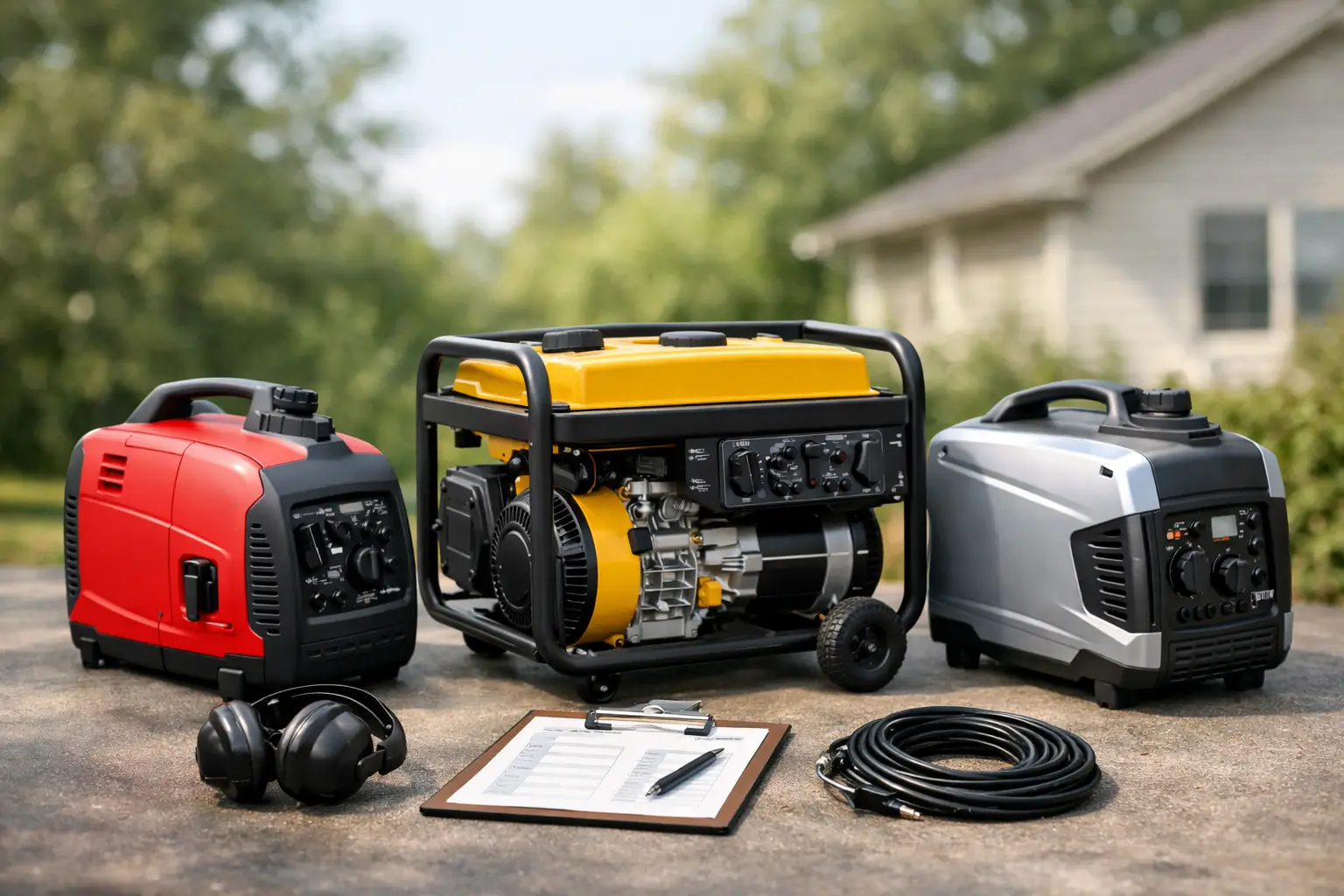
inverter generator is often the quietest practical choice. Models such as the Honda EU2200i or Champion 2500-watt class inverter generators can lower engine speed when demand is light. That is a meaningful advantage over a conventional open-frame unit that must maintain a fixed engine speed.
For whole-home backup, a permanently installed standby generator can be less intrusive than a portable model because it is housed, positioned professionally, and designed for a fixed installation. It is not silent, and local placement rules still apply, but it may be the better long-term option for frequent outages.
1. Move the Generator Farther Away, Safely
Distance is one of the most effective generator noise reduction tips because sound drops substantially as you move away from its source. Place a portable generator as far from occupied spaces as your extension-cord setup and safety requirements allow. A longer, properly rated outdoor generator cord is usually a better solution than placing the generator close to the house for convenience.
Noise should not be the only reason for distance. Portable generators must operate outdoors, well away from doors, windows, vents, crawlspace openings, and attached garages. Carbon monoxide can enter a building even when a generator is outside. Follow the generator manual and local requirements, and use working carbon monoxide alarms inside the home.
2. Point the Exhaust Away From People and Structures
The exhaust outlet is often the sharpest, most noticeable part of generator noise. Turn the generator so the exhaust faces away from the house, patio, tent area, campsite neighbor, or work crew. Avoid aiming it toward a solid wall, fence, or corner, where sound can bounce back and seem louder.
Keep the exhaust side clear. Never place a generator so close to a barrier that exhaust gases or heat become trapped. The engine needs open space around it, and the exhaust system can become extremely hot during operation.
3. Put It on a Firm, Non-Resonant Surface
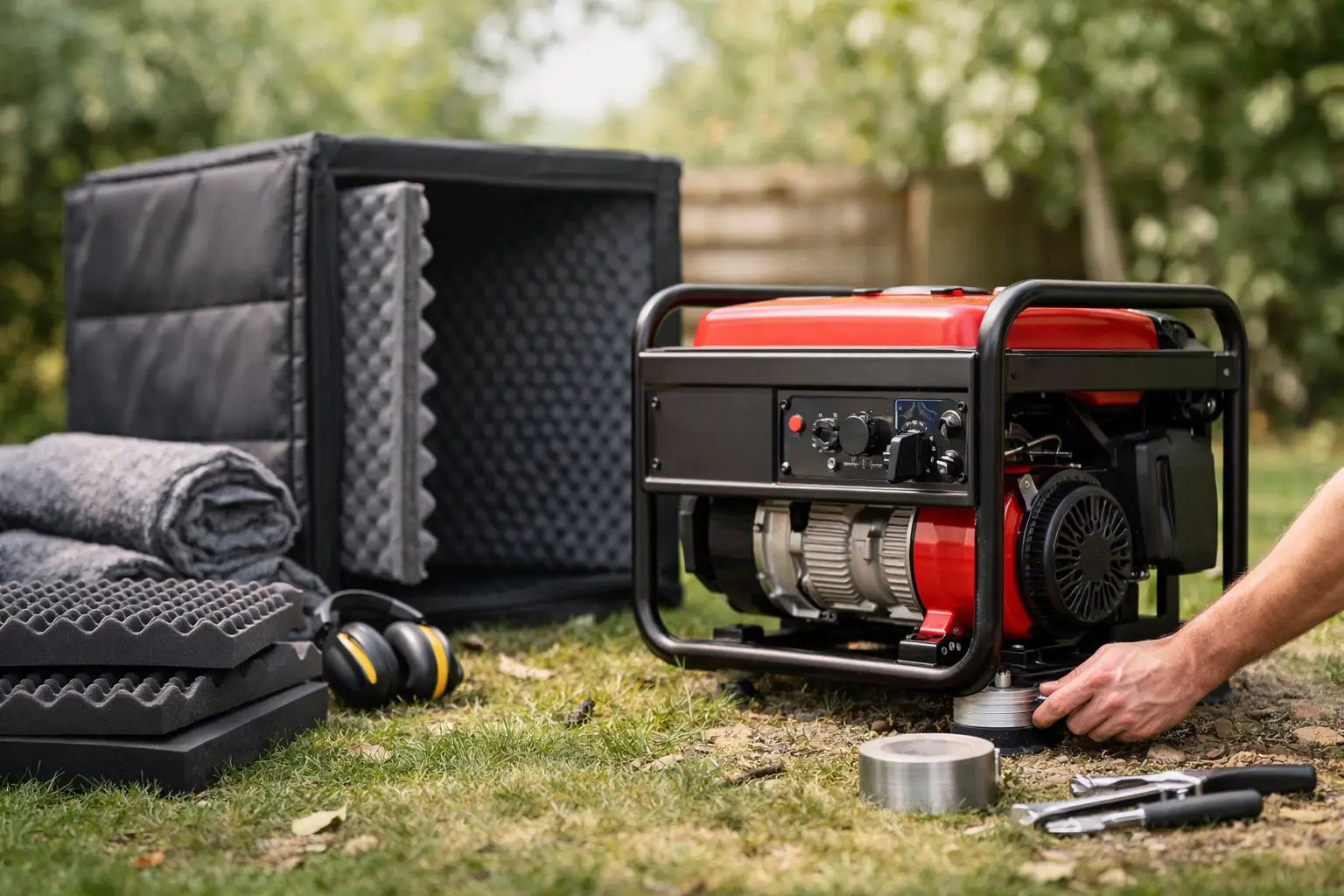
A generator can sound far louder when vibration transfers into a hollow deck, loose plywood sheet, metal trailer bed, or RV storage platform. Put it on level ground or a stable concrete pad whenever possible. If the surface itself is transmitting vibration, a heavy rubber anti-vibration mat made for outdoor equipment can help isolate the generator feet.
Do not use thick carpeting, soft foam, or an unstable stack of materials. Those surfaces can interfere with stability, hold heat, collect fuel, and create a fire risk. The generator should remain level so its engine lubrication and fuel system operate as intended.
4. Use a Sound Barrier, Not a Sealed Box
A barrier can block the direct path of sound, especially the lower mechanical noise from an open-frame generator. A purpose-built portable generator sound barrier, or a freestanding outdoor-rated panel placed between the generator and the listener, can help. The panel should be several feet away from the unit and should not wrap around it.
The key trade-off is airflow. Homemade generator boxes are frequently unsafe because they trap heat and exhaust fumes. A
generator enclosure is only appropriate if it is specifically engineered for the exact generator type, with adequate ventilation, heat clearance, and exhaust management. Never operate a portable generator inside a shed, garage, tent, vehicle, or improvised enclosure.
5. Check Rubber Mounts, Feet, and Loose Hardware
A new rattle can make a familiar generator seem suddenly louder. Before each extended use, inspect the rubber feet, engine mounting hardware, handle hardware, side panels, and wheel kit. A worn rubber isolator or loose bolt can transfer vibration into the frame and create a metallic buzz.
Turn the generator off, let it cool, and disconnect loads before inspecting it. Tighten hardware only to the manufacturer’s specifications. Over-tightening vibration mounts can reduce their ability to absorb vibration, while loose hardware can cause damage beyond the noise itself.
6. Reduce the Electrical Load When You Can
A heavily loaded portable generator often sounds more aggressive because the engine is working harder. Shut off nonessential loads, stagger motor-driven appliances, and avoid running high-draw equipment simultaneously unless your generator is sized for it. For example, starting an RV air conditioner while a microwave and electric water heater are already running can push a small generator into a loud, strained operating range.
If your inverter generator has an economy or eco-throttle mode, use it when the load is stable and modest. It can reduce noise and fuel use. Do not rely on economy mode when an application needs fast response to large changing loads, and check the manual before using it with sensitive equipment or battery chargers.
7. Maintain the Engine and Muffler System
Poor maintenance rarely stays quiet for long. Dirty air filters, old spark plugs, neglected oil changes, and damaged muffler components can make an engine run rougher and louder. Follow the maintenance schedule in the owner’s manual, particularly after long storage or heavy storm-season use.
Pay attention to exhaust changes. A sudden popping sound, sharp hiss, loose heat shield, or visible soot around the muffler may indicate an exhaust leak or damaged component. Stop using the generator until the problem is inspected and repaired. Do not attempt to modify the muffler or remove spark arrestor components to change performance or sound.
8. Build a Smarter Extension-Cord Setup
Many owners place the generator too close simply because their cord will not reach. A heavy-duty
outdoor extension cord rated for the expected load gives you more flexibility to position the generator in a safer, quieter location. For higher-power connections, use the proper generator inlet, transfer equipment, and wire gauge rather than joining multiple household cords together.
Longer cords have limits. Undersized cords can create voltage drop, overheating, and poor appliance performance. Match the cord gauge, length, connector type, and amperage rating to the generator outlet and the load. If you are connecting a generator to home circuits, use a transfer switch or listed interlock installed according to applicable electrical requirements. Never backfeed through a dryer outlet or other receptacle.
9. Choose Placement With Sound Reflection in Mind
Hard surfaces can make a generator seem louder than its published decibel rating suggests. Concrete walls, brick siding, garage doors, retaining walls, and narrow side yards reflect sound. An open area with clear airflow is often quieter at the listening point than a tight corner near the house.
At a campground, be considerate of both quiet hours and site layout. Position the exhaust and control panel away from adjacent sites, use the lowest practical load, and avoid running the generator when a battery bank, solar setup, or power station can handle smaller overnight loads. A generator may be permitted, but that does not mean every placement is equally courteous.
10. Know When a Quieter Upgrade Makes More Sense
Accessories can reduce annoyance, but they cannot turn a loud contractor generator into a whisper-quiet inverter model. If you need frequent power near an RV, home office, tent, or sleeping area, compare published operating noise at 25% load as well as maximum wattage. A lower decibel rating at a realistic load is more useful than a marketing claim with no load condition.
Parallel-capable inverter generators can be a practical alternative for users who need quiet power most of the time but occasionally need more capacity. One small inverter generator can cover battery charging and lights, while a second matching unit can be added for air conditioning or higher-demand equipment. This approach costs more upfront, but it may offer better fuel efficiency and lower everyday noise than running one large generator continuously.
Quiet operation is ultimately about planning, not hiding the machine. Give the generator clean air, stable footing, adequate distance, and a load it can handle comfortably. Those choices protect your equipment, reduce disruption for everyone nearby, and make backup power far easier to live with.