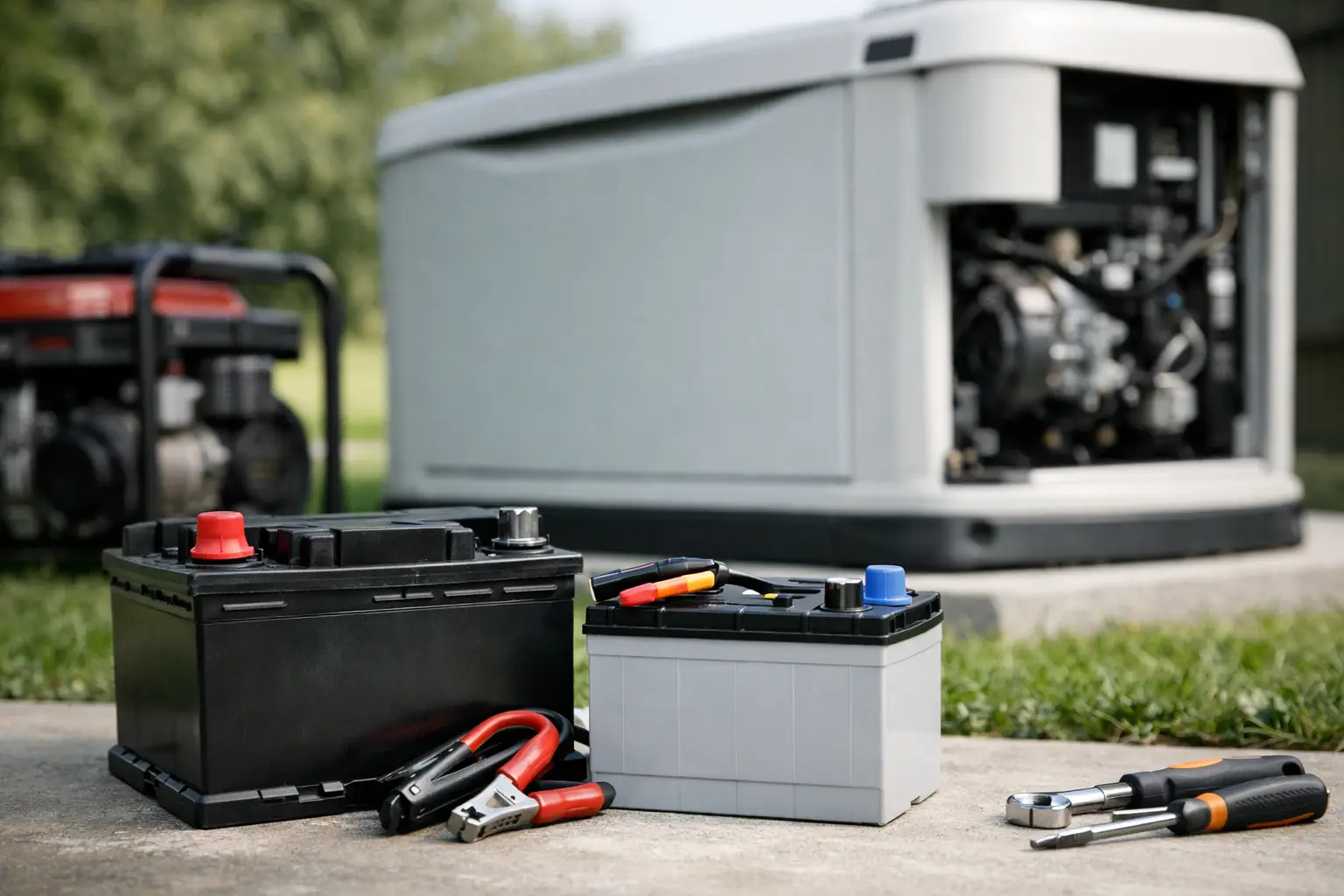
A generator can have fresh fuel, clean oil, and plenty of available wattage, then still fail at the moment you need it because the starter battery is flat. Generator batteries are a small part of the system, but they determine whether an electric-start portable generator or home standby unit actually starts. For homeowners preparing for an outage, RV owners heading out for the weekend, and jobsite users relying on dependable equipment, that makes battery care a practical priority.
The first point to clear up is what a generator battery does. On most conventional generators, the battery runs the electric starter motor and may support the control panel, automatic choke, and standby controller. It does not normally power your refrigerator, well pump, or tools after the engine is running. The generator engine produces that power. Battery-based power stations are different products entirely, even though they are often grouped into the same backup-power conversation.
What Generator Batteries Need to Do
A starting battery must deliver a strong burst of current to crank an engine, sometimes after sitting unused for weeks or months. That is different from a deep-cycle battery, which is built to discharge more slowly over a longer period. Using the wrong battery may work briefly, but it can leave you with short service life or unreliable starts.
Portable generators with electric start commonly use a compact 12-volt battery. Depending on the model, it may be a sealed AGM battery, a conventional flooded lead-acid battery, or occasionally a lithium replacement approved by the manufacturer. Larger home standby generators also generally use a 12-volt starting battery, but their size, terminal layout, and cold-cranking requirements are specific to the generator.
Do not choose solely by voltage. A 12-volt battery that physically fits may still have the wrong terminal orientation, insufficient cranking capacity, or an incompatible charging profile. The owner’s manual and the label on the existing battery are the starting points for any replacement.
Starting battery vs. deep-cycle battery
A starting battery is the usual choice for a gasoline, propane, or diesel generator because its job is to crank the engine. Its specifications emphasize cranking amps or cold cranking amps (CCA). Higher CCA can help in cold weather, but only if the battery still fits the tray and meets the generator maker’s requirements.
A deep-cycle battery is more appropriate for equipment designed to run loads from battery power, such as an RV house-battery bank or a portable power station. Some RV setups use a generator alongside deep-cycle batteries and an inverter, but those are separate roles. The generator’s own starter battery should not be confused with the RV battery bank.
How to Choose a Replacement Generator Battery
Start with the generator model number, not a photo of the battery online. Manufacturers can use different batteries across closely related models, and even a minor change in terminal placement can make installation difficult. Record the battery’s voltage, group or case size, terminal type, polarity, capacity rating, and CCA if listed.
For a portable generator, a sealed AGM battery is often the most practical replacement. It is spill-resistant, needs no water checks, and tolerates vibration better than many conventional flooded batteries. That matters when a generator rides in an RV compartment, truck bed, or jobsite trailer. AGM batteries typically cost more, but the convenience and lower maintenance can be worthwhile.
Flooded lead-acid batteries remain a reasonable option where the manufacturer specifies them. They are often less expensive and widely available, but they must be kept upright and inspected for corrosion and electrolyte issues. A vented battery also should not be installed in a sealed area unless the equipment was designed for it.
Lithium batteries deserve extra caution. They are light and can hold a charge well, but many generator charging systems were designed around lead-acid chemistry. A lithium replacement needs the correct battery management system, adequate starting output, and explicit compatibility with the generator’s charging circuit. If the manual does not support lithium, an AGM battery is the safer choice.
For an automatic standby generator, follow the manufacturer’s battery specification closely. The unit may test its battery regularly, but those tests do not make an undersized or aging battery dependable. Standby systems are often installed outdoors, where summer heat and winter cold can shorten battery life faster than expected.
Why physical fit matters as much as power
A battery with excellent ratings is still the wrong purchase if its hold-down bracket cannot secure it. Vibration can damage terminals, crack a case, and create an intermittent no-start condition. Confirm the length, width, height, and location of the positive and negative terminals before ordering.
Pay attention to terminal style as well. Small portable generators may use bolt-and-nut connections, while other units use automotive-style posts. Never force a cable to reach a reversed terminal. Stretched cables and improvised adapters create heat, poor connections, and avoidable safety risks.
Charging and Maintaining Generator Batteries
A generator battery needs a charging plan, especially when the generator is stored most of the year. Some portable models charge the battery only while the engine is running. That means a generator that sits in a garage with no exercise schedule can slowly lose its starting charge. Other models have a built-in charger that works when connected to utility power. Standby generators usually maintain their batteries automatically, but they still need inspection.
For a seasonal portable generator, connect a quality smart maintainer when the unit is stored, provided the manufacturer permits it. A smart maintainer monitors the battery and supplies a low maintenance charge instead of continuously pushing current into it. Avoid an old-style unregulated trickle charger, which can overcharge a small battery over time.
Run the generator according to its manual, not just to charge the battery. Exercise helps circulate fuel and lets you confirm that the engine, voltage output, and safety features are working. During that test, inspect the battery cables and look for loose hardware, swelling, cracks, or white and blue-green corrosion around the terminals.
If you use a transfer switch and inlet box for home backup, include a generator start test in your outage-prep routine. Verify that the generator starts, then confirm that the correct power cord, inlet connection, and interlock or transfer switch are ready. A charged battery is only useful if the rest of the connection equipment is safe, correctly rated, and accessible.
Signs It Is Time to Replace the Battery
Most generator batteries do not fail without warning, although the warning is easy to miss when the generator is rarely used. Slow cranking, repeated clicking from the starter relay, dim control-panel lights, and a battery that will not hold a charge after proper charging are common signs. A swollen case, damaged terminals, leaking electrolyte, or a strong sulfur smell calls for immediate replacement and careful handling.
Age matters too. Many small lead-acid starting batteries last roughly three to five years, but heat, vibration, infrequent charging, and deep discharge can reduce that range. Record the installation date on the battery or in your maintenance log. Replacing a questionable battery before storm season is less costly than discovering a no-start problem during an outage.
A basic multimeter can help, but voltage alone is not a complete health test. A battery may show around 12.6 volts at rest and still collapse under the load of the starter. If starts are becoming inconsistent, a battery load test at a qualified shop provides a more meaningful answer.
Safe Battery Replacement Basics
Turn the generator off, let the engine cool, and remove the key if the unit has one. Disconnect the negative cable first, then the positive cable. This lowers the chance of accidentally shorting the positive terminal to the generator frame with a tool. Install the new battery in the reverse order: positive first, negative last.
Secure the hold-down, tighten connections without overtightening, and apply terminal protectant if appropriate. Keep sparks, cigarettes, and open flames away from lead-acid batteries because they can release flammable gas. Wear eye protection and gloves, particularly if there is corrosion or leakage.
Do not throw an old battery in household trash. Automotive parts stores, battery retailers, recycling centers, and many service departments accept lead-acid batteries for recycling. Take the old unit with you when buying a replacement if a core charge applies.
A Small Part of a Dependable Backup Plan
The best generator battery is not necessarily the highest-rated model on the shelf. It is the correctly sized, properly connected battery that matches your generator, stays charged during storage, and has enough cranking power for the weather where you use it. A few minutes of battery attention before an approaching storm can protect the much larger investment in your generator, cords, inlet box, and the equipment you are counting on to keep running.