As an Amazon Associate I earn from qualifying purchases.
A generator that runs all night is more useful than one with a bigger fuel tank on paper. This generator fuel efficiency guide focuses on the choices that determine real runtime: matching
generator size to the load, understanding fuel consumption ratings, using the right cords and transfer equipment, and maintaining the unit so it does not waste fuel when you need it most.
Fuel efficiency is not just a camping concern. For a homeowner during an outage, every gallon affects how long refrigerated food, a well pump, lights, and communications can stay online. For RV users and jobsites, quieter operation, fewer refueling stops, and lower operating costs can be just as valuable.
Start With the Load, Not the Tank Size
The fastest way to burn unnecessary fuel is to buy or run more generator than the job requires. Generators consume fuel even at low demand because the engine must keep spinning to produce electricity. A conventional 7,500-watt portable generator powering a few lights and a refrigerator may use far more fuel per useful watt than a properly sized 2,200-watt inverter generator.
Before comparing runtime claims, add up the running watts of the appliances you genuinely need. Then account for starting watts from motor-driven equipment such as refrigerators, sump pumps, air conditioners, and well pumps. A pump may need two to three times its running wattage for a brief startup period, so sizing only for its running load can cause overloads.
For example, a basic outage setup might include a refrigerator, freezer, modem, a few LED lights, phone chargers, and a sump pump. That can often fit comfortably within a 3,000- to 4,500-watt generator, depending on the pump. Running central air, an electric water heater, or a whole-home electric range changes the calculation considerably. In those cases, a larger portable unit or standby generator may be justified, but it will use more fuel.
The goal is not to run a generator at its absolute limit. A practical target is often a normal load around 50% to 75% of rated running capacity, with enough headroom for motor starts. This range generally provides better efficiency, steadier operation, and less stress than operating near maximum output for hours.
How to Read Generator Fuel Efficiency Ratings
Manufacturers commonly list runtime at 25% load, and sometimes at 50% load. That number is useful, but it is not a promise that the generator will run that long in your setup. Temperature, altitude, fuel quality, maintenance, and the appliances cycling on and off all affect consumption.
To make comparisons meaningful, look at three numbers together: tank capacity, runtime at a stated load, and rated watts. A 1-gallon tank that runs eight hours at 25% load uses about 0.125 gallons per hour. If another generator uses a 2-gallon tank over the same eight hours, its hourly use is roughly double, even though both advertisements say “8-hour runtime.”
A useful calculation is:
Fuel use per hour = tank capacity ÷ listed runtime
For a more realistic outage estimate, assume that your average load may be higher than 25%. A refrigerator and pump do not draw full power constantly, but their cycling makes the load uneven. If you expect to run a window air conditioner, microwave, or power tools periodically, runtime can drop sharply.
Inverter generators often have an advantage here. Their engines can slow down when demand falls, especially with an economy or eco-throttle mode engaged. A conventional generator generally runs at a fixed engine speed whether it is supplying 300 watts or 3,000 watts. That makes inverter models particularly attractive for light-to-medium RV loads, camping, battery charging, and overnight emergency essentials.
Choose Fuel for the Job You Actually Have
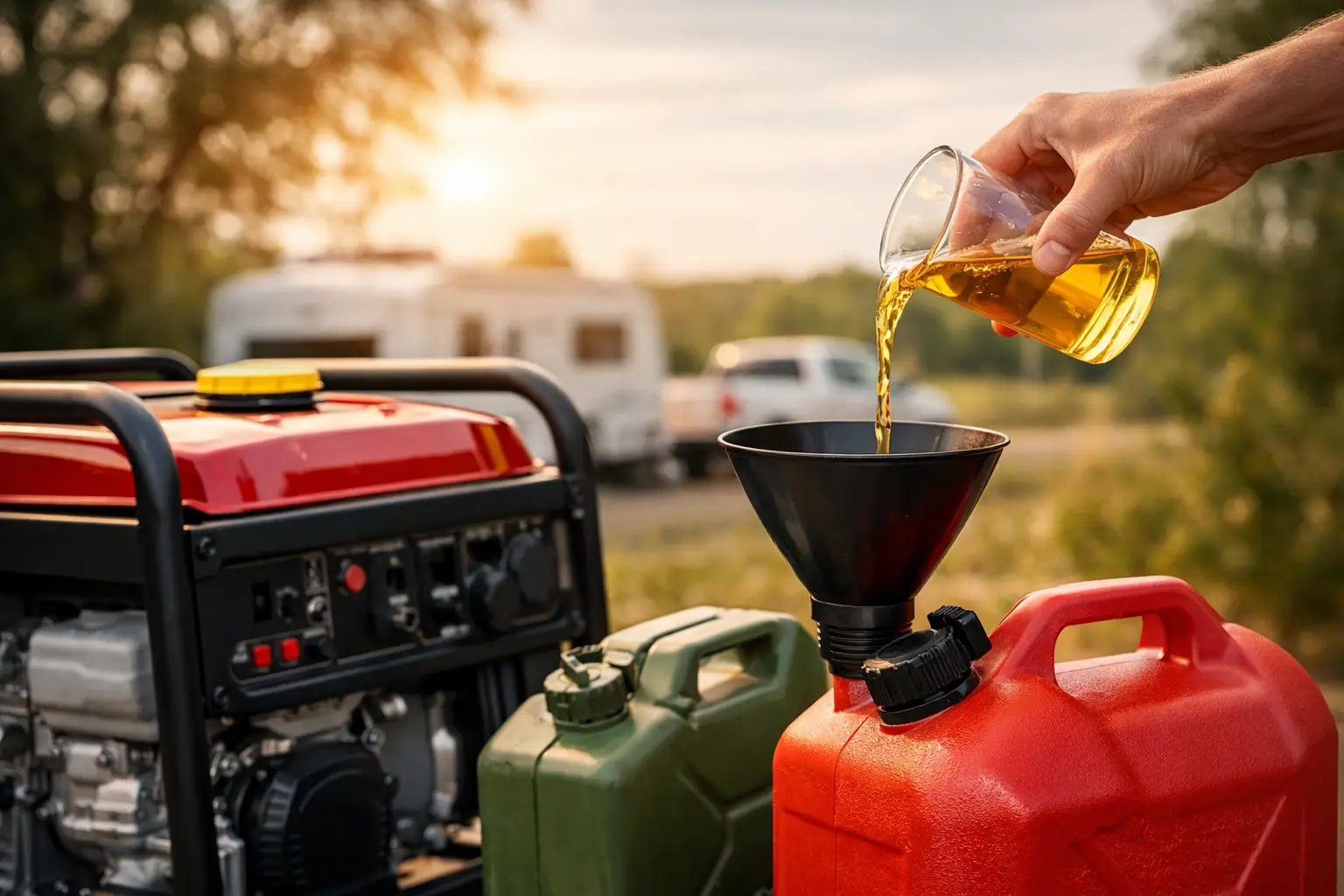
Gasoline remains common because it is widely available and portable generators are easy to find in gasoline models. It also delivers strong output for the tank size. The trade-off is storage life. Untreated gasoline can degrade, and stale fuel is a frequent cause of hard starts and rough running after an outage begins.
Propane stores much longer and burns cleanly, which makes dual-fuel generators appealing for emergency preparedness. A homeowner with several properly stored propane cylinders can avoid relying entirely on a last-minute gas station run. However, propane typically produces somewhat less maximum power than gasoline and can use more fuel by volume. Cold weather can also reduce vaporization from small cylinders, especially under sustained heavy demand.
Diesel is often the efficiency choice for larger generators and long-running work applications. Diesel engines tend to perform well under steady loads and are built for durability, but portable diesel units are usually heavier, louder, and more expensive. Natural gas is practical for permanently installed standby generators because it can provide extended operation through a utility connection, though severe regional emergencies can still affect supply.
For most portable-generator buyers, the best fuel is the one you can store and replenish safely. A
dual-fuel inverter generator is a sensible compromise for many homes and RV owners, while a larger gasoline or diesel model may fit a jobsite with higher, consistent demand.
Reduce Waste With Better Power Distribution
Fuel efficiency is also affected by how you connect equipment. Undersized extension cords create voltage drop, particularly over long runs. Motors may run hotter or struggle to start, and the generator works harder to deliver usable power. Use outdoor-rated cords with a wire gauge appropriate for the amperage and length. A short, heavy-duty 12-gauge cord is often a better choice for a refrigerator or pump than a thin, long household cord.
For home backup,
an inlet box paired with a properly installed transfer switch or panel interlock provides a safer and more controlled way to supply selected circuits. It lets you power the loads that matter without stringing multiple cords through windows and doors. More importantly, it prevents dangerous backfeeding into utility lines.
Do not assume that running every available circuit is efficient. Build a priority plan before an outage: refrigeration, water or sump pumping, communications, selected lighting, and medical equipment come first. Run high-draw appliances in intervals. For instance, make coffee or use the microwave while the well pump and air conditioner are not cycling if your generator capacity is limited.
RV owners can use the same approach. A small inverter generator may handle battery charging, lights, electronics, and a microwave, but an air conditioner can dominate the load. A soft-start device on a compatible RV air conditioner can reduce startup demand, allowing a smaller generator to handle it. That can improve fuel economy compared with moving up to a much larger conventional unit solely for compressor startup.
Maintenance Has a Direct Effect on Runtime
A generator with a dirty air filter, old oil, fouled spark plug, or carburetor deposits does not run as cleanly or efficiently as it should. Small problems also tend to appear at the worst time – after months of storage.
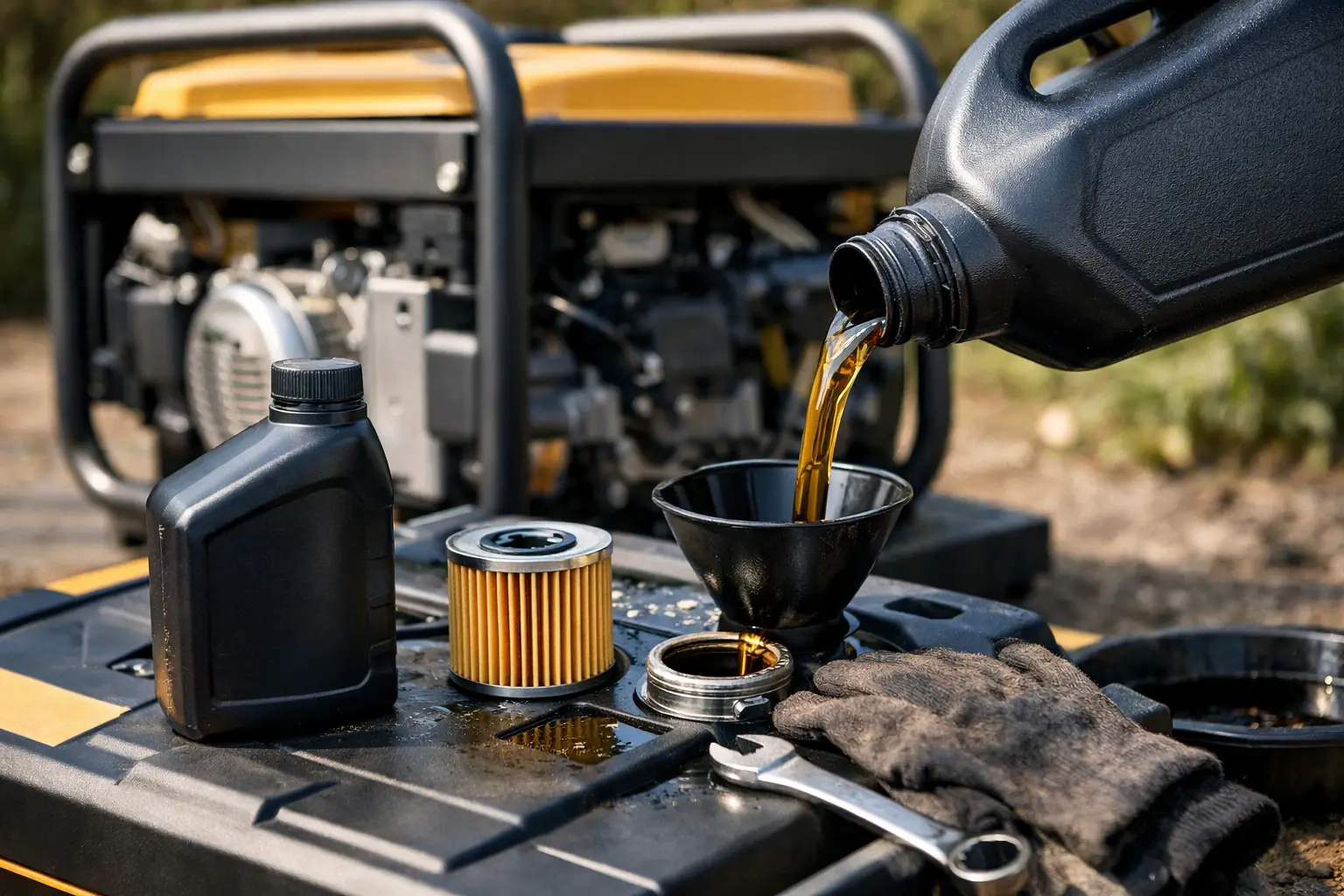
Follow the owner’s manual for oil-change intervals, air-filter inspection, and spark-plug service. Check the oil before each extended run, and keep the generator level so the low-oil shutdown system can work properly. Use fresh fuel, add a stabilizer when storing gasoline, and run the unit periodically under load rather than only starting it for a few minutes.
If you have a dual-fuel model, test both fuel modes. A propane regulator or hose that has never been checked is not something to discover during a storm. Keep spare oil, an approved fuel container, a basic spark plug, and the correct generator adapter with your backup equipment.
A Realistic Fuel Plan for Outages and Travel
Estimate fuel from your expected average load, not from the generator’s maximum wattage. If your unit burns 0.3 gallons per hour at a typical household load, a 24-hour outage requires about 7.2 gallons, plus a reasonable safety margin. If you need continuous power for several days, reducing demand is usually more practical than trying to store excessive gasoline.
Cycle loads when safe to do so. Keep refrigerator and freezer doors closed, charge devices in batches, turn off battery chargers once full, and avoid running resistive appliances such as space heaters, toaster ovens, and electric cooktops from a portable generator. Those appliances convert nearly every watt into heat, which makes them poor candidates when fuel is limited.
A fuel-efficient setup is not necessarily the smallest generator or the largest tank. It is the combination of a correctly sized generator, suitable fuel, safe inlet-box or cord setup, and a load plan that protects the equipment your household, RV, or jobsite truly depends on. Build that plan before you need it, and each gallon will do more useful work.
CHECK OUT THE BEST GENERATORS FUEL AT THE BEST PRICE ON AMAZON 🛒