A generator can keep a refrigerator, well pump, furnace blower, or RV running when the weather turns bad. It can also become a serious electrical and carbon monoxide hazard if rain reaches the outlets, fuel system, or engine while it is operating. Knowing
how to protect generator from rain means more than throwing a tarp over it. The goal is to keep water away while preserving the airflow the engine needs to run safely.
Start With Safe Generator Placement
Place a portable generator outdoors on firm, level ground where water will drain away from the unit. Avoid low spots, puddles, soft soil, and areas beneath a roof valley where runoff can pour onto the generator during a storm. A slightly elevated pad of gravel, concrete pavers, or a purpose-built generator platform helps keep the frame and electrical panel above standing water.
Distance matters just as much as dryness. Keep the generator at least 20 feet from doors, windows, vents, crawlspace openings, and attached garages, with the exhaust directed away from the home. Never run it inside a garage, shed, basement, tent, or carport, even if the door is open. Those spaces can trap lethal carbon monoxide quickly.
Think through the wind direction before starting the generator. Driving rain can blow sideways under a basic shelter, and exhaust can drift toward the home when winds shift. A good location leaves room around all sides of the machine and does not force you to route cords through a doorway or a partially open window.
Use a Cover Designed for Running Generators
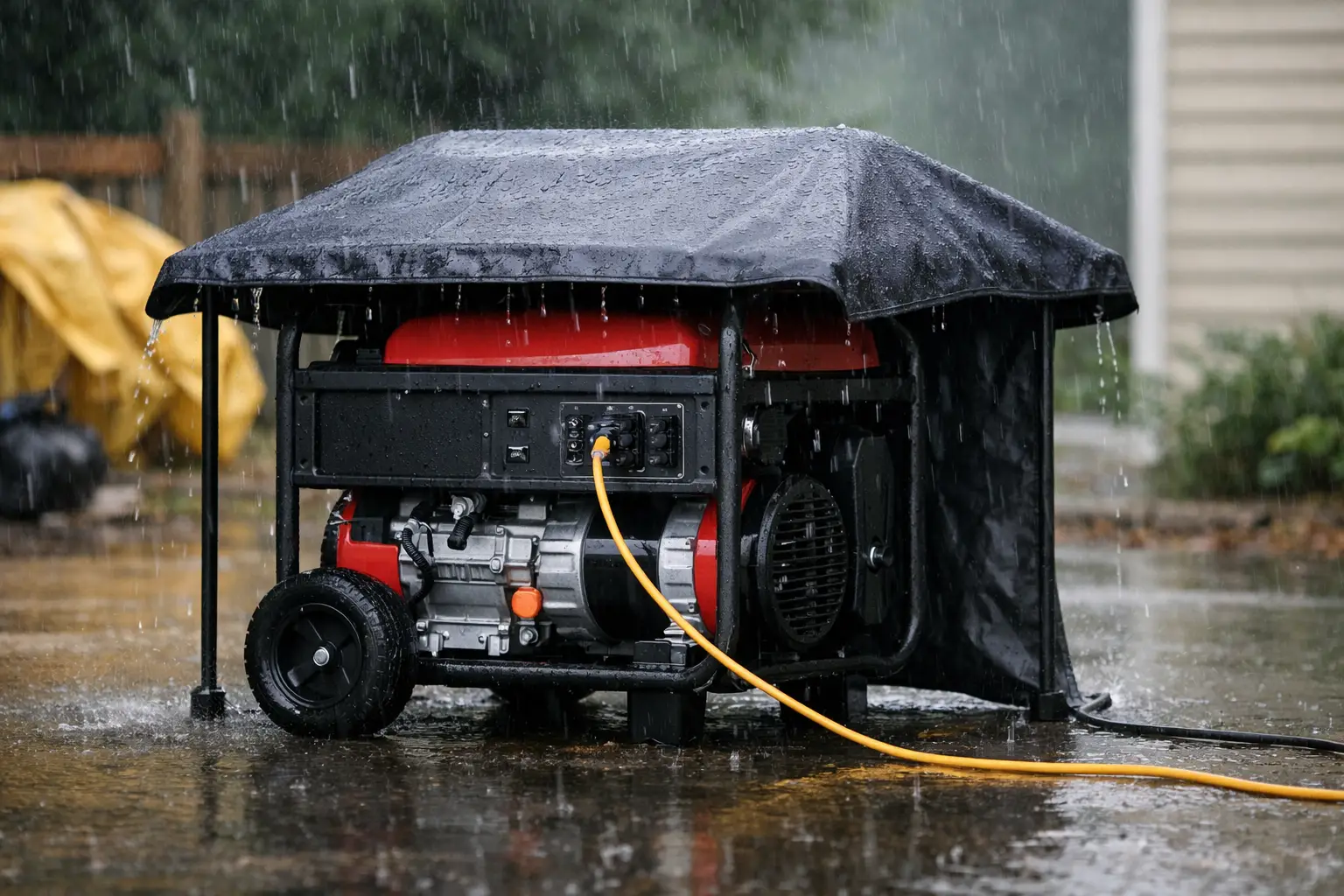
The safest way to protect an operating portable generator from rain is a purpose-built running cover, often called a generator tent, rain shelter, or weatherproof operating enclosure. These products are made to shield the top and control panel from rain while leaving specified intake, exhaust, and cooling areas open.
A storage cover is different. A fitted vinyl or polyester cover protects a generator from dust, UV exposure, and moisture when the engine is off and cool. It should not be used while the generator is running unless the manufacturer specifically says it is designed for operation. Covering a running generator with a standard cover, tarp, moving blanket, or plastic sheet can trap heat, restrict airflow, damage the unit, and create a fire risk.
When comparing operating covers, look beyond the word “waterproof.” Confirm that the cover is sized for your generator’s dimensions, has openings or panels that match the control side, and is rated for use with a running engine. The best option depends on the generator style. Open-frame models usually need a larger canopy-style shelter, while enclosed inverter generators may fit purpose-made covers more closely.
Why a tarp is not a safe shortcut
A tarp seems convenient during an emergency, but it creates two common problems. First, it can collect rainwater and collapse against the hot muffler or exhaust area. Second, it blocks the cooling airflow that prevents overheating. Even a tarp mounted above the generator needs careful clearance, secure anchoring, and open sides so it does not become a heat trap or blow into the machine.
If a permanent canopy is your plan, use noncombustible or heat-resistant materials near the generator and follow the generator manufacturer’s clearance requirements. A small roof alone is not enough if it channels water onto the unit or leaves it exposed to wind-driven rain.
Keep Outlets, Cords, and Connections Dry
The alternator and engine are not the only parts affected by rain. Wet outlets, damaged extension cords, and loose adapters raise the risk of shock, short circuits, and equipment damage. Before every use, inspect the generator receptacles, cord jackets, plugs, and inlet box for cracks, corrosion, bent blades, or moisture.
Use
outdoor-rated extension cords with intact molded plugs and adequate wire size for the load and distance. A heavy-duty 12-gauge cord may suit many household loads, but higher-demand equipment and longer runs may require 10-gauge cords. Undersized cords can overheat even in dry conditions, so rain is not the only reason to choose carefully.
Keep cord connections off the ground. A cord connection protector or weatherproof cord cover can shield plug-to-cord joints from direct rain. Where a cord must cross a wet driveway or yard, route it so connectors do not sit in water. Avoid making a connection under a puddle-prone tarp edge or near a downspout.
For home backup power, a properly installed
power inlet box and transfer switch offer a cleaner, safer setup than running multiple extension cords through the house. Choose an outdoor-rated inlet box with a weatherproof cover, and make sure its amperage, voltage, and plug configuration match the generator outlet and generator cord. A 30-amp L14-30 connection, for example, is not interchangeable with a 50-amp SS2-50 setup simply because both are used for generator power.
Do not backfeed a home by plugging a generator into a wall outlet with a homemade double-male cord. This can energize utility lines, endanger utility workers, damage appliances, and violate electrical codes. A transfer switch or listed interlock installed by a qualified electrician is the appropriate solution.
Protect Fuel and the Engine From Water
Rain entering the fuel tank can cause hard starting, surging, corrosion, and fuel-system damage. Keep the fuel cap securely tightened, inspect the cap gasket periodically, and do not refuel during heavy rain if water can enter the tank. Shut the generator down, let it cool, and move fuel containers under cover before refueling.
If you suspect water has entered the fuel system, do not keep cranking the engine and hope it clears itself. Check the fuel, sediment bowl if equipped, and carburetor drain according to the owner’s manual. In some cases, draining contaminated fuel is necessary before restarting.
After using the generator in wet weather, allow it to cool under a dry, ventilated shelter. Wipe off standing water, inspect the outlets and breaker panel, and let the machine dry fully before installing a storage cover. Long-term storage with trapped moisture encourages rust on fasteners, electrical terminals, and the frame.
What to Do When Rain Starts While the Generator Is Running
If rain begins unexpectedly, do not rush to grab a hot generator or throw a cover over it. First, assess whether the unit is already under an approved operating cover and whether the electrical connections remain dry. If it is exposed to direct rain, the safest choice may be to shut it down rather than continue operating in unsafe conditions.
Turn off or unplug connected loads first, then switch off the generator following the manufacturer’s shutdown procedure. Do not touch wet outlets, plugs, or damaged cords. Once the unit has stopped and cooled, move it to a safe outdoor shelter or install the correct rain-rated operating cover before restarting.
This is one reason emergency preparation should happen before a storm arrives. Set up the generator location, test the cord route, confirm the inlet box works, and make sure the operating cover fits while the weather is still calm. A storm is the wrong time to discover that a cover blocks the control panel or that your generator cord is too short.
Choose Equipment That Fits Your Use Case
Homeowners who rely on a generator for sump pumps, refrigerators, well pumps, or a transfer-switch connection may benefit from a dedicated outdoor generator enclosure or a covered operating area designed around their specific unit. The investment makes more sense when backup power is used regularly or when the generator must operate through long storms.
Campers and RV owners usually need a portable solution. A compact inverter generator, an outdoor-rated cord, a generator rain tent, and a dry place to store fuel often provide the right balance of mobility and weather protection. Jobsite users may need heavier-duty shelters and cord protection because equipment is exposed to mud, repeated setup, and higher electrical loads.
At TopGeneratorsOnline, we recommend checking compatibility before buying accessories. Measure the generator, identify its exhaust location, confirm the outlet type, and compare the shelter’s operating instructions with your generator manual. A rain cover that fits physically but obstructs the muffler, air intake, or service panel is not a safe fit.
A Simple Wet-Weather Checklist
Before starting in rain-prone conditions, confirm four things: the generator is outdoors on dry, level ground; the operating shelter is designed for a running generator; cords and plug connections are elevated and protected; and exhaust has a clear path away from people and buildings. Also verify that carbon monoxide alarms inside the home have fresh batteries and are working properly.
Rain should not automatically leave you without backup power, but it does require a setup built around ventilation, drainage, and dry electrical connections. Prepare that setup before storm season, and your generator will be far more likely to provide the dependable power you bought it for when conditions are at their worst.