When the power goes out because of severe weather, equipment failure, or a utility interruption, a properly sized home generator can keep essential appliances and electrical systems running. In 2026, homeowners have several backup-power options, including automatic standby generators, dual-fuel portable generators, and high-output gasoline models designed for connection to selected household circuits.
The right generator depends on how much power your home needs, which fuels are available, how long outages typically last, and whether you want an automatic standby system or a portable generator that can be stored and deployed when needed.
Generac, Champion Power Equipment, and Westinghouse offer different approaches to residential backup power. Some models are permanently installed and start automatically when utility power fails, while others are portable units that provide high output and fuel flexibility without requiring a permanent generator installation.
Featured Home Backup Generators for 2026
| Product | |
|---|---|
| Generac Guardian 10kW Home Standby Generator | Check Amazon Price |
| Champion Power Equipment 8.5kW Standby Generator | Check Amazon Price |
| Westinghouse WGen14500DF Dual-Fuel Generator | Check Amazon Price |
| Westinghouse WGen20000 Home Backup Generator | Check Amazon Price |
| Westinghouse 12,500-Watt Dual-Fuel Generator | Check Amazon Price |
Home Generator Technologies to Know in 2026
1. Dual-Fuel Flexibility
Dual-fuel generators can operate on gasoline or propane, giving homeowners more than one fuel option during an extended outage. This can be useful when gasoline is difficult to obtain or when a homeowner prefers to keep propane available for emergency use.
The Westinghouse WGen14500DF, for example, operates on gasoline or propane rather than natural gas. It produces up to 14,500 running watts and 18,000 peak watts on gasoline, while propane output is rated at 13,000 running watts and 16,000 peak watts.
Dual-fuel operation does not mean that every generator can use every fuel. Always check the manufacturer’s specifications before connecting a fuel source.
2. Automatic Standby Generators
Standby generators are permanently installed and connected to a home’s electrical system through a transfer switch. When utility power fails, the system can start automatically and transfer selected household circuits to generator power.
This approach is different from a portable generator. A standby system is designed for automatic operation and does not require the homeowner to wheel the generator outside and connect it manually during every outage.
3. High-Output Portable Generators
Large portable generators can provide substantial power without the permanent installation associated with a traditional standby system. Some models are transfer-switch-ready and can support major household loads when installed and connected correctly.
However, portable generators require careful outdoor placement, fueling, operation, and storage. They should never be operated inside a house, garage, basement, or other enclosed space.
4. Diesel Generators
Diesel generators remain an option for certain residential, agricultural, commercial, and backup-power applications. Diesel engines are known for durability and fuel efficiency in many applications, but diesel is not the same as dual-fuel gasoline/propane operation.
For homeowners comparing the models in this guide, the featured products are primarily propane/natural-gas standby systems or gasoline/propane and gasoline portable generators. Buyers specifically seeking a residential diesel generator should compare diesel models separately rather than assuming a dual-fuel model is diesel-powered.
Featured Generator Details and Highlights
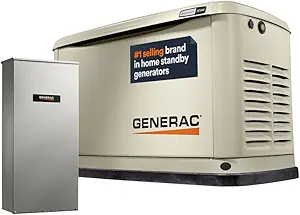
Generac Guardian 10kW Home Standby Generator
- Output Capacity: Up to 10,000 watts on propane
- Natural Gas Output: Up to 9,000 watts
- Fuel Type: Liquid propane or natural gas
- Monitoring: Mobile Link remote monitoring
- Transfer Switch: 16-circuit transfer switch configuration
- Warranty: 5 years
- Ideal For: Automatic backup of essential household circuits
The Generac Guardian 10kW is designed for homeowners who want an automatic backup system rather than a portable generator that must be manually positioned and connected during an outage.
The current model is available with a 16-circuit transfer switch and supports liquid propane or natural gas. Generac also includes Mobile Link remote monitoring, which allows owners to check generator status and maintenance information through connected devices.
This generator is better described as an essential-circuit backup solution rather than an automatic guarantee of whole-house power. The actual loads it can support depend on the home’s electrical demand, transfer-switch configuration, and any load-management equipment used.
Champion Power Equipment 8.5kW Standby Generator
- Output Capacity: 8,500 watts on propane
- Natural Gas Output: 7,500 watts
- Fuel Type: Propane or natural gas
- Transfer Switch: 50A automatic transfer switch
- Switch Capacity: 12 circuits
- Cold-Weather Starting: Rated down to -22°F
- Warranty: 10-year limited warranty
- Ideal For: Select-circuit residential backup
Champion’s 8.5kW home standby system is designed for homeowners who want automatic backup power without moving a portable generator into position during an outage.
The included 50A automatic transfer switch can manage up to 12 circuits, making this model particularly suitable for selected essential loads. The generator produces 8,500 watts on propane and 7,500 watts on natural gas.
Its 24-volt starting system is designed to operate in temperatures as low as -22°F without a warming kit. Champion also specifies a 10-year limited warranty for this home standby system.
Because this is a select-circuit system, homeowners should identify their most important loads before installation rather than assuming the generator can operate every appliance in the house simultaneously.
Westinghouse WGen14500DF Dual-Fuel Generator
- Gasoline Output: 14,500 running watts / 18,000 peak watts
- Propane Output: 13,000 running watts / 16,000 peak watts
- Fuel Type: Gasoline or propane
- Gasoline Runtime: Up to 16 hours at 25% load
- Engine: 713cc V-Twin
- Start System: Electric and remote start
- Transfer Switch: 50A transfer-switch ready
- Ideal For: Large-home backup, jobsites, and high-output portable power
The Westinghouse WGen14500DF is one of the higher-output portable options in this group. Despite the 14,500-watt name, its gasoline output includes both a running rating and a higher peak rating: 14,500 running watts and 18,000 peak watts.
The generator can operate on gasoline or propane. On propane, its output is rated at 13,000 running watts and 16,000 peak watts.
It includes a 50A 120/240V outlet that is transfer-switch and interlock-kit ready. The unit also has remote and electric start, a VFT display for voltage, frequency, and lifetime hours, automatic low-oil shutdown, and less than 5% total harmonic distortion.
This is a portable generator, not an automatic standby generator. A proper connection to a home’s electrical system requires the appropriate transfer equipment and installation.
Westinghouse WGen20000 Home Backup Generator
- Running Output: 20,000 watts
- Peak Output: 28,000 watts
- Fuel Type: Gasoline
- Engine: 999cc V-Twin
- Fuel Tank: Approximately 17 gallons
- Start System: Electric start
- Transfer Switch: 50A transfer-switch ready
- Ideal For: Large homes, high-demand loads, and heavy-duty backup applications
The Westinghouse WGen20000 is designed for homeowners who need substantially more output than a typical portable generator.
The important distinction is that 28,000 watts is the peak rating, while the continuous running rating is 20,000 watts. That distinction matters when calculating whether a generator can actually sustain a home’s electrical load.
The WGen20000 runs on gasoline and uses a 999cc V-Twin engine. It has 120/240V outlets, including 50A connections suitable for transfer-switch applications, along with a digital display for voltage, frequency, and operating hours.
The generator is also rated at less than 5% THD and includes automatic low-oil shutdown and overload protection.
Because of its size and weight, this is a substantially heavier portable generator than smaller residential models. Buyers should plan where it will be stored, how it will be moved, and how it will be connected before purchasing.
Westinghouse 12,500-Watt Dual-Fuel Generator
- Gasoline Output: 9,500 running watts / 12,500 peak watts
- Propane Output: 8,500 running watts / 11,200 peak watts
- Fuel Type: Gasoline or propane
- Gasoline Runtime: Up to 12 hours
- Engine: 457cc 4-stroke OHV
- Start System: Electric, remote, and recoil
- Display: VFT meter
- Ideal For: Moderate-to-high household backup and RV use
This Westinghouse dual-fuel model provides a useful balance between output, portability, and fuel flexibility.
On gasoline, the generator produces 9,500 running watts and 12,500 peak watts. On propane, output is rated at 8,500 running watts and 11,200 peak watts.
The 6.6-gallon gasoline tank can provide up to 12 hours of runtime under the manufacturer’s stated conditions. Actual runtime will vary with electrical load and operating conditions.
The unit also includes remote start, electric start, recoil start, a VFT display, automatic low-oil shutdown, GFCI outlets, and a transfer-switch-ready L14-30R connection.
Key Advantages of Modern Home Backup Generators
1. Remote Monitoring and Remote Start
Remote features can mean different things depending on the generator.
The Generac Guardian 10kW provides Mobile Link remote monitoring, allowing owners to check generator status and maintenance information remotely.
Portable Westinghouse models such as the WGen14500DF and WGen9500DF use remote-start systems that allow the engine to be started with a remote control.
These features are useful, but remote starting is not the same as internet-based monitoring. Buyers should check the exact connectivity features of the model they are considering.
2. Fuel Flexibility
Dual-fuel generators can operate on gasoline or propane, which gives homeowners another option during a prolonged outage.
Gasoline is widely available but requires appropriate storage practices. Propane can be stored for extended periods when handled correctly and can be useful when gasoline availability becomes a concern.
Natural gas is another option, but only for generators designed for natural-gas operation and homes with an appropriate utility connection.
3. Runtime
Runtime depends on fuel capacity, electrical load, engine efficiency, fuel type, and operating conditions.
For example, a generator with a large gasoline tank may run longer between refueling stops than a smaller unit, while a propane-powered generator’s runtime depends on the size and condition of the propane supply.
Manufacturer runtime figures are normally measured at a specified load, so they should not be interpreted as a guaranteed runtime under full household demand.
4. Safety Systems
Modern generators can include several safety features, including:
- Automatic low-oil shutdown
- Overload protection
- GFCI-protected outlets
- Carbon monoxide protection on applicable portable models
- Automatic transfer switches on standby systems
- Weather-resistant enclosures or outlet covers
These features reduce certain risks, but they do not replace proper installation and safe operating practices.
5. Powering Essential Household Loads
Depending on the generator’s continuous output and the home’s electrical configuration, backup power can support loads such as:
- Refrigerators and freezers
- Sump pumps
- Well pumps
- Heating systems
- Air-conditioning equipment
- Lighting
- Internet routers and networking equipment
- Home security systems
- Medical equipment
- Electric water heaters
The key is to calculate the actual running and starting wattage of the equipment you want to operate. High-demand appliances can have substantial startup loads, and several large appliances may exceed a generator’s continuous output if operated simultaneously.
How to Choose the Right Home Backup Generator
1. Calculate Your Power Requirements
Start by listing the appliances and circuits you want to keep running during an outage.
Do not simply add the wattage printed on every appliance. Some motors, compressors, pumps, and HVAC systems require additional starting power.
A basic backup plan might prioritize:
- Refrigerator
- Freezer
- Furnace or heating system
- Sump pump
- Well pump
- Internet equipment
- Lighting
- Selected kitchen circuits
Larger systems may also support central air conditioning, electric water heating, or other high-demand equipment when the generator and electrical system are properly sized.
2. Choose the Fuel Type
Consider the fuels that are realistically available at your home.
Natural gas: Convenient for homes already connected to a suitable utility line and compatible generator.
Propane: Useful for homeowners who want an on-site fuel supply and a generator designed for LPG operation.
Gasoline: Common among portable generators and widely available, but it requires careful storage and fuel management.
Diesel: An option for specific residential and commercial applications, particularly where diesel availability and engine characteristics justify it.
Dual fuel: Allows gasoline and propane operation on compatible generators.
3. Compare Running Watts, Not Just Peak Watts
One of the easiest generator-shopping mistakes is focusing only on the largest number in the product name.
Peak watts describe short-duration output available for starting certain loads. Running or rated watts describe the power the generator is designed to provide continuously.
For example, the Westinghouse WGen20000 is rated for 20,000 running watts and 28,000 peak watts. The two figures serve different purposes.
Always use the running-watt rating when estimating the sustained household load.
4. Check Transfer-Switch Compatibility
A portable generator should not simply be connected to household wiring with an improvised cable.
A properly installed transfer switch or approved interlock arrangement can isolate the home’s electrical system from utility power and allow generator power to feed designated circuits.
Standby generators use automatic transfer equipment to switch between utility and generator power.
The exact transfer equipment depends on the generator, electrical service, panel configuration, local requirements, and installation method.
5. Consider Generator Placement
Location is one of the most important safety considerations.
Portable generators should be operated outdoors and at least 20 feet away from the home, with the exhaust directed away from the building. Never operate a portable generator inside a house, garage, basement, crawlspace, or other enclosed area.
Stationary standby generators have different installation requirements, including minimum clearances from walls, windows, doors, and other openings. These requirements vary by installation and generator design.
Always follow the manufacturer’s installation instructions and applicable local electrical, building, and fire requirements.
6. Consider Noise and Physical Size
High-output portable generators can be heavy and relatively loud. Before buying one, consider:
- Generator weight
- Wheel and handle design
- Storage location
- Noise rating
- Fuel storage
- Distance from neighboring properties
- Electrical connection requirements
A generator that produces enough power but cannot be safely stored, moved, fueled, and operated may not be practical for a particular home.
Installation Tips for Homeowners
Permanently installed standby generators should be installed according to the manufacturer’s instructions and applicable local codes. In many situations, professional electrical and gas installation is required or strongly recommended.
For portable generators, homeowners should plan the electrical connection before an emergency occurs.
Important considerations include:
- Location: Operate portable generators outdoors and at least 20 feet from the home, with exhaust directed away from the building.
- Electrical connection: Use an appropriate transfer switch or approved interlock arrangement installed according to applicable requirements.
- Fuel: Store gasoline and propane according to applicable safety requirements and manufacturer recommendations.
- Ventilation: Never operate a fuel-burning generator in an enclosed or partially enclosed area.
- Carbon monoxide: Install and maintain CO alarms according to the manufacturer’s instructions and local requirements.
- Testing: Periodically test the generator under the manufacturer’s recommended procedure.
- Documentation: Keep the owner’s manual available so you can follow the correct starting, shutdown, maintenance, and emergency procedures.
Maintenance Guidelines for Long-Term Use
The maintenance schedule depends on the specific generator, engine, fuel system, and operating conditions.
Instead of relying on a universal interval, follow the maintenance schedule in the owner’s manual for your exact model.
Common maintenance tasks may include:
- Engine oil changes
- Air-filter inspection or replacement
- Spark-plug inspection on gasoline engines
- Battery inspection on electric-start and standby systems
- Fuel-system inspection
- Cooling-system inspection
- Electrical connection inspection
- Exercise cycles for standby generators
- Fuel stabilization and storage procedures
Generators that sit unused for long periods can develop problems if fuel, batteries, oil, or other components are not maintained properly.
For a standby generator, scheduled exercise cycles and professional servicing can help identify problems before an actual outage occurs.
Why Consider a Home Backup Generator in 2026?
1. Extended Power Outages
Severe weather and utility problems can leave homes without electricity for extended periods. A properly sized backup generator can help maintain essential household loads until utility service is restored.
2. Protection of Essential Equipment
A generator can keep refrigerators, freezers, sump pumps, heating systems, and other important equipment operating during an outage.
For homes with basements or sump pumps, maintaining power can be particularly important when an outage occurs during heavy rain.
3. Remote Work and Connectivity
Internet routers, computers, networking equipment, and other electronics have become important parts of everyday household life.
A generator can help keep selected electronic equipment operating, provided the generator and electrical system are properly configured.
4. Fuel Choice
Dual-fuel generators give homeowners another option if one fuel becomes difficult to obtain.
A homeowner who stores propane can have an alternative to gasoline, while a standby generator connected to natural gas can use the home’s existing utility supply when that service remains available.
5. Emergency Preparedness
A generator is one part of a broader emergency-preparedness plan.
Homeowners should also consider fuel storage, carbon monoxide alarms, battery backup for critical electronics, flashlights, communication equipment, and a clear procedure for safely starting and shutting down the generator.
Conclusion
Choosing a home backup generator in 2026 starts with understanding the difference between standby and portable systems, continuous and peak wattage, and single-fuel and dual-fuel operation.
The Generac Guardian 10kW and Champion 8.5kW are designed for automatic standby applications and selected household circuits, while the Westinghouse WGen14500DF provides high-output dual-fuel portable power. The Westinghouse WGen20000 focuses on very high gasoline output, with 20,000 running watts and 28,000 peak watts, while the 12,500-watt dual-fuel model provides a smaller portable option with gasoline and propane capability.
There is no single generator that fits every home. The most appropriate choice depends on your required running wattage, starting loads, fuel availability, installation requirements, noise tolerance, storage space, and budget.
Before purchasing, verify the generator’s current specifications, warranty, fuel requirements, transfer-switch compatibility, and installation instructions. Most importantly, size the system around the loads you actually need during an outage rather than choosing a generator based only on its largest advertised wattage.