As an Amazon Associate I earn from qualifying purchases.
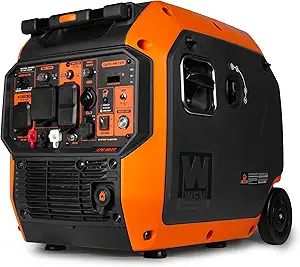
If you’re shopping for a 220 volt generator in the United States, there’s an important detail to understand before comparing models: most portable generators marketed for this type of use actually provide 120/240V output rather than a simple 220V connection.
That matters because 120/240V portable generators can power ordinary 120V appliances while also supplying 240V power for equipment such as well pumps, larger tools, air conditioners, and selected household circuits through a properly installed transfer switch or interlock.
For 2026, dual-fuel generators remain especially attractive because they can run on gasoline or propane. Gasoline generally provides the highest output, while propane gives you another fuel option that is convenient to store for emergencies.
I’ve kept the focus of this guide on portable generators that offer useful 120/240V capability, with options ranging from a relatively compact inverter generator to large home-backup machines.
Quick Comparison: Best 220 Volt Generators for 2026
| Generator | Gas Running/Peak | Propane Running/Peak | Type | 120/240V | Best For |
|---|---|---|---|---|---|
| WEN DF680iX | 5,100 / 6,800W | 4,500 / 6,000W | Inverter | Yes | Quiet power and RV use |
| WEN DF1100T | 8,300 / 11,000W | 7,500 / 9,500W | Conventional | Yes | Home backup value |
| Westinghouse WGen9500DF | 9,500 / 12,500W | 8,500 / 11,200W | Conventional | Yes | Heavy-duty home backup |
| WEN DF475T | 3,800 / 4,750W | 3,500 / 4,350W | Conventional | Yes | Budget and moderate loads |
| Westinghouse iGen11000DFc | 9,000 / 11,000W | 8,100 / 10,000W | Inverter | Yes | High-power clean inverter output |
Our top picks
- Best compact inverter: WEN DF680iX
- Best value for home backup: WEN DF1100T
- Best heavy-duty conventional generator: Westinghouse WGen9500DF
- Best budget 120/240V option: WEN DF475T
- Best high-power inverter: Westinghouse iGen11000DFc
What Does “220 Volt Generator” Actually Mean?
The term 220 volt generator is widely used by shoppers, but residential electrical systems in the United States commonly use 120/240V split-phase power.
A generator with a 120/240V receptacle can provide two 120V legs and 240V across the appropriate terminals. That’s what makes these generators useful for certain larger household loads and equipment that requires 240V.
So, when you’re searching Amazon for a “220V generator,” look closely at the specifications.
You should specifically look for:
- 120/240V output
- A suitable 30A or 50A 120/240V receptacle
- Adequate running wattage
- Adequate starting wattage
- Transfer-switch or interlock compatibility
- The correct plug and inlet for your installation
Don’t buy a generator simply because the listing says “220V.” The actual receptacles and electrical specifications matter much more.
1. WEN DF680iX 6,800-Watt Dual Fuel Inverter Generator
Buy it now on Amazon at the best price!
Click here to shop now!
The WEN DF680iX is one of the most interesting choices in this lineup because it combines dual-fuel operation, inverter technology, and 120/240V capability in a considerably smaller package than traditional 8,000- to 12,000-watt generators.
It is particularly appealing if you want a generator that can work for an RV, backup essentials during an outage, or supply 240V equipment without moving a 200-plus-pound open-frame generator.
The DF680iX produces 5,100 running watts and 6,800 starting watts on gasoline. On propane, output is rated at 4,500 running watts and 6,000 starting watts. It uses a 224cc engine and has a 2.9-gallon fuel tank. WEN also lists a 120/240V L14-30R connection, RV-oriented TT-30R output, and inverter technology.
Key Specifications
| Feature | WEN DF680iX |
|---|---|
| Gasoline Running Wattage | 5,100W |
| Gasoline Starting Wattage | 6,800W |
| Propane Running Wattage | 4,500W |
| Propane Starting Wattage | 6,000W |
| Engine | 224cc 4-stroke OHV |
| Fuel | Gasoline / Propane |
| Voltage | 120V / 240V |
| Fuel Tank | 2.9 gallons |
| Gas Runtime | Up to 6.1 hours at 50% load |
| Propane Runtime | Up to 9 hours at 50% load |
| Weight | About 95 lb |
| Starting | Electric / Recoil |
| Generator Type | Inverter |
Why It Stands Out
The biggest advantage is its combination of portability and 240V capability.
Unlike many large conventional generators, this WEN is much easier to move around. It also produces inverter power, which is a major advantage when you’re running modern electronics and other equipment that benefits from cleaner electrical output.
WEN’s parallel system can also provide 240V operation with the appropriate GNA240i parallel connection system, although that requires compatible equipment and additional hardware.
Pros
- Inverter technology
- Dual-fuel operation
- 120/240V capability
- Much lighter than large home-backup generators
- RV-friendly outlet configuration
- Useful for sensitive electronics
- Good choice when portability matters
Cons
- Much less running power than the 9,000W+ generators below
- Not designed to power an entire large home
- Parallel operation requires additional equipment
Best for: RV owners, smaller homes, electronics, moderate emergency loads, and buyers who want 240V capability without a 200-pound generator.
2. WEN DF1100T 11,000-Watt Dual Fuel Portable Generator
Buy it now on Amazon at the best price!
Click here to shop now!
If your priority is home backup power at a reasonable price, the WEN DF1100T is one of the strongest options in this list.
The generator produces 8,300 running watts and 11,000 surge watts on gasoline. Propane output is rated at 7,500 running watts and 9,500 surge watts.
Most importantly for this article, the DF1100T provides selectable 120V/240V output and includes a 120/240V NEMA 14-50R receptacle. WEN also specifies a 120V/240V capability intended for transfer-switch use.
Key Specifications
| Feature | WEN DF1100T |
|---|---|
| Gasoline Running Wattage | 8,300W |
| Gasoline Starting Wattage | 11,000W |
| Propane Running Wattage | 7,500W |
| Propane Starting Wattage | 9,500W |
| Engine | 457cc 4-stroke OHV |
| Fuel | Gasoline / Propane |
| Voltage | 120V / 240V |
| Fuel Tank | 6.6 gallons |
| Runtime | Up to 8.5 hours at 50% load |
| Starting | Electric |
| 240V Outlet | NEMA 14-50R |
| Warranty | 2 years |
The DF1100T also includes four 120V GFCI outlets, a 120V 30A twist-lock outlet, a 120/240V 50A outlet, and a propane connection hose.
Why Buy the DF1100T?
This is the kind of generator that makes sense when you’re less concerned about campground-level noise and more concerned with keeping essential household equipment operating during an outage.
Its output can handle substantially larger loads than the DF680iX, making it better suited to refrigerators, sump pumps, furnaces, selected air-conditioning loads, tools, and other demanding equipment.
Pros
- 11,000W starting output on gasoline
- 8,300W continuous gasoline output
- 120/240V operation
- NEMA 14-50R outlet
- Dual-fuel flexibility
- Electric start
- Good value for the power
Cons
- Heavy
- Conventional generator rather than inverter
- Louder than enclosed inverter models
- Propane reduces available output
Best for: homeowners who need substantial 120/240V emergency power without moving into premium inverter pricing.
3. Westinghouse WGen9500DF 12,500-Watt Dual Fuel Generator
Buy it now on Amazon at the best price!
Click here to shop now!
The Westinghouse WGen9500DF is a good example of why generator wattage labels can be confusing.
It’s sometimes described as a “12,500-watt generator,” but 12,500 watts is its peak output on gasoline. Its continuous gasoline rating is 9,500 watts. On propane, it produces 8,500 running watts and 11,200 peak watts.
That distinction is important when sizing a generator for a home.
Key Specifications
| Feature | Westinghouse WGen9500DF |
|---|---|
| Gasoline Running Wattage | 9,500W |
| Gasoline Peak Wattage | 12,500W |
| Propane Running Wattage | 8,500W |
| Propane Peak Wattage | 11,200W |
| Engine | 457cc 4-stroke OHV |
| Fuel | Gasoline / Propane |
| Voltage | 120V / 240V |
| Fuel Tank | 6.6 gallons |
| Gas Runtime | Up to 12 hours at 25% load |
| Starting | Electric / Remote / Recoil |
| 240V Outlets | L14-30R and 14-50R |
| Weight | About 211 lb |
The WGen9500DF includes an L14-30R transfer-switch-ready receptacle and a 120/240V 14-50R outlet. It also has GFCI protection, electric start, remote start, low-oil shutdown, and overload protection.
One Important Limitation
This is a conventional generator, not an inverter generator.
Westinghouse lists total harmonic distortion at up to 23%, so I would not automatically choose this model over an inverter simply because it has more watts.
For basic household loads and equipment designed for generator power, its large output can be very useful. But if your priority is cleaner inverter output for sensitive electronics, the iGen11000DFc later in this list is the more appropriate comparison.
Pros
- Excellent continuous output
- 120/240V operation
- 50A receptacle
- Remote start
- Dual fuel
- Large fuel tank
- Good choice for transfer-switch applications
Cons
- Around 211 lb
- Loud compared with inverter generators
- Conventional generator
- Higher THD than an inverter
- Not the best choice for quiet RV environments
Best for: whole-home essential-load backup, well pumps, larger appliances, and homeowners who prioritize output and value over quiet operation.
4. WEN DF475T 4,750-Watt Dual Fuel Portable Generator
Buy it now on Amazon at the best price!
Click here to shop now!
The WEN DF475T is the smaller, more affordable option in this lineup.
It produces 3,800 running watts and 4,750 starting watts on gasoline. Propane output drops to 3,500 running watts and 4,350 starting watts.
Despite its smaller size, it still offers selectable 120V/240V operation and an L14-30R 120/240V twist-lock outlet.
Key Specifications
| Feature | WEN DF475T |
|---|---|
| Gasoline Running Wattage | 3,800W |
| Gasoline Starting Wattage | 4,750W |
| Propane Running Wattage | 3,500W |
| Propane Starting Wattage | 4,350W |
| Engine | 224cc 4-stroke OHV |
| Fuel | Gasoline / Propane |
| Voltage | 120V / 240V |
| Fuel Tank | 4 gallons |
| Runtime | Up to 11 hours at 50% load |
| Starting | Electric |
| Weight | About 106 lb |
WEN includes two 120V GFCI outlets, the 120/240V L14-30R outlet, a 12V DC outlet, wheel and handle kit, and a propane hose.
Who Should Buy It?
This isn’t a whole-house generator.
Instead, think of it as an emergency power source for selected circuits and essential equipment.
Depending on the starting requirements of your equipment, it can be useful for refrigerators, lights, smaller pumps, electronics, tools, and moderate RV applications.
The important thing is not to look at the 4,750W peak number and assume you can continuously operate 4,750 watts of equipment.
The 3,800W running rating is the number you should use when calculating your sustained load.
Pros
- Lower purchase cost
- Dual fuel
- 120/240V capability
- Electric start
- Wheels and handle included
- Reasonable runtime
Cons
- Limited continuous output
- Conventional generator
- Not appropriate for large whole-home loads
- Propane output is lower
Best for: budget-conscious buyers, moderate emergency loads, smaller workshops, and RV owners who need 120/240V capability without a large generator.
5. Westinghouse iGen11000DFc 11,000-Watt Dual Fuel Inverter Generator
Buy it now on Amazon at the best price!
Click here to shop now!
If you want high output without giving up inverter technology, the Westinghouse iGen11000DFc is arguably the most interesting generator in this group.
It produces 9,000 running watts and 11,000 peak watts on gasoline. On propane, it delivers 8,100 running watts and 10,000 peak watts.
Unlike the WGen9500DF, this model uses inverter technology and is rated at less than 3% total harmonic distortion, making it a better fit for buyers who want high output and cleaner power.
Key Specifications
| Feature | Westinghouse iGen11000DFc |
|---|---|
| Gasoline Running Wattage | 9,000W |
| Gasoline Peak Wattage | 11,000W |
| Propane Running Wattage | 8,100W |
| Propane Peak Wattage | 10,000W |
| Engine | 457cc 4-stroke OHV |
| Fuel | Gasoline / Propane |
| Voltage | 120V / 240V |
| Fuel Tank | About 9.8 gallons |
| Gas Runtime | Up to 17 hours |
| THD | Less than 3% |
| Starting | Remote / Electric / Recoil |
| Generator Type | Inverter |
The iGen11000DFc includes a 120V L14-30R and a 120/240V 14-50R transfer-switch-ready outlet, along with GFCI 120V outlets. It also includes a CO sensor, remote start, digital display, and parallel capability.
Why It’s Different
The combination of 9,000 running watts, dual fuel, inverter technology, 240V output, and less than 3% THD puts this generator in a different category from traditional open-frame generators.
It’s also substantially more practical for homeowners who have a mixture of modern electronics and larger electrical loads.
The tradeoff is price and weight. This isn’t a lightweight camping generator.
Pros
- 9,000W continuous gasoline output
- Inverter technology
- Less than 3% THD
- 120/240V output
- Dual fuel
- 50A outlet
- Remote start
- CO sensor
- Long gasoline runtime
- Parallel capable
Cons
- Expensive
- Heavy
- Overkill for basic RV or camping needs
- Propane produces less power than gasoline
Best for: homeowners who want high-output 120/240V backup power with inverter technology and cleaner electrical output.
220V vs. 240V: Which One Do You Need?
If you’re in the United States, don’t get too caught up in the “220V” terminology.
For most residential generator applications, the specification you actually want to see is 120/240V.
A 120/240V generator can provide:
- Standard 120V household power
- 240V power for compatible equipment
- Power to selected circuits through a transfer switch or interlock
- Better flexibility for emergency backup
Before buying, check the electrical requirements of the equipment you intend to operate.
A generator’s 240V rating doesn’t mean every receptacle supplies 240V, either. Many generators have separate 120V outlets and one or more 120/240V outlets.
How Many Watts Do You Need?
This is one of the most important questions to answer before buying a generator.
Start by listing the appliances or equipment you want to operate at the same time.
For example:
| Appliance | Typical Running Load | Starting Load |
|---|---|---|
| Refrigerator | 100–400W | Higher during startup |
| Sump pump | 800–1,500W | Higher during startup |
| Furnace blower | 400–800W | Higher during startup |
| Window AC | 500–1,500W | Higher during startup |
| Well pump | Varies widely | High starting demand |
| Lights | 10–100W each | Usually low |
| TV | 50–200W | Usually low |
| Microwave | 1,000–1,500W | Usually similar |
| Power tools | Varies | Can have high startup demand |
These are general planning ranges, not guarantees. Always check the nameplate or manufacturer’s specifications for your actual equipment.
The important rule is:
Size the generator using running watts plus the starting requirements of equipment that may start at the same time.
Do not simply add the peak wattage of every appliance.
Dual Fuel vs. Gasoline-Only Generators
One of the strongest reasons to choose a dual-fuel generator is fuel flexibility.
Gasoline
Gasoline usually gives you the highest output from a dual-fuel generator.
It’s also widely available when fuel stations are operating normally.
The downside is long-term storage. Gasoline can degrade, so proper storage and fuel management matter.
Propane
Propane is useful for emergency preparedness because you can keep compatible tanks stored for future use.
The downside is that most dual-fuel generators produce fewer running and peak watts on propane than on gasoline.
For example, the WEN DF1100T produces 8,300 running watts on gasoline but 7,500 on propane.
For that reason, if you’re planning to run the generator primarily on propane, size your system according to the propane wattage, not the gasoline rating.
Inverter vs. Conventional 220/240V Generators
The five generators above illustrate an important distinction.
Conventional generator
Conventional generators generally offer a lot of power for the money.
They’re attractive for:
- Home backup
- Job sites
- Pumps
- Large appliances
- Heavy-duty tools
The WEN DF1100T and Westinghouse WGen9500DF fall into this category.
Inverter generator
Inverter generators are usually more attractive when you care about:
- Cleaner power
- Lower noise
- Better fuel efficiency at lighter loads
- Sensitive electronics
- RV use
The WEN DF680iX and Westinghouse iGen11000DFc are inverter models.
For buyers who need both high output and cleaner inverter power, the iGen11000DFc is the strongest choice among these five.
Can You Use a 220/240V Generator for an RV?
Yes, but you need to look at your RV’s electrical system rather than simply buying the largest generator available.
Many RVs use 30A or 50A electrical connections.
A 30A RV generally has a different power requirement from a 50A RV, and not every 120/240V generator is automatically a plug-and-play RV solution.
For an RV, check:
- The RV’s shore-power connector.
- The generator’s available receptacles.
- Whether an appropriate adapter is required.
- Maximum continuous wattage.
- Air-conditioner starting requirements.
- Whether the generator is appropriate for campground noise restrictions.
For smaller RVs, a compact inverter can make more sense than a 200-pound home-backup generator.
Using a 240V Generator for Home Backup
If your goal is to power selected circuits in your house, a generator with 120/240V output can be extremely useful.
However, do not connect a portable generator to a household wall outlet.
A home backup installation should use an appropriately rated transfer switch or approved interlock system installed according to local electrical requirements.
The generator must also be sized for the inlet, transfer equipment, and loads you’re planning to operate.
For example, buying an 11,000-watt generator does not automatically mean you can safely feed every circuit in a large home.
A qualified electrician can help determine the appropriate inlet, breaker, transfer equipment, and circuit configuration.
Generator Safety: What You Need to Know in 2026
This part should never be treated as optional.
Portable generators produce carbon monoxide, an odorless and potentially deadly gas.
The CPSC’s current guidance says portable generators should be operated outside only and at least 20 feet from the home, with exhaust directed away from doors, windows, and vents. Generators should never be operated inside a house, garage, basement, crawlspace, shed, or other enclosed area.
The CDC also recommends keeping portable generators more than 20 feet from doors, windows, and vents and using a battery-powered or battery-backup CO detector in the home.
Important safety rules
- Never operate a portable generator inside a home or garage.
- Never assume an open garage door makes generator operation safe.
- Keep the generator at least 20 feet away from the house.
- Point exhaust away from the building.
- Keep working CO alarms inside the home.
- Never backfeed your house through a wall outlet.
- Use a properly installed transfer switch or approved interlock.
- Keep the generator dry and follow the manufacturer’s wet-weather instructions.
- Never refuel a hot or running generator.
- Follow the owner’s manual for maintenance and operation.
A built-in CO shutoff is an excellent safety feature, but it does not make indoor operation safe. CPSC specifically recommends looking for generators equipped with automatic CO shutoff protection.
Which 220 Volt Generator Should You Buy?
The right choice depends on what you’re actually trying to power.
Choose the WEN DF680iX if:
You want a more portable inverter generator with 120/240V capability and enough output for moderate emergency loads or RV use.
Choose the WEN DF1100T if:
You want a relatively affordable high-output generator for home backup and need 120/240V capability.
Choose the Westinghouse WGen9500DF if:
You want a heavy-duty conventional generator with 9,500 running watts on gasoline, remote start, dual fuel, and both 30A and 50A 120/240V connections.
Choose the WEN DF475T if:
You want a smaller and less expensive 120/240V dual-fuel generator for moderate loads.
Choose the Westinghouse iGen11000DFc if:
You want high output, dual-fuel flexibility, 240V capability, and inverter technology with less than 3% THD.
Frequently Asked Questions
Is a 220V generator the same as a 240V generator?
Not exactly, although the terms are often used interchangeably in consumer searches. In the U.S., residential equipment commonly uses 120/240V split-phase power. When shopping for a “220V generator,” look for a generator specifically rated for 120/240V output and verify the receptacle configuration.
What is the best 220V generator for home backup?
For this group, the Westinghouse iGen11000DFc is the strongest choice if you want high output and inverter technology. The WEN DF1100T and Westinghouse WGen9500DF are attractive alternatives if conventional generator technology better fits your budget or intended use.
Can a 220V generator run a well pump?
It can if the generator provides the correct 120/240V output and has enough running and starting wattage for the pump. Well pumps can have significant startup requirements, so check the pump’s nameplate and starting load before choosing a generator.
Are dual-fuel generators worth it?
For many homeowners, yes. The ability to switch between gasoline and propane gives you more flexibility during extended outages. Just remember that propane output is usually lower, so size the generator according to the fuel you expect to use.
Is an inverter generator better than a regular generator?
Neither is automatically better. Conventional generators often provide more power for the money, while inverter generators generally offer cleaner electrical output and can be quieter and more fuel-efficient at lighter loads. Your intended use should determine which technology makes more sense.
Can I run a 50-amp RV with a 240V generator?
Potentially, but you need to verify the generator’s receptacle, available amperage, and the RV’s electrical configuration. A generator having a 120/240V 50A outlet does not automatically mean every RV connection can be used safely without the correct equipment.
How far should a portable generator be from my house?
The CPSC and CDC recommend operating portable generators outside and at least 20 feet from the home, doors, windows, and vents, with the exhaust directed away from the building.
Final Verdict
The best 220 volt generator in 2026 isn’t necessarily the model with the biggest number on the box.
For U.S. buyers, the more useful specification is usually 120/240V output, combined with enough continuous wattage for your actual loads and enough starting capacity for motors, pumps, compressors, and air conditioners.
For portability and inverter technology, the WEN DF680iX is an appealing choice.
For affordable high-output home backup, the WEN DF1100T offers a strong combination of power, dual-fuel capability, and 120/240V output.
The Westinghouse WGen9500DF is a powerful conventional option for homeowners who prioritize heavy-duty output and value.
The WEN DF475T makes more sense when your power requirements are moderate and you want to keep the purchase cost and generator size under control.
For shoppers who want the combination of high output, dual fuel, 120/240V capability, and inverter technology, the Westinghouse iGen11000DFc stands out as the most advanced option in this group.
Before buying, calculate your running and starting loads, check the electrical requirements of your home or RV, verify the generator’s 120/240V receptacles, and plan your connection method before the next outage occurs.
A properly sized dual-fuel 120/240V generator can give you far more flexibility than a basic 120V portable generator—and in a prolonged outage, having both gasoline and propane available can be a major advantage.