As an Amazon Associate I earn from qualifying purchases.
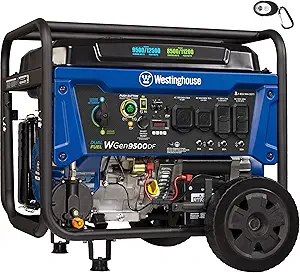
Running a food truck means keeping a lot of equipment working at the same time. Refrigerators, freezers, exhaust fans, water pumps, POS systems, lighting, air conditioning, coffee equipment, and electric cooking appliances can quickly add up to thousands of watts.
That makes the generator more than just another piece of equipment. It is part of the food truck’s operating system.
The right portable generator for a food truck needs enough continuous power for your normal load, enough starting capacity for motors and compressors, the right voltage and outlets, and safety features appropriate for mobile commercial use.
And bigger is not automatically better. A generator that is too small can overload during the lunch rush, while an unnecessarily large generator adds weight, fuel consumption, cost, and storage demands.
For 2026, these five generators are worth considering if you are looking for substantial portable power for a mobile kitchen.
Best Generators for Food Trucks in 2026
| Generator | Output | Fuel | Best For | Amazon |
|---|---|---|---|---|
| Westinghouse WGen9500DF | 12,500W peak / 9,500W running | Gas/Propane | Large mobile kitchens | Amazon Link |
| DuroMax XP13000EH | 13,000W peak / 10,500W running | Gas/Propane | Heavy electrical loads | Amazon Link |
| AIVOLT 11250W Inverter | 11,250W peak / 9,000W running | Gas/Propane | Clean inverter power | Amazon Link |
| WEN DF1100T | 11,000W peak / 8,300W running | Gas/Propane | Flexible 120/240V setups | Amazon Link |
| Champion 201407 11,000W | 11,000W peak / 9,000W running | Gasoline | Sensitive electronics + remote start | Amazon Link |
The important point is that these numbers should not be treated as a universal recommendation for every food truck. Current food-truck sizing guidance emphasizes calculating the actual running load and then accounting for the largest startup surge and an appropriate reserve.
1. Westinghouse WGen9500DF Dual Fuel Portable Generator
Check Amazon Price Click Here!
The Westinghouse WGen9500DF is a strong option for a food truck that needs substantial electrical capacity without moving into a much larger commercial generator.
It produces up to 12,500 peak watts and 9,500 running watts on gasoline. On propane, output is rated at 11,200 peak watts and 8,500 running watts.
Key specifications
- Gasoline: 12,500 peak / 9,500 running watts
- Propane: 11,200 peak / 8,500 running watts
- Fuel: Gasoline or propane
- Voltage: 120/240V
- Fuel tank: 6.6 gallons
- Runtime: Up to 12 hours at 25% load on gasoline
- Starting: Electric, remote, and recoil
- Outlets: Includes 120V and 120/240V connections
- GFCI protection: Yes
- Transfer-switch ready: Yes
- Noise: About 74 dBA
- Weight: About 211 lb.
Westinghouse lists the generator as dual fuel with remote and electric start, GFCI outlets, 120/240V output, and a 50A receptacle.
Why it works for a food truck
The biggest advantage here is flexibility. If your truck relies heavily on propane cooking equipment, you can reserve electricity for refrigeration, ventilation, lighting, POS equipment, pumps, and other electrical loads while keeping gasoline as an alternative fuel.
One important consideration is that this is an open-frame generator rather than an inverter generator, and the manufacturer lists total harmonic distortion at up to 23%. That makes it less attractive for operators who want inverter-level power quality for sensitive electronics.
For a food truck with substantial conventional electrical loads, however, its combination of output, dual-fuel capability, and 120/240V connections can make sense.
Best for: Food trucks with heavy electrical loads that value dual-fuel flexibility.
2. DuroMax XP13000EH Dual Fuel Portable Generator
Check Amazon Price Click Here!
If maximum portable capacity is the priority, the DuroMax XP13000EH is one of the largest generators in this group.
It produces 13,000 peak watts and 10,500 running watts on gasoline. Propane output is lower, at 12,350 peak watts and 9,975 running watts.
Key specifications
- Gasoline: 13,000 peak / 10,500 running watts
- Propane: 12,350 peak / 9,975 running watts
- Fuel: Gasoline or propane
- Engine: 500cc 4-stroke OHV
- Voltage: 120/240V
- Starting: Electric, recoil, and remote
- Runtime at 25% load: Up to 17 hours on gasoline
- Runtime at 50% load: Up to 8 hours on gasoline
- CO Alert: Yes
- 50A outlet: Yes
- GFCI outlets: Yes
The XP13000EH also provides a 120/240V 50A connection, making it useful for applications requiring substantial electrical capacity.
Why it works for a food truck
This generator makes the most sense when your calculated load is genuinely high.
A truck using refrigeration, ventilation, pumps, HVAC, commercial food equipment, and several electrical appliances simultaneously may need considerably more capacity than a small coffee or snack truck.
However, there is an important distinction for commercial operators: DuroMax’s warranty documentation differentiates residential and commercial use. The XP13000EH has a shorter commercial warranty than its residential warranty.
That is worth checking before purchasing if the generator will be used for daily paid food-service operations.
Best for: High-demand mobile kitchens that need substantial continuous output.
3. AIVOLT 11250W Dual Fuel Inverter Generator
Check Amazon Price Click Here!
The AIVOLT 11250W takes a different approach from the large open-frame generators above. Its main attraction is the combination of high output, dual-fuel operation, and inverter technology.
The manufacturer lists 11,250 starting watts and 9,000 running watts on gasoline, with 10,570 starting watts and 8,450 running watts on propane. It also uses inverter technology with less than 3% THD.
Key specifications
- Gasoline: 11,250 peak / 9,000 running watts
- Propane: 10,570 peak / 8,450 running watts
- Fuel: Gasoline or propane
- Technology: Inverter
- Engine: 459cc 4-stroke
- THD: Less than 3%
- Remote start: Yes
- Voltage: 120/240V
- GFCI: Yes
- 50A outlet: Yes
- Parallel capability: Yes, with compatible parallel kit
The AIVOLT also includes CO protection and multiple 120V and 240V receptacles.
Why it works for a food truck
This is the model to consider when power quality matters almost as much as raw wattage.
A food truck may contain POS terminals, computers, displays, chargers, control boards, refrigeration electronics, and other sensitive equipment. An inverter generator producing low-THD power can be attractive for these loads.
The AIVOLT also gives you the ability to operate on propane when desired while maintaining a high output level.
Keep in mind that inverter technology does not eliminate the need to calculate your total electrical load. A 9,000W running rating is still a 9,000W running rating.
Best for: Food trucks that want high output combined with inverter power quality.
4. WEN DF1100T Dual Fuel Portable Generator
Check Amazon Price Click Here!
The WEN DF1100T is a practical choice when you want a large dual-fuel generator without moving into the highest-output models.
Its gasoline rating is 11,000 surge watts and 8,300 running watts. On propane, it produces 9,500 surge watts and 7,500 running watts.
Key specifications
- Gasoline: 11,000 peak / 8,300 running watts
- Propane: 9,500 peak / 7,500 running watts
- Fuel: Gasoline or propane
- Engine: 457cc 4-stroke OHV
- Voltage: 120/240V
- Starting: Electric
- Fuel tank: 6.6 gallons
- Runtime: Up to 8.5 hours at half load
- GFCI outlets: Yes
- 50A outlet: Yes
- 30A twist-lock: Yes
The WEN also provides a voltage selector and several outlet configurations, including 120V/240V 50A service.
Why it works for a food truck
The DF1100T can make sense for a food truck whose calculated running load falls comfortably below its 8,300W gasoline rating.
Its dual-fuel capability is particularly useful for operators who want the option of gasoline or propane depending on availability and operating preferences.
The main limitation is that it is not an inverter generator, so it should not automatically be treated as equivalent to an inverter model when powering sensitive electronic equipment.
Best for: Food truck owners looking for a straightforward, high-output dual-fuel generator.
5. Champion 11,000W Wireless Remote Start Inverter Generator
Check Amazon Price Click Here!
The Champion 201407 11,000W Wireless Remote Start Inverter Generator is especially interesting for mobile kitchens because it combines high output with inverter technology.
Unlike some descriptions online, this particular model is gasoline-only, not dual fuel.
Champion’s documentation lists 11,000 starting watts and 9,000 running watts, with 120/240V output.
Key specifications
- Starting watts: 11,000W
- Running watts: 9,000W
- Fuel: Gasoline
- Technology: Inverter
- Voltage: 120/240V
- Starting: Wireless remote, electric, and manual
- Engine: 459cc
- Weight: About 200 lb.
- CO Shield: Yes
- Remote range: Up to 80 feet
- Low-THD inverter power: Yes
Champion’s documentation confirms the 11,000W/9,000W ratings and wireless, electric, and manual starting system.
Why it works for a food truck
The combination of inverter technology and remote starting can be useful when you want clean power for electronics without giving up the capacity needed for a relatively demanding mobile kitchen.
The remote start can also be convenient during setup, although the generator still needs to be positioned and operated safely outdoors.
One important detail is noise. Champion lists the 201407 at approximately 64 dBA at 23 feet, which is considerably more relevant for event environments than simply looking at wattage.
Best for: Food trucks that want high-output inverter power and convenient remote starting.
How Many Watts Does a Food Truck Generator Need?
There is no single generator size that works for every food truck.
A small coffee truck may have a completely different electrical load from a burger truck with a commercial fryer, griddle, refrigeration, exhaust system, HVAC, water pump, and multiple appliances.
Current food-truck sizing guides commonly emphasize calculating the actual equipment load rather than choosing a generator based simply on truck size.
Start with the equipment that will operate simultaneously.
For example:
| Equipment | Example Running Load |
|---|---|
| Refrigerator | 500–800W |
| Freezer | 500–1,000W |
| POS + networking | 100–400W |
| LED lighting | 100–300W |
| Water pump | 300–800W |
| Exhaust fan | 300–800W |
| HVAC | 1,200–2,000W+ |
| Microwave | 1,000–1,500W |
| Electric griddle | 2,000–5,000W+ |
| Commercial fryer | 2,000–4,000W+ |
| Espresso machine | 1,500W+ |
These are planning examples, not universal appliance specifications. Always use the actual nameplate rating or manufacturer documentation for your equipment.
Running Watts vs. Starting Watts
This is one of the most important things to understand before buying a generator.
Running watts are the power the equipment needs during normal operation.
Starting watts are the additional power some equipment may require briefly when it starts.
Refrigerators, freezers, air conditioners, pumps, and other motor-driven equipment can require a startup surge.
A generator therefore needs to handle both the continuous load and the relevant startup demand.
For example, if your food truck normally consumes 6,000W but a refrigerator or HVAC compressor requires a substantial startup surge, choosing a generator rated at exactly 6,000 running watts may leave too little headroom.
A Simple Food Truck Generator Sizing Method
Before buying a generator, make a list of every electrical appliance.
Step 1: Add the running watts
Add the running wattage of the equipment that may operate simultaneously.
Step 2: Identify motor startup loads
Look for refrigerators, freezers, air conditioners, pumps, compressors, and other equipment with significant startup requirements.
Step 3: Add the largest relevant startup demand
You do not necessarily need to add every possible startup surge together. Think about how your kitchen actually operates and which appliances can start at the same time.
Step 4: Leave some headroom
Avoid operating continuously at the generator’s maximum rated output.
A reasonable planning reserve can give you flexibility when loads fluctuate, equipment starts, or you add another appliance later.
Step 5: Check voltage and amperage
This step is easy to overlook.
A generator can have enough watts but still be incompatible with a particular appliance if the voltage, phase, amperage, plug configuration, or circuit requirements do not match.
Some commercial food-service equipment uses 240V rather than standard 120V power.
What Size Generator Is Best for Different Food Trucks?
Small Coffee or Snack Truck
A relatively simple setup may require considerably less power than a full commercial kitchen.
Coffee equipment, refrigeration, POS equipment, lighting, and small appliances may fall into the 3,000–5,000W range, depending on the exact equipment.
Do not buy an 11,000W generator simply because it is advertised as a food truck generator.
Calculate your actual load first.
Standard Food Truck
A food truck with refrigeration, ventilation, pumps, lighting, POS equipment, HVAC, and some electric cooking equipment may need approximately 6,000–10,000W, depending heavily on the appliances.
This is where models in the 8,000–10,000W running-watt class can become useful.
High-Demand Mobile Kitchen
A truck with multiple electric cooking appliances, commercial refrigeration, HVAC, ventilation, and other heavy loads may require 10,000W or more.
At this level, the DuroMax XP13000EH, Westinghouse WGen9500DF, AIVOLT 11250W, or another appropriately sized commercial power system may make more sense.
For an all-electric kitchen, however, do not assume a portable generator is automatically the right solution. Some high-demand food trucks may be better served by a properly designed built-in commercial generator or another engineered power system.
Dual Fuel vs. Gasoline for a Food Truck
Dual Fuel
A dual-fuel generator can operate on gasoline or propane.
The main advantage is flexibility.
If propane is readily available at your operating location, you can use it as your primary fuel and keep gasoline as another option.
The downside is that propane usually produces less power than gasoline on the same generator.
For example, the DuroMax XP13000EH produces 10,500 running watts on gasoline and 9,975 running watts on propane.
Gasoline
Gasoline-only generators can still be an excellent choice, particularly if the generator offers inverter technology and enough capacity for your actual load.
The Champion 201407 is an example: it provides 9,000 running watts from gasoline and uses inverter technology.
Do Food Trucks Need an Inverter Generator?
Not necessarily.
An inverter generator is particularly attractive when your food truck contains sensitive electronics such as:
- POS terminals
- Computers
- Tablets
- Networking equipment
- Digital displays
- Audio equipment
- Electronic refrigeration controls
- Battery chargers
The AIVOLT 11250W, for example, is specified at less than 3% THD.
The Champion 201407 is also an inverter generator.
However, inverter technology does not compensate for insufficient wattage. A generator with excellent power quality can still overload if the food truck requires more power than it can provide.
120V vs. 240V: Check Before You Buy
Many large portable generators provide both 120V and 240V output, but that does not mean every appliance can automatically be connected to them.
Before purchasing, check:
- Appliance voltage
- Amperage
- Plug type
- Circuit requirements
- Generator outlet configuration
- Whether the appliance requires single-phase or another configuration
For larger commercial kitchens, this can be just as important as the generator’s wattage rating.
The Westinghouse, DuroMax, WEN, AIVOLT, and Champion models listed above provide various 120V/240V configurations, but the exact connection should always be verified against the equipment manufacturer’s requirements.
Generator Safety for Food Trucks
This is one area where you should never cut corners.
A portable gasoline or propane generator produces carbon monoxide. It must never be operated inside the food truck, inside a trailer, inside a garage, or in another enclosed or partially enclosed space.
The U.S. Consumer Product Safety Commission recommends operating portable generators outside and at least 20 feet from structures, with exhaust directed away from buildings and openings.
For a food truck, that means you should consider the generator’s location before buying it.
The serving window, doors, roof vents, kitchen ventilation system, and neighboring vehicles or structures can all affect safe placement.
Follow these basic rules
- Operate the generator outdoors.
- Never place it inside the food truck.
- Never operate it in a partially enclosed area.
- Keep exhaust away from doors, windows, and vents.
- Follow the generator manufacturer’s required clearances.
- Use properly rated cords and connections.
- Do not overload the generator.
- Inspect extension cords for damage.
- Keep fuel away from hot surfaces and ignition sources.
- Follow local fire, health, and event regulations.
A CO shutoff feature is an important additional safety feature, but it does not make indoor operation safe.
Portable Generator vs. Built-In Food Truck Generator
Portable generators are attractive because they can be purchased separately from the truck, moved between locations, and replaced without redesigning the entire vehicle.
A built-in generator, on the other hand, can provide a more integrated solution for a commercial mobile kitchen.
The better option depends on your truck design, electrical system, available space, noise requirements, operating schedule, and local regulations.
If your truck operates every day and relies almost entirely on generator power, it is worth discussing the electrical design with a qualified professional before committing to a large portable generator.
What to Look For in a Food Truck Generator
Before buying, compare more than the headline wattage.
1. Continuous running watts
This is one of the most important numbers.
2. Starting watts
Make sure the generator can handle the startup requirements of compressors, motors, and other equipment.
3. Voltage
Confirm whether your kitchen equipment requires 120V, 240V, or both.
4. Fuel type
Dual fuel can provide more flexibility, while gasoline-only models may offer higher output or inverter options at a particular price.
5. Inverter technology
Consider it if your truck contains a significant amount of sensitive electronics.
6. Outlet configuration
Check for the exact receptacles and amperage required by your equipment.
7. Noise
A loud generator can make customer interaction more difficult and may violate event or local noise restrictions.
8. Weight
A 200-plus-pound generator is portable in the technical sense, but moving it is still a serious task.
9. CO protection
Look for automatic CO shutoff systems, but never use this feature as a substitute for proper outdoor placement.
10. Commercial warranty
Read the warranty carefully. Commercial food-service use may have different warranty terms than residential use.
Final Verdict: Which Food Truck Generator Should You Choose?
There is no single best generator for every food truck.
The right choice depends on your actual electrical load and how your kitchen operates.
Westinghouse WGen9500DF: A strong choice if you want high output, dual-fuel capability, remote starting, and 120/240V flexibility.
DuroMax XP13000EH: A good fit for high-demand mobile kitchens that genuinely need more than 10,000 running watts.
AIVOLT 11250W: Worth considering when you want high output, dual fuel, and inverter technology with low-THD power.
WEN DF1100T: A practical dual-fuel option for food trucks that need substantial power without moving into the highest-capacity class.
Champion 201407 11,000W: A compelling option if inverter power and wireless remote starting are priorities and gasoline-only operation is acceptable.
Most importantly, do not choose a generator simply because it has the highest wattage number.
Start with your food truck’s equipment list. Add the running loads, account for startup demands, verify voltage and amperage, and leave reasonable operating headroom.
That approach will give you a generator that is much more likely to keep refrigeration, POS systems, lighting, ventilation, and kitchen equipment running when the lunch rush arrives.
Frequently Asked Questions
What size generator is best for a food truck?
There is no universal size. Smaller coffee and snack trucks may need only a few thousand watts, while full-service mobile kitchens can require 8,000–12,000 watts or more. Calculate your actual running load, account for startup requirements, and verify the voltage and amperage of every major appliance before choosing a generator.
Can a portable generator run a food truck?
Yes, a properly sized portable generator can power many food truck systems, including refrigeration, lighting, POS equipment, ventilation, pumps, HVAC, and electrical cooking equipment. The generator must be compatible with the truck’s electrical system and must always be operated outdoors according to the manufacturer’s instructions and local regulations.
Is dual fuel better for a food truck?
Dual fuel can be useful because it gives you gasoline and propane as fuel options. Propane can be convenient for operators already using propane in their cooking operation. However, output is usually lower on propane, so compare the generator’s gasoline and propane running-watt ratings before buying.
Do I need an inverter generator for a food truck?
Not necessarily. An inverter generator is especially useful when your truck contains sensitive electronics such as POS terminals, computers, digital controls, and chargers. If most of your load consists of conventional high-wattage equipment, capacity, voltage, connections, and runtime may be more important than inverter technology.
Can I run a generator inside my food truck?
No. Portable gasoline and propane generators should never be operated inside a food truck, trailer, garage, or other enclosed or partially enclosed space. Carbon monoxide can build up rapidly and become deadly. CPSC recommends operating portable generators outdoors and at least 20 feet from structures, with exhaust directed away from openings.
Is a 10,000-watt generator enough for a food truck?
It can be, but it depends entirely on the equipment. A food truck with propane cooking equipment and moderate electrical loads may operate comfortably below 10,000 running watts. A truck with several electric cooking appliances, HVAC, refrigeration, and other heavy loads may need more. Always calculate the actual load instead of relying on a generic wattage recommendation.
What is more important: running watts or peak watts?
Both matter, but running watts are especially important because they determine how much electrical load the generator can support continuously. Peak or starting watts provide additional short-term capacity for equipment such as compressors and motors during startup. A generator must be capable of handling both the continuous load and relevant startup demand.