As an Amazon Associate I earn from qualifying purchases.
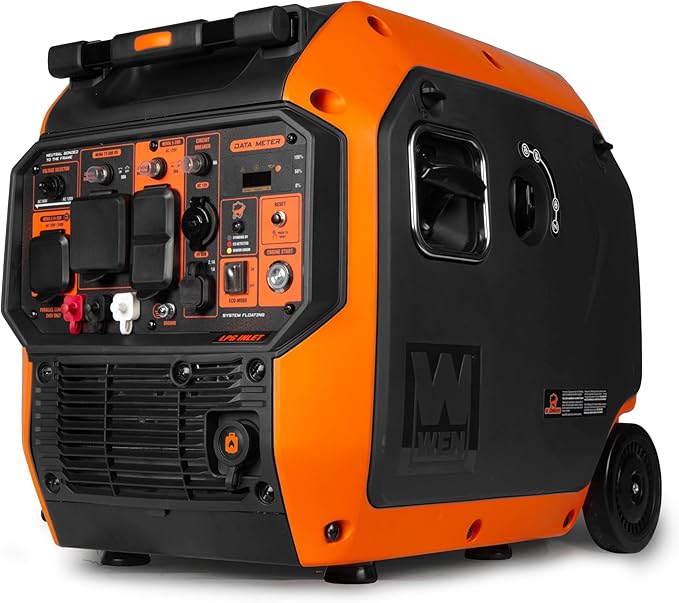
A dual fuel inverter generator gives you two practical ways to make electricity: gasoline and propane. That flexibility can be especially useful during power outages, RV trips, camping, tailgating, or remote work when you do not want to depend on a single fuel source.
Unlike conventional portable generators, inverter generators produce cleaner, more stable electricity and can automatically adjust engine speed based on the electrical load. That usually means lower noise and better fuel efficiency when you are not using the generator at full capacity.
For 2026, the most important things to compare are not simply the advertised peak wattage. Running watts, fuel-specific output, noise, runtime, outlet configuration, portability, starting system, and carbon monoxide protection can make a much bigger difference once you actually use the generator.
Below are five dual fuel inverter generators worth considering, ranging from compact RV-friendly models to higher-output options designed for heavier loads.
Quick Comparison: Dual Fuel Inverter Generators
| Model | Gasoline Output | Propane Output | Key Features | Amazon |
|---|---|---|---|---|
| WEN DF680iX | 6,800 peak / 5,100 running watts | 6,000 peak / 4,500 running watts | 120/240V, electric start, CO Watchdog, RV ready | Amazon Link |
| Westinghouse iGen4000DFc | 4,000 peak / 3,300 running watts | 3,600 peak / 2,970 running watts | Remote start, 52 dBA, LED display, RV ready | Amazon Link |
| Champion 4000W RV Ready | Up to 4,000 peak watts | Fuel-dependent | Electric/recoil start, CO protection, RV outlet | Amazon Link |
| Champion 4500W Electric Start | 4,500 peak / 3,500 running watts | 4,500 peak / 3,150 running watts | 61 dBA, electric start, CO Shield, RV ready | Amazon Link |
| WEN DF360iX | 3,600 peak / 2,900 running watts | 3,500 peak / 2,600 running watts | Lightweight, RV ready, CO Watchdog, fuel shutoff | Amazon Link |
Generator specifications can change by production version or retailer listing. Always verify the current manufacturer’s specifications before purchase.
Why Choose a Dual Fuel Inverter Generator?
The biggest advantage of a dual fuel generator is flexibility.
Gasoline is usually the better choice when you need the generator’s maximum rated output. Propane, on the other hand, can be convenient for long-term storage because propane does not degrade in the same way stored gasoline can.
There is also an important tradeoff: a generator normally produces less power on propane than it does on gasoline. For example, the WEN DF680iX is rated for 5,100 running watts on gasoline but 4,500 running watts on propane.
An inverter generator adds another advantage. Instead of running the engine at one constant speed regardless of demand, inverter technology can adjust engine speed to the electrical load. This can reduce fuel consumption and noise when the generator is operating below its maximum capacity.
For RV owners, campers, and homeowners who want a flexible backup option, that combination can be very useful.
1. WEN DF680iX – High-Output Dual Fuel Inverter Generator
Check Amazon Price Click Here!
The WEN DF680iX is the highest-output model in this group and is particularly interesting if you need more than the typical 3,000 to 4,000 running watts offered by smaller portable inverter generators.
It produces 6,800 starting watts and 5,100 running watts on gasoline. On propane, the output is 6,000 starting watts and 4,500 running watts. It also provides 120/240V output, giving it more flexibility for certain home-backup and workshop applications than a basic 120V-only inverter generator.
The DF680iX has a 224cc engine, electric and recoil starting, wheels, and a telescoping handle. It also includes a TT-30R RV outlet and an L14-30R 120/240V outlet.
WEN lists total harmonic distortion below 1.2% at full load, which is considerably cleaner than the output you would expect from many conventional open-frame generators. It also includes a CO Watchdog shutdown system and a fuel-shutoff feature designed to help reduce stale fuel remaining in the carburetor during storage.
Why consider the WEN DF680iX?
- 5,100 running watts on gasoline
- 4,500 running watts on propane
- 6,800 gasoline starting watts
- 120/240V output
- Electric and recoil start
- CO Watchdog shutdown
- Fuel shutoff
- RV-ready TT-30R outlet
- Less than 100 pounds
- Inverter technology with low THD
The main drawback is size. At about 95 pounds, this is not the type of generator you will want to carry around a campground by hand. It makes more sense for larger RVs, emergency backup, workshops, and situations where extra power is more important than ultra-light portability.
Best for: Higher-power RV use, home essentials, workshops, and buyers who need 120/240V flexibility.
2. Westinghouse iGen4000DFc – Quiet Dual Fuel Inverter
Check Amazon Price Click Here!
If low noise and convenient starting are high on your list, the Westinghouse iGen4000DFc deserves a close look.
This model produces 4,000 peak and 3,300 running watts on gasoline, while propane output is rated at 3,600 peak and 2,970 running watts. Westinghouse lists noise as low as 52 dBA, making it one of the more appealing choices here for camping, RV use, and other situations where generator noise matters.
It includes electric start and a wireless remote start key fob, along with recoil backup. The LED Data Center displays information such as fuel level, power output, remaining runtime, voltage, and lifetime hours.
The generator also includes a 120V TT-30R RV outlet, a household duplex outlet, USB ports, automatic low-oil shutdown, and an automatic CO shutdown system.
Its 1.69-gallon gasoline tank provides up to seven hours of runtime at 25% load. On propane, Westinghouse lists up to 17 hours under the same 25% load condition. Remember that these figures are not full-load runtime estimates. Actual runtime depends heavily on the appliances connected to the generator.
Why consider the Westinghouse iGen4000DFc?
- 3,300 running watts on gasoline
- 2,970 running watts on propane
- As low as 52 dBA
- Remote start
- Electric and recoil start
- LED information display
- RV-ready TT-30R outlet
- CO shutdown
- Automatic low-oil shutdown
- Parallel capable
Best for: RV owners, campers, tailgating, and anyone who prioritizes quiet operation and convenient starting.
3. Champion 4000W RV Ready Dual Fuel Inverter Generator
Check Amazon Price Click Here!
A 4,000-watt-class Champion inverter generator can be a practical middle ground when you want more capability than a small camping generator without moving into the weight and size of a 6,000-watt-plus machine.
Champion’s current 4000W dual-fuel inverter models are designed around gasoline and propane operation and include CO Shield technology. Depending on the exact model version, output and starting equipment can vary, so check the current Amazon listing and manufacturer’s specification sheet before ordering.
One current Champion 4000W dual-fuel version produces 4,000 starting watts and 3,300 running watts on gasoline, with 4,000 starting watts and 2,970 running watts on propane. It also provides a 120V 30A RV outlet, household outlet, electric start, recoil backup, and parallel capability.
That makes this class of Champion inverter generator particularly interesting for RV owners who need enough output for common campsite loads without jumping to a much heavier generator.
The CO Shield system is another useful safety feature, but it should not be confused with permission to operate the generator inside a garage, RV, house, or other enclosed space.
Why consider a Champion 4000W dual fuel inverter?
- Gasoline and propane capability
- Around 3,300 running watts on gasoline on the current 201592 version
- Around 2,970 running watts on propane
- 120V 30A RV outlet
- Electric and recoil start
- CO Shield
- Parallel capability
- Enclosed inverter design
Best for: RV owners and campers who want a compact 4,000-watt-class dual-fuel inverter.
4. Champion 4500W Electric Start Dual Fuel Inverter
Check Amazon Price Click Here!
The Champion 4500W Electric Start Dual Fuel Inverter is a step up from the smaller 4,000-watt models and offers a useful combination of output, portability, and convenience.
The 201319 model produces 4,500 starting watts and 3,500 running watts on gasoline. On propane, it produces 4,500 starting watts and 3,150 running watts. Champion rates the generator at just 61 dBA from 23 feet, which is relatively quiet for a generator in this power class.
One of its strongest features is the electric start. A battery is included, and the EZ Start Dial makes switching between operating functions straightforward. Recoil starting is also available as a backup.
For RV users, the TT-30R outlet is particularly useful. The generator also has a household 120V outlet and parallel capability if you later need additional power.
Champion lists up to 14 hours of gasoline runtime and 21 hours on a 20-pound propane tank at 25% load. Those numbers should be treated as light-load estimates rather than a guarantee of overnight operation with heavy appliances running continuously.
Why consider the Champion 4500W?
- 4,500 starting watts
- 3,500 running watts on gasoline
- 3,150 running watts on propane
- 61 dBA
- Electric start
- Recoil backup
- CO Shield
- 120V 30A RV outlet
- Parallel capability
- 3-year limited warranty
Best for: RVs, camping, tailgating, and emergency backup where 3,000+ running watts are useful.
5. WEN DF360iX – Lightweight Dual Fuel RV Inverter
Check Amazon Price Click Here!
If portability matters more than maximum power, the WEN DF360iX is the smallest generator in this comparison.
The important correction to the original specifications is that the DF360iX does not provide 3,200 running watts on propane. Its published specifications are 3,600 starting watts and 2,900 running watts on gasoline, or 3,500 starting watts and 2,600 running watts on propane.
The generator weighs roughly 50 pounds and uses a compact enclosed inverter design. It is RV-ready and includes a 120V 30A TT-30R outlet, making it useful for smaller travel trailers and camping setups.
WEN also includes a CO Watchdog shutdown system and fuel shutoff. The fuel shutoff is useful when the generator will be stored for extended periods because reducing the amount of gasoline left in the carburetor can help with long-term storage.
The DF360iX is not the model to choose if you expect to power a large home HVAC system or several high-demand appliances at once. Its strength is portability.
Why consider the WEN DF360iX?
- 3,600 starting watts on gasoline
- 2,900 running watts on gasoline
- 3,500 starting watts on propane
- 2,600 running watts on propane
- Around 50 pounds
- RV-ready TT-30R outlet
- CO Watchdog
- Fuel shutoff
- Enclosed inverter design
- Compact footprint
Best for: Smaller RVs, camping, tailgating, and buyers who want dual-fuel capability without carrying a 90- to 100-pound generator.
How to Choose the Right Dual Fuel Inverter Generator
Choosing between these generators becomes much easier when you focus on how you actually plan to use the power.
1. Check Running Watts First
Starting or surge watts are not the number you should use when calculating your everyday electrical load.
Running watts represent the approximate continuous power the generator can provide. Starting watts are additional short-term capacity available for appliances with electric motors, such as refrigerators, pumps, compressors, and some air conditioners.
For example, if your expected continuous load is around 2,500 watts, a generator with 2,900 running watts may work, but you will have less headroom than with a model rated at 4,000 or 5,100 running watts.
2. Remember That Propane Usually Produces Less Power
Dual-fuel does not mean the generator produces identical wattage on both fuels.
The WEN DF680iX, for example, drops from 5,100 running watts on gasoline to 4,500 running watts on propane. The Westinghouse iGen4000DFc drops from 3,300 to 2,970 running watts.
If you plan to run close to the generator’s maximum capacity, calculate your load using the output available from the fuel you expect to use.
3. Consider Noise
Noise becomes much more important when you are camping, staying at an RV park, or working near the generator for hours.
A rating such as 52 or 61 dBA can make a noticeable difference compared with a louder conventional generator. However, remember that noise measurements depend on the test distance and load.
The Westinghouse iGen4000DFc is listed as low as 52 dBA, while the Champion 4500W electric-start model is rated at 61 dBA from 23 feet.
4. Decide Whether You Need 120V or 120/240V
Most RV and camping applications can work perfectly well with a 120V generator.
A model such as the WEN DF680iX adds 120/240V capability, which can make it more useful for certain home-backup, workshop, and equipment applications.
However, having a 240V outlet does not automatically mean the generator can power every 240V appliance. Always compare the generator’s rated amperage and the requirements of the equipment you intend to connect.
5. Look at the Outlets
For RV use, a TT-30R 30-amp RV outlet can be more important than a high peak-wattage number.
For home backup, an L14-30R or another appropriate connection may be more useful, depending on your electrical setup.
Never connect a portable generator to a home’s electrical system by plugging it into a household wall outlet. A properly installed transfer switch or other approved connection method should be used according to local electrical requirements.
6. Decide Between Recoil, Electric, and Remote Start
Recoil starting is simple and does not depend on a battery.
Electric start is more convenient, particularly when the generator is heavier or when you may need to start it during bad weather.
Remote start adds another level of convenience, especially for RV owners or situations where you do not want to walk outside every time you need to start the generator.
The Westinghouse iGen4000DFc, for example, includes remote, electric, and recoil starting.
7. Check CO Protection
Carbon monoxide is one of the most important safety considerations when using any gasoline- or propane-powered generator.
Modern models in this comparison include systems such as CO Watchdog or CO Shield, which can automatically shut down the generator if dangerous carbon monoxide levels are detected.
However, a CO shutdown system is a secondary safety feature. Never operate a fuel-burning generator inside a house, garage, RV, basement, shed, or other enclosed or partially enclosed area.
Always follow the owner’s manual for placement, ventilation, clearance, and operation.
Gasoline vs. Propane: Which Fuel Is Better?
There is no single answer because each fuel has practical advantages.
Gasoline
Gasoline is generally preferable when you need the generator’s maximum available output. It is also widely available and can be convenient for short-term emergency use.
The downside is that gasoline requires more attention during storage. Old gasoline can create fuel-system problems if the generator is left unused for long periods.
Propane
Propane is convenient for long-term storage and emergency preparedness. A properly stored propane cylinder can remain usable for a long time, making it attractive for backup-power planning.
The tradeoff is lower output on many dual-fuel generators.
For that reason, many owners keep both fuels available: gasoline when maximum output is important and propane when storage life and fuel flexibility matter more.
Are Dual Fuel Inverter Generators Good for Sensitive Electronics?
Generally, yes.
Inverter generators are designed to produce cleaner and more stable electrical power than many traditional portable generators. This can make them a good match for electronics such as laptops, televisions, routers, chargers, and other equipment.
The key specification to look for is total harmonic distortion (THD).
The WEN DF680iX, for example, is listed at less than 1.2% THD at full load, while the Westinghouse iGen4000DFc is listed at 3% or less.
That said, “inverter generator” does not mean you should ignore the manufacturer’s specifications. If you are powering expensive medical equipment, specialized electronics, or equipment with strict power requirements, check the equipment manufacturer’s recommendations first.
Can You Use a Dual Fuel Generator for RV Air Conditioning?
Potentially, yes, but you need to calculate the actual electrical requirements of the RV.
An RV air conditioner can require significantly more power when its compressor starts than it does while running. That is why the generator’s starting wattage and running wattage both matter.
A 2,600- to 3,000-running-watt generator may work with some smaller RV air-conditioning setups, but there may be little remaining capacity for microwaves, coffee makers, battery chargers, refrigerators, or other high-demand devices.
If your RV has a larger air conditioner or multiple high-load appliances, a generator such as the WEN DF680iX provides substantially more running-watt headroom.
How Many Watts Do You Need?
A simple way to estimate your generator size is to make a list of everything you expect to run at the same time.
For example:
| Appliance | Approximate Running Watts |
|---|---|
| Refrigerator | 100–800W |
| LED lights | 10–100W |
| Wi-Fi router | 10–30W |
| Television | 50–200W |
| Laptop | 50–150W |
| Microwave | 800–1,500W |
| Coffee maker | 800–1,500W |
| Portable AC | 700–1,500W+ |
These are only rough planning ranges. Actual electrical requirements vary by appliance.
Add the running watts of the equipment you expect to use simultaneously, then leave some headroom for startup surges and unexpected loads.
Which Dual Fuel Inverter Generator Should You Buy?
The right choice depends on what matters most to you.
Choose the WEN DF680iX if you need the highest output in this group, 120/240V capability, and more headroom for larger RVs, workshops, or emergency backup.
Choose the Westinghouse iGen4000DFc if quiet operation, remote start, and portability are more important. Its 52 dBA rating and 3,300 gasoline running watts make it particularly interesting for RV and recreational use.
Choose a Champion 4000W dual-fuel model if you want a compact 4,000-watt-class inverter with RV capability, electric starting, and CO Shield protection.
Choose the Champion 4500W Electric Start if you want more running-watt capacity than the smaller 4,000-watt class while keeping noise and portability under control. Its 3,500 gasoline running watts, 61 dBA rating, and electric start make it a versatile option.
Choose the WEN DF360iX if portability is your priority and your expected electrical load is relatively modest. Its roughly 50-pound weight makes it considerably easier to move than larger inverter generators.
Final Thoughts
The best dual fuel inverter generator for 2026 is not necessarily the one with the highest advertised wattage. The better choice is the generator that gives you enough running watts for your actual loads, provides the outlets you need, offers acceptable noise levels, and gives you a practical fuel option for the way you use it.
For higher-power applications, the WEN DF680iX stands out because of its 5,100 running watts on gasoline and 120/240V capability. For quieter RV and recreational use, the Westinghouse iGen4000DFc offers a compelling combination of 3,300 running watts, remote start, and a 52 dBA noise rating.
The Champion models fill the middle of the range, while the WEN DF360iX makes more sense when keeping the generator compact and relatively easy to move is a priority.
Whatever model you choose, calculate your real electrical load before buying and follow the manufacturer’s instructions for fuel, grounding, placement, carbon monoxide protection, and electrical connections.
Frequently Asked Questions
Is a dual fuel inverter generator better than a gasoline-only generator?
A dual fuel inverter generator offers more fuel flexibility because you can choose gasoline or propane. That can be especially useful during extended outages or emergencies. The tradeoff is that propane typically provides less power than gasoline, so compare the rated output for both fuels rather than looking only at the headline wattage.
Does a dual fuel generator make the same power on propane?
Usually, no. Most dual-fuel generators produce slightly less running and starting power on propane than on gasoline. For example, the WEN DF680iX produces 5,100 running watts on gasoline and 4,500 on propane. Always calculate your electrical load using the fuel you actually expect to use.
Are inverter generators quieter?
Inverter generators are generally quieter than many conventional open-frame generators because their engines can slow down when electrical demand decreases and because many use enclosed designs. Actual noise varies considerably by model, load, and testing conditions.
Can I run a dual fuel inverter generator inside my garage?
No. Never operate a gasoline- or propane-powered generator inside a garage, house, RV, basement, shed, or other enclosed or partially enclosed space. Carbon monoxide from generator exhaust can become fatal very quickly. CO shutdown technology is an additional safety feature, not a substitute for outdoor operation.
Is propane better than gasoline for generator storage?
Propane can be more convenient for long-term emergency storage because it does not become stale in the same way gasoline does. Gasoline is still useful when maximum generator output is needed. Keeping both fuels available can provide greater flexibility during a prolonged outage.
What is the most important generator specification to compare?
Start with running watts, not peak watts. Then compare the generator’s output on the fuel you plan to use, outlet configuration, noise rating, runtime, starting system, weight, and safety features. A generator that technically has enough peak wattage may still be too small if its continuous running capacity is insufficient for your appliances.