As an Amazon Associate I earn from qualifying purchases.
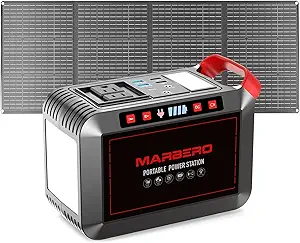
A good solar generator can be useful when you need backup power without dealing with gasoline, engine noise, exhaust fumes, or regular fuel storage. For camping, road trips, RV use, short power outages, and emergency preparedness, portable power stations have become a practical alternative to traditional fuel-powered generators.
One important clarification: a solar generator is essentially a portable power station paired with solar panels. The battery stores electricity, while the solar panel provides a way to recharge it when sunlight is available. You can also recharge most portable power stations from a wall outlet or a vehicle.
The best option depends on what you need to power. A small 100W-class unit may be enough for phones, lights, cameras, and a laptop, while a 1,000Wh power station with a 1,500W inverter can handle much larger loads.
For 2026, there are more choices than ever, but you do not necessarily need to spend thousands of dollars. The affordable models below cover several different use cases, from lightweight emergency power to more capable backup systems.
Best Affordable Solar Generators for 2026
| Solar Generator | Battery Capacity | AC Output | Approx. Weight | Best For |
|---|---|---|---|---|
| MARBERO 237Wh | 237Wh | 300W | 4.6 lb | Camping and small electronics |
| Jackery Explorer 1000 V2 | 1,070Wh | 1,500W | 23.8 lb | Emergency backup and off-grid use |
| Apowking 200W | 146Wh | 100W | 3.3 lb | Phones, laptops and travel |
| Jackery Explorer 300 | 293Wh | 300W | About 7.1 lb | Camping and everyday portable power |
| ZeroKor 300W | 280Wh | 300W | About 5 lb | Budget backup and camping |
Specifications can vary by product version or package. Check the current Amazon listing before purchasing, particularly when a solar panel is offered as an optional bundle.
Why Choose a Solar Generator?
The biggest advantage of a solar generator is simplicity.
There is no gasoline to store, no engine oil to change, and no exhaust produced while the battery is supplying power. Portable power stations are also considerably quieter than conventional generators, which makes them more comfortable to use around a campsite, RV, or home during a power outage.
Another advantage is flexibility. Depending on the model, you may be able to charge the battery from:
- A standard AC wall outlet
- A 12V vehicle outlet
- Compatible solar panels
- Multiple charging sources on certain models
Solar charging becomes particularly useful during longer outages because you can replenish the battery during daylight rather than depending entirely on the electrical grid.
However, solar generators have an important limitation: they store energy rather than producing electricity continuously like a fuel-powered engine. Once the battery is depleted, you need access to AC power, a vehicle, or enough sunlight and compatible solar panels to recharge it.
That distinction matters when choosing a model for emergency preparedness.
In-Depth Reviews of the Best Affordable Solar Generators for 2026
MARBERO 237Wh Solar Generator
The MARBERO 237Wh portable power station is one of the more compact choices in this group. The current M823 version has a 237Wh battery, a 300W rated AC output, and a 375W peak output. It weighs about 4.6 pounds, making it considerably easier to carry than larger 1,000Wh-class power stations.
Its multiple outputs make it suitable for everyday electronics such as smartphones, tablets, cameras, laptops, lights, and other relatively low-power devices. It also includes USB-A, USB-C, AC, and DC outputs, so you are not limited to a single type of connection.
The built-in LED lights are another useful feature for emergencies or camping. The unit can be recharged from an AC outlet, a vehicle, or a compatible solar panel. The manufacturer lists solar input compatibility in the 16.4V–24V range, with a maximum of 2.7A.
MARBERO 237Wh at a glance
| Feature | Specification |
|---|---|
| Battery capacity | 237Wh |
| AC output | 300W |
| Peak output | 375W |
| Weight | About 4.6 lb |
| USB-C | Yes |
| Solar charging | Yes |
| LED lighting | Yes |
This is a better fit for people who value portability over long runtimes. It is not intended to replace a large home backup battery, but it can be useful when your primary goal is keeping essential electronics running.
Best for: Camping, road trips, emergency lighting, phones, laptops, cameras, and other small electronics.
Jackery Explorer 1000 V2 Solar Generator
If you need substantially more power than the compact models above, the Jackery Explorer 1000 V2 is the most capable option in this particular group.
The Explorer 1000 V2 has a 1,070Wh LiFePO4 battery and a 1,500W continuous AC output with a 3,000W surge rating. Jackery lists a cycle life of up to 4,000 cycles before the battery reaches 70% or more of its original capacity. The unit weighs approximately 23.8 pounds.
That combination makes it much more versatile than a small 100W or 300W power station. It can handle devices such as laptops, televisions, portable refrigerators, coolers, lights, fans, and many smaller household appliances, provided their power requirements remain within the station’s limits.
The V2 also supports up to 400W of solar input. A 200W SolarSaga panel is available as part of certain bundles, but buyers should verify the exact package because the Explorer 1000 V2 is also sold separately.
One of the biggest improvements over the older Explorer 1000 is the LiFePO4 battery chemistry. The V2 combines that longer-cycle-life battery technology with a higher 1,500W inverter output while remaining relatively portable for its capacity.
Jackery Explorer 1000 V2 at a glance
| Feature | Specification |
|---|---|
| Battery capacity | 1,070Wh |
| Battery chemistry | LiFePO4 |
| Continuous AC output | 1,500W |
| Surge output | 3,000W |
| Maximum solar input | 400W |
| Weight | About 23.8 lb |
| AC outlets | 3 |
| USB-C | 30W and 100W ports |
| Car port | 12V |
The main trade-off is size. At nearly 24 pounds, this is no longer a backpack-friendly power station. But for emergency backup, vehicle-based camping, RV trips, or off-grid use, the additional capacity is much more useful.
Best for: Emergency backup, RV use, off-grid trips, refrigerators, coolers, laptops, lights, and larger electronics.
Apowking 200W Solar Generator
The Apowking is aimed at a completely different type of buyer. Rather than trying to compete with 1,000Wh power stations, it focuses on being small, inexpensive, and easy to carry.
The current Apowking model in this capacity class has a 146Wh battery, 100W rated AC output, and 200W peak output. It weighs about 3.3 pounds and comes with a 40W monocrystalline solar panel.
That makes it particularly useful for keeping personal electronics charged. Phones, tablets, cameras, lights, small fans, laptops, and similar devices are much more appropriate than high-wattage appliances.
The unit has multiple outputs, including AC, USB, USB-C/Quick Charge, and DC connections. It also includes built-in lighting, which can be helpful during a nighttime outage or while camping.
Apowking 146Wh at a glance
| Feature | Specification |
|---|---|
| Battery capacity | 146Wh |
| Rated output | 100W |
| Peak output | 200W |
| Weight | About 3.3 lb |
| Solar panel | 40W included |
| AC outlets | 2 |
| Best use | Small electronics |
The biggest limitation is also obvious from its specifications: 100W of continuous output is not enough for most power-hungry appliances.
That is not necessarily a disadvantage. If you only need emergency charging for communication devices, lighting, cameras, or a laptop, buying a much larger and heavier power station may not make sense.
Best for: Travel, camping, emergency charging, phones, tablets, cameras, lights, and low-power electronics.
Jackery Explorer 300 Solar Generator
The Jackery Explorer 300 sits between the ultra-portable Apowking and the larger Explorer 1000 V2.
The current Explorer 300 has a 293Wh battery and a 300W pure sine wave inverter with a 500W surge rating. Jackery says it can power up to six devices simultaneously and includes two AC outlets, USB connections, USB-C, a car port, and other charging options.
It can be recharged from AC power, a vehicle, or solar panels. With a 100W SolarSaga panel, Jackery states that the Explorer 300 can reach 80% charge in approximately 3.5 hours under full-sun conditions. Actual solar charging times will vary with weather, panel orientation, temperature, and available sunlight.
The Explorer 300 is particularly appealing because it provides enough capacity for more than basic phone charging without becoming excessively large.
Jackery’s own runtime formula uses approximately 85% of the rated capacity for estimating usable runtime, which illustrates why a simple Wh-to-watts calculation should only be treated as an estimate.
Jackery Explorer 300 at a glance
| Feature | Specification |
|---|---|
| Battery capacity | 293Wh |
| AC output | 300W |
| Surge | 500W |
| Battery type | Lithium-ion |
| Solar charging | Yes |
| Solar panel option | SolarSaga 100W |
| Weight | About 7.1 lb |
| Pure sine wave | Yes |
The Explorer 300 makes the most sense when you want a reasonably compact power station that can do more than charge phones but do not need the capacity or weight of a 1,000Wh model.
Best for: Camping, short trips, laptops, drones, lights, portable coolers, and everyday backup power.
ZeroKor 300W Solar Generator
ZeroKor’s 300W portable power station is another budget-oriented option with a 280Wh lithium-ion battery and a 300W maximum AC output. Some versions are sold with a 60W foldable solar panel, while other listings are sold without a panel, so it is important to check the specific package before ordering.
The unit provides multiple outputs, including AC, DC, USB, and USB QC connections. Listings also describe a built-in LED light with emergency/SOS functions.
With 280Wh of storage, the ZeroKor is suitable for charging phones, tablets, cameras, laptops, lights, and other devices with relatively modest power requirements.
It should not be confused with a high-capacity emergency power station. The 300W output limit means appliances such as space heaters, hair dryers, electric kettles, and other high-wattage heating devices are outside its intended range. Some product listings specifically warn against connecting devices over the rated output.
ZeroKor 300W at a glance
| Feature | Specification |
|---|---|
| Battery capacity | 280Wh |
| AC output | 300W |
| Battery type | Lithium-ion |
| Solar charging | Yes |
| Solar panel | 60W on certain bundles |
| USB/QC | Yes |
| LED/SOS light | Yes |
| Weight | About 5 lb |
Best for: Budget-conscious campers, emergency charging, phones, laptops, cameras, and small electronics.
How to Choose the Right Solar Generator
Choosing a solar generator based only on the largest number in the product title can lead to disappointment. There are several specifications that matter more than marketing claims.
1. Battery Capacity: Look at Watt-Hours
Battery capacity is measured in watt-hours, or Wh.
Think of Wh as the amount of energy the battery can store.
For example, a 1,000Wh power station generally has considerably more stored energy than a 200Wh unit. That does not mean it can automatically run a 1,000W appliance for one hour because some energy is lost through the inverter and other electronics.
As a basic estimate:
Estimated runtime = usable battery capacity ÷ device power consumption
Actual runtime will be lower or different depending on the device, inverter efficiency, battery condition, temperature, and other factors.
If you only need phones and lights, 100–300Wh may be sufficient. For refrigerators, coolers, laptops, and multiple devices during an outage, moving into the 500–1,000Wh range can make more sense.
2. Check Continuous Wattage
Watt-hours tell you how much energy is stored. Watts tell you how much power the station can deliver at one time.
This distinction is critical.
A 300Wh power station with a 300W inverter may have enough stored energy for a particular device, but it still cannot safely operate an appliance that requires substantially more than 300W.
Always check the continuous output rating before purchasing.
3. Pay Attention to Surge Power
Some appliances require extra power when starting.
Refrigerators, freezers, pumps, and certain power tools can briefly draw considerably more power than their normal running consumption.
That is why manufacturers often provide both continuous and surge ratings.
The Jackery Explorer 1000 V2, for example, is rated at 1,500W continuous and 3,000W surge.
However, a high surge number does not mean the station can continuously operate a device at that level.
4. Understand Solar Charging
Solar panels do not normally produce their advertised wattage continuously.
A panel rated at 100W might produce considerably less in real-world conditions because of clouds, heat, shade, panel angle, time of day, and other factors.
You should also verify the solar input voltage and amperage requirements of the power station.
Connecting an incompatible panel can result in poor charging performance or potentially damage the equipment.
For that reason, always compare the power station’s maximum solar input with the panel specifications before buying.
5. Consider Battery Chemistry
Battery chemistry affects lifespan, weight, performance, and cost.
Many newer portable power stations use LiFePO4 batteries because they can provide significantly more charge cycles than older lithium-ion designs.
The Jackery Explorer 1000 V2, for example, uses LiFePO4 cells and is rated for 4,000 cycles to at least 70% capacity.
For occasional emergency use, battery longevity may not be the most important factor. For someone using a power station every week for camping, travel, or off-grid work, it becomes much more important.
6. Think About Portability
More capacity almost always means more weight.
A 146Wh power station weighing roughly 3.3 pounds is easy to carry. A 1,070Wh model weighing about 23.8 pounds is much more capable, but you are unlikely to want to carry it for long distances.
Think about where you will actually use the unit.
For backpacking or short camping trips, compact models make more sense.
For an RV, vehicle camping, or home emergency storage, additional capacity may be worth the extra weight.
What Can an Affordable Solar Generator Actually Power?
The answer depends on the output rating and battery capacity.
Small 100W-class power stations
These are mainly intended for:
- Smartphones
- Tablets
- Cameras
- LED lights
- Small fans
- Portable electronics
- Some laptops
The Apowking is a good example of this category.
300W-class power stations
These provide more flexibility for:
- Laptops
- Cameras
- Drones
- Portable coolers
- Small TVs
- Fans
- Lighting
- Other low-power electronics
The MARBERO, Jackery Explorer 300, and ZeroKor fall into this general category.
1,000Wh-class power stations
These can support much larger loads, depending on the inverter rating:
- Refrigerators
- Portable freezers
- Larger coolers
- Multiple laptops
- TVs
- Lighting systems
- Networking equipment
- Selected power tools
- Other small household appliances
The Jackery Explorer 1000 V2 is considerably more capable in this category because of its 1,500W continuous inverter.
Keep in mind that high-wattage heating appliances such as electric heaters, hair dryers, kettles, and hot plates can drain a battery extremely quickly even when the inverter can technically handle the load.
Solar Generator vs. Gas Generator
The two technologies serve different purposes.
A gas generator can continue producing electricity as long as you have enough fuel. That can make it more suitable for extended high-power loads.
A solar generator, on the other hand, is quieter, produces no exhaust while operating, and can be used indoors for appropriate loads without running an internal-combustion engine.
There is also no gasoline to store.
The trade-off is that a battery-based power station has a finite amount of stored energy. Once the battery is depleted, you need to recharge it.
For many people, the best solution is not choosing one technology exclusively. A larger fuel generator may serve high-demand emergency loads, while a portable power station can handle electronics, communications, lighting, and smaller appliances without engine noise.
Are Affordable Solar Generators Good for Emergency Backup?
Yes, but expectations are important.
A small power station can be extremely useful during a short outage, particularly for keeping phones charged, maintaining internet equipment, powering lights, and operating other essential electronics.
A larger 1,000Wh-class model can provide considerably more flexibility, but even that does not mean it can power an entire house indefinitely.
If your goal is whole-home backup, you will generally need a substantially larger battery system, additional solar capacity, and potentially an appropriate transfer or electrical integration system installed according to local requirements.
For simple emergency preparedness, however, a portable power station can be much easier to use.
Final Thoughts
The best affordable solar generator depends on how much power you actually need.
The MARBERO 237Wh is a compact option for camping and basic emergency charging, while the Apowking 146Wh makes more sense when portability and low-power electronics are the priorities.
The Jackery Explorer 300 offers a useful middle ground, providing 293Wh of capacity and a 300W inverter in a relatively compact package.
The ZeroKor 300W is another budget-oriented alternative for users who want around 280Wh of storage and multiple output options, although buyers should confirm whether the specific listing includes the solar panel.
For substantially more demanding emergency and off-grid applications, the Jackery Explorer 1000 V2 is in another class. Its 1,070Wh LiFePO4 battery, 1,500W continuous output, 3,000W surge rating, and up to 400W solar input make it considerably more versatile than the smaller units.
Before buying, focus on three numbers first: battery capacity in Wh, continuous AC output in watts, and maximum solar input. Then consider weight, battery chemistry, charging options, ports, and the devices you actually expect to run.
That approach is more useful than simply choosing the biggest or cheapest model because the right solar generator is ultimately the one whose capacity and output match your real power needs.