As an Amazon Associate I earn from qualifying purchases.

A large portable generator can be a practical solution when you need more power than a small inverter generator or battery power station can provide. During a prolonged outage, a high-output portable generator can run several essential appliances at the same time, while the same type of generator can also be useful for demanding jobsites, RVs, workshops, and outdoor projects.
The important thing is to match the generator to the job. A 14,500-watt tri-fuel generator is designed for a very different purpose than a 4,000-watt RV inverter generator, and neither should be compared directly with a small lithium power station.
For 2026, fuel flexibility is one of the biggest reasons to consider a large portable generator. Dual-fuel models can use gasoline and propane, while tri-fuel generators add natural gas. That can be especially useful during extended outages when gasoline availability may become inconvenient.
Below, we compare several portable power options and explain what to look for before buying one.
Best Large Portable Generators for 2026
| Model | Fuel Type | Best For |
|---|---|---|
| Westinghouse 12500 Watt Dual Fuel | Gasoline / Propane | Large-home backup |
| Westinghouse 14500 Peak Watt Tri-Fuel | Gasoline / Propane / Natural Gas | High-output home backup |
| Champion 4000-Watt RV Ready Inverter | Gasoline | RVs, camping and essential loads |
| MARBERO Portable Power Station 88Wh | Battery | Phones and small electronics |
| bailibatt Portable Power Station 300W | Battery | Small electronics and portable use |
The first two options are the true large-generator choices in this comparison. The Champion is better suited to RV and recreational applications, while the MARBERO and bailibatt units belong in the portable battery category rather than the large-generator category.
What Is a Large Portable Generator?
There is no single industry definition of a “large portable generator.” In practical terms, the category generally includes gasoline, dual-fuel, or tri-fuel generators with substantially more output than compact camping models.
For home backup, generators in the 8,000- to 15,000-watt class are often considered when the goal is to run multiple appliances simultaneously. The exact size required depends on the home’s electrical loads, especially appliances with electric motors or compressors.
A large generator can potentially power equipment such as:
- Refrigerators and freezers
- Sump pumps
- Well pumps
- Furnaces and heating equipment
- Window or compatible central air-conditioning systems
- Lights
- Internet equipment
- Televisions and computers
- Power tools
- Selected kitchen appliances
However, a generator’s peak wattage is not the same as its continuous output.
Running watts indicate the power the generator can continuously supply, while starting watts account for the temporary surge required by certain motors and compressors.
That difference matters when sizing a generator for a home.
Westinghouse 12500 Watt Dual Fuel Generator
The Westinghouse 12500 Watt Dual Fuel generator is one of the more substantial options in this group and is designed for buyers who need significantly more output than a typical RV inverter generator.
It produces up to 12,500 peak watts and 9,500 running watts on gasoline, while propane provides lower output. The generator uses a large fuel tank and is designed for extended operation compared with smaller portable models.
One of its biggest advantages is dual-fuel capability. Gasoline is useful when maximum output is needed, while propane can be stored for longer periods and provides another option during an extended outage.
The electric start and remote-start functionality are also useful when the generator is being used as emergency backup. Instead of manually starting the engine every time, the operator can use the starting system provided with the unit.
The generator is also designed with outlets suitable for higher-demand applications, including connections commonly used for RVs and home backup.
Why consider the Westinghouse 12500?
This model makes the most sense when you need substantial output but do not necessarily need natural-gas capability.
It can be a good fit for:
- Large homes with essential circuits
- Extended power outages
- Workshops
- Jobsites
- RV applications requiring substantial output
- Buyers who want gasoline and propane flexibility
Keep in mind that a generator of this size is heavy. Although wheels and handles make moving it easier, it is not something most people will want to carry or move frequently.
Westinghouse 14500 Peak Watt Tri-Fuel Generator
The Westinghouse 14500 Peak Watt Tri-Fuel generator takes the concept a step further by supporting gasoline, propane, and natural gas.
On gasoline, the generator is rated for up to 14,500 peak watts and 11,500 running watts. Published specifications also show lower output when operating on propane or natural gas, which is normal because generator output varies by fuel.
That distinction is important. Buyers should not assume that a generator will deliver its maximum advertised wattage regardless of the fuel being used.
The major attraction here is fuel flexibility.
Gasoline can provide the highest output, propane offers convenient long-term fuel storage, and natural gas can be particularly convenient for a property that already has a suitable natural-gas connection.
The generator also offers electric starting and is designed for applications where 120/240V power and home-transfer equipment may be required.
For a large-home backup application, the 14500 class provides considerably more capacity than smaller 4,000- or 5,000-watt portable generators.
What makes the 14500 different?
The biggest difference is not simply the additional wattage. It is the combination of high output and three fuel choices.
That can matter during a lengthy outage. If gasoline becomes inconvenient to obtain or store, propane or natural gas may provide an alternative, assuming the necessary fuel infrastructure is available.
This generator is best considered by homeowners who need substantial portable backup power and are comfortable handling a large, heavy open-frame generator.
Champion 4000-Watt RV Ready Inverter Generator
The Champion 4000-Watt RV Ready inverter generator belongs in a different category from the two Westinghouse models above.
It provides 4,000 starting watts and 3,000 running watts on gasoline and is designed primarily for camping, tailgating, RV use, and powering a smaller selection of household essentials.
Champion lists operation at approximately 64 dBA from 23 feet, with up to 10 hours of runtime at 25% load. The generator also features CO Shield automatic carbon-monoxide shutoff and clean power with less than 3% THD.
Its parallel capability is another useful feature. With the appropriate parallel kit, two compatible Champion inverter generators can be connected to increase available power.
The major advantage over a conventional large open-frame generator is portability. At under 49 pounds, this Champion is dramatically easier to transport than a 12,500- or 14,500-watt generator.
Who should buy the Champion 4000?
This is a better choice for someone who wants:
- RV power
- Camping power
- Tailgating power
- A quieter portable generator
- Power for refrigerators and selected essentials
- A lightweight generator that is easy to move
It is not the right choice if your primary goal is to power a large home’s central electrical system during a prolonged outage.
MARBERO Portable Power Station 88Wh
The MARBERO 88Wh portable power station is not a large generator in the traditional sense. It is a small battery-based power station intended for low-power electronics.
Its compact size makes it much easier to carry than a gasoline generator, and it can be useful for devices such as phones, tablets, lights, and other small electronics.
The important tradeoff is capacity. An 88Wh battery cannot provide anything close to the sustained output of a large gasoline generator.
For that reason, it should be viewed as a portable electronics backup, not as a replacement for a large generator during a household power outage.
Its advantages are simplicity, quiet operation, zero tailpipe emissions during use, and easy portability.
bailibatt Portable Power Station 300W
The bailibatt portable power station is another battery-based option, with a rated output around the 300-watt class.
It is intended for smaller loads such as phones, tablets, laptops, lights, and other portable electronics.
A pure-sine-wave AC output can be useful when powering electronics that are sensitive to the quality of the electrical waveform.
As with the MARBERO, the main limitation is battery capacity. A 300-watt power station should not be confused with a 12,000- or 14,000-watt gasoline generator.
Instead, it makes sense as a compact backup device for situations where portability and quiet operation are more important than high output.
How to Choose the Right Large Portable Generator
1. Calculate Your Running Wattage
Start by listing the appliances and equipment you actually need during an outage.
For example, you might want to run:
- Refrigerator
- Freezer
- Internet router
- Several lights
- Sump pump
- Furnace blower
- Television
- Microwave
Add their running wattages together.
Then identify equipment with motors or compressors that may require additional starting power.
A refrigerator, air conditioner, well pump, or sump pump can require substantially more power when its motor starts than it uses once running.
Do not size a generator solely by adding the maximum starting watts of every appliance. Instead, determine which loads may start at the same time and use the generator manufacturer’s sizing information.
2. Understand Starting Watts vs. Running Watts
This is one of the most common sources of confusion when shopping for generators.
A generator advertised as 14,500 watts does not necessarily provide 14,500 watts continuously.
For example, the Westinghouse 14500 is rated at 14,500 peak watts and 11,500 running watts on gasoline.
The running-watt figure is therefore especially important when comparing generators for extended backup use.
3. Decide Between Gasoline, Dual Fuel and Tri-Fuel
Gasoline
Gasoline generally provides strong output and is widely available, but it requires appropriate storage and regular fuel management.
Dual Fuel
Dual-fuel generators typically use gasoline and propane.
This gives you another fuel option during an outage and can be useful for people who already keep propane tanks available.
Tri-Fuel
Tri-fuel generators add natural gas to gasoline and propane.
This can be particularly useful for home backup if your property has an appropriate natural-gas connection.
However, output can vary depending on the fuel. Always check the manufacturer’s specifications for running and starting watts on each fuel rather than assuming the gasoline rating applies to all three.
4. Check for 120/240V Output
If you plan to connect a large generator to a home’s electrical system through a properly installed transfer switch, 120/240V capability may be important.
This is also relevant for certain large appliances and equipment.
Before buying, confirm:
- Voltage
- Outlet types
- Amperage
- Transfer-switch compatibility
- Generator inlet requirements
Do not assume that every high-wattage generator has the outlet configuration you need.
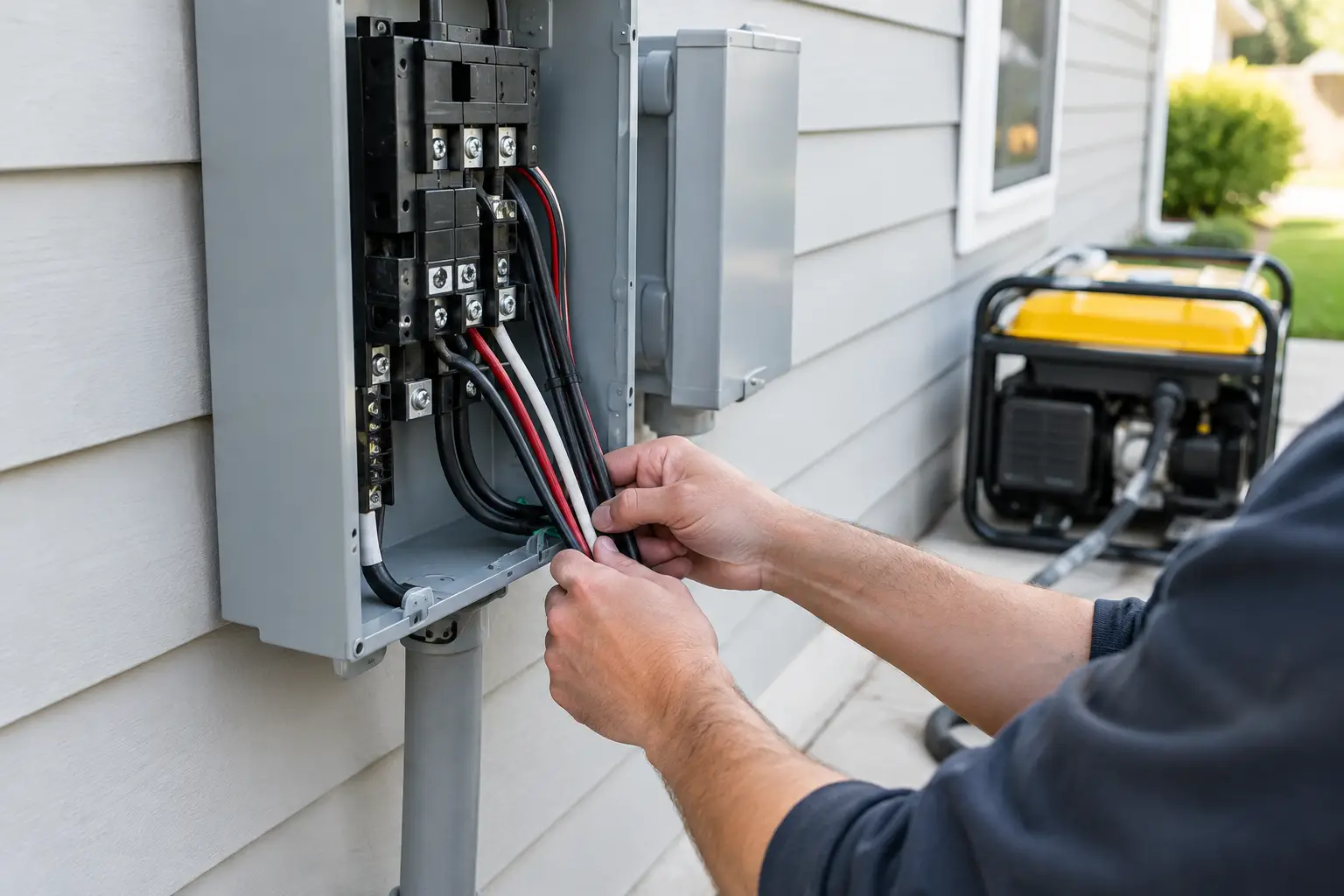
5. Consider Transfer Switch Compatibility
A large portable generator can power appliances directly through properly rated extension cords, but connecting a generator to a home’s electrical system is different.
OSHA warns against connecting a generator directly to a building’s electrical system unless a qualified electrician has properly installed a transfer switch. Without proper isolation, electricity can be sent back into utility lines and create an electrocution hazard.
If your goal is home backup, plan the electrical connection before buying the generator.
6. Look for Carbon Monoxide Protection
CO protection should be treated as an important feature rather than a marketing extra.
Modern portable generators may include systems that monitor carbon monoxide and automatically shut down the engine when dangerous levels are detected.
However, a CO shutoff system does not make indoor operation safe.
The U.S. Consumer Product Safety Commission continues to recommend operating portable generators outdoors at least 20 feet from the home, with the exhaust directed away from the building, windows, doors, and vents.
7. Think About Noise
Large conventional generators are generally louder than inverter generators.
If the generator will be used in a residential neighborhood, campground, or near an RV, published noise levels deserve attention.
The Champion 4000-watt inverter, for example, is rated at 64 dBA from 23 feet.
A large open-frame generator may offer substantially more power but will usually require more tolerance for engine noise.
8. Consider Weight and Storage
Large portable generators are portable in the sense that they have wheels and handles. That does not mean they are lightweight.
A 12,000- or 14,000-watt generator can weigh well over 200 pounds.
Before buying, consider where you will:
- Store the generator
- Refuel it
- Operate it
- Move it
- Maintain it
- Protect it from unauthorized access
A generator that is difficult to move or store may become inconvenient during an emergency.
9. Compare Runtime at a Realistic Load
Runtime figures are often advertised at a specific percentage of load.
A generator that runs for many hours at 25% or 50% load will not necessarily run for the same amount of time when heavily loaded.
When comparing models, look at:
- Fuel tank capacity
- Runtime at the stated load
- Fuel type
- Running watts
- Expected household load
This gives you a much more realistic idea of how frequently you will need to refuel.
Large Portable Generator Safety Tips
Portable generators produce carbon monoxide and must be operated outdoors.
Never operate one inside a house, garage, basement, shed, crawlspace, or other enclosed area. Opening doors or windows does not provide adequate protection from dangerous CO accumulation.
For home backup use, CPSC recommends placing the generator at least 20 feet from the home and directing the exhaust away from the building.
You should also:
- Keep the generator dry and follow the manufacturer’s instructions for wet-weather operation.
- Never refuel a hot generator.
- Allow the engine to cool before adding fuel.
- Do not overload the generator.
- Use properly rated extension cords when connecting appliances directly.
- Keep working carbon monoxide alarms inside the home.
- Follow the owner’s manual for grounding and bonding requirements.
- Have a qualified electrician install the appropriate transfer equipment when connecting to household wiring.
OSHA also recommends keeping generators dry, avoiding overloads, using appropriately rated cords, and following the manufacturer’s grounding and bonding instructions.
Which Type of Generator Makes Sense for You?
The right choice depends more on your intended use than on the largest wattage number printed on the box.
For large-home backup
A high-output dual-fuel or tri-fuel generator such as the Westinghouse 12500 or 14500 class makes more sense when you need to run several large appliances and essential circuits.
For maximum fuel flexibility
A tri-fuel generator gives you gasoline, propane, and natural gas as options. That can be useful for extended outages where fuel availability may change.
For RV and camping
The Champion 4000-watt inverter is much easier to transport and offers a quieter operating experience than the large open-frame generators in this comparison.
For phones and small electronics
A compact battery power station such as the MARBERO or bailibatt is more convenient when you only need to charge small devices.
Final Thoughts
The best large portable generator for 2026 depends on how much power you actually need, which fuels are available to you, and how you plan to connect and operate the generator.
The Westinghouse 12500 is aimed at buyers who want high output with gasoline and propane flexibility. The Westinghouse 14500 adds natural-gas capability and even more gasoline output, making the tri-fuel format particularly useful for buyers planning for longer outages.
The Champion 4000-watt inverter serves a different purpose. Its lighter design, RV-ready outlet, quieter operation, and inverter technology make it more appropriate for camping, RVs, tailgating, and selected essential loads rather than whole-home backup.
The smaller MARBERO and bailibatt power stations are useful for portable electronics, but their limited battery capacity means they should not be treated as alternatives to a high-output gasoline generator.
Before purchasing, calculate your actual running and starting wattage, check the voltage and outlet requirements, consider fuel availability, and make sure you have a safe location for the generator.
Most importantly, treat carbon monoxide protection and proper electrical connection as essential parts of generator planning—not optional features. A properly sized generator can provide valuable backup power, but it must be operated according to the manufacturer’s instructions and current safety guidance.