As an Amazon Associate I earn from qualifying purchases.
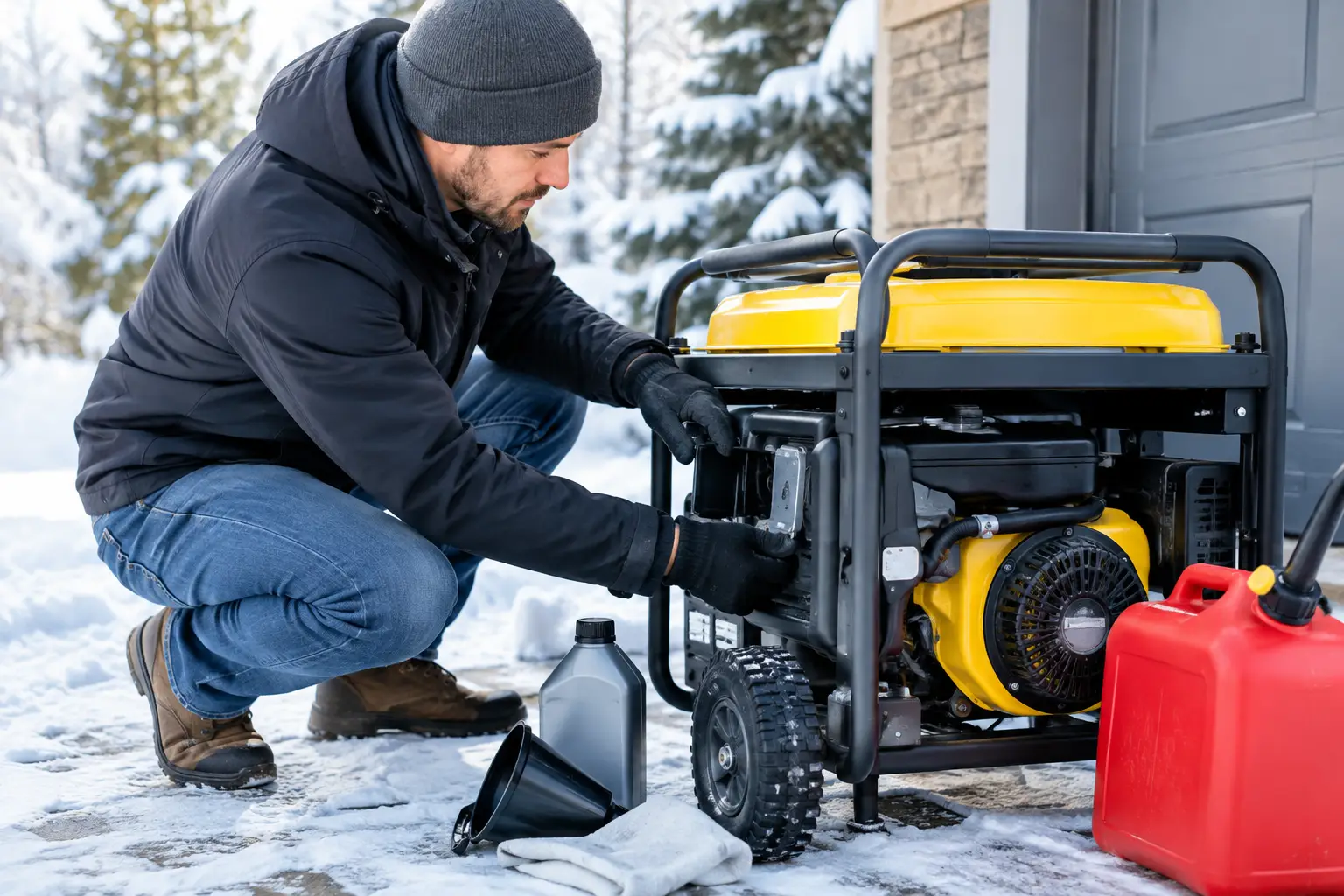
A portable generator can sit unused for several months and then become one of the most important pieces of equipment in your home during a winter power outage. Unfortunately, cold weather is not always the biggest problem. Old gasoline, a discharged starting battery, moisture, and neglected maintenance can prevent a generator from starting when you need it most.
Learning how to winterize a portable generator properly means preparing more than just the engine. You also need to protect the fuel system, battery, electrical components, and exterior from the effects of cold temperatures and long periods of inactivity.
The correct procedure depends on how you plan to use the generator. A portable unit that will remain in storage until spring needs different preparation from an emergency generator that must be ready to operate during snowstorms and freezing weather.
In this guide, I’ll explain how to prepare gasoline, propane, dual-fuel, and diesel generators for winter, what to inspect before storage, and how to get your equipment ready for its next use.
1. Decide Whether Your Generator Will Be Stored or Used During Winter
Before doing any maintenance, decide how long the generator will remain unused.
There are two different situations to consider.
Long-term seasonal storage
If you use your portable generator for camping, RV trips, outdoor projects, or seasonal work, it may sit unused for three to six months. In this situation, protecting the fuel system and preventing corrosion should be your priorities.
Depending on the manufacturer’s instructions, preparation may include:
- Stabilizing fresh gasoline or draining the fuel system.
- Changing the engine oil if maintenance is due.
- Inspecting the spark plug and air filter.
- Disconnecting or maintaining the starting battery.
- Cleaning the exterior and protecting exposed metal.
- Storing the generator in a dry, protected location.
Emergency backup during winter
A generator used for home backup power needs a different approach. You want it maintained without making it difficult to start during an unexpected outage.
Keep the generator accessible, check its fuel supply, maintain the starting battery, and inspect the electrical connections before severe weather arrives.
Do not leave the generator buried behind snow blowers, lawn equipment, or other stored items.
Also, identify the outdoor location where you will operate it. You need a clear path, a suitable operating surface, and enough distance from the house to prevent exhaust from entering through windows, doors, and ventilation openings.
Never operate a portable generator inside a house, garage, basement, shed, or enclosed porch. Keep it at least 20 feet from the home, direct the exhaust away from buildings, and follow the manufacturer’s instructions for wet-weather operation.
2. Prepare the Fuel System Before Winter Storage
Fuel deterioration is one of the most common reasons a gasoline generator develops starting problems after sitting unused.
Gasoline can begin to deteriorate in approximately 30 days, depending on its formulation, storage conditions, and exposure to air. Ethanol-blended gasoline can also absorb moisture, which may contribute to corrosion and fuel-system problems.
The remaining fuel inside a carburetor is particularly important. Even when the generator has a relatively clean fuel tank, gasoline left in the carburetor bowl can evaporate and leave deposits that restrict small passages.
There are two common approaches to preparing a gasoline generator for storage.
Option A: Use Fresh Gasoline With Fuel Stabilizer
For generators whose manufacturers permit stabilized-fuel storage, this method can be convenient.
Follow these steps:
- Start with fresh gasoline appropriate for your generator.
- Add a fuel stabilizer designed for gasoline engines.
- Follow the stabilizer manufacturer’s recommended mixing ratio.
- Run the generator outdoors for several minutes so treated fuel reaches the fuel lines and carburetor.
- Shut down the generator and allow it to cool before storing it.
Fuel stabilizer helps slow deterioration, but it does not restore old gasoline or make fuel last indefinitely.
Pay attention to the storage period stated on the stabilizer label. If the generator will remain unused longer than the recommended period, another storage method may be necessary.
Option B: Drain the Fuel System
For longer storage periods, draining the gasoline system may be preferable, especially on carbureted generators.
The general procedure is:
- Turn off the generator and close the fuel valve if the model has one.
- Allow the engine to cool.
- Drain the carburetor bowl using the procedure described in the owner’s manual.
- Drain the fuel tank if the manufacturer recommends completely emptying it.
- Collect gasoline in an approved fuel container.
- Dispose of unwanted gasoline through an appropriate local hazardous-waste collection program.
Some manufacturers recommend running the engine until it stops after closing the fuel valve. Others provide a dedicated carburetor drain procedure.
Do not assume these methods are interchangeable. Follow the instructions for your specific generator.
Never drain gasoline near flames, heaters, pilot lights, sparks, or other ignition sources. Work in a suitable ventilated area and keep fuel away from living spaces.
For emergency generators that need to remain available during winter, follow the manufacturer’s recommended fuel-storage method rather than automatically emptying the tank.
What About Dual-Fuel Generators?
If you own a dual-fuel generator, remember that gasoline and propane require different storage considerations.
Gasoline needs attention because it deteriorates over time. Propane does not develop the same stale-fuel problems during normal cylinder storage.
Before storing the generator:
- Follow the manufacturer’s procedure for the gasoline system.
- Close the propane cylinder valve.
- Disconnect the cylinder only as directed by the manufacturer.
- Inspect the propane hose, regulator, and fittings for damage.
- Protect exposed connections from dirt and moisture.
Store propane cylinders upright, outdoors, in a secure and well-ventilated location, away from ignition sources and excessive heat. Never store propane cylinders inside a house, basement, or attached garage.
Winterizing a Portable Diesel Generator
Diesel generators need additional attention when temperatures fall below freezing.
Ordinary diesel fuel can develop wax crystals in cold conditions. These crystals can restrict fuel filters and make it difficult for the engine to receive enough fuel.
Before winter storage or cold-weather operation:
- Use the appropriate winter-grade diesel fuel for your climate.
- Follow the manufacturer’s recommendations for compatible anti-gel additives.
- Inspect and drain the water separator if equipped.
- Check the fuel filter according to the maintenance schedule.
- Keep the fuel system protected from water contamination.
Do not assume that an additive designed for gasoline will work in a diesel engine. Use products specifically formulated for diesel fuel.
3. Change the Generator Oil if Maintenance Is Due
Engine oil deserves attention before extended winter storage.
Used oil contains combustion byproducts and contaminants. If your generator is approaching its scheduled oil change, taking care of it before storage is a practical way to prepare the engine for its next operating season.
First, check the maintenance schedule in your owner’s manual.
If an oil change is due, follow this procedure:
- Place the generator on a level surface outdoors.
- Run the engine briefly to warm the oil.
- Shut it down and allow hot components to cool enough to handle safely.
- Position an appropriate drain pan beneath the oil drain.
- Remove the drain plug or use the supplied drain tube.
- Allow the old oil to drain completely.
- Reinstall the drain plug securely.
- Refill with the recommended oil.
Many portable generators use SAE 10W-30, but this is not a universal recommendation. Some engines require different oil viscosities depending on the temperature range and operating conditions.
Check the oil level with the generator positioned correctly. Avoid overfilling, and inspect around the drain plug for leaks.
If the oil change is not yet due, follow the manufacturer’s storage instructions rather than assuming every generator needs a new oil charge before winter.
Collect used oil in a suitable container and take it to an approved recycling location.
4. Protect the Starting Battery During Cold Weather
An electric-start portable generator depends on a healthy battery. Unfortunately, batteries can gradually lose their charge when equipment remains unused.
Cold temperatures can also reduce a battery’s ability to deliver starting power.
Before winter storage, inspect the battery and its connections.
Look for:
- Corrosion around the battery terminals.
- Loose or damaged cables.
- Cracks or swelling in the battery case.
- Signs of leakage.
- A weak or inconsistent electric start.
If the manufacturer permits it, disconnect the negative battery cable before extended storage.
Another option is a compatible automatic battery maintainer. Unlike a basic charger, a suitable maintainer monitors the battery and helps keep it charged without continuously applying excessive charging current.
Make sure the maintainer is compatible with the battery chemistry and voltage. Follow the manufacturer’s instructions for connecting and storing the battery.
If the battery must be removed, store it in the recommended temperature range and away from fuel, flames, and metal objects that could short its terminals.
You can also compare replacement options in this guide to 12-volt generator batteries.
Do not wait until a winter outage to discover that the electric starter no longer has enough power to crank the engine.
5. Inspect the Spark Plug and Air Filter
The spark plug and air filter are relatively small components, but both can affect how easily a portable generator starts.
Remove the spark plug following the owner’s manual and inspect its condition.
Look for:
- Heavy carbon deposits.
- Oil contamination.
- Cracked ceramic insulation.
- Corrosion.
- Worn electrodes.
If the plug is damaged, fouled, or due for replacement, install the correct replacement specified by the manufacturer.
Check the electrode gap before installation. Do not assume that every new spark plug comes pre-gapped correctly for your engine.
The air filter also needs inspection.
Foam filters may require cleaning and re-oiling according to the manufacturer’s procedure. Paper filters generally need replacement when excessively dirty or damaged. Never apply oil to a paper filter unless the manufacturer specifically requires it.
A dirty filter restricts airflow, while a damaged filter can allow dirt to enter the engine.
Before returning the generator to storage, make sure the air filter is installed correctly and the air intake is free of debris.
6. Clean the Generator and Protect It From Moisture
Cleaning the generator before storage makes it easier to identify problems that might otherwise go unnoticed.
Start by shutting down the engine and allowing it to cool completely.
Remove loose dirt, leaves, grass, sawdust, and other debris from the frame and exterior.
Pay particular attention to:
- Cooling air openings.
- The alternator housing.
- The control panel.
- Electrical receptacles.
- Fuel tank connections.
- The engine cooling area.
Use a dry cloth or a soft brush where appropriate. Avoid directing water or high-pressure air into electrical components, the carburetor, or the air intake.
Inspect the frame for rust, loose fasteners, damaged wheels, and worn rubber feet.
Moisture is a particular concern when generators are stored in garages, sheds, or outdoor storage areas with temperature changes.
A cold generator moved into a warmer, humid space may develop condensation on metal surfaces. Good storage conditions help reduce this risk.
If your generator will remain unused for several months, choose a dry location with protection from rain, snow, and direct moisture.
A breathable generator cover can help protect the exterior from dust and debris. Avoid tightly wrapping the entire machine in plastic, which can trap moisture.
Never leave a cover on while the generator is operating.
7. Choose the Right Storage Location
Where you store a portable generator can make a significant difference in its condition when winter ends.
A suitable storage location should be:
- Dry and protected from direct precipitation.
- Away from standing water.
- Well ventilated.
- Protected from excessive humidity.
- Away from open flames and ignition sources.
- Inaccessible to children and unauthorized users.
Place the generator on a level surface. If the storage floor is damp concrete, an appropriate platform can help keep the equipment away from standing moisture.
Do not store gasoline in the generator’s storage area unless that location complies with applicable fire codes and the fuel container manufacturer’s requirements. Keep fuel in approved containers and away from living spaces and ignition sources.
Rodents can also cause problems during long storage periods. They may chew electrical wiring, damage insulation, or build nests around the engine and cooling openings.
Inspect the generator periodically for signs of nesting, droppings, or damaged cables.
A generator that looks clean from the outside may still have debris inside its cooling area.
8. Prepare Your Generator for Winter Power Outages
If you expect to use your generator during winter storms, preparation should include the equipment needed to deliver electricity safely.
A working generator is only part of the backup power system.
Check your extension cords, transfer switch equipment, inlet box, and electrical connections before severe weather arrives.
For example, confirm that your 50-amp generator extension cords have the correct connectors, conductor size, and electrical rating for the generator and the equipment being powered.
Inspect the entire length of each cord for cuts, damaged insulation, crushed sections, or loose plugs.
If you plan to power a well pump, sump pump, refrigerator, or heating equipment, remember that some appliances require substantially more electricity when starting than when running.
Check both the generator’s running wattage and starting wattage. Make sure the generator can handle the combined load without exceeding its rated capacity.
For home backup connections, use a properly installed transfer switch or another approved connection method. Never connect a generator directly to a household wall outlet, which can cause dangerous backfeeding.
Can You Run a Portable Generator in Snow or Freezing Rain?
A portable generator should not operate while exposed to conditions that allow water or snow to reach electrical components.
Moisture can create a risk of electric shock or electrocution.
However, protecting the generator from precipitation does not mean placing it inside a garage, shed, or enclosed structure.
Use only a manufacturer-approved or appropriately rated noncombustible generator shelter when permitted by the owner’s manual. The setup must allow adequate airflow, prevent exhaust from entering occupied buildings, and maintain the required clearance from combustible materials.
Keep the generator at least 20 feet from the house and point the exhaust away from windows, doors, and vents.
Clear snow around the operating area, maintain stable footing, and make sure exhaust openings cannot become blocked.
If conditions are too severe to operate the equipment safely, wait until the weather improves.
The U.S. Consumer Product Safety Commission provides additional guidance on portable generator safety during winter storms.
9. Perform Periodic Readiness Checks
A generator kept for emergency use should not be forgotten until the electricity goes out.
Follow the manufacturer’s recommended inspection and exercise schedule.
When the manual calls for a test run, operate the generator outdoors in a safe location and use an appropriate electrical load within its rated capacity.
During the test, check for:
- Difficult starting.
- Unusual engine noise.
- Surging or unstable operation.
- Fuel or oil leaks.
- Excessive smoke.
- Damaged electrical outlets.
- Warning lights or fault indicators.
- Problems with the CO shutoff system, if equipped.
Do not assume that running a generator without a load proves it is ready for an emergency. A properly sized test load can help reveal problems that may not appear during idle operation.
After the test, shut down the generator according to the owner’s manual and allow it to cool before covering or storing it.
Also inspect the battery, fuel supply, cords, and outdoor operating area.
10. How to Prepare a Portable Generator After Winter Storage
When spring arrives, do not immediately assume that your generator is ready to operate.
A few checks can prevent starting problems and identify damage caused by months of inactivity.
Before starting:
- Remove the storage cover.
- Inspect the generator for corrosion, dirt, and signs of rodent activity.
- Check the fuel tank and fuel lines for leaks or deterioration.
- Replace old gasoline if it has exceeded the permitted storage period.
- Inspect the carburetor and fuel system if starting problems are suspected.
- Check the engine oil level.
- Inspect the spark plug and air filter.
- Check the battery charge and terminal connections.
- Inspect the electrical outlets and extension cords.
- Start the generator outdoors and check that it operates normally.
If the engine will not start, avoid repeatedly pulling the starter or cranking the electric starter without investigating the cause.
Stale fuel, a restricted carburetor, a weak battery, or a fouled spark plug may be responsible.
Consult the troubleshooting section of your owner’s manual before attempting repairs.
Portable Generator Winterization Checklist
Use this checklist before storing your generator or preparing it for winter emergency use.
- [ ] Determine whether the generator will be stored or used periodically.
- [ ] Follow the manufacturer’s gasoline or diesel storage procedure.
- [ ] Add compatible fuel stabilizer or drain the fuel system when recommended.
- [ ] Inspect the propane hose, regulator, and cylinder connections if applicable.
- [ ] Change the engine oil if maintenance is due.
- [ ] Inspect the starting battery and charging system.
- [ ] Check the spark plug and air filter.
- [ ] Clean the frame, cooling openings, and control panel.
- [ ] Look for fuel leaks, damaged wiring, and corrosion.
- [ ] Store the generator in a dry, protected location.
- [ ] Inspect the extension cords and electrical connections.
- [ ] Confirm that the outdoor operating location is safe.
- [ ] Keep the generator at least 20 feet from the home when operating.
- [ ] Check the equipment periodically according to the owner’s manual.
Frequently Asked Questions About Winterizing Portable Generators
Should I drain the gas from my portable generator before winter?
It depends on the generator and how long it will remain unused. Some manufacturers recommend draining the fuel tank and carburetor for extended storage, while others permit fresh gasoline treated with an appropriate stabilizer. Always follow the specific storage procedure in your owner’s manual.
Is it better to store a generator with a full or empty gas tank?
There is no single answer for every portable generator. Some manufacturers recommend storing the fuel system completely dry, while others allow a tank filled with fresh, stabilized gasoline. Follow the manufacturer’s instructions rather than applying one method to every model.
How long can gasoline sit in a portable generator?
Gasoline can begin deteriorating in approximately 30 days, although the actual period depends on fuel formulation and storage conditions. A compatible stabilizer can extend its usable storage period when applied correctly, but it does not preserve gasoline indefinitely.
Should I remove the battery from my generator during winter?
Not necessarily. If the generator will remain in storage for several months, you can disconnect the battery if permitted by the manufacturer or use a compatible automatic battery maintainer. If the battery is removed, store it according to its manufacturer’s temperature and charging recommendations.
Can I leave my portable generator outside during winter?
A portable generator should ideally be stored in a dry, protected location. Leaving it exposed to rain, snow, ice, and moisture can accelerate corrosion and damage electrical components. If outdoor storage is unavoidable, follow the manufacturer’s recommendations for weather protection and never operate the generator under an enclosure that restricts ventilation.
Can cold weather damage a portable generator?
Cold temperatures can reduce battery performance, affect engine starting, increase the viscosity of engine oil, and cause problems with diesel fuel. Proper maintenance, the correct oil viscosity, suitable fuel, and battery care help reduce these problems.
Should I start my portable generator every month during winter?
Not automatically. Follow the exercise schedule in the owner’s manual. Some manufacturers recommend periodic operation, while others emphasize proper fuel preparation and storage. If you run the generator, use a safe outdoor location and an appropriate load.
Final Thoughts
Winterizing a portable generator is not just about preventing the engine from getting cold. It is about protecting the entire machine during a period when it may sit unused or be called into service during difficult weather.
Pay particular attention to the fuel system, engine oil, starting battery, air filter, and storage environment. If your generator will be used during winter storms, prepare the electrical connections and outdoor operating location before an emergency happens.
A few hours of maintenance before winter can save you from discovering a fuel-system problem, a dead battery, or damaged wiring when your household needs backup electricity.
Most importantly, follow the manufacturer’s instructions for your specific generator. Proper storage and safe operation go together, and both are essential for dependable backup power.