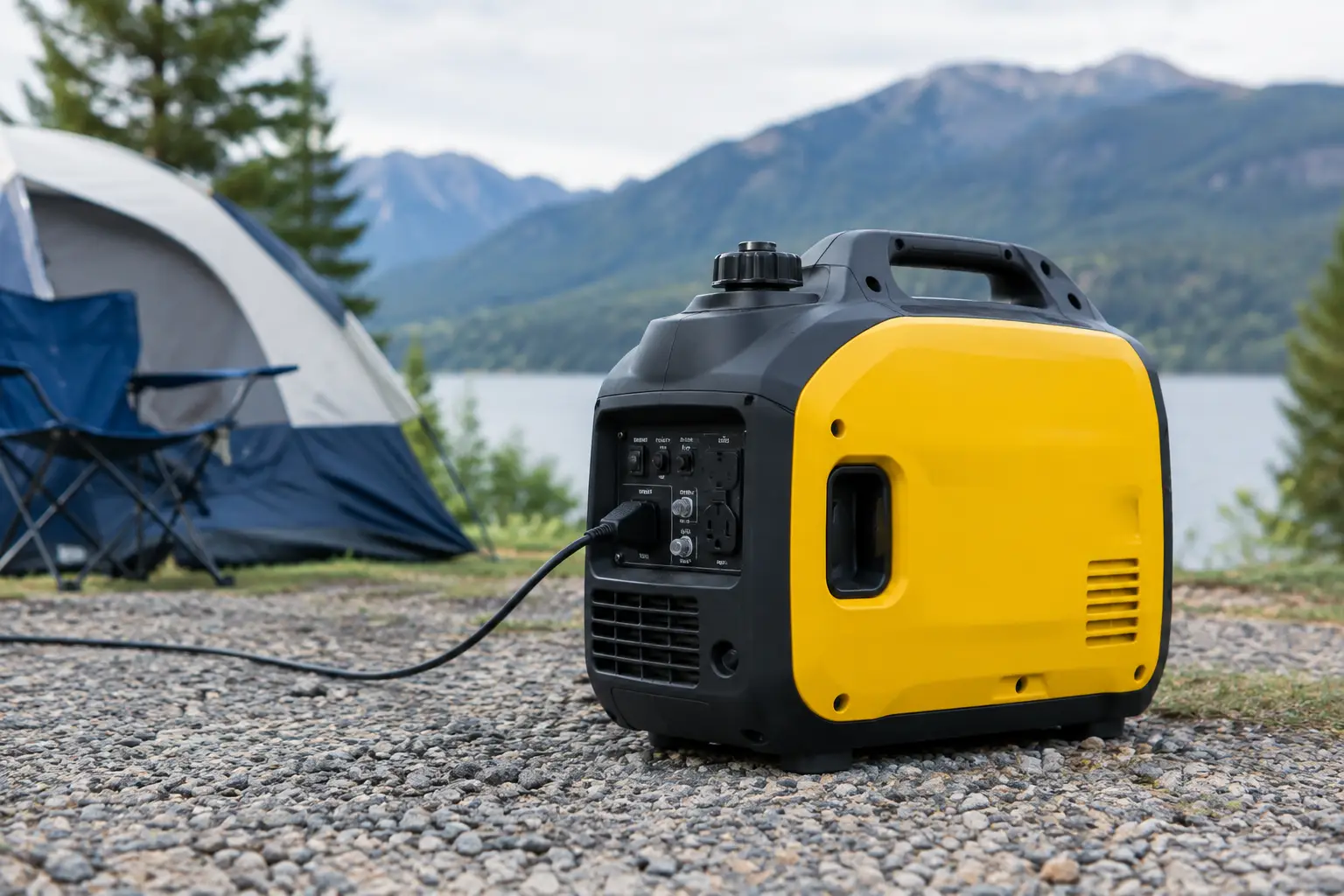
As an Amazon Associate I earn from qualifying purchases.
A quiet generator is only useful if it can start the equipment you actually need. That is the central question in any Champion inverter generator review: not whether the unit has a long feature list, but whether its running watts, outlet configuration, fuel setup, and portability match the job. Champion has built a broad inverter lineup for camping, RV travel, jobsite support, and limited home backup, with choices ranging from compact suitcase-style units to larger dual-fuel models designed for heavier loads.
For many buyers, Champion is a sensible middle ground. Its inverter generators usually offer useful features without moving into premium-price territory, and the range includes gasoline-only, dual-fuel, open-frame, and enclosed options. The trade-off is that the nameplate alone does not tell you enough. A 2,500-watt portable inverter and a 4,500-watt dual-fuel model may both be good products, but they solve very different power problems.
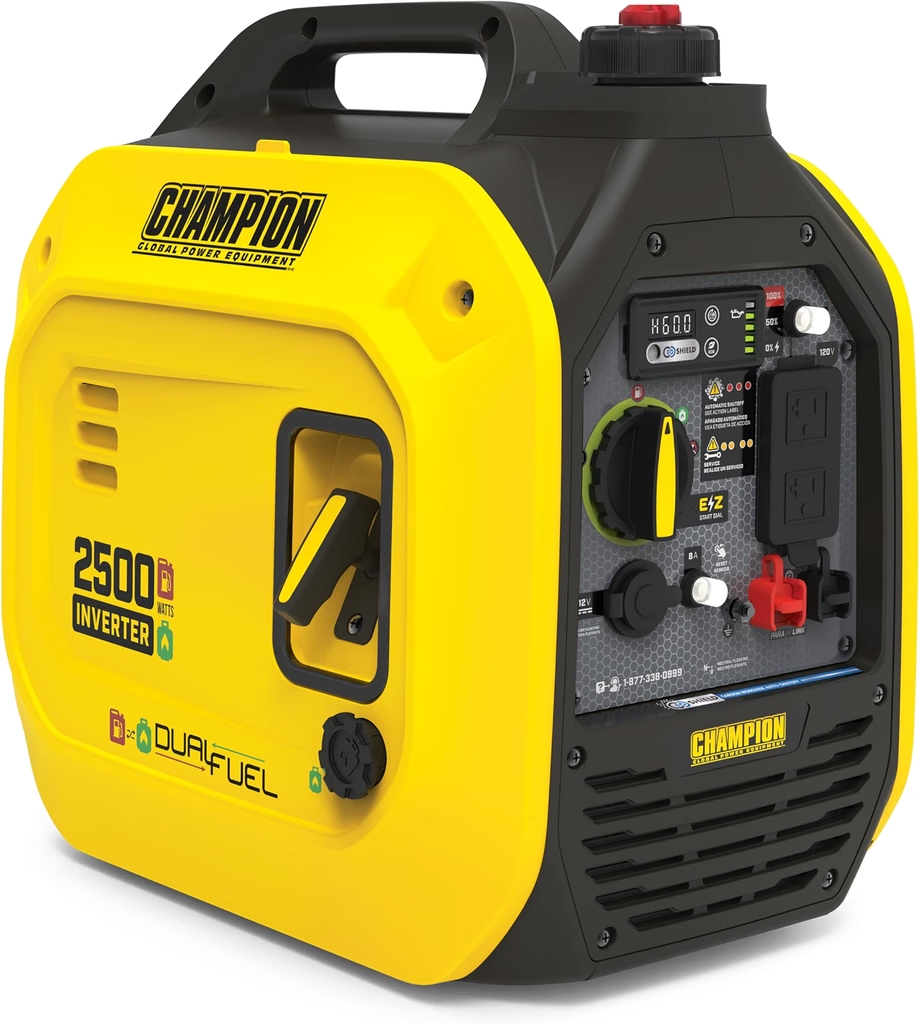
Champion 2500-watt dual fuel inverter generator – portable backup power for a small water plant.
Champion inverter generator review: the short verdict
Champion inverter generators are a strong fit for shoppers who want cleaner power, lower noise, and more flexible fueling than a conventional portable generator typically provides. They are especially appealing for RV owners, campers, tailgaters, and homeowners who want to keep a few essentials running during an outage.
The best value tends to be in Champion’s small and mid-size dual-fuel inverter models. Propane gives owners a practical stored-fuel option, while gasoline delivers longer runtime per tank and is often easier to find during normal use. Models with a 30-amp RV outlet can power many travel trailers directly, while larger units may support a transfer-switch-connected essential-load panel when properly sized and installed.
They are not automatically the right answer for whole-house backup, central air conditioning, electric water heating, or a deep well pump with a demanding starting load. Those applications need a careful load calculation, and sometimes a larger conventional generator, a standby unit, or a soft-start solution is the more realistic choice.
| Champion Generator | Best For | Check Price |
|---|---|---|
| Champion 2500W Dual Fuel Inverter | Camping, electronics and portable power | Check Price → |
| Champion 4000W Dual Fuel RV Ready Inverter | RV travel and essential backup loads | Check Price → |
| Champion 4500W Open Frame Inverter | RV use and larger portable power needs | Check Price → |
What Champion gets right
Inverter power is better for sensitive electronics
An inverter generator converts power electronically before sending it to the outlets. In practical terms, this usually means more stable power for equipment such as phones, laptops, TVs, battery chargers, and modern RV electronics. Champion markets this as clean power, and that distinction matters if you are replacing an old open-frame generator that produced rougher output under changing loads.
It does not mean you should plug every valuable device directly into a generator without protection. A quality surge protector is still worthwhile for RVs and home electronics, particularly where utility power may return unexpectedly or cords are exposed to wet outdoor conditions.
Dual fuel adds useful preparedness flexibility
Champion’s dual-fuel inverter generators are among the brand’s most practical options. Gasoline is familiar and delivers the published gasoline output, while propane stores longer and eliminates concerns about stale fuel in the carburetor. For occasional outage use, a properly stored propane cylinder can make ownership less stressful.
There is a catch: generators generally produce less wattage on propane than on gasoline. If you are close to the unit’s running-watt limit on gas, changing to propane may cause overloads when a refrigerator compressor, sump pump, or RV air conditioner starts. Plan your loads around the lower propane rating, not the higher gasoline number.
Portable options are genuinely useful
Champion’s smaller inverter units are easy to understand because their purpose is narrow. A compact 2,000- to 2,500-watt class model can handle battery charging, lights, a small refrigerator, a coffee maker used one at a time, or many RV needs short of a large air conditioner. Their lower weight and quieter operation make them much more pleasant for camping than a large construction-style generator.
At the other end, larger Champion inverter generators often include wheels, folding handles, electric start, and more substantial outlet panels. Those features improve usability, but they do not make a 100-plus-pound generator easy to move alone. Buyers who expect to load a generator into an SUV or truck bed should check the actual dry weight and handle placement before ordering.
Parallel capability can be a smart compromise
Many Champion inverter models can be paired with a compatible parallel kit. This lets two smaller generators share a larger load. For RV owners, that can be more convenient than carrying one very heavy generator: run one unit for basic loads, then connect the second when air conditioning is needed.
Parallel operation is not always cheaper, and it adds cables, storage requirements, and another engine to maintain. Still, it is a practical option for people whose power needs change from weekend camping to occasional emergency use.
Where buyers need to look closer
The biggest source of disappointment is confusing starting watts with running watts. Motors need a brief surge of extra power when they start. A refrigerator may run on modest wattage but pull several times that amount for a moment. Sump pumps, circular saws, air compressors, and well pumps can be even more demanding.
Before choosing a Champion model, make a list of what will operate at the same time. Include the running watts, the highest starting watt requirement, and a safety margin. Do not assume a generator advertised near 4,500 watts can continuously support 4,500 watts of mixed household equipment. Its continuous rating may be lower, and propane output may reduce it further.
Noise ratings deserve the same scrutiny. Inverter generators are generally quieter than conventional models, especially in economy mode at light loads. But published decibel figures are commonly measured from a specified distance and under a low load. When a generator is running an RV air conditioner or a group of home essentials, it will be louder than the best-case number suggests.
Fuel runtime also depends heavily on load. A model that runs for many hours at 25 percent load will run far less time while carrying a refrigerator, freezer, internet equipment, lights, and a sump pump. For outage planning, estimate runtime at the load you expect to use, then plan a safe refueling or propane-cylinder rotation schedule.
Choosing the right size for common uses
For tent camping, tailgating, or charging tools and electronics, a small Champion inverter generator is usually enough. Prioritize light weight, a standard 120-volt outlet, and a quiet enclosure. If you need to run a microwave or a small RV air conditioner, move to a model with an RV-ready 30-amp receptacle and enough starting capacity for the air conditioner.
For an RV, inspect the plug before assuming compatibility. A 30-amp travel trailer normally uses a TT-30R receptacle, while a 50-amp RV uses a four-prong 120/240-volt connection and may require a generator with the appropriate output or a carefully chosen adapter. An adapter changes the physical connection, not the generator’s available power. It cannot turn a small 120-volt generator into a full 50-amp RV power source.
For home backup, a larger Champion inverter generator can be useful for an essential-load plan: refrigerator, freezer, furnace blower, a few lights, internet equipment, and selected kitchen outlets. The safest approach is a properly installed power inlet box, generator cord, and transfer switch or panel interlock. This prevents dangerous backfeeding into utility lines and provides a controlled way to manage loads.
Never run a generator in a garage, basement, porch enclosure, or near open windows. Carbon monoxide can enter a home quickly, even when the unit is outside but too close to doors, vents, or windows. Champion’s CO shutoff features are valuable backup protection, but they are not a substitute for correct placement and working indoor carbon monoxide alarms.
Setup details that affect ownership
Use a heavy-duty outdoor-rated generator cord sized for the amperage and length of the run. A long, undersized cord can cause voltage drop, heat buildup, and poor motor performance. Keep connections off wet ground, inspect plugs for damage, and avoid routing cords where vehicles, doors, or foot traffic can crush them.
Neutral bonding is another detail worth checking before connecting to an RV surge protector or a transfer setup. Generator neutral configuration can differ by model and application. Follow the specific Champion manual and the instructions for your transfer equipment. Do not add a bonding plug because of a forum recommendation without confirming that your setup requires it. Incorrect neutral bonding can create safety and compatibility problems.
Maintenance is straightforward but not optional. Run the generator periodically, change oil on schedule, service the air filter, and keep fresh stabilized gasoline if gasoline is stored in the tank. If a dual-fuel model will sit for months, propane operation can reduce carburetor concerns, but the engine still needs regular exercise and oil checks.
A Champion inverter generator earns its place when you buy it for a defined load plan rather than a hopeful wattage number. Measure what you need, choose the right receptacles and cords, and set up the connection safely. That preparation turns a portable generator from an emergency purchase into power you can rely on when it matters.