As an Amazon Associate I earn from qualifying purchases.

A portable solar generator can be one of the most useful pieces of backup equipment to keep in an RV, camping setup, emergency kit, or vehicle. Unlike a traditional gas generator, a solar generator produces no exhaust while operating and can be recharged from the sun when conditions allow.
For 2026, portable power stations have also become more capable. LiFePO4 batteries, faster AC charging, higher solar-input limits, app controls, and larger capacities make today’s models much more practical for both outdoor adventures and short-term power outages.
But choosing a solar generator is not simply about buying the model with the biggest battery. You also need to consider continuous AC output, solar charging capacity, battery chemistry, weight, ports, and what you actually need to power.
This guide compares five portable solar generators from the original lineup and explains where each one makes the most sense.
Top Solar Generators with Solar Panels for 2026
| Model | Battery Capacity | AC Output | Solar Charging | Best For |
|---|---|---|---|---|
| MARBERO 237Wh Solar Generator | 237Wh | 300W | 60W panel configuration | Lightweight emergency and outdoor use |
| Anker SOLIX C1000 | 1,056Wh | 1,800W | Up to 600W | Camping, RVs and home backup |
| Jackery Solar Generator 300 | 293Wh | 300W | SolarSaga compatible | Short camping trips and small electronics |
| ZeroKor 300W Solar Generator | 280Wh | 300W | 60W panel configuration | Budget outdoor use |
| Jackery Solar Generator 1000 v2 | 1,070Wh | 1,500W | Up to 400W | Camping and emergency backup |
Important: Solar generator bundles can change depending on the seller and configuration. Before ordering, check the current Amazon listing to confirm whether the solar panel is included, which panel wattage comes with the package, and what accessories are in the box.
1. MARBERO 237Wh Solar Generator – Compact Power for Camping and Emergencies
Check Amazon Price: Click Here
The MARBERO 237Wh Solar Generator is designed for people who care more about portability than high-output appliances. A power station in this capacity range makes sense for keeping phones, cameras, lights, tablets, and other small electronics running during camping trips or short power interruptions.
The original configuration associated with this listing uses a compact solar panel and a 300W inverter, making it considerably smaller than the 1,000Wh-class power stations that dominate the current market.
Key features
- Battery capacity: 237Wh
- AC inverter: Up to 300W
- Solar panel: 60W configuration
- Charging options: AC, vehicle and solar depending on configuration
- Battery protection: Built-in protection systems
- Portable design: Suitable for camping, travel and emergency kits
The main advantage here is size. You are not carrying a 50-pound power station just to recharge a phone or run a small light.
On the other hand, 237Wh is not enough capacity for serious home backup. High-wattage appliances such as space heaters, hair dryers, electric kettles and large coffee makers can drain a small battery quickly or exceed the inverter’s output limit.
Who should consider it?
This type of solar generator makes the most sense for short camping trips, emergency phone charging, lighting and small electronics.
If your priority is running a refrigerator, microwave or multiple appliances during a blackout, move up to a 1,000Wh or larger model.
2. Anker SOLIX C1000 – High-Output Solar Generator for Camping and Backup Power
Check Amazon Price: Click Here
The Anker SOLIX C1000 is a much more capable power station than the smaller 200Wh-to-300Wh models. It has a 1,056Wh LiFePO4 battery, an 1,800W pure sine wave AC inverter, and up to 2,400W surge output. Anker also rates its solar input at up to 600W.
That combination makes the C1000 more appropriate for people who want one power station that can work for camping, RV use and emergency backup.
Key features
- Battery capacity: 1,056Wh
- Battery chemistry: LiFePO4
- Continuous AC output: 1,800W
- Surge output: 2,400W
- Maximum solar input: 600W
- AC charging: Up to 1,300W
- UPS switching: Less than 20ms
- Connectivity: Wi-Fi and Bluetooth
- Weight: About 28.4 pounds
The LiFePO4 battery is particularly useful if you expect to use the power station regularly. Anker rates the battery for 3,000 cycles to 80% capacity, and the unit carries a five-year warranty.
Solar charging is another important advantage. The C1000 can accept up to 600W of solar input, although actual charging performance depends on the panels, sunlight, temperature, orientation and other conditions.
The built-in app is also useful when the power station is being used as emergency backup because you can monitor battery status and power consumption without constantly checking the display.
What can it power?
With 1,800W of continuous output, the C1000 can handle many common appliances, provided their startup and operating requirements remain within the unit’s limits.
Potential uses include:
- Refrigerator
- Microwave for limited periods
- Coffee maker
- Laptop and monitors
- CPAP equipment
- Lights
- Fans
- Small electric appliances
- Camera and drone batteries
- Camping equipment
It is still important to check the wattage of each appliance before connecting it. Battery capacity determines how long something can run, while inverter output determines whether the power station can run it in the first place.
3. Jackery Solar Generator 300 – Lightweight Solar Power for Short Trips
Check Amazon Price: Click Here
The Jackery Solar Generator 300 remains a useful option for people who want a small and straightforward system rather than a large emergency power station.
The Explorer 300 has a 293Wh battery and a 300W inverter, with a 500W surge rating. Jackery’s Solar Generator 300 configuration pairs the Explorer 300 with a SolarSaga 100W solar panel.
Key features
- Battery capacity: 293Wh
- AC output: 300W
- Surge output: 500W
- Solar panel: SolarSaga 100W configuration
- Battery type: Lithium-ion
- Weight: About 7 pounds
- Charging options: Solar, AC and vehicle charging
- Ports: AC, USB-A, USB-C and 12V car output
This is one of the better formats for weekend camping because it doesn’t take up much room in a vehicle.
Jackery states that the Explorer 300 can reach 80% charge in about 3.5 hours under suitable full-sun conditions with a SolarSaga 100W panel. Actual charging time can vary significantly with sunlight and panel positioning.
What can the Jackery 300 power?
This is a small power station, so expectations matter.
It is well suited to:
- Smartphones
- Tablets
- Cameras
- Drones
- Laptops
- LED lights
- Small fans
- Portable coolers
- Other electronics below its output limit
Jackery specifically notes that the AC output should be used with devices operating below 300W.
That makes the Explorer 300 a poor choice for high-draw appliances but a practical option for personal electronics and short outdoor trips.
4. ZeroKor 300W Solar Generator – Budget-Friendly Portable Power
Check Amazon Price: Click Here
The ZeroKor 300W Solar Generator is aimed at buyers who want basic battery backup without moving into the larger and more expensive 1,000Wh category.
The 280Wh version uses a lithium-ion battery and a 300W maximum AC output. Configurations with a 60W folding solar panel are also available, although the contents of a particular package should always be verified before purchase.
Key features
- Battery capacity: 280Wh
- AC output: Up to 300W
- Battery chemistry: Lithium-ion
- Solar charging: Compatible configurations use a 60W panel
- AC voltage: 110V
- Portable design: Approximately 5 pounds
- Lighting: Built-in LED/SOS light on applicable versions
A 280Wh battery is enough for basic electronics, lighting and communication equipment, but it should not be treated like a whole-home backup battery.
For example, a 60W device theoretically consumes 60Wh every hour. Real-world runtime will be lower than simply dividing 280Wh by 60W because of inverter losses and other power consumption.
That distinction is important when comparing inexpensive solar generators.
Best uses
The ZeroKor makes the most sense for:
- Roadside emergencies
- Camping
- Fishing trips
- Phone and tablet charging
- Emergency lighting
- Small electronics
- Backup power for low-wattage equipment
If you need to power refrigerators or larger appliances for extended periods, a 1,000Wh-class power station is a more appropriate starting point.
5. Jackery Solar Generator 1000 v2 – A Strong Balance of Capacity and Portability
Check Amazon Price: Click Here
The Jackery Solar Generator 1000 v2 is one of the most important upgrades to the original lineup because it combines a relatively portable design with a modern 1,070Wh LiFePO4 battery.
Jackery rates the Explorer 1000 v2 at 1,500W continuous output and 3,000W surge, while its dual DC inputs can accept up to 400W of solar input when used together.
It is also significantly more suitable for repeated use than the smaller lithium-ion models.
Key features
- Battery capacity: 1,070Wh
- Battery chemistry: LiFePO4
- Continuous AC output: 1,500W
- Surge output: 3,000W
- Maximum solar input: Up to 400W
- USB-C: Up to 100W on the high-power port
- AC charging: About 1.6 to 1.7 hours
- Cycle life: 4,000 cycles to at least 70% capacity
- Weight: About 23.8 pounds
- Warranty: 3+2 years
The combination of capacity, output and weight makes this a particularly practical middle ground.
Popular Mechanics’ 2026 testing and buying guide also includes the Explorer 1000 V2 with a 200W solar panel among its current solar-generator recommendations.
What can it power?
A 1,070Wh power station can handle much more than a 300Wh model.
Depending on the appliance and actual consumption, it can be useful for:
- Refrigerators
- Laptops and monitors
- TVs
- Fans
- CPAP machines
- Small power tools
- Camping appliances
- Lights
- Communications equipment
- Battery chargers
It can also be useful during short outages when the priority is keeping essential equipment operating rather than powering an entire house.
How to Choose the Right Solar Generator in 2026
The most important mistake when buying a solar generator is focusing on only one specification.
A 2,000W inverter does not automatically mean the unit will run appliances for a long time. Likewise, a 2,000Wh battery is not useful for an appliance that requires more wattage than the inverter can provide.
Here are the specifications that matter most.
1. Battery Capacity: Wh
Watt-hours (Wh) indicate how much stored energy the battery can hold.
A 300Wh-class power station is appropriate for smaller electronics and short trips.
A 1,000Wh-class unit provides substantially more flexibility for camping, RV use and emergency backup.
Models around 2,000Wh and above are better suited to longer outages and larger appliances.
However, usable energy is always lower than the nameplate capacity because power stations have conversion and operating losses.
2. Continuous AC Output: Watts
The inverter’s continuous output tells you how much power the station can provide at one time.
For example:
- 300W: Phones, lights, cameras, laptops and small electronics
- 1,000W: More demanding electronics and selected appliances
- 1,500W–1,800W: Refrigerators, coffee makers, microwaves for limited periods and many small appliances
- 2,000W+: Greater flexibility for high-demand equipment
Always check both the appliance’s running wattage and its startup requirements.
Motors and compressors can temporarily require substantially more power when starting.
3. Solar Input
Solar input is often overlooked.
A power station with a 1,000Wh battery but only a very small solar-input limit may take much longer to recharge than expected.
For example, the Anker SOLIX C1000 accepts up to 600W of solar input, while the Jackery Explorer 1000 v2 supports up to 400W through its dual DC configuration.
More solar input does not guarantee those numbers will be reached. Panel output depends on sunlight, temperature, orientation, shading and the panel’s rated capacity.
4. Battery Chemistry
Many newer portable power stations use LiFePO4, also called lithium iron phosphate.
Compared with older lithium-ion chemistry, LiFePO4 batteries are generally valued for their longer cycle life and durability.
The Jackery Explorer 1000 v2, for example, uses LiFePO4 cells and is rated for 4,000 cycles to at least 70% capacity.
For someone who expects to use a solar generator frequently, battery chemistry is worth considering alongside capacity.
5. Weight and Portability
Don’t buy a 50-pound power station for a backpacking trip.
Likewise, a 7-pound unit may not be enough for someone preparing for a multi-day outage.
A simple way to think about it is:
- Under 10 pounds: Personal electronics and short trips
- 20–30 pounds: Camping, RVs and moderate emergency backup
- 40+ pounds: Larger-capacity backup and more demanding applications
The best size depends on what you actually intend to carry and power.
What Can a Solar Generator Power During a Blackout?
A solar generator is particularly useful when you prioritize essential loads.
A smaller model can keep phones, lights, radios and laptops running.
A 1,000Wh-class station can provide considerably more flexibility for refrigerators, networking equipment, medical equipment such as CPAP machines, and other essential electronics.
For longer outages, however, battery capacity becomes increasingly important.
A refrigerator might consume relatively little electricity while running but still have startup requirements. Heating appliances are a different story because electric heaters can consume around 1,500W or more.
That is why a portable solar generator should not be selected based solely on its battery capacity.
Solar Generator vs. Traditional Gas Generator
The two technologies solve different problems.
Solar generators
- Produce no exhaust while operating
- Operate quietly
- Can be used indoors when the manufacturer permits it
- Do not require gasoline
- Can recharge from solar panels
- Are convenient for electronics and moderate loads
Gas generators
- Can generally provide power continuously as long as fuel is available
- Often provide high output for demanding appliances
- Can be refueled quickly
- Produce exhaust and carbon monoxide
- Must be operated outdoors and away from doors, windows and other openings
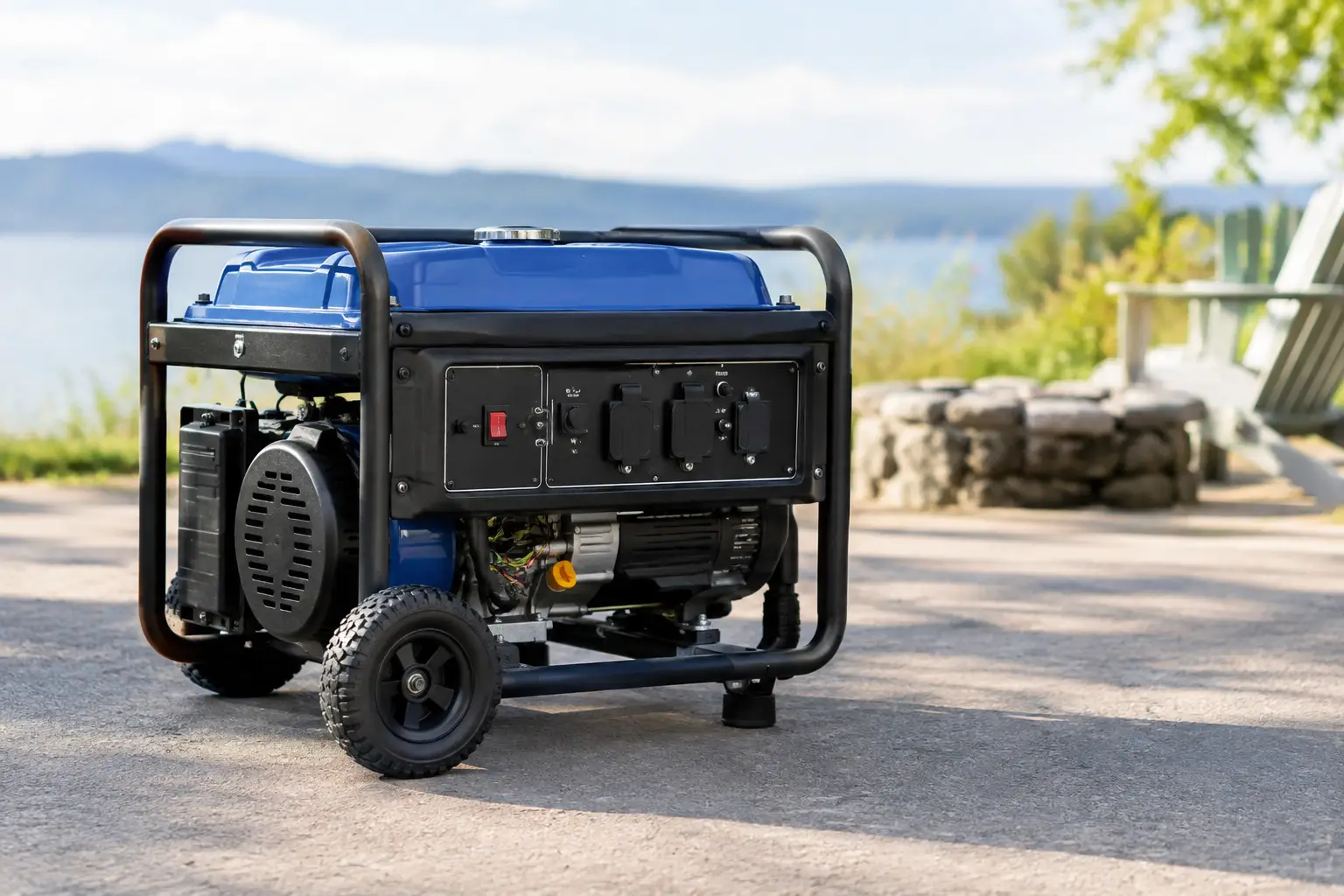
A solar generator is particularly attractive when quiet operation, portability and indoor-safe battery backup are priorities.
Are Solar Generators Worth It for Emergency Backup?
For many households, a portable power station can be useful as part of an emergency preparedness setup.
The key is to decide what you actually want to keep running.
If your goal is simply to maintain communication and lighting, a 200Wh-to-300Wh model may be sufficient.
If you want to keep a refrigerator, CPAP machine, router, laptops and other essential equipment running, moving into the 1,000Wh class makes more sense.
For longer outages or heavier household loads, larger 2,000Wh+ systems are worth considering. Current 2026 comparisons increasingly focus on this larger category, including models from EcoFlow, BLUETTI, Jackery and Anker.
How to Get More Energy From Your Solar Panels
The rated wattage printed on a solar panel is based on controlled test conditions. Real-world output can be considerably lower.
To improve charging performance:
- Place the panel in direct sunlight.
- Avoid partial shade.
- Adjust the panel angle as the sun moves.
- Keep the panel surface reasonably clean.
- Follow the power station’s voltage and current limits.
- Use compatible cables and connectors.
- Check the power station display to see actual solar input.
Portable solar panels are most useful when you have several hours of usable sunlight rather than expecting them to provide maximum output throughout the entire day.
Final Verdict: Which Solar Generator Makes Sense for You?
There is no single solar generator that makes sense for every situation.
The MARBERO 237Wh and ZeroKor 280Wh are better suited to lightweight emergency kits, personal electronics and short outdoor trips.
The Jackery Solar Generator 300 is another compact option for camping, cameras, laptops, phones and other smaller loads.
The Anker SOLIX C1000 moves into a completely different performance class with its 1,056Wh LiFePO4 battery, 1,800W continuous inverter and up to 600W solar input.
The Jackery Solar Generator 1000 v2 offers a similarly useful middle ground, with 1,070Wh of LiFePO4 storage, 1,500W continuous output and up to 400W of solar input.
For most buyers, the deciding factors should be how much power you need, how long you need it, how much weight you are willing to carry, and how quickly you need to recharge from the sun.
If your primary goal is lightweight camping, stay compact. If you are preparing for power outages, a 1,000Wh-class or larger power station provides considerably more flexibility.
Frequently Asked Questions
Can a solar generator power a refrigerator?
Yes, depending on the refrigerator’s running and startup wattage and the solar generator’s inverter capacity. A 1,000Wh-class power station is generally much more practical for refrigerator backup than a 200Wh-to-300Wh unit.
How long does a solar generator last?
Battery runtime depends on the appliance’s actual power consumption. A simple estimate is to divide the usable battery capacity by the device’s wattage, then account for conversion losses.
Are LiFePO4 solar generators better?
LiFePO4 batteries are attractive for frequent users because they generally offer longer cycle life than older lithium-ion chemistries. They are now common in many newer portable power stations.
Can you use a solar generator indoors?
Battery power stations do not produce the exhaust associated with fuel-burning generators, but you should always follow the manufacturer’s instructions for indoor operation, ventilation and charging.
How many solar panels do I need?
It depends on the power station’s maximum solar input and the amount of energy you need to recover each day. A larger battery does not necessarily mean you need more panels, but additional solar capacity can shorten recharge times when the power station supports it.
Can a solar generator run a house?
Small portable solar generators are not designed to power an entire home. Larger systems can provide backup for selected household circuits, but whole-home applications require equipment specifically designed for that purpose, including appropriate transfer equipment and professional installation where applicable.
Is a solar generator the same as a portable power station?
In most consumer product listings, the terms are used interchangeably. Technically, a solar generator is generally a portable power station combined with solar panels or solar charging capability.
Bottom line: The best solar generator for outdoor use is not necessarily the one with the biggest battery. Look at Wh capacity, continuous watts, solar input, battery chemistry, weight and your actual appliances before buying. That approach will help you choose a system that works for camping today and remains useful when you actually need emergency backup power.