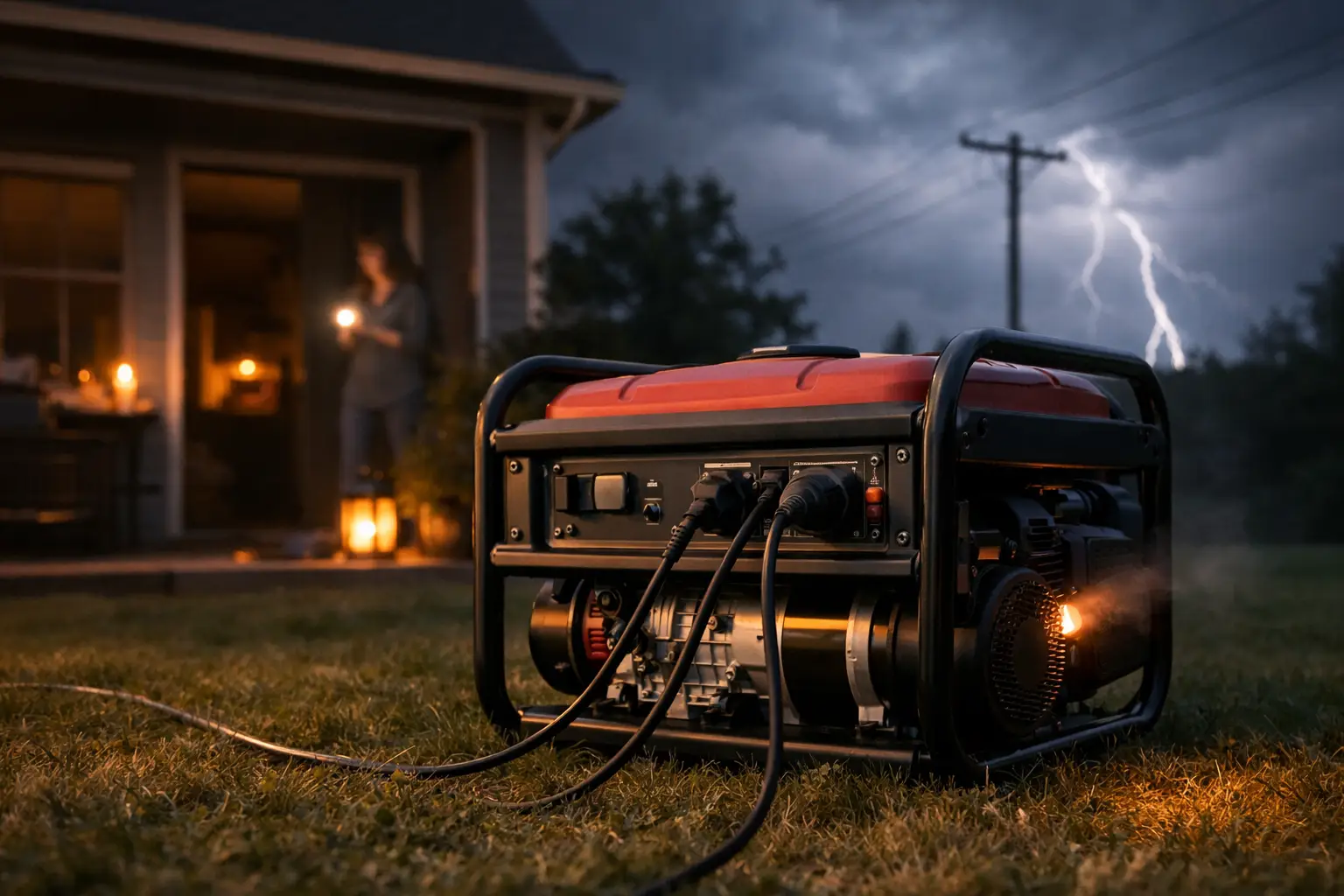
When the lights go out, most people realize very quickly that the best generator for power outages is not simply the biggest model on the shelf. What matters is whether it starts reliably, runs the appliances you actually need, and fits the way your home handles an outage. A family trying to keep a refrigerator, sump pump, and a few lights running has a very different backup power need than someone trying to support central air and most of the house.
That is where many generator purchases go wrong. Shoppers often compare wattage numbers first and ignore fuel type, outlet configuration, transfer switch compatibility, noise, and runtime under realistic loads. If you want backup power that feels useful instead of frustrating, those details matter just as much as raw output.
How to choose the best generator for power outages
The right place to start is your outage plan, not a product page. Think about what must stay on during a blackout, what would be nice to have, and what you can live without for a day or two. For many homes, the must-run list includes the refrigerator, freezer, Wi-Fi, phone chargers, a few lights, and either a furnace blower or a small window AC depending on the season.
Once you build that list, you can estimate both running watts and starting watts. Refrigerators, pumps, and some power tools need extra surge wattage at startup. A generator that looks sufficient on paper can still trip or bog down if several motor-driven appliances kick on at once. That is why a portable unit in the 5,000 to 7,500 running watt range often works well for essential home backup, while whole-home coverage usually requires a larger standby system.
Fuel choice comes next. Gasoline portables are widely available and often cost less up front, but gasoline storage is less convenient for long emergencies. Propane burns cleaner and stores better, though power output can be slightly lower than on gas. Dual-fuel models are popular because they give you options when one fuel is hard to find. Natural gas standby units offer the most convenience if your home already has service, but they require a higher initial investment and professional installation.
Portable vs standby: which is better for outages?
For many buyers, this is the biggest decision.
Portable generators
A portable generator is usually the better fit if you want lower upfront cost and occasional emergency use. Models from Westinghouse, Champion, DuroMax, and Generac are common in this category. A good portable can keep core circuits alive during a storm, especially when paired with a transfer switch or interlock kit.
The trade-off is involvement. You need to wheel it out, fuel it, start it, connect it properly, and keep up with refueling during longer outages. That is manageable for many homeowners, but it is not automatic and it does require some planning.
Standby generators
A standby generator is the premium choice if outages are frequent, extended, or medically significant. These systems monitor utility power and start automatically when the grid drops. Popular options from Generac, Kohler, and Cummins are designed for that hands-off reliability.
The trade-off is cost. Purchase price, installation, permits, and transfer equipment put standby systems in a different budget class. Still, for homeowners who need dependable whole-home or near-whole-home coverage, that extra cost often makes sense.
What size generator works for most homes?
There is no single best size, but there are useful ranges.
A smaller
inverter generator around 2,000 to 3,500 watts is excellent for camping, tailgating, and very light emergency use, but it is usually not the best generator for power outages at home unless your needs are minimal. You may run a fridge and a few electronics, but you will have to manage loads carefully.
A mid-size portable in the 4,000 to 8,000 watt class is the sweet spot for many households. This range can usually support refrigeration, lights, chargers, a microwave, and selected circuits without constant compromise. A model like the Champion 6250-watt open-frame inverter or a Westinghouse dual-fuel portable can be a practical match for homeowners who want enough output without stepping into standby pricing.
If you want to run well pumps, electric water heaters, larger HVAC loads, or multiple major appliances together, you are often looking at 8,000 watts and up. At that point, transfer setup and fuel logistics become more important, because a larger machine can only help if your home is configured to use it safely.
Features that actually matter during a blackout
Some specs look impressive in marketing copy but do very little for real outage performance. Others make a noticeable difference.
Electric start is one of them. Pull-start may be fine on a jobsite, but during a storm, convenience matters. Remote start can be even better if the generator is placed at a proper distance from the home.
Runtime matters more than peak wattage for overnight use. A generator that can run 10 to 14 hours at moderate load is easier to live with than one that needs
frequent refueling. Fuel gauge visibility and low-oil shutdown also add real value during extended outages.
Outlet selection is another area buyers overlook. If you plan to connect through a transfer switch or interlock, make sure the generator has the correct 30-amp or 50-amp outlet. Without that, a high-wattage generator may still be awkward to integrate into your home backup setup.
For neighborhoods where noise is a concern, inverter generators are much easier to live with than traditional open-frame models. They are quieter and better for sensitive electronics, though you often pay more per watt. If your priority is running a furnace, fridge, and lights during overnight outages without making your backyard sound like a construction site, the extra cost can be worth it.
Safety is part of choosing the best generator for power outages
A generator is only a good backup solution if it can be used safely. Carbon monoxide risk is the biggest issue. Never run a generator in a garage, near open windows, under a covered patio, or close to doors. Even partial enclosure is not safe unless the system is specifically designed and installed for that use.
Look for models with CO shutoff technology, but do not treat that as permission to place the unit too close to the house. It is a backup layer, not a substitute for proper placement.
You also want a safe connection plan. Extension cords work for a few direct-plug appliances, but a transfer switch or interlock kit is the better long-term answer for home outage use. It protects utility workers, protects your equipment, and makes backup power much easier to manage. If you are not sure how bonding, grounding, or
inlet compatibility works, that is worth sorting out before you buy.
A practical way to narrow your options
If you are shopping today, it helps to think in three lanes.
If you want the best value for essential home backup, look at dual-fuel portable generators in the mid-wattage range. They offer flexibility, solid output, and a reasonable price for most households.
If you want quieter operation and cleaner power for electronics while still covering basics, an inverter generator or inverter-style open-frame model is often the better fit. These are especially attractive in suburban settings where noise and fuel efficiency matter.
If you want automatic protection and can justify the budget, a standby generator is the strongest long-term answer. It is the least hands-on option and the closest thing to normal life during a major outage.
This is the approach TopGeneratorsOnline typically recommends because it matches the product type to the outage problem instead of forcing every buyer toward the same category.
Common mistakes that lead to buyer regret
The first mistake is buying for rare maximum demand instead of realistic essential loads. That usually leads to overspending, more fuel consumption, and a larger machine than the homeowner actually needs.
The second is underestimating startup wattage. A generator that handles small electronics easily may still struggle with a refrigerator compressor or well pump.
The third is ignoring ownership factors. If the generator is too heavy to move, too loud for the neighborhood, or incompatible with your home connection plan, it will be less useful when the outage hits.
A final mistake is treating the generator as the whole solution. Fuel storage, maintenance, extension cord quality, transfer equipment, and test runs all matter. The best machine in the world cannot help much if it has stale fuel, a dead battery, or no safe way to connect to the loads you care about.
The best generator for power outages is the one that matches your home, your budget, and your tolerance for hands-on setup. For many buyers, that means a dual-fuel portable sized for essentials. For others, especially in outage-prone areas, a standby unit is worth every dollar. Buy for the outage you are most likely to face, not the one that sounds most dramatic, and you will end up with backup power you can actually count on.
CHECK OUT THE BEST GENERATORS FOR POWER OUTAGES AT THE BEST PRICE ON AMAZON 🛒