As an Amazon Associate I earn from qualifying purchases.
If you have been asking, do I need a generator bonding plug, you are already dealing with one of the most misunderstood parts of generator setup. A bonding plug can solve a specific grounding and neutral issue, but it is not a universal accessory and it is definitely not something every generator owner should use by default.
The short answer is this: maybe, but only if your generator, transfer method, and connected equipment create a situation where a bonded neutral is required. In some setups, a bonding plug helps. In others, it can create a safety problem or conflict with your transfer switch. That is why this topic deserves more than a quick yes or no.
What a generator bonding plug actually does
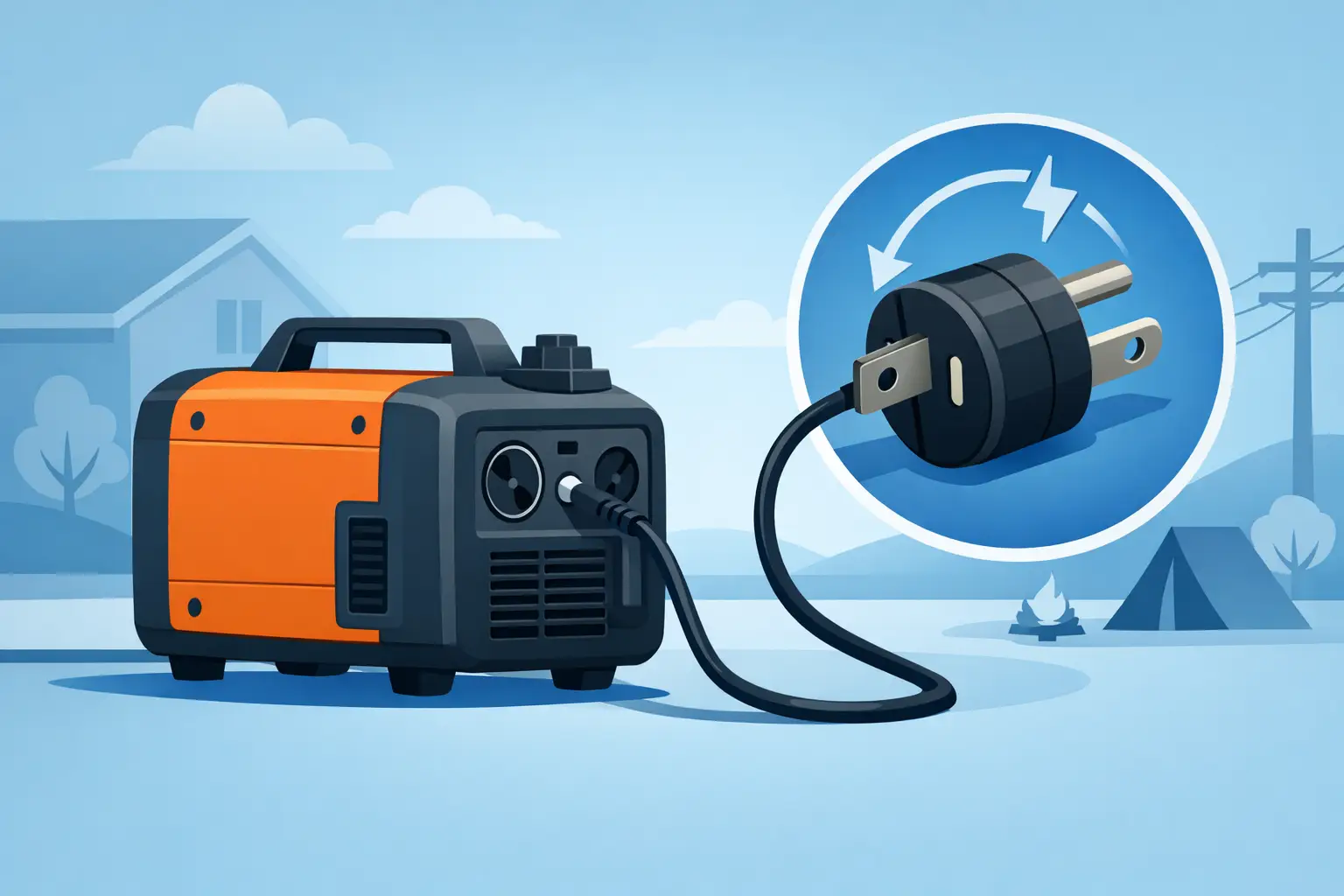
A generator bonding plug is a plug, usually inserted into one of the generator’s receptacles, that bonds neutral to ground at the generator output. In plain terms, it creates a neutral-ground connection where one may not already exist.
Many portable generators are built with a floating neutral. That means neutral is isolated from the frame and equipment ground. This design is common because it works well for many portable-use cases, especially when powering tools and appliances directly from the generator.
A bonding plug is often used when a floating-neutral generator is connected to equipment that expects a bonded neutral to operate properly. Some surge protectors, transfer equipment, and EMS units, especially in RV setups, can flag an open ground or refuse to function if they do not detect that bond.
Do I need a generator bonding plug for home backup?
For most homeowners, the answer depends on how the generator connects to the house.
If you are plugging appliances directly into the generator with extension cords, you usually do not need a bonding plug unless a specific device requires it. The generator is acting as a standalone source, and adding a bonding plug without understanding the generator design is not a smart guess.
If you are connecting the generator to your home through a transfer switch or interlock, things change. In many home backup systems, the neutral-ground bond is supposed to exist only at the main service panel. If your generator also becomes bonded through a bonding plug, you may create a second neutral-ground bond. That can lead to improper current paths and code or safety concerns.
This is the part that trips people up. A bonding plug is not just an accessory. It changes how the system is grounded. For a house connection, that decision needs to match the transfer equipment and the generator’s neutral configuration.
When home setups usually should not use one
If your transfer switch is designed for a floating-neutral portable generator, adding a bonding plug can be the wrong move. The home electrical system already has its neutral-ground bond at the main panel, and duplicating that bond at the generator can create parallel paths for neutral current.
That does not always cause an obvious failure right away, which is why people assume it is fine. But hidden electrical problems are still problems.
When home setups might need a different approach
If your transfer equipment switches the neutral, or if you are using a separately derived system where the generator is intended to provide the bond, then the right answer may involve a bonded generator setup. In that case, the solution may be a generator configured for bonded neutral, not necessarily a homemade or aftermarket bonding plug.
This is one of those times where the generator manual and transfer switch documentation matter more than internet advice.
Do I need a generator bonding plug for RV use?
This is where bonding plugs come up most often.
Many RV owners use portable inverter generators with floating neutrals. Then they connect the generator to the RV through a surge protector or electrical management system. The RV device checks for proper wiring and may see the floating neutral as an open ground or wiring fault. As a result, power may not pass through.
In that situation, a generator bonding plug can allow the protection device to recognize a proper neutral-ground bond and let the RV receive power. That is why you will often hear RV users say they need one.
Even here, though, the answer is still not automatic. You need to confirm three things: that your generator has a floating neutral, that your RV protection device requires a bonded neutral to operate correctly, and that the bonding plug is compatible with that setup.
If all three are true, a bonding plug may be a practical fix. If not, you may be adding something unnecessary.
How to tell if your generator has a floating neutral
Before you buy or use anything, you need to know how your generator is wired.
Some manufacturers clearly state whether the generator has a floating neutral or bonded neutral in the owner’s manual. That is the easiest place to start. If the manual is vague, the product specifications or customer support may help.
You can also test it with a multimeter, but that assumes you know how to do it safely and accurately. For many buyers, reading the documentation is the better first step.
A floating-neutral generator does not have continuity between neutral and ground at the receptacle when the generator is off. A bonded-neutral generator does. That single detail determines whether a bonding plug is even part of the conversation.
When a generator bonding plug is useful
A bonding plug can make sense when you have a floating-neutral generator, you are not tying it into a home system that already handles neutral bonding, and a connected device specifically requires the neutral-ground bond to function.
The most common example is RV use with an EMS or surge protector. Another possible case is certain jobsite or specialty equipment that monitors wiring integrity before it allows operation.
In those narrow situations, the bonding plug is not a gimmick. It is a workaround for compatibility.
When a generator bonding plug is a bad idea
It is a bad idea when people use it as a catch-all fix without knowing the wiring layout.
If your generator is already bonded, adding a bonding plug is redundant at best. If your generator is connected to a home transfer switch or panel arrangement that already establishes the neutral-ground bond, the plug may create an improper double bond. If you are troubleshooting generator power issues and use a bonding plug instead of identifying the real cause, you can waste time and introduce risk.
That is why the safest mindset is simple: never use a bonding plug just because someone online said every generator needs one.
Common mistakes buyers make
One common mistake is assuming ground and neutral are interchangeable. They are not. They work together in a system, but they have different roles.
Another mistake is confusing a grounding rod with a bonding plug. Driving a rod into the earth does not do the same thing as bonding neutral to ground at the source. People often mix up grounding, bonding, and earthing, and that leads to bad decisions.
The third mistake is buying a bonding plug before checking the generator manual. That is backwards. The generator’s design should drive the decision, not the accessory listing.
A practical way to decide
If you are still asking do I need a generator bonding plug, use a simple decision path.
First, find out whether your generator has a floating neutral or bonded neutral. Second, identify how you are using the generator: direct plug-in use, RV connection, or home backup through transfer equipment. Third, check whether any connected device specifically requires a bonded neutral to function.
If your generator is floating neutral and your RV surge protector or similar device refuses to pass power because it expects a bond, a bonding plug may be appropriate. If you are feeding a home electrical system, stop there and verify the transfer setup before doing anything else.
Should you make your own bonding plug?
Some people do, but this is not a place to improvise unless you fully understand generator receptacle wiring and safe construction. A poorly made plug can be dangerous, and a correctly made plug can still be wrong for your system.
For the average buyer, the better move is to confirm you actually need one first. Then, if a bonding plug is the right solution, use a properly built product that matches the receptacle type and intended use.
At TopGeneratorsOnline, we see this accessory cause more confusion than it should because the question sounds simple while the wiring details are not. The good news is that once you identify your generator’s neutral setup and how you plan to use the unit, the answer usually becomes clear.
A bonding plug is not something every generator owner needs in the toolbox. But if your setup truly calls for one, knowing why it matters is what keeps your power both functional and safe.