As an Amazon Associate I earn from qualifying purchases.
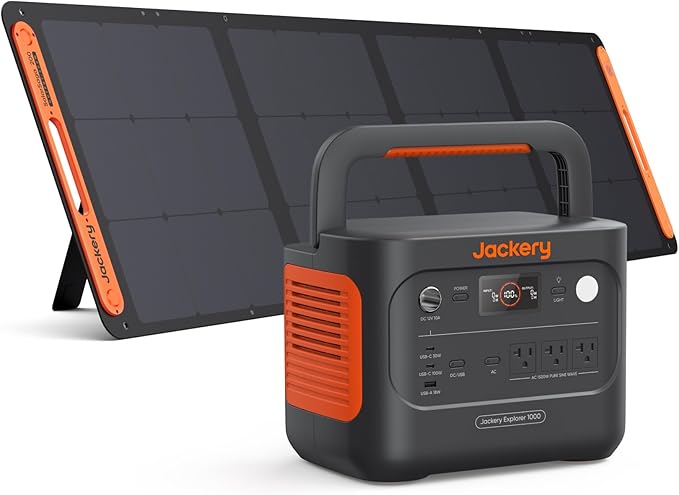
If you want backup power without gasoline, engine noise, or exhaust fumes, a modern solar generator can be an excellent solution. These systems are more accurately called portable power stations: they store electricity in a large rechargeable battery and can be recharged from a wall outlet, a vehicle, or compatible solar panels.
The best solar power stations in 2026 range from lightweight units designed for phones and laptops to much larger systems capable of running refrigerators, CPAP machines, power tools, and other essential appliances during a power outage.
That difference matters when choosing the right model. A compact 300Wh power station can be perfect for camping, while a 1,000Wh or larger unit makes much more sense for emergency home backup.
In this guide, I’ll compare several popular options, explain what their watt-hour and watt ratings actually mean, and show you what to look for before buying a portable solar power generator.
Best Solar Inverter Generators for 2026
| Product | Best For | Battery Capacity | AC Output | Type |
|---|---|---|---|---|
| Jackery Solar Generator 1000 v2 | Camping and emergency backup | 1,070Wh | Up to 1,500W* | Solar power station |
| BLUETTI EB3A | Small electronics and short trips | 268.8Wh | 600W | Solar power station |
| EF ECOFLOW DELTA 2 | Home backup and RV use | 1,024Wh | 1,800W | Solar power station |
| ZeroKor 300W | Lightweight camping and basic emergency use | 280Wh | 300W | Solar power station |
| Champion 4000W Inverter | Fuel-powered backup alternative | Gasoline | 3,000W running | Gas inverter generator |
*Output specifications can vary by regional/product configuration, so verify the current Amazon listing before purchasing.
1. Jackery Solar Generator 1000 v2
Check Amazon Price [Click Here]
The Jackery Solar Generator 1000 v2 remains one of the most practical choices for people who want a balance between portability, battery capacity, and usable AC power.
Jackery currently lists the 1000 v2 at approximately 1,070Wh, and the current product lineup distinguishes the Explorer 1000 v2 from the newer HomePower 1000 v2. That makes it important to verify exactly which version is being sold when shopping online.
Key Specifications
- Battery capacity: approximately 1,070Wh
- AC output: up to 1,500W depending on version
- Weight: approximately 14–15 lb
- Solar charging: compatible with Jackery SolarSaga panels
- Charging: AC, car, and solar
- Battery chemistry: verify the specific current configuration
- Use cases: camping, emergency backup, CPAP, electronics, small appliances
Why It Stands Out
The biggest advantage of this Jackery is its size. It has enough stored energy to be considerably more useful than a small 200–300Wh power station without becoming a heavy, difficult-to-transport battery system.
It makes sense for campers who need more than USB power and for homeowners who want to keep essential electronics operating during a short outage.
It can also be a practical CPAP backup, although anyone relying on a power station for medical equipment should calculate expected runtime carefully and maintain another backup plan.
Jackery’s current product lineup also shows how quickly this category has evolved. The company now sells considerably larger systems, including 2,000Wh and 3,000Wh-class models, but the 1000 v2 remains much easier to carry.
Best for: Camping, emergency electronics, CPAP backup, and buyers who want a relatively portable 1,000Wh-class system.
2. BLUETTI Solar Generator EB3A
Check Amazon Price [Click Here]
The BLUETTI EB3A is a much smaller power station than the Jackery 1000 v2. Its 268.8Wh LiFePO4 battery and 600W inverter make it better suited to smaller loads rather than serious home backup.
BLUETTI lists the EB3A with a 600W pure sine wave inverter, 1,200W surge capability, a 100W USB-C port, two USB-A ports, DC outputs, a 15W wireless charging pad, and up to 200W solar input.
Key Specifications
- Battery capacity: 268.8Wh
- Battery chemistry: LiFePO4
- AC output: 600W
- Surge output: 1,200W
- Weight: 10.14 lb
- Solar input: up to 200W
- USB-C: up to 100W
- Wireless charging: up to 15W
Why It Stands Out
The EB3A is particularly useful when portability matters more than runtime.
You can use it for phones, tablets, laptops, lights, cameras, small fans, networking equipment, and other relatively low-power devices.
It is also more versatile than a basic battery bank because it provides AC power as well as USB and DC outputs.
One important 2026 consideration is that BLUETTI’s current documentation indicates the EB3A is an older/discontinued model in some product listings. Therefore, availability, warranty terms, and pricing should be checked carefully before purchasing.
Best for: Day trips, camping, small electronics, and emergency charging when you want something relatively compact.
3. EF ECOFLOW DELTA 2
Check Amazon Price [Click Here]
The EF ECOFLOW DELTA 2 is considerably more capable than the smaller EB3A and is a better fit for people who need a general-purpose backup power station for both home and outdoor use.
EcoFlow lists the DELTA 2 with a 1,024Wh LiFePO4 battery, 1,800W continuous AC output, 2,700W surge capacity, and 500W maximum solar input. It also supports an additional battery, which can significantly increase stored energy.
Key Specifications
- Battery capacity: 1,024Wh
- Battery chemistry: LiFePO4
- AC output: 1,800W
- Surge output: 2,700W
- Solar input: up to 500W
- Weight: approximately 27 lb
- AC outlets: 6
- USB-C: up to 100W
- Expansion: supports an additional battery
- Connectivity: Wi-Fi and Bluetooth
Why It Stands Out
The DELTA 2 is one of the more versatile products in this group because it isn’t limited to lightweight electronics.
Its 1,800W inverter provides enough output for many common household devices, while its 1,024Wh battery gives you substantially more energy than compact power stations.
The LiFePO4 battery chemistry is another important advantage. EcoFlow rates the battery for 3,000 cycles to 80% or more of its original capacity.
The expandable design also makes the DELTA 2 more flexible for people who eventually decide they need more runtime.
For example, instead of replacing the entire power station when your power requirements increase, you can add compatible battery capacity.
Best for: Home backup, RVs, camping, CPAP users, small appliances, and buyers who want expansion capability.
4. ZeroKor 300W Portable Solar Generator
Check Amazon Price [Click Here]
The ZeroKor 300W Portable Solar Generator is designed for a very different buyer.
Instead of trying to compete with 1,000Wh or 3,000Wh home backup systems, this compact power station focuses on basic portable electricity.
The current 280Wh version is rated for 300W AC output and weighs about 5.08 lb. Available configurations include AC, DC, USB outputs, and solar charging. Some bundles include a 60W folding solar panel.
Key Specifications
- Battery capacity: 280Wh
- AC output: 300W
- Weight: approximately 5.08 lb
- Solar charging: available
- USB outputs: multiple USB ports
- DC output: available
- Size: approximately 8.5 × 6.7 × 4.1 inches
Why It Stands Out
The ZeroKor makes sense when you want something small enough to throw into a vehicle, camping box, emergency kit, or backpacking setup.
It can handle devices such as phones, tablets, cameras, lights, radios, and some low-wattage appliances.
It should not, however, be presented as a whole-home backup solution.
With only 280Wh of stored energy, runtime becomes very limited when powering high-draw appliances. For example, a 1,000W appliance cannot realistically be powered continuously from a 300W-rated inverter.
This is a compact emergency and outdoor power solution, not a substitute for a large home battery system.
Best for: Camping, road trips, tailgating, emergency electronics, and lightweight portable power.
5. Champion 4000W Portable Inverter Generator
Check Amazon Price [Click Here]
The Champion 4000W Portable Inverter Generator is included here as an alternative for buyers who need longer-duration power and cannot depend on sunlight.
However, there is an important distinction: this is not a solar generator.
It is a gasoline-powered inverter generator with a combustion engine. That makes it fundamentally different from the battery-based solar generators above.
The current Champion 4000W model 100809 produces 4,000 starting watts and 3,000 running watts. Champion lists a 149cc engine, 64 dBA noise level, a 1.54-gallon gasoline tank, and up to 10 hours of runtime at 25% load.
Key Specifications
- Starting watts: 4,000W
- Running watts: 3,000W
- Engine: 149cc
- Fuel: Gasoline
- Noise: 64 dBA at 23 feet
- Runtime: up to 10 hours at 25% load
- RV outlet: 120V 30A TT-30R
- Parallel capability: Yes
- Weight: approximately 48 lb
Why Consider It?
The major advantage of a gasoline inverter generator is that it can continue producing electricity as long as you have fuel.
A solar generator is limited by its stored battery capacity and the amount of electricity available from its charging sources. A gasoline generator, by contrast, produces power while its engine is running.
That makes the Champion an alternative worth considering for longer outages, RV trips, tailgating, and situations where cloudy weather could make solar charging difficult.
It is also important to follow generator safety rules. Gasoline generators must be operated outdoors and well away from occupied buildings because their exhaust contains carbon monoxide. Champion’s CO Shield system is designed to shut the generator down when unsafe carbon monoxide levels are detected, but it is not a substitute for safe placement and a separate carbon monoxide alarm.
Best for: RVs, camping, tailgating, and extended backup where fuel-powered generation is acceptable.
Solar Generator vs. Gas Generator: What’s the Difference?
The terminology can be confusing because the term “solar generator” is commonly used for portable battery power stations.
A typical solar generator does not create electricity from nothing.
Instead, it contains:
- A rechargeable battery
- An inverter
- Battery management electronics
- AC outlets
- DC and USB outputs
- Charging inputs
- Solar charging circuitry
You recharge the battery with solar panels, AC power, or sometimes a vehicle.
A gasoline generator works differently. Its engine burns fuel and mechanically drives an alternator to produce electricity.
Solar Power Station
Advantages:
- No gasoline
- No exhaust
- Very quiet
- Minimal maintenance
- Can be recharged from solar panels
- Convenient indoors when used according to the manufacturer’s instructions
- Excellent for electronics and short outages
Disadvantages:
- Limited by battery capacity
- Solar charging depends on weather and available sunlight
- Large-capacity models can be expensive
- Heavy units can be difficult to move
Gasoline Inverter Generator
Advantages:
- Long runtime with additional fuel
- High continuous output
- Easy to refuel
- Useful during extended outages
- Often better for sustained high-power loads
Disadvantages:
- Produces exhaust
- Requires outdoor operation
- Makes engine noise
- Requires maintenance
- Requires fuel storage
The right choice depends on whether your priority is quiet, clean portable energy or sustained power during a longer outage.
How Much Power Do You Actually Need?
One of the most common mistakes when buying a solar generator is looking only at the watt-hour number.
You need to consider both battery capacity and inverter output.
Watt-Hours: How Much Energy Is Stored?
Battery capacity is normally expressed in watt-hours (Wh).
A 1,000Wh power station theoretically stores more energy than a 300Wh model.
For example, ignoring conversion losses:
- A 100W device could use approximately 100Wh in one hour.
- A 50W device could use approximately 100Wh in two hours.
- A 500W device could use approximately 500Wh in one hour.
Real-world runtime is lower because of inverter losses, battery-management limits, temperature, and the actual power consumption of the appliance.
Watts: How Much Power Can It Deliver?
The inverter’s watt rating tells you how much electrical power the station can deliver at one time.
A power station with a 300W inverter cannot normally run a 1,500W appliance simply because its battery contains 1,000Wh.
This is why both specifications matter.
What Can a 1,000Wh Solar Generator Run?
A 1,000Wh-class power station can be useful for:
- Phones
- Tablets
- Laptops
- Wi-Fi routers
- LED lights
- Small fans
- Cameras
- CPAP machines
- Small televisions
- Some refrigerators
- Small appliances within the inverter’s rating
However, runtime depends heavily on the appliance.
A refrigerator, for example, does not necessarily consume its maximum rated wattage continuously because its compressor cycles on and off.
That makes actual runtime different from simply dividing battery capacity by the appliance’s listed wattage.
What to Look for in a Solar Generator in 2026
1. Battery Capacity
For occasional phone charging, a small 200–300Wh unit may be sufficient.
For broader emergency backup, look at approximately 1,000Wh or more.
For extended outages, larger 2,000Wh–3,000Wh systems may make more sense.
2. Continuous AC Output
Check the continuous watt rating before purchasing.
A 600W power station and a 1,800W power station can have completely different capabilities even if their battery capacities appear similar.
3. Surge Capacity
Some appliances require additional power when starting.
Refrigerators, pumps, compressors, and certain power tools can have startup demands considerably higher than their normal operating wattage.
4. Solar Input
This specification is frequently overlooked.
A 1,000Wh battery with a very low solar input can take much longer to recharge than a similarly sized battery that accepts several hundred watts of solar input.
For example, EcoFlow lists the DELTA 2 with up to 500W of solar input.
5. Battery Chemistry
LiFePO4, also called LFP, has become increasingly common in modern portable power stations.
The chemistry generally offers a long cycle life and is now used across many higher-quality power stations.
The BLUETTI EB3A, for example, uses a LiFePO4 battery and is rated for more than 2,500 cycles to 80% of original capacity according to BLUETTI’s current specifications.
6. Expansion Capability
If you expect your energy requirements to grow, an expandable power station can be more practical.
The EcoFlow DELTA 2 supports an additional compatible battery, allowing substantially more stored energy than the base unit.
7. UPS/EPS Function
If you want to protect a computer, router, networking equipment, or other sensitive electronics during an outage, check whether the model offers UPS or EPS functionality and what transfer time it specifies.
Do not assume every portable power station works as a true UPS simply because it has pass-through charging.
8. Ports and Connections
Consider what you actually need:
- 120V AC outlets
- USB-A
- USB-C
- 12V DC
- Car outlet
- RV TT-30
- Solar input
- Expansion ports
More ports aren’t automatically better if they aren’t useful for your equipment.
Can a Solar Generator Power a Whole House?
Usually, not by itself.
A small portable power station is designed to power selected devices rather than an entire home.
Larger battery systems can provide substantially more capacity and may support home integration, but installation requirements vary.
If your goal is to power a home’s electrical panel or selected circuits, you may need compatible equipment such as a transfer switch, inlet, or other professionally installed components.
Never connect a portable power station directly to a home’s electrical wiring through an improvised connection.
For whole-home backup, compare the power station’s continuous output, battery capacity, 120/240V capability, transfer equipment, and installation requirements rather than focusing only on the “solar generator” label.
Are Solar Generators Worth It for Power Outages?
For many households, they can be.
The biggest advantage is convenience. You can keep a charged battery station ready before a storm or outage and use it immediately without starting an engine or storing gasoline.
They are especially useful for:
- Refrigerators
- Wi-Fi equipment
- Phones
- Laptops
- Lights
- CPAP machines
- Small fans
- Televisions
- Medical and communication equipment within the manufacturer’s specifications
The limitation is runtime.
A portable power station is not an unlimited source of electricity. Once the battery is depleted, you need a way to recharge it.
Solar panels provide a useful recharge option, but cloudy weather, shade, panel orientation, temperature, and available daylight all affect charging speed.
Are Solar Generators Good for Camping?
Yes, and this is one of their strongest use cases.
For camping, look for a balance between battery capacity and weight.
A 300Wh-class unit may be enough for phones, lights, cameras, and small electronics.
A 1,000Wh-class station makes more sense if you’re taking a refrigerator, CPAP machine, larger lights, or several devices.
If you plan to carry the station far from your vehicle, weight becomes much more important.
A 3,000Wh station may offer impressive runtime, but carrying a 50–60 lb battery pack to a remote campsite is a very different experience from carrying a 5–15 lb unit.
Maintenance Tips for Portable Solar Generators
Battery power stations require less maintenance than gasoline generators, but they still need proper care.
Keep the Unit Dry
Follow the manufacturer’s water-resistance instructions. Do not assume a portable power station is waterproof simply because the solar panel is weather resistant.
Store It at an Appropriate Temperature
Extreme heat and cold can affect battery performance and long-term battery health.
EcoFlow’s DELTA 2 documentation, for example, recommends controlled storage conditions and periodic charging/discharging during long-term storage.
Recharge It Periodically
Do not leave a battery station forgotten in a closet for years.
Check the manufacturer’s recommended storage charge level and maintenance interval.
Keep Solar Panels Clean
Dust, dirt, leaves, and other debris can reduce solar production.
Inspect Cables and Connectors
Before an emergency, verify that charging cables and adapters are available and compatible with the power station.
Safety Tips
Portable power stations are considerably simpler to operate than gasoline generators, but basic safety still matters.
- Use the manufacturer’s approved charging equipment.
- Do not block ventilation openings.
- Keep the unit away from excessive heat and moisture.
- Do not use damaged cables or connectors.
- Follow the manufacturer’s maximum input voltage and current specifications.
- Do not exceed the inverter’s rated output.
- Keep lithium batteries away from fire and extreme heat.
- Follow the manufacturer’s instructions for long-term storage.
- For gasoline generators, always operate outdoors and well away from buildings.
Remember that a solar generator does not produce carbon monoxide during battery operation, while a gasoline generator does. Gasoline generators should never be operated inside a house, garage, shed, RV, or other enclosed space. Champion specifically warns that its CO Shield system is not a substitute for safe generator placement.
Best Solar Inverter Generators 2026: Quick Comparison
| Model | Best Use | Capacity | AC Output | Main Strength |
|---|---|---|---|---|
| Jackery Solar Generator 1000 v2 | Camping and emergency backup | ~1,070Wh | Up to 1,500W* | Portable 1,000Wh-class option |
| BLUETTI EB3A | Small electronics | 268.8Wh | 600W | Compact LiFePO4 design |
| EcoFlow DELTA 2 | Home and RV backup | 1,024Wh | 1,800W | Expandable and powerful |
| ZeroKor 300W | Lightweight outdoor use | 280Wh | 300W | Small and affordable class |
| Champion 4000W | Extended fuel-powered backup | Gasoline | 3,000W running | Long runtime with refueling |
*Verify the exact version and current specifications before purchasing.
Which Solar Generator Should You Buy?
The answer depends on how you plan to use it.
If portability is your priority, the ZeroKor 300W is aimed at basic electronics and short trips.
If you want a compact but more capable system, the BLUETTI EB3A offers considerably more inverter output than its small size might suggest.
For a more substantial all-around power station, the Jackery Solar Generator 1000 v2 is a practical middle ground between portability and capacity.
If you want more AC output, LiFePO4 chemistry, and the ability to expand the battery, the EcoFlow DELTA 2 is a more capable choice.
And if your priority is extended power during an outage and you are comfortable using gasoline outdoors, the Champion 4000W inverter generator belongs in a different category but remains a useful alternative.
Final Thoughts
The biggest mistake when shopping for a solar generator is choosing one based only on the largest watt-hour number.
Instead, look at the complete system:
Battery capacity + continuous AC output + surge capacity + solar input + battery chemistry + portability + expansion options.
A small 300Wh power station can be the right choice for a weekend camping trip, while a 1,000Wh-plus system is considerably more useful for emergency preparedness.
For larger backup requirements, today’s market also includes power stations in the 2,000Wh, 3,000Wh, and even larger capacity classes. Current 2026 reviews from major publications show how the market has moved toward higher-capacity systems with faster solar charging, better batteries, home integration, and more sophisticated power management.
The key is to match the power station to the appliances you actually need to run rather than simply buying the biggest battery you can afford.
For camping and everyday portable power, a compact solar generator may be all you need. For extended outages, a larger expandable system can provide much more flexibility. And when you need continuous high-power generation regardless of sunlight, a properly used fuel-powered inverter generator remains a different but useful solution.
Before buying, always check the current Amazon listing for the exact model, battery capacity, output, included accessories, warranty, and compatibility with your preferred solar panels.