As an Amazon Associate I earn from qualifying purchases.
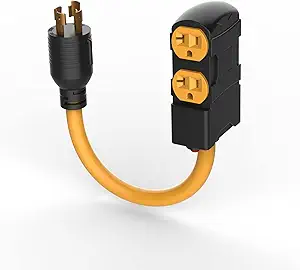
When the power goes out, keeping your refrigerator running is one of the most practical reasons to use a portable generator. But choosing the right extension cord is just as important as choosing the generator itself.
The best generator extension cord for a refrigerator depends on more than wire gauge. You also need to match the generator outlet, check the cord’s amperage and voltage rating, consider the distance between the generator and refrigerator, and make sure the cord is rated for outdoor use.
For many portable generator setups, a 10-gauge, outdoor-rated cord is an excellent choice because it provides plenty of capacity and helps reduce voltage drop over longer runs. However, a refrigerator does not automatically require a 30-amp cord. The correct cord is the one that matches the load and the generator connection.
Below are five generator cords worth considering in 2026, followed by a practical guide to choosing the right one for your refrigerator.
Top Generator Extension Cords for Refrigerators in 2026
| Product | Length | Connection | Gauge | Best Use |
|---|---|---|---|---|
| Yodotek 25FT Heavy Duty Generator Adapter Extension Cord | 25 ft | L14-30P to 4×5-20R | 10 AWG | Multiple 120V appliances |
| Champion Power Equipment 25-Foot Fan-Style Cord | 25 ft | L5-30P to 3×5-15R | 10 AWG | 120V generator outlet |
| Yodotek 25FT Generator Extension Cord | 25 ft | L5-30P to 3×5-15R | 10 AWG | Refrigerator + smaller loads |
| S7 25FT Heavy Duty Generator Adapter Cord | 25 ft | L14-30P to 4×5-20R | 10 AWG | Multiple household loads |
| PlugSaf 25FT 30 Amp Generator Cord | 25 ft | L14-30P to L14-30R | 10 AWG | Inlet box or transfer switch |
Important: A cord’s maximum rating does not mean your generator can produce that much power. Always stay within the generator’s rated output and the rating of the specific generator receptacle.
1. Yodotek 25FT Heavy Duty Generator Adapter Extension Cord
Check Amazon Price Click Here!
The Yodotek 25FT Heavy Duty Generator Adapter Extension Cord is designed for generator outlets using an L14-30P connection and provides multiple household-style receptacles at the other end.
Product details:
- Brand: Yodotek
- Length: 25 feet
- Gauge: 10 AWG
- Generator connection: NEMA L14-30P
- Output: 4 household-style receptacles
- Voltage configuration: 125/250V generator connection
- Primary use: Multiple 120V appliances
This type of cord makes sense when you want to run a refrigerator while also powering a few other essential loads, such as lights, chargers, a modem, or a small fan.
The important point is that the refrigerator should not be treated as an unlimited load simply because the cord has four outlets. The total current flowing through the cord still has to remain within the cord, receptacle, and generator limits.
A 10 AWG cable is useful for generator applications because the larger conductors can reduce voltage drop compared with thinner extension cords, particularly when the cable is carrying a substantial load.
Best for: Homeowners who want multiple household outlets from an L14-30 generator receptacle.
Watch out for: Make sure your generator actually has the matching L14-30 outlet before purchasing.
2. Champion Power Equipment 25-Foot 30-Amp Fan-Style Generator Extension Cord
Check Amazon Price Click Here!
The Champion Power Equipment 48034 is a 25-foot, 30-amp, 125-volt fan-style generator cord designed to convert an L5-30 locking generator outlet into multiple household receptacles.
Champion’s current product information identifies it as a 25-foot cord with 10-gauge wire, outdoor-rated SJTW insulation and a 125-volt rating.
Product details:
- Brand: Champion Power Equipment
- Model: 48034
- Length: 25 feet
- Gauge: 10 AWG
- Voltage: 125V
- Generator connection: L5-30P
- Household outlets: Three 5-15R
- Cord type: Outdoor-rated SJTW
- Maximum generator-side rating: 30A at 125V
This is a particularly useful choice when your generator has a 120V L5-30 outlet rather than the larger L14-30 connection.
The fan-style design keeps the household outlets together at one end, making it convenient for an outage situation where you need to connect a refrigerator and a few smaller loads.
The cord is outdoor-rated and designed to remain flexible across a range of temperatures. Champion also specifies weather- and abrasion-resistant insulation.
One important clarification: having three household receptacles does not mean you can draw 15 amps from each one simultaneously. The total load remains limited by the 30-amp generator connection, the generator itself, and the cord’s rating.
Best for: 120V-only generators equipped with an L5-30 outlet.
Watch out for: This is not the cord you need for an L14-30 inlet box or transfer switch.
3. Yodotek 25FT Generator Extension Cord (L5-30P to 3×5-15R)
Check Amazon Price Click Here!
The Yodotek 25FT L5-30P to 3×5-15R generator cord follows the same basic configuration as the Champion option above: it connects to a 120V L5-30 generator outlet and provides three standard household-style receptacles.
Product details:
- Brand: Yodotek
- Length: 25 feet
- Gauge: 10 AWG
- Generator connection: L5-30P
- Output: Three 5-15R receptacles
- Voltage: 125V
- Primary use: 120V generator applications
This configuration can be convenient for emergency power because a refrigerator can be plugged directly into one household receptacle while smaller essential devices use the others.
The main advantage here is convenience rather than the refrigerator itself. A typical refrigerator does not need 30 amps by itself, but a heavy-duty generator cord gives you more flexibility when other loads are connected.
As with any multi-outlet generator cord, calculate the combined load instead of assuming every receptacle can be used at its maximum rating simultaneously.
Best for: A 120V generator setup where you want to power a refrigerator plus a few smaller household devices.
Watch out for: Confirm that your generator has an L5-30 outlet. An L5-30 and L14-30 are not interchangeable.
4. S7 25FT Heavy Duty Generator Adapter Cord
Check Amazon Price Click Here!
The S7 25FT Heavy Duty Generator Adapter Cord is another option for generators using an L14-30 connection and multiple household-style receptacles.
Product details:
- Brand: S7
- Length: 25 feet
- Gauge: 10 AWG
- Generator connection: L14-30P
- Output: Four household-style receptacles
- Primary use: Multiple 120V loads
- Application: Portable generator backup power
This type of cord is useful when your goal is to power several individual appliances directly rather than feed a home’s electrical panel.
For example, you might connect a refrigerator to one outlet and use additional outlets for a freezer, lights, router, battery chargers or other essential equipment.
The advantage of a 10-gauge generator cord is that it gives you more conductor capacity than the lightweight extension cords commonly used around the house.
Still, don’t confuse the cord’s rating with the generator’s available power. If your generator produces 4,000 watts, installing a 7,500-watt-rated cord does not increase the generator’s output.
Best for: Users who need several household outlets from an L14-30 generator connection.
Watch out for: Verify the current product specifications before purchasing, particularly the listing’s exact outlet configuration and certification information.
5. PlugSaf 25FT 30 Amp Generator Cord – 4 Prong
Check Amazon Price Click Here!
The PlugSaf 25FT 30 Amp Generator Cord is different from the multi-outlet cords above.
Instead of converting the generator’s L14-30 connection into several household outlets, it uses an L14-30P to L14-30R configuration.
Product details:
- Brand: PlugSaf
- Length: 25 feet
- Gauge: 10 AWG
- Generator connection: L14-30P
- Other end: L14-30R
- Voltage: 125/250V
- Amperage: 30A
- Primary use: Generator inlet boxes and compatible transfer-switch systems
This is the type of cord you would normally consider when the generator connects to a properly installed power inlet box or transfer switch.
It is not intended to be plugged into an ordinary household wall outlet to backfeed a home. A generator should never be connected to household wiring through an improvised male-to-male arrangement.
For homeowners with a correctly installed generator inlet and transfer equipment, an L14-30P-to-L14-30R cord provides a straightforward connection between the generator and the inlet.
Best for: Portable generators connected to a compatible inlet box or transfer-switch system.
Watch out for: Do not use this cord as a substitute for a properly installed transfer switch or generator inlet.
What Gauge Extension Cord Do You Need for a Refrigerator?
There is no single gauge that is correct for every refrigerator and generator setup.
The correct gauge depends on:
- Refrigerator electrical demand
- Starting current
- Cord length
- Generator outlet rating
- Total connected load
- Outdoor conditions
- Voltage drop
For many generator applications, 12 AWG or 10 AWG outdoor-rated cords are sensible choices. A 10 AWG cord provides additional capacity and can be especially useful when the run is longer or other loads are involved.
However, bigger is not automatically better if the cord does not match the generator connection.
The generator outlet, cord connector and refrigerator plug all have to work together.
Is a 10-Gauge Cord Necessary for a Refrigerator?
Not necessarily.
A normal household refrigerator typically uses far less than 30 amps. The reason many generator users prefer 10-gauge cords is that they provide more capacity and can help reduce voltage drop compared with smaller conductors.
The refrigerator’s compressor also creates a starting surge. A cord that works well once the compressor is running may still have problems if excessive voltage drop prevents the compressor from starting properly.
That is why cord size should be considered together with length and load.
For a short run to a single refrigerator, a properly rated 12-gauge outdoor extension cord may be adequate depending on the refrigerator and generator manufacturer’s requirements.
For longer runs or multiple appliances, moving to 10 AWG provides additional margin.
How Long Should a Generator Extension Cord Be for a Refrigerator?
A generator cord should be long enough to keep the generator in a safe location without creating unnecessary extra cable.
For portable fuel-burning generators, safety takes priority over minimizing cord length.
The CDC recommends operating generators outdoors at least 20 feet away from doors, windows and vents and using outdoor-rated extension cords.
That makes a 25-foot cord a practical length for many situations.
However, do not assume that 25 feet is always enough. If the generator needs to be positioned farther away, use a properly rated longer cord rather than placing the generator too close to the house.
Longer cords can produce greater voltage drop, so increasing conductor size may become important as the distance increases.
10 AWG vs. 12 AWG for a Refrigerator
The lower the AWG number, the thicker the conductor.
| Cord Gauge | General Advantage | Typical Generator Use |
|---|---|---|
| 14 AWG | Lighter and easier to handle | Smaller loads and short runs when properly rated |
| 12 AWG | Good balance of capacity and flexibility | Individual appliances and moderate generator loads |
| 10 AWG | Higher capacity and lower resistance | Generator-duty applications and longer/heavier loads |
The exact allowable load and length should always be checked against the cord manufacturer’s rating.
For generator use, don’t choose a cord based solely on the refrigerator’s normal running wattage. Consider startup demand, total load and distance.
L5-30 vs. L14-30: Which Generator Cord Do You Need?
This is one of the most important things to check before buying.
NEMA L5-30
An L5-30 connection is commonly used for 120V generator output.
A cord such as the Champion 48034 uses an L5-30P connection and provides household-style receptacles for 120V loads. Champion specifies this model as a 125V, 30A, 10-gauge, 25-foot generator cord.
NEMA L14-30
An L14-30 connection is used for generator applications that provide 120/240V capability.
A straight L14-30P-to-L14-30R cord is commonly used to connect a compatible portable generator to an inlet box or transfer-switch system.
The two connectors should not be treated as interchangeable simply because both are rated around 30 amps.
Always look at the label on your generator before ordering the cord.
Can You Plug a Refrigerator Directly Into a Generator?
Yes, if the generator has a compatible receptacle and the extension cord is properly rated for the application.
For a direct connection, the refrigerator’s normal 120V plug can connect to a suitable household-style receptacle supplied by the generator through an appropriately rated outdoor extension cord.
This is different from powering the home’s electrical circuits.
If you want to power refrigerator circuits through your home’s wiring, use a properly installed generator inlet and transfer equipment. Never attempt to backfeed a house through a standard wall outlet.
Can You Run a Refrigerator and Other Appliances From the Same Generator Cord?
You can use a multi-outlet generator cord for multiple appliances if the total load remains within the limits of the cord, generator outlet and generator.
However, a refrigerator deserves special consideration because its compressor can have a higher startup demand.
For a simple emergency setup, it is often better to prioritize essential loads:
- Refrigerator
- Freezer
- Internet modem/router
- Essential lighting
- Phone chargers
- Other small electronics
Avoid connecting high-demand loads such as electric heaters or large air conditioners to the same circuit unless the generator and cord are specifically sized for them.
Generator Extension Cord Safety for Refrigerators
Choosing the correct cord is only part of a safe generator setup.
Keep the generator outside
Portable fuel-burning generators produce carbon monoxide.
The CDC and CPSC recommend operating portable generators outdoors and at least 20 feet away from the home, doors, windows and vents, with the exhaust directed away from the building.
Never operate a portable generator inside a house, garage, basement, shed or other enclosed space. Opening a door or window does not make indoor generator operation safe.
Use an outdoor-rated extension cord
The cord should be specifically rated for outdoor use and for the electrical load you intend to connect.
CDC guidance also recommends using extension cords rated for outdoor use with generators.
Inspect the cord before every use
Do not use a generator cord if you find:
- Cuts
- Exposed conductors
- Cracked insulation
- Burn marks
- Damaged plugs
- Loose connections
- Melted sections
Replace damaged cords rather than repairing them with tape.
Do not daisy-chain extension cords
Connecting multiple extension cords together increases the total resistance and can create additional points of failure.
Whenever possible, use one properly sized cord for the entire run.
Keep connections dry
Outdoor-rated does not mean waterproof under every condition.
Keep plugs and receptacles away from standing water and follow the generator and cord manufacturer’s instructions for operation during rain or snow.
Fully uncoil heavy-duty cords
Do not leave a heavily loaded extension cord tightly coiled. Heat can build up in the cable when current is flowing.
How to Choose the Best Generator Cord for Your Refrigerator
Before clicking the Buy button, check these six things.
1. Check the generator outlet
Look at the generator panel and identify whether you have:
- 5-15R
- L5-30R
- L14-30R
- TT-30R
- 14-50R
- Another configuration
The connector on the generator determines which cord can be used.
2. Check the refrigerator requirements
Look at the refrigerator’s rating plate or owner’s manual.
Check the voltage and amperage information and, when available, the starting or locked-rotor requirements.
3. Measure the required distance
Determine how far the generator needs to be from the house while maintaining the manufacturer’s and safety agencies’ placement requirements.
Do not move the generator closer just because you bought a short cord.
4. Choose the appropriate wire gauge
For many generator applications, 10 AWG provides useful capacity and voltage-drop margin.
But don’t assume every refrigerator requires 10 AWG. The proper gauge depends on load and length.
5. Check the cord’s environmental rating
Because a portable generator is normally operated outdoors, choose a cord specifically designed for outdoor use.
Look for the manufacturer’s stated jacket and service rating rather than relying on the phrase “heavy duty” alone.
6. Match the connector to the application
If you’re plugging individual appliances directly into the generator, a multi-outlet generator cord may make sense.
If you’re connecting a portable generator to a properly installed inlet box or transfer switch, a straight L14-30P-to-L14-30R cord may be the appropriate choice.
Best Generator Extension Cord for Refrigerator: Final Verdict for 2026
There is no single extension cord that is best for every refrigerator and generator.
The right choice depends primarily on your generator’s outlet and how you plan to distribute power.
Best for an L14-30 generator with multiple household loads
Yodotek 25FT Heavy Duty Generator Adapter Extension Cord
Best for a 120V L5-30 generator outlet
Champion Power Equipment 48034 25-Foot Fan-Style Generator Cord
Another L5-30 multi-outlet option
Yodotek 25FT L5-30P to 3×5-15R
Another L14-30 multi-outlet option
S7 25FT Heavy Duty Generator Adapter Cord
Best suited to a generator inlet or transfer-switch connection
PlugSaf 25FT L14-30P to L14-30R
The most important thing is not simply buying the thickest or highest-rated cord. Match the connector, voltage, amperage, wire gauge and length to your generator and refrigerator setup.
And remember: the extension cord is only one part of generator safety. Keep a portable fuel-burning generator outdoors and at least 20 feet from the home, doors, windows and vents, and always follow the generator manufacturer’s instructions.
Frequently Asked Questions
What gauge extension cord is best for a refrigerator on a generator?
A properly rated 12-gauge cord can be adequate for some short refrigerator runs, while 10-gauge provides additional capacity and can help reduce voltage drop on longer or heavier-duty generator applications. The correct gauge depends on the refrigerator’s load, cord length and generator connection.
Can I use a 10-gauge extension cord for my refrigerator?
Yes. A 10-gauge cord can be used for a refrigerator as long as its connector, voltage and overall rating are compatible with the generator and appliance. A thicker cord does not force the refrigerator to consume more electricity.
How far should a generator be from a house?
The CDC and CPSC recommend keeping portable generators outdoors and at least 20 feet from the home, doors, windows and vents. The exhaust should be directed away from the building.
Can I use a regular extension cord for a generator?
Only if the cord is properly rated for the electrical load and intended environment. For portable generator use outdoors, choose an outdoor-rated cord with the correct gauge, length and connector for the application.
Can I plug a refrigerator directly into a portable generator?
Yes, provided the generator has a compatible receptacle and the extension cord is properly rated. A direct appliance connection is different from connecting a generator to household wiring, which requires an appropriate inlet and transfer equipment.
Is a 25-foot generator cord long enough?
A 25-foot cord is practical for many portable generator setups because it can help maintain the required separation from the home. However, the correct length depends on where the generator must be positioned. Never place the generator closer to the house just to accommodate a shorter cord.
Can I run a refrigerator and freezer from the same generator?
Usually, provided the generator has enough running and starting capacity and the extension cord and receptacle are properly rated. Consider the combined electrical load, including compressor startup demand, rather than adding only the appliances’ normal running wattage.
Does a 30-amp extension cord mean my generator produces 30 amps?
No. The 30-amp rating describes the cord and its compatible connection. Your generator determines how much power is actually available. Never exceed the generator’s rated output or the rating of its individual receptacle.