As an Amazon Associate I earn from qualifying purchases.

If you’re looking for a traditional portable generator that can handle emergency home power, RV equipment, and demanding jobsite tools without moving into the price range of a larger standby generator, the WEN 56475 4,750-watt portable generator is still worth considering in 2026.
This gasoline-powered model combines a 3,750-watt rated output, 4,750 watts of starting power, electric start, a 4-gallon fuel tank, multiple 120V outlets, and a dedicated 30-amp RV receptacle. It is also equipped with an automatic voltage regulator, low-oil shutdown, overload protection, and a digital readout for maintenance tracking.
But there is an important distinction to make: the WEN 56475 is a conventional portable generator, not an inverter generator. That matters if you’re primarily looking for the quietest operation, maximum fuel efficiency, or the type of power output commonly associated with inverter models.
So, is the WEN 56475 still a practical choice in 2026?
For buyers who need straightforward gasoline-powered backup power and don’t mind a heavier, louder machine, it can make sense. For RV campers who prioritize quiet operation or homeowners who need to power an entire house, however, there are important limitations to understand before buying.
Check Amazon Price Click Here!
WEN 56475 Specifications at a Glance
| Feature | WEN 56475 |
|---|---|
| Model | 56475 |
| Generator Type | Portable gasoline generator |
| Starting Wattage | 4,750 watts |
| Rated Wattage | 3,750 watts |
| Engine | 223cc OHV |
| Fuel | Gasoline |
| Fuel Tank | 4 gallons |
| Starting System | Electric and recoil |
| Voltage | 120V |
| Frequency | 60 Hz |
| RV Outlet | 120V 30A TT-30R |
| Household Outlets | Two 120V 20A receptacles |
| Additional Outlet | 120V 30A L5-30 |
| Noise | Approximately 67 dBA at idle; up to 74 dBA under full load according to manual specifications |
| Weight | Approximately 116 lb |
| Safety Features | Low-oil shutdown, overload protection and AVR |
| Compliance | EPA III and CARB compliance information is listed for the model |
| Warranty | 2 years |
| Wheel Kit | Included |
WEN currently lists the 56475 with a 223cc engine, 4,750 surge watts, 3,750 rated watts, electric start, a 4-gallon tank, wheel kit and foldable handles.
What Kind of Generator Is the WEN 56475?
The WEN 56475 is a conventional open-frame gasoline generator designed around practical power output rather than ultra-quiet operation or maximum portability.
Its 3,750 rated watts are the number that matters most for continuous use. The 4,750-watt figure represents the additional short-term capacity available for appliances and tools that need extra power when their motors start.
That distinction is important.
For example, a refrigerator may require considerably more power for a brief moment when its compressor starts than it uses once it is running. The generator’s surge capacity is designed to accommodate those short starting demands.
The owner’s documentation specifically warns users to calculate both running and starting wattage before connecting equipment.
In other words, don’t choose this generator based only on the 4,750-watt headline number. For continuous loads, think of it as a 3,750-watt generator.
3,750 Running Watts vs. 4,750 Starting Watts
This is one of the most important things to understand before buying the WEN 56475.
The generator can provide:
- 3,750 watts continuously
- 4,750 watts of short-term starting power
The difference gives motors and other equipment some additional headroom when they start.
However, the generator cannot continuously deliver 4,750 watts. If your combined running load is consistently above 3,750 watts, you are exceeding the generator’s rated capacity.
The manual also notes that users should pay attention to the capacity of individual outlets, not just the generator’s total output.
This makes proper load calculation especially important when using multiple appliances or power tools at the same time.
Engine and Power Output
The WEN 56475 uses a 223cc OHV gasoline engine and produces 4,750 surge watts and 3,750 rated watts.
That is enough output for many common emergency-power situations, including combinations of essential household appliances, lighting, chargers and selected tools.
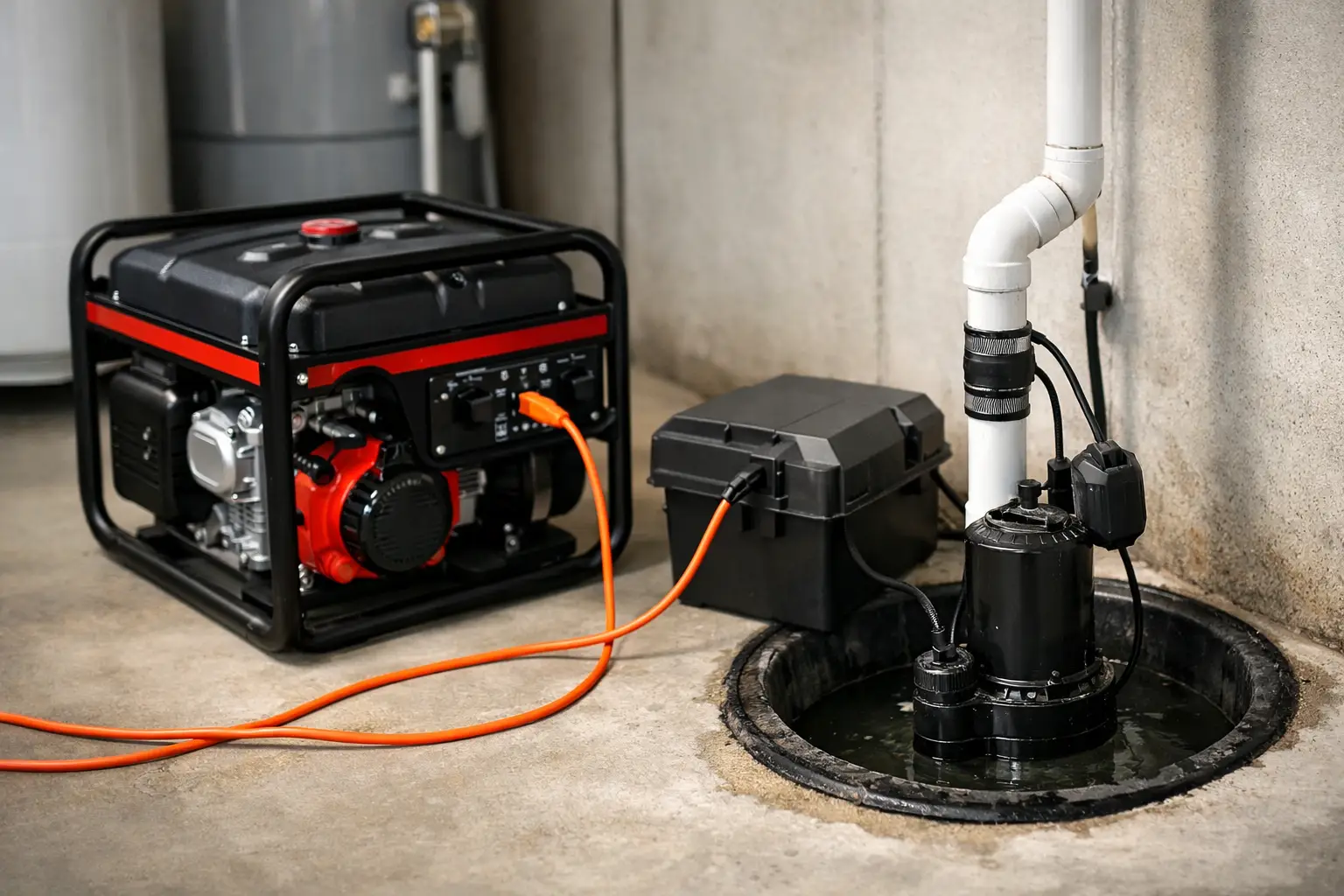
WEN specifically mentions applications such as refrigerators, lights, televisions and sump pumps.
The important word here is essential.
A generator in this size class is not intended to power every electrical circuit in a modern home simultaneously. Large central air conditioners, electric water heaters, electric ranges, clothes dryers and other high-demand appliances can consume a significant portion of the available capacity.
If your goal is whole-house backup, you’ll need to calculate your home’s actual loads and use an appropriately sized transfer switch or other code-compliant connection method installed by a qualified professional.
Electric Start Is One of Its Most Useful Features
The WEN 56475 includes keyed electric start, which is convenient when you don’t want to repeatedly pull a recoil starter.
The generator also has a recoil starting system, giving you a manual starting option if the electric-start system or battery is unavailable.
This combination is particularly useful for emergency situations because the generator isn’t dependent on only one starting method.
The electric-start battery is part of the generator’s starting system, so owners should still pay attention to battery condition and follow the manufacturer’s maintenance recommendations.
Automatic Voltage Regulation: Useful, But Don’t Confuse It With an Inverter
The WEN 56475 includes an automatic voltage regulator (AVR).
AVR is useful because it helps regulate voltage as the generator operates under changing loads. WEN includes the feature as part of the generator’s protection and electrical-output system.
However, this does not make the WEN 56475 an inverter generator.
That distinction is important if you’re shopping for a generator to run sensitive electronics, camping equipment or RV appliances and you’re comparing conventional generators with modern inverter models.
An inverter generator generally offers a different electrical architecture, along with advantages that can include quieter operation and better fuel efficiency at lighter loads.
The WEN 56475 is instead focused on delivering a larger amount of conventional generator power at a relatively accessible size and price.
Fuel Tank and Runtime
The WEN 56475 uses a 4-gallon gasoline tank.
WEN currently advertises up to 10 hours of runtime at half load for the model.
Actual runtime will vary according to the electrical load, fuel condition, temperature and operating conditions.
That means you shouldn’t assume that the generator will run for 10 hours whenever you use it. A generator carrying a heavier load will generally consume fuel more quickly.
For emergency preparedness, this is still a useful fuel capacity because you can run essential equipment for an extended period without stopping for fuel every few hours.
If you are preparing for a prolonged outage, however, you should plan fuel storage and refueling rather than treating the advertised runtime as an overnight guarantee.
How Noisy Is the WEN 56475?
Noise is one area where the WEN 56475 needs a realistic assessment.
It is not a quiet inverter generator.
Documentation for the model lists approximately 67 dBA at idle and up to 74 dBA under full load.
That means it can be noticeably louder than the compact inverter generators commonly marketed for quiet camping and RV use.
For homeowners, this may be perfectly manageable when the generator is positioned correctly outdoors and away from living areas. For RV campers, neighbors, or anyone particularly sensitive to noise, the open-frame design deserves more consideration.
Always check campground, local and HOA rules before operating a gasoline generator.
Portability: The Wheels Help, But This Is Still a Heavy Generator
Calling the WEN 56475 “compact” can be misleading.
The generator weighs roughly 116 pounds according to the product documentation, so this is not a model most people will want to carry by hand for any significant distance.
The included wheels and foldable handles make a substantial difference when moving it across a driveway, garage floor, yard or campsite.
But there is an important difference between portable and lightweight.
The WEN 56475 is portable in the sense that it can be moved without a permanent installation. It is not lightweight in the way a small 1,000W or 2,000W inverter generator is.
If you regularly load your generator into an SUV or truck by yourself, its weight should be part of your buying decision.
Outlets and RV Compatibility
One of the strongest practical features of the WEN 56475 is its selection of receptacles.
The generator includes:
- Two 120V 20A household-style receptacles
- One 120V 30A L5-30 receptacle
- One 120V 30A TT-30R RV receptacle
WEN specifically lists the TT-30R as the RV receptacle and the L5-30 as a 30-amp three-prong receptacle.
The dedicated 120V 30A TT-30R can be particularly useful for RV owners because it matches the common 30-amp RV connection.
That doesn’t mean the generator will automatically run every appliance in an RV at once. You still need to stay within the generator’s rated output and consider the starting requirements of air conditioners, microwaves and other high-draw equipment.
Can the WEN 56475 Power a House During an Outage?
Yes, but it should be viewed as an essential-load backup generator, not a whole-house generator.
With 3,750 running watts, it can provide useful emergency electricity for selected loads such as:
- Refrigerator
- Freezer
- Lights
- Internet equipment
- Television
- Chargers
- Selected sump pumps
- Some smaller appliances
Whether it can run a particular appliance depends on that appliance’s running and starting wattage.
For connection to household circuits, use the appropriate transfer equipment and have the installation completed according to local electrical codes by a qualified professional.
Never connect a portable generator directly to a home’s electrical panel through an improvised connection or by backfeeding a wall outlet.
Jobsite Use
The WEN 56475 can also make sense for contractors and DIY users who need gasoline-powered electricity where utility power isn’t available.
The 3,750-watt continuous rating gives you enough capacity for many common tools, but you still need to calculate their combined running and starting loads.
For example, a circular saw, shop vacuum or drill may be manageable individually, but adding several high-draw tools simultaneously can push the generator beyond its rated output.
The open-frame design also makes it more suited to practical outdoor work than compact indoor-style power stations.
As with any gasoline generator, it should be operated outdoors in a properly ventilated area and away from combustible materials.
Safety: The Part You Should Not Ignore
The WEN 56475 includes several built-in protections, including:
- Low-oil shutdown
- Overload protection
- Automatic voltage regulation
- Circuit protection
- Spark arrestor
These features can help protect the generator and make operation easier, but they do not eliminate the basic risks associated with gasoline generators.
The biggest concern is carbon monoxide.
Never operate this generator inside a house, garage, basement, crawl space or other partially enclosed area. The WEN quick-start documentation specifically warns that the generator must be operated outdoors and away from windows, doors and vents.
Do not place it underneath an attached porch or in another location where exhaust can accumulate.
Gasoline also presents a fire hazard. Refuel only when the generator is stopped and has cooled sufficiently, and keep fuel away from ignition sources.
Is the WEN 56475 CARB Compliant?
The WEN 56475 is listed with CARB and EPA III compliance in current retailer information, and California regulatory documentation also identifies model 56475 within the applicable certified engine/fuel-system information.
This is important for buyers in California, where portable gasoline-powered equipment can be subject to stricter emissions requirements.
WEN’s current product page also identifies the model as EPA III compliant and states that it meets requirements for sale in all 50 states.
If you’re buying a used unit or an older version, verify the exact model and emissions label rather than assuming that every similarly named WEN generator has identical certification.
Maintenance Matters More Than Many Buyers Expect
One of the useful features of the WEN 56475 is its digital readout, which helps users keep track of maintenance intervals and operating information.
That can be especially helpful for an emergency generator that spends most of the year sitting in storage.
Gasoline generators should not simply be purchased and forgotten.
The manufacturer’s documentation recommends regular operation and provides maintenance and storage procedures for the generator.
Before an expected storm or outage, it is much better to discover a battery, fuel or starting problem while utility power is still available.
Owners should follow the maintenance schedule in the current owner’s manual, use fresh fuel and prepare the generator properly for extended storage.
What I Like About the WEN 56475
The WEN 56475 has several characteristics that make sense for buyers who need conventional portable power.
1. Useful 3,750-Watt Continuous Output
The rated output is large enough for many emergency loads and a variety of tools without stepping up to a much larger generator.
2. Electric Start
The keyed electric starter is convenient, especially compared with generators that rely exclusively on recoil starting.
3. Dedicated 30A RV Outlet
The TT-30R makes the generator more practical for many 30-amp RV setups.
4. 4-Gallon Fuel Tank
The larger tank supports longer operating periods between refueling compared with many smaller portable generators.
5. Built-In Protection
Low-oil shutdown, overload protection and AVR provide useful safeguards during operation.
6. Wheel Kit and Handles
The generator is heavy, but the included transport hardware makes moving it considerably easier.
7. CARB/EPA Compliance
Its emissions compliance makes the model relevant to buyers who need a generator that can be sold and used under applicable California requirements.
What I Don’t Like About the WEN 56475
The generator isn’t perfect, and some of its limitations are important.
1. It’s Heavy
At around 116 pounds, this isn’t an easy generator to lift.
2. It’s Not an Inverter Generator
If quiet operation, fuel efficiency at light loads and inverter-style electrical output are your priorities, you may want to compare other generator types.
3. Noise Can Be Significant
The published noise figures reach approximately 74 dBA under full load.
4. Gasoline Is the Only Standard Fuel
Unlike dual-fuel or tri-fuel models, the standard WEN 56475 is designed around gasoline operation.
5. It Doesn’t Provide Whole-House Power
The 3,750-watt rated capacity is useful for essential circuits but is not a substitute for a properly sized standby generator in a large home.
WEN 56475 vs. an Inverter Generator
The biggest question isn’t necessarily whether the WEN 56475 is good or bad.
It’s whether this type of generator matches what you need.
Choose a conventional model like the WEN 56475 when your priorities are:
- Higher wattage for the money
- Emergency household power
- Jobsite tools
- A 30A RV connection
- Electric start
- A larger fuel tank
Consider an inverter generator instead if your priorities are:
- Lower noise
- Better fuel efficiency at lighter loads
- Easier transportation
- Camping in noise-sensitive environments
- Cleaner electrical characteristics associated with inverter technology
This is one of the most important distinctions to make before purchasing.
Who Should Consider the WEN 56475?
The WEN 56475 makes the most sense for someone who needs a mid-size gasoline generator with electric start and enough output for essential home loads, recreational use or tools.
It can be a practical fit for:
- Homeowners preparing for power outages
- DIYers
- Contractors
- 30A RV owners
- Property owners who need temporary outdoor power
- Buyers who prefer a traditional generator over a battery power station
It is less appealing if your main goal is an ultra-quiet camping generator or a lightweight unit that can easily be loaded into a vehicle.
Who Should Look at Something Else?
You may want to compare other options if you need:
Whole-house backup: Look at larger generators and professionally installed standby systems.
Very quiet RV power: Compare inverter generators designed specifically for RV and campground use.
Longer fuel flexibility: Consider dual-fuel or tri-fuel generators.
Easy transportation: A smaller inverter generator may be a better match.
Battery-based emergency power: Portable power stations eliminate gasoline storage and engine noise, although they have different capacity and recharge limitations.
Final Verdict: Is the WEN 56475 Still Worth Considering in 2026?
The WEN 56475 4,750-watt portable generator remains a practical option in 2026 for buyers who understand what it is designed to do.
Its biggest strengths are straightforward: 3,750 watts of rated power, 4,750 watts of starting power, electric start, a 4-gallon gasoline tank, a 30A RV outlet, wheel kit, AVR and basic engine protection features. WEN continues to list the model as an active product, with a current manufacturer price of $499.99 on its website at the time of this review.
The tradeoffs are just as important.
This is a heavy, open-frame gasoline generator. It isn’t designed to be whisper-quiet, it isn’t an inverter generator, and its 3,750-watt continuous output isn’t enough to treat a typical modern home as one unlimited electrical load.
For the right buyer, those limitations may not be a problem.
If your goal is dependable portable gasoline power for selected home circuits, an RV, a workshop or a jobsite, the WEN 56475 has a useful combination of output and practical features.
Before purchasing, calculate the running and starting wattage of everything you expect to connect, consider the generator’s weight and noise level, and make sure you have a safe outdoor operating location.
Check Amazon Price Click Here!
Frequently Asked Questions
Is the WEN 56475 a good generator for home backup?
The WEN 56475 can provide useful emergency power for selected household loads, including appliances and essential electronics, as long as their combined running and starting wattage stays within the generator’s limits. It is not a whole-house generator, so larger electrical loads may need to remain disconnected during an outage.
How many watts does the WEN 56475 actually produce?
The WEN 56475 produces 3,750 rated watts for continuous operation and up to 4,750 starting watts for short-term surge demands. When calculating what you can run, use the 3,750-watt rated figure as your primary limit and account for additional starting wattage from motor-driven appliances.
Can the WEN 56475 run an RV air conditioner?
It may be able to run an RV air conditioner, but the answer depends on the air conditioner’s running and starting requirements and what other equipment is operating at the same time. The generator has a dedicated 120V 30A TT-30R RV receptacle, but you still need to stay within its total rated output.
Is the WEN 56475 an inverter generator?
No. The WEN 56475 is a conventional gasoline-powered portable generator. It does have an automatic voltage regulator, but AVR should not be confused with inverter technology. If low noise and inverter operation are priorities, compare it with an appropriately sized inverter generator.
How long can the WEN 56475 run on a tank of gas?
WEN currently advertises up to 10 hours at half load with the 4-gallon tank. Actual runtime depends on the electrical load and operating conditions, so heavier loads will generally use fuel more quickly.
How loud is the WEN 56475?
The model’s documentation lists approximately 67 dBA at idle and up to 74 dBA at full load. That makes it noticeably louder than many small inverter generators. It should be operated only outdoors and in compliance with local noise and generator-use regulations.
Can I use the WEN 56475 to power my entire house?
Not typically. Its 3,750-watt rated output is better suited to selected essential circuits. If you want to connect a portable generator to household wiring, use a properly installed transfer switch or other code-compliant equipment and have the installation handled by a qualified professional.
Is the WEN 56475 CARB compliant?
Current retailer information lists the WEN 56475 as CARB and EPA III compliant, and California regulatory documentation identifies model 56475 within the relevant certification information. Buyers of used or older units should still verify the emissions label and exact model before purchase.