As an Amazon Associate I earn from qualifying purchases.
A portable generator is built to work outdoors, but that does not mean it should be left exposed to rain, snow, dust, and wind. Moisture around electrical outlets and controls can create serious safety problems, while prolonged exposure to UV rays and weather can shorten the life of the generator.
The important distinction is between a generator storage cover and a generator running cover. A storage cover is designed to protect a generator when it is turned off. A running cover, sometimes called a generator tent, is specifically designed to remain in place while the generator operates outdoors.
If you need protection while your generator is running, choose a cover specifically designed and approved for that purpose. Never use a standard storage cover, tarp, or improvised enclosure over a running generator.
Below, we look at several popular weatherproof generator covers and explain what to consider before buying one in 2026.
Durable Weatherproof Generator Covers for Outdoor Use
| Generator Cover | Type | Material | Approx. Generator Range | Notable Features |
|---|---|---|---|---|
| GenArmor 100% Waterproof Generator Tent | Running cover | Heavy-duty waterproof tarpaulin and frame | 4,000W–13,000W | Waterproof design, frame system, access for refueling |
| Westinghouse WGenTent | Running cover | Weather-resistant fabric and frame | Varies by model | Vented top, refueling access, up to 70 mph wind rating |
| JIAHOO Heavy Duty Oxford Fabric Cover | Storage cover | Oxford fabric | Model dependent | Weather protection, ventilation features, storage pockets |
| IGAN Ultra Heavy-Duty Generator Tent | Running/storage cover | Heavy-duty vinyl and metal frame | 3,500W–12,000W | Stainless steel frame, weather protection, quick conversion |
| Porch Shield Generator Running Cover | Running cover | 600D PVC polyester | 3,500W–12,000W | Pre-assembled frame, waterproof construction, adjustable fasteners |
Specifications can vary by size and model, so always compare the cover’s actual dimensions with your generator before ordering.
Why Use a Weatherproof Generator Cover?
A generator cover can provide useful protection from the elements, but the type of cover matters.
When a generator is stored outdoors, a weatherproof storage cover can help reduce exposure to:
- Rain and moisture
- Snow and sleet
- Dust and dirt
- Leaves and other debris
- UV exposure
- Wind-blown particles
A properly designed running generator cover serves a different purpose. It provides a sheltered operating area around the generator while maintaining access to controls and allowing the engine to receive the airflow it needs.
This distinction is important because a simple waterproof tarp is not a substitute for a purpose-built running cover.
For example, the current GenTent product line is specifically designed around portable generator operation and separates its products for open-frame and inverter generators. Its current systems are advertised with features including waterproof canopies, wind and snow ratings, and NFPA 701 flame-retardant materials.
1. GenArmor 100% Waterproof Generator Tent
GenArmor Generator Tent on Amazon
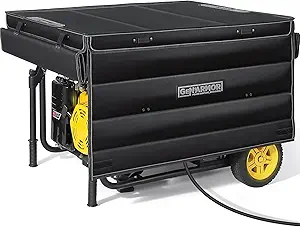
The GenArmor Generator Tent is designed for portable generators that need weather protection while operating outdoors. Its heavy-duty tarpaulin construction and supporting frame create a more substantial shelter than simply placing a fabric cover over the generator.
One useful feature is the access design, which allows the user to reach important areas of the generator without completely removing the cover. The manufacturer materials describe the canopy as waterproof and designed to protect against rain, snow, ice, and sleet.
What makes the GenArmor useful?
- Designed for outdoor generator operation
- Heavy-duty waterproof tarpaulin
- Metal frame construction
- Access for refueling
- Access to the generator control panel
- Designed for several open-frame generator sizes
- Can also provide protection when the generator is stored
The important thing is to verify the exact GenArmor size against your generator rather than relying only on its wattage rating.
A 10,000-watt generator, for example, can have very different dimensions from another generator with the same output.
2. Westinghouse WGenTent
Westinghouse WGenTent Large Generator Cover
The Westinghouse WGenTent is one of the more recognizable running covers for open-frame portable generators. The current Large Universal version is designed to protect a generator during severe weather and is listed as waterproof and windproof up to 70 mph.
The design also includes a vented top to encourage natural airflow and a refueling door, making it more practical for extended operation than a conventional storage cover. Manufacturer and retailer specifications also describe protection from significant rain and snow exposure.
Key features
- Designed for open-frame portable generators
- Waterproof construction
- Wind rating up to 70 mph for the applicable model
- Vented top
- Refueling access
- Designed for relatively quick installation
- Available in different sizes
The WGenTent is particularly worth considering if you own a Westinghouse generator, but the universal versions can also fit compatible generators from other manufacturers.
Check the dimensions and frame configuration before purchasing.
3. JIAHOO Heavy-Duty Oxford Fabric Generator Cover
JIAHOO Generator Cover on Amazon
The JIAHOO Heavy-Duty Oxford Fabric Cover is better treated as a weatherproof storage cover rather than automatically assuming that every version is suitable for a generator that is running.
Its Oxford fabric construction is intended to protect the generator from outdoor elements when it is not being used. Depending on the specific model, features can include ventilation areas, roll-up sections, and storage pockets.
Where this type of cover makes sense
A storage cover can be useful if you keep a generator:
- On a covered patio
- In a shed with some exposure to outdoor conditions
- On a job site when it is not operating
- Outdoors between power outages
- In a garage or storage area where dust protection is needed
The most important rule is simple: do not assume a storage cover can remain on the generator while it is operating.
If your primary goal is to run a generator during rain or snow, look specifically for a product described as a running cover or generator tent and follow the manufacturer’s operating instructions.
4. IGAN Ultra Heavy-Duty Generator Tent
The IGAN Ultra Heavy-Duty Generator Tent is designed around a frame-and-canopy configuration and is intended for compatible open-frame portable generators.
It has also received attention in independent generator-cover testing. Bob Vila’s 2025 testing compared several generator covers under rainy and windy conditions and included the IGAN Ultra Heavy-Duty Generator Tent as a running/storage option. The test specifically evaluated fit, weatherproofing, durability, ease of use, and performance while the generator was operating.
The design uses a metal frame and heavy-duty vinyl cover, providing a more rigid structure than a conventional elastic-bottom generator storage cover.
Key features
- Designed for compatible open-frame generators
- Heavy-duty vinyl cover
- Metal frame
- Can be used for running and storage
- Designed to protect controls and outlets from precipitation
- Access for refueling
- Available for generators in several size ranges
The IGAN is a particularly interesting option for someone who wants one enclosure that can provide weather protection during operation and storage.
However, compatibility is critical. It is not intended for every closed-frame inverter generator.
5. Porch Shield Heavy-Duty Generator Running Cover
Porch Shield Generator Running Cover on Amazon
The Porch Shield Generator Running Cover uses a pre-assembled frame and heavy-duty fabric construction. The current product information describes a 600D PVC polyester enclosure measuring approximately 36 by 28 by 20 inches and designed for compatible 3,500W–12,000W generators.
One of its more convenient characteristics is the pre-assembled frame. Instead of putting together a complicated support structure each time, the frame can be unfolded and secured to the generator.
Features to consider
- 600D PVC polyester construction
- Pre-assembled support frame
- Waterproof design
- Velcro closures
- Adjustable nylon ties
- Approximately 36 × 28 × 20 inches
- Designed for compatible 3,500W–12,000W generators
Porch Shield is worth considering if you want a relatively straightforward running enclosure and your generator falls within the compatible dimensions.
As with any generator tent, verify that the enclosure leaves the required air intake, exhaust, controls, and hot surfaces properly positioned according to the manufacturer’s instructions.
Running Cover vs. Storage Cover: Which One Do You Need?
This is one of the most important things to understand before buying a generator cover.
Storage generator cover
A storage cover is designed for a generator that is turned off.
Its main job is to protect the exterior from:
- Rain
- Snow
- Dust
- Dirt
- UV rays
- Leaves
- General outdoor exposure
Storage covers are usually simpler and less expensive than running tents.
Running generator cover
A running cover is designed specifically to remain installed while the generator is operating outdoors.
It typically uses some combination of:
- A raised frame
- Weather-resistant canopy
- Ventilation space
- Protected control-panel access
- Refueling access
- Secure attachment points
A purpose-built running cover is fundamentally different from throwing a tarp over a running generator.
Can You Run a Generator in the Rain?
A portable generator should not simply be left exposed to rain or snow.
Water around electrical components can create shock and equipment hazards. OSHA guidance warns against operating portable generators in wet conditions, while purpose-built running covers are designed to provide weather protection while allowing the generator to operate outdoors. Bob Vila’s testing likewise distinguishes running covers from ordinary storage covers.
If you need to operate a generator during bad weather, use a cover specifically designed for running operation and follow both the generator manufacturer’s instructions and the cover manufacturer’s instructions.
Most importantly, the cover does not eliminate carbon monoxide hazards.
Generator Cover Safety Tips
A weatherproof generator cover is only one part of safe generator operation.
Keep the generator outdoors
Never operate a portable generator inside a house, garage, basement, shed, or other enclosed space.
A generator produces carbon monoxide, an odorless and potentially deadly gas.
The current GenTent safety guidance also recommends operating portable generators outdoors and at least 20 feet away from the home, with exhaust directed away from doors, windows, and vents.
Keep the exhaust unobstructed
The cover should never interfere with the generator’s exhaust system.
Hot exhaust gases and components can damage unsuitable materials or create a fire hazard.
Do not block the air intake
Portable generators need adequate airflow for cooling and engine operation.
A running cover should provide the clearance and ventilation specified by the manufacturer.
Turn the generator off before refueling
Never refuel a hot or running gasoline generator.
Turn it off, allow the engine to cool, and then refuel according to the owner’s manual.
Keep combustible materials away
Do not place gasoline containers, cardboard, leaves, fabrics, or other combustible materials against the generator or running cover.
Follow the generator manual
Generator designs vary considerably. A cover that fits one open-frame model may not be appropriate for another generator, even if both have similar wattage ratings.
How to Choose the Right Generator Cover
Choosing a generator cover based only on wattage is one of the most common mistakes.
Here are the factors that matter.
1. Measure Your Generator
Measure:
- Length
- Width
- Height
- Frame perimeter
- Wheel-kit dimensions
- Handle position
Compare those measurements with the cover manufacturer’s specifications.
A 7,500W generator from one brand may have completely different dimensions from another 7,500W generator.
2. Identify the Generator Type
Determine whether you have:
- An open-frame portable generator
- A closed-frame inverter generator
- A large portable generator
- A dual-fuel generator
- A tri-fuel generator
Some running tents are specifically designed around exposed frame posts, while others use straps for enclosed inverter-style generators.
GenTent, for example, currently separates its systems into Universal, Inverter, XL Universal, and XL Inverter configurations based on generator design and size.
3. Decide Between Storage and Running Protection
If you only need to protect the generator while it is sitting unused, a traditional weatherproof storage cover may be all you need.
If you want to operate the generator during rain or snow, specifically search for a generator running cover or generator tent.
4. Check the Material
Common materials include:
- 600D polyester
- PVC-coated polyester
- Heavy-duty vinyl
- Waterproof tarpaulin
A heavier fabric is not automatically better. Look at the complete construction, including seams, frame, attachment system, ventilation, and weather rating.
5. Look at the Frame
A running cover with a rigid frame can provide more consistent clearance around the generator than a loose tarp.
This is especially important when the generator needs to operate during wind or heavy precipitation.
6. Check Weather Ratings
If you live in an area with strong winds or heavy snow, pay attention to the manufacturer’s published weather ratings.
For example, Westinghouse lists up to 70 mph wind protection for its Large Universal WGenTent, while GenTent publishes higher wind and precipitation ratings for its current product line. These ratings apply to specific products and configurations, so they should not be generalized to every generator cover.
What About Snow, Ice, and Strong Wind?
Not every weatherproof generator cover is designed for severe winter conditions.
Snow can accumulate on top of a cover, adding significant weight to the supporting structure. Strong wind can also place considerable stress on the frame and attachment points.
If you regularly experience severe weather, look for a running cover with a clearly published weather rating rather than relying on the words “heavy duty” or “waterproof” alone.
GenTent currently publishes specific ratings for wind, rain, and snow on its generator tent systems, while Westinghouse publishes weather ratings for its WGenTent models.
Do Generator Covers Reduce Noise?
Some generator enclosures may reduce or redirect some noise, but a generator cover should not be purchased primarily as a soundproofing solution.
The engine, exhaust, cooling fan, and vibration-producing components remain active regardless of the cover.
More importantly, never modify or seal a generator enclosure simply to make it quieter. Restricting airflow or trapping exhaust can create dangerous conditions.
Are Generator Covers Worth It?
For anyone who regularly stores a portable generator outdoors, a weather-resistant storage cover can help protect the equipment from long-term exposure.
For people who expect to use a portable generator during rain or snow, a purpose-built running cover can provide another layer of protection around the generator while maintaining the airflow and access needed for operation.
The key is choosing the right type.
A $30 storage cover and a $150-plus running tent may both be described as “generator covers,” but they serve very different purposes.
Final Thoughts
The right weatherproof generator cover depends on how you plan to use your generator.
For storage, a durable waterproof cover can help protect the generator from rain, dust, UV exposure, and other outdoor conditions.
For operation during wet weather, look specifically for a purpose-built generator running cover with an appropriate frame, ventilation, weather protection, and compatibility with your generator.
Among the products discussed here, the GenArmor, Westinghouse WGenTent, IGAN, and Porch Shield are designed around running-generator protection, while a conventional JIAHOO Oxford fabric cover is better approached as a storage solution unless the specific model states otherwise.
Before buying, measure your generator, identify whether it is open-frame or enclosed, check the manufacturer’s instructions, and verify that the cover is actually rated for operation.
Most importantly, remember that a generator cover does not replace basic generator safety. Keep the generator outdoors, maintain adequate clearance from the home, keep exhaust paths clear, and follow the operating instructions for both the generator and the cover.
In 2026, the best way to protect a portable generator outdoors is not simply to find the thickest or most waterproof cover. It is to choose a cover designed for the exact way you intend to use the generator.