As an Amazon Associate I earn from qualifying purchases.

Portable power has become much easier to access, but choosing an affordable generator still depends on what you actually need to run. A compact battery power station can be enough for phones, laptops, lights, and other small electronics, while a gasoline inverter generator makes more sense when you need longer runtime or more output at a campsite or RV. For emergency home backup, the requirements are different again.
This 2026 guide focuses on affordable portable power options for camping, RV trips, outdoor work, and emergency backup. Instead of treating every model as interchangeable, we look at output, portability, fuel type, battery capacity, charging options, and practical limitations so you can choose a unit that matches the equipment you actually plan to power.
Affordable Portable Generators and Power Stations for 2026
| Product | Type | Best For |
|---|---|---|
| AMERISUN 2500-Watt Inverter Generator | Gasoline inverter | Camping, RVs and outdoor work |
| Apowking 300W Portable Power Station | Battery power station | Small electronics and light camping |
| MARBERO 88.8Wh Portable Power Station | Battery power station | Phones, laptops and emergency charging |
| Westinghouse WGen9500DFc | Dual-fuel generator | Home backup and RVs |
| OUPES MEGA 1 2000W | LiFePO4 power station | Solar backup and off-grid use |
Understanding the Value of Affordable Portable Generators
An affordable portable generator is not necessarily a low-quality product, but lower-priced models usually involve some trade-offs. The important question is whether those trade-offs matter for your intended use. A small battery power station may be excellent for charging electronics but unsuitable for a refrigerator, while a gasoline generator can provide much more power but requires fuel, ventilation, maintenance, and outdoor operation.
Depending on the model, affordable portable power can be useful for:
- Camping and overlanding
- Emergency backup for essential circuits or appliances
- RV trips and tailgating
- Outdoor work and job sites
- Charging electronics during travel
- Powering small appliances off-grid
- Running essential devices during short power outages
The right choice depends on the amount of power you need, how long you need it, how often you will move the unit, and whether you prefer gasoline, propane, battery power, or solar charging.
Deep Dive Into Each Generator and Power Station
1. AMERISUN 2500-Watt Gas Powered Inverter Generator
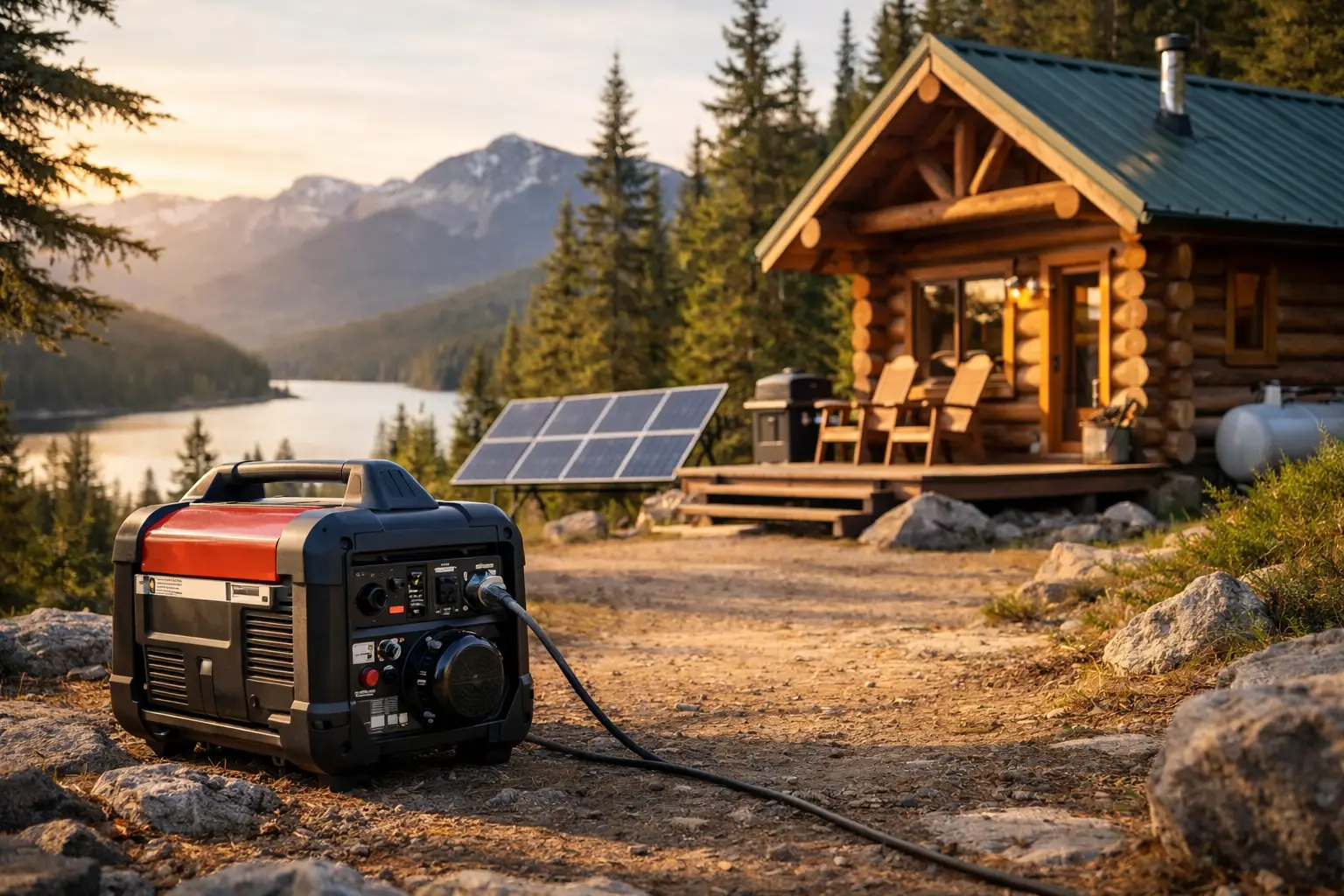
Designed for users who need a portable gasoline generator without moving into the size of a large home-backup unit, the AMERISUN 2500-Watt Inverter Generator is rated at 2,500 peak watts and 1,900 running watts.
At about 39.7 pounds, it is considerably easier to transport than a large conventional generator. That makes this type of inverter generator more practical for camping, RV trips, tailgating, and outdoor work where you still need more output than a small battery power station can provide.
Inverter technology can also make a generator more suitable for electronics because it produces cleaner electrical power than many conventional open-frame generators. However, fuel consumption and runtime depend on load and operating conditions, so buyers should check the manufacturer’s current specifications rather than assume a particular runtime.
The unit includes CO-related safety features, but that does not make it safe for indoor or enclosed use. Portable gasoline generators should always be operated outdoors and away from doors, windows, vents, and other openings.
Best for: Camping, RV use, tailgating, and small emergency backup needs where gasoline power is practical.
2. Apowking Solar Powered Generator 300W
The Apowking 300W portable power station is designed for users who need battery-powered electricity without operating a gasoline engine. Its 220Wh battery provides a compact source of backup power for phones, tablets, laptops, lights, fans, cameras, and other small electronics.
It offers 300W of rated output with a 600W peak output. That makes it useful for low-power equipment, but it is not intended for high-draw appliances such as electric heaters, microwaves, induction cooktops, or other devices that exceed its output rating.
Solar charging is supported, although the included accessories depend on the specific bundle. Some versions are sold with a 40W solar panel, while the standalone power station does not necessarily include one.
The compact design and approximately 5-pound weight make this type of power station easier to carry than a gasoline generator. It is particularly useful when quiet operation matters, such as camping or overnight trips.
Best for: Light camping, electronics, emergency charging, and users who want battery power instead of gasoline.
3. MARBERO 88.8Wh Portable Power Station
The MARBERO portable power station is designed for very small loads rather than appliance-level backup. Its 88.8Wh battery provides a compact source of emergency power for phones, tablets, lights, and other low-power electronics.
MARBERO lists an 80W output with a 120W peak, so this is better viewed as a small battery backup than as a conventional generator. The manufacturer specifically positions it for devices such as smartphones, tablets, laptops and other electronics below its output limit.
Its small size is one of its biggest advantages. At this capacity, the unit can fit easily into a vehicle, emergency bag, camping kit, or small workspace without taking up much room.
Charging time varies according to the input source and the specific version or bundle, so check the current product specifications before buying.
Best for: Emergency go-bags, phones, tablets, lights, small electronics, and ultralight camping.
4. Westinghouse WGen9500DFc Dual-Fuel Generator
The Westinghouse WGen9500DFc belongs to a completely different class from the small battery power stations above. It is a large dual-fuel generator designed for home backup, RV use, and demanding outdoor work.
On gasoline, the WGen9500DFc is rated for 12,500 starting watts and 9,500 running watts. On propane, output is lower at 11,200 starting watts and 8,500 running watts. Its 120/240V capability makes it suitable for larger emergency loads, although the actual appliances you can operate simultaneously depend on their running and startup wattage.
The generator supports gasoline and propane, and it includes electric start, remote start, recoil backup, GFCI outlets, and a CO sensor with automatic shutdown. It is also transfer-switch ready. The gasoline tank holds 6.6 gallons, and manufacturer specifications list up to 12 hours of runtime at 25% load on gasoline.
At roughly 212 pounds, this is not a camping-friendly generator. Its wheels and handle are intended to make movement around a property, driveway, RV setup, or job site easier rather than make the unit easy to carry.
Best for: Emergency home backup, RVs, job sites, large appliances, and users who need substantially more power than a small inverter generator or battery station can provide.
5. OUPES MEGA 1 2000W Portable Power Station
The OUPES MEGA 1 is a battery-powered portable power station built for users who want substantial output without operating a gasoline engine. It provides 2,000W of continuous AC output with up to 4,500W of surge power.
The unit uses a 1,024Wh LiFePO4 battery and weighs about 27.8 pounds. It supports up to 800W of solar input and up to 1,400W of AC charging input, giving users several ways to recharge the battery.
The LiFePO4 chemistry is useful for buyers who expect to cycle the battery regularly, while the 2,000W inverter provides considerably more output than small 300W-class power stations.
The MEGA 1 also supports Wi-Fi and Bluetooth connectivity, allowing users to monitor and control supported functions through the app.
Charging speed depends on the selected input method and conditions, with AC and solar charging offering different maximum input rates.
Best for: Solar backup, camping, off-grid use, home emergency power, and users who want higher output without gasoline.
What Can an Affordable Portable Generator Actually Power?
The wattage printed on a generator is only part of the story. You also need to consider starting watts, running watts, battery capacity, and the power requirements of the equipment you plan to connect.
A small 300W power station can be useful for phones, tablets, cameras, LED lights, routers, and some laptops. Moving into the 1,000W to 2,000W range opens the door to larger electronics, small appliances, and some RV equipment, depending on startup requirements.
Gasoline inverter generators in the 2,000W to 3,000W range are more suitable when you need longer operating time and higher continuous output. Large dual-fuel generators such as the Westinghouse WGen9500DFc are designed for a completely different job: powering multiple essential household loads during an outage or supporting larger equipment at a job site.
Before buying, make a list of the devices you expect to run at the same time. Add their running wattage and allow extra capacity for equipment with motors or compressors, such as refrigerators, pumps, and air conditioners.
How to Choose an Affordable Portable Generator in 2026
1. Start With Your Power Requirements
Make a list of everything you expect to run and check both running and starting wattage. A refrigerator, pump, air conditioner, or power tool may require substantially more power when its motor starts.
As a general starting point:
- Under 300W: Phones, tablets, cameras, lights, routers, and other small electronics
- 300W–1,000W: Larger electronics, fans, small appliances, and selected low-power equipment
- 1,000W–2,500W: More demanding camping, RV, and backup applications
- 2,500W and above: Larger appliances, tools, RV equipment, and broader emergency backup
These ranges are only a starting point. Always compare the generator’s continuous output and surge capability with the actual requirements of your equipment.
2. Choose the Right Power Source
Your choice between a gasoline generator, dual-fuel generator, or battery power station affects runtime, noise, maintenance, portability, and how you can use the unit.
- Gasoline generators: Higher sustained output and long runtime, but require fuel, maintenance, and outdoor operation.
- Dual-fuel generators: Provide gasoline and propane flexibility, which can be useful during extended outages.
- Battery power stations: Quiet and emission-free during operation, but their runtime depends on battery capacity and available recharging.
- Solar charging: A charging method for compatible power stations rather than a fuel source.
3. Consider Weight and Portability
Weight matters more for camping than it does for home backup. A small power station may weigh only a few pounds, while a larger battery station can weigh 25 to 50 pounds or more. Full-size gasoline generators can exceed 200 pounds.
If you will load the unit into a vehicle frequently, pay attention to handles, wheels, dimensions, and lifting points rather than looking at wattage alone.
4. Look at the Features You Will Actually Use
Useful features can include:
- Remote or electric start
- Solar charging
- Automatic CO shutoff
- Pure sine wave AC output
- Multiple USB and AC ports
- Expandable battery systems
- 120/240V capability for larger loads
- Transfer-switch compatibility for home backup
- Digital displays for power and runtime information
Avoid paying extra for features that do not match your use case. A camper who only needs to charge electronics does not necessarily need the same feature set as someone preparing for a multi-day home power outage.
Portable Generator Safety: What You Need to Know
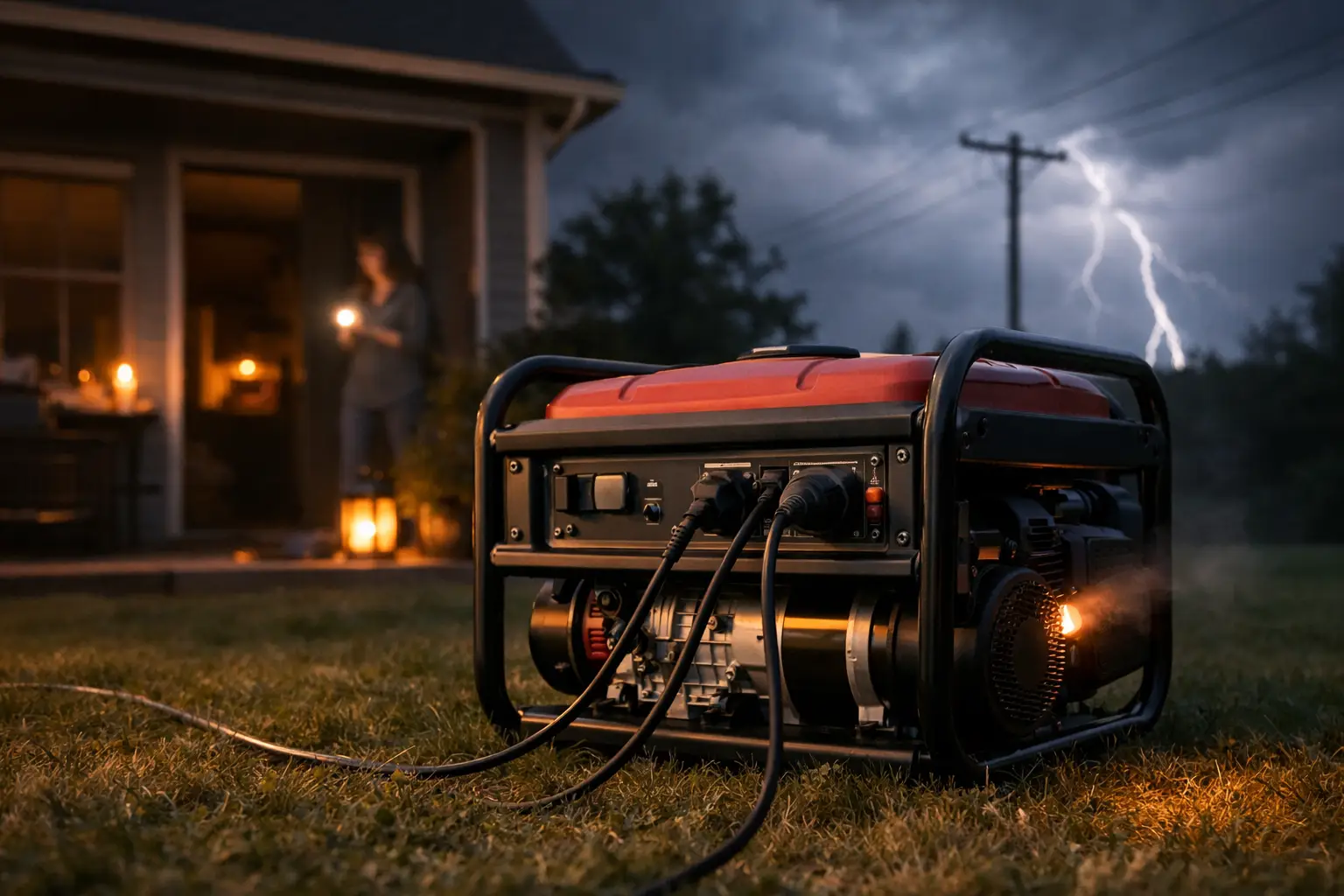
Gasoline and propane generators require careful handling. Never operate a portable fuel-burning generator inside a home, garage, basement, crawlspace, shed, or other enclosed area. Opening a door or window does not provide enough ventilation to prevent dangerous carbon monoxide buildup.
The U.S. Consumer Product Safety Commission recommends operating portable generators outdoors at least 20 feet from homes and buildings, with the exhaust directed away from doors, windows, and vents. Follow the manufacturer’s instructions for electrical connections and wet-weather operation, and look for models with an automatic CO shutoff safety feature.
A battery power station is different because it does not produce combustion exhaust while operating. However, it still needs to be used according to the manufacturer’s instructions, particularly when charging, connecting high-power appliances, or using solar panels.
Camping regulations can also vary by campground. Some campgrounds restrict generator use during nighttime quiet hours or prohibit generators entirely in designated areas, so check the rules for your specific destination before bringing a fuel-powered unit.
Final Thoughts on Affordable Portable Generators in 2026
The right affordable portable power option depends on what you need to run and where you plan to use it. A small power station makes sense when your priority is charging personal electronics quietly and without gasoline. A portable inverter generator is more practical when you need longer runtime and higher output for camping, RV trips, or outdoor work.
For emergency home backup, a larger dual-fuel generator can provide substantially more power, but it also requires more space, fuel, maintenance, and careful outdoor operation.
Before buying, compare continuous wattage, starting wattage, battery capacity, runtime, weight, fuel type, charging options, outlet configuration, and safety features. Most importantly, don’t choose a generator simply because it has the highest wattage or the lowest price. Choose the capacity and type that match the equipment you actually need to keep running.