As an Amazon Associate I earn from qualifying purchases.
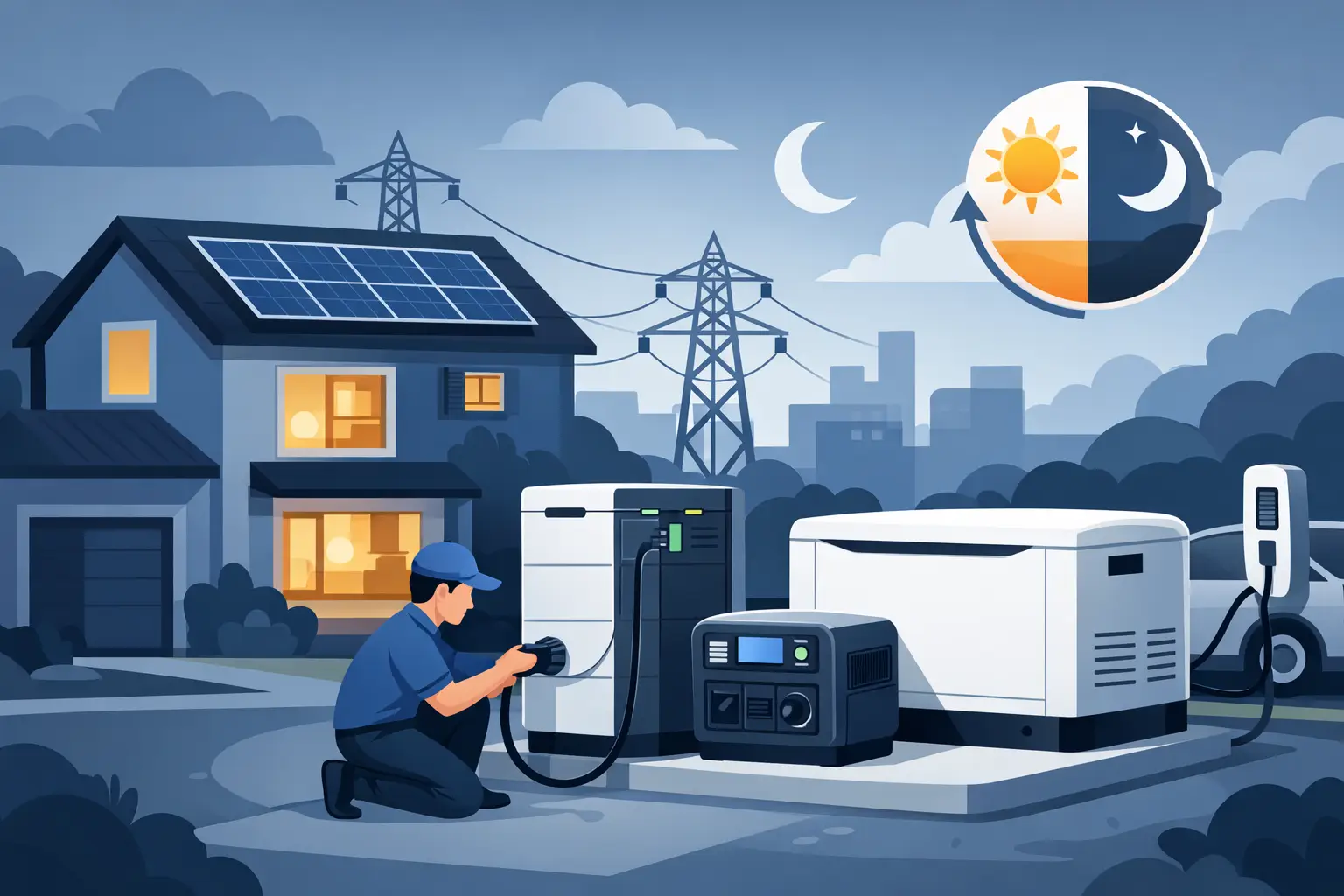
When you need serious portable power for a home outage, RV, workshop, or job site, a 10,000 watt generator can be a practical middle ground between smaller portable generators and expensive whole-house standby systems.
There is one important detail to understand before buying, though: 10,000 watts does not always mean 10,000 watts of continuous power. Some generators advertised in the 10,000-watt class produce 10,000 watts or more of starting power but considerably less running power. Others, such as the Champion 12,500-watt tri-fuel model, actually provide 10,000 running watts on gasoline.
For this 2026 guide, I compared five popular Amazon options covering dual-fuel, tri-fuel, conventional, and inverter designs. The goal is not simply to find the generator with the biggest number on the box. It is to help you choose the right combination of running watts, fuel flexibility, safety features, outlets, portability, and power quality for your situation.
Best 10,000 Watt Generators on Amazon
| Generator | Fuel | Gas Starting / Running Watts | Best For |
|---|---|---|---|
| Westinghouse 12500W Dual Fuel | Gas / Propane | 12,500 / 9,500W | Home backup |
| Westinghouse 10000W Inverter | Gasoline | 10,000 / 7,600W | Cleaner, quieter power |
| WEN DF1100T | Gas / Propane | 11,000 / 8,300W | Value |
| DuroMax XP13000EH | Gas / Propane | 13,000 / 10,500W | Maximum portable output |
| Champion 12500W Tri-Fuel | Gas / Propane / Natural Gas | 12,500 / 10,000W | Flexible home backup |
Quick Links
Westinghouse 12500W Dual Fuel:
Check Price on Amazon
Westinghouse 10000W Inverter:
Check Price on Amazon
WEN DF1100T:
Check Price on Amazon
DuroMax XP13000EH:
Check Price on Amazon
Champion 12500W Tri-Fuel:
Check Price on Amazon
What Does a 10,000 Watt Generator Actually Mean?
Before comparing models, it helps to understand two numbers you’ll see on almost every generator:
- Starting watts: The temporary surge of power available when motors and compressors start.
- Running watts: The power the generator can continuously produce.
Running watts are the number you should pay the most attention to when sizing a generator for your home or equipment.
For example, the DuroMax XP13000EH produces 13,000 starting watts and 10,500 running watts on gasoline. That makes it a genuine 10kW-class generator from a continuous-output perspective.
By comparison, the WEN DF1100T produces 11,000 starting watts but 8,300 running watts on gasoline. It is still commonly grouped with 10,000-watt generators, but it does not provide 10,000 watts continuously.
The distinction becomes especially important when you’re powering equipment with electric motors, such as central air conditioners, well pumps, refrigerators, compressors, and power tools.
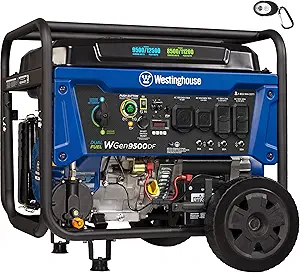
1. Westinghouse 12500 Watt Dual Fuel Generator
The Westinghouse 12500 Watt Dual Fuel Generator is one of the strongest choices in this group for home emergency backup. Its combination of high output, dual-fuel capability, 120/240V power, and transfer-switch readiness makes it much more than a basic recreational generator.
On gasoline, it produces 12,500 peak watts and 9,500 running watts. On propane, output drops to 11,200 peak watts and 8,500 running watts.
Key Features
- 12,500 peak / 9,500 running watts on gasoline
- 11,200 peak / 8,500 running watts on propane
- Gasoline and propane operation
- Electric, remote, and recoil start
- 120/240V output
- 50-amp RV-ready outlet
- Transfer-switch-ready 30A outlet
- GFCI outlets
- Low-oil shutdown
- Digital monitoring
- Approximately 12-hour runtime at 25% load on gasoline
- 457cc 4-stroke OHV engine
One of the biggest advantages is fuel flexibility. Gasoline is convenient when maximum output is important, while propane is easier to store for emergency preparedness.
This generator is particularly attractive to homeowners who want substantial portable power without moving all the way to a permanently installed standby generator.
Check the Westinghouse 12500W Dual Fuel on Amazon
2. Westinghouse 10000 Peak Watt Inverter Generator
The Westinghouse 10000 Peak Watt Portable Inverter Generator takes a different approach. Rather than maximizing continuous output, it combines a 10,000-watt peak rating with inverter technology and low-THD power.
The current Amazon listing specifies 10,000 peak watts and 7,600 running watts on gasoline.
That distinction makes this model a better fit for buyers who specifically want an inverter generator but don’t necessarily need 10,000 watts of continuous output.
Key Features
- 10,000 peak watts
- 7,600 running watts
- Gasoline powered
- Less than 3% THD
- Inverter technology
- Remote electric start
- Push-button and recoil starting
- 120/240V output
- 50A outlet
- Transfer-switch-ready outlets
- GFCI protection
- CO sensor
- Up to approximately 12 hours of runtime
- 420cc 4-stroke OHV engine
The biggest advantage here is power quality. Inverter generators regulate the electrical output electronically, making them particularly attractive for modern electronics and other equipment where clean power matters.
It is also worth noting that inverter technology does not automatically mean a generator is silent. A large 10,000-watt-class generator is still a substantial machine, so buyers should have realistic expectations about noise.
If your priority is clean power rather than maximum continuous wattage, this Westinghouse is an interesting alternative to conventional open-frame generators.
Check the Westinghouse 10000 Peak Watt Inverter on Amazon
3. WEN DF1100T 11,000-Watt Dual Fuel Generator
The WEN DF1100T is one of the better choices for shoppers who want a large dual-fuel generator without moving into the highest-priced models.
It produces 11,000 surge watts and 8,300 running watts on gasoline, while propane output is rated at 9,500 surge watts and 7,500 running watts.
That makes the WEN slightly less powerful in continuous output than the Westinghouse and DuroMax models, but it remains a useful option for emergency backup, workshops, RV use, and demanding outdoor applications.
Key Features
- 11,000 peak watts on gasoline
- 8,300 running watts on gasoline
- 9,500 peak watts on propane
- 7,500 running watts on propane
- Dual-fuel operation
- 120/240V output
- Electric start
- Recoil backup start
- 50A 120/240V outlet
- 30A twist-lock outlet
- GFCI household outlets
- 6.6-gallon fuel tank
- Up to approximately 8.5 hours at half load
- Wheel and handle kit
One of the useful features is the ability to select between 120V and 240V operation, making it more flexible for equipment and emergency backup applications.
The WEN is best viewed as a value-oriented 8,000-plus running-watt generator, rather than a true 10,000-running-watt model.
Check the WEN DF1100T on Amazon
4. DuroMax XP13000EH Dual Fuel Generator
If continuous output is your priority, the DuroMax XP13000EH is one of the most capable generators in this comparison.
It produces 13,000 peak watts and 10,500 running watts on gasoline. On propane, it produces 12,350 peak watts and 9,975 running watts.
That puts it above the 10,000-watt continuous-output target and gives it more headroom for large starting loads.
Key Features
- 13,000 peak / 10,500 running watts on gasoline
- 12,350 peak / 9,975 running watts on propane
- Dual-fuel operation
- 500cc 4-stroke OHV engine
- Electric start
- Remote start
- Recoil backup
- 120/240V output
- 50A connection
- Transfer-switch-ready design
- CO safety system
- Automatic low-oil shutdown
- Up to 17 hours at 25% load on gasoline
- Approximately 8 hours at 50% load on gasoline
The XP13000EH is particularly attractive for larger homes, demanding workshops, contractors, and users who don’t want to run a generator close to its maximum capacity all the time.
More available wattage also gives you additional headroom when a refrigerator, air conditioner, pump, compressor, or power tool suddenly demands extra starting power.
The tradeoff is size and weight. This is a heavy-duty portable generator, not something most people will casually load into a vehicle by themselves.
Check the DuroMax XP13000EH on Amazon
5. Champion 12500-Watt Tri-Fuel Generator
The Champion 12,500-Watt Tri-Fuel Generator is arguably the most versatile option in this group because it can operate on gasoline, propane, or natural gas.
Its gasoline rating is particularly important for this article: 12,500 starting watts and 10,000 running watts.
On propane, it produces 11,250 starting watts and 9,000 running watts. Natural gas output is rated at 10,000 starting watts and 8,000 running watts.
Key Features
- 12,500 starting / 10,000 running watts on gasoline
- 11,250 starting / 9,000 running watts on propane
- 10,000 starting / 8,000 running watts on natural gas
- Tri-fuel operation
- 500cc Champion engine
- Electric and recoil start
- CO Shield automatic carbon monoxide shutoff
- 120/240V output
- 50A connection
- GFCI outlets
- Intelligauge monitoring
- Natural gas hose included
- Propane hose included
- 7.7-gallon gasoline tank
- 3-year limited warranty
Natural gas is the feature that separates this model from the other generators on the list.
During a long power outage, gasoline and propane supplies can become inconvenient. If your home already has a suitable natural gas connection, having a generator capable of using it can significantly increase your fuel flexibility.
The downside is that natural gas provides less output than gasoline. Therefore, you should size your electrical loads using the actual running and starting wattage available for the fuel you plan to use.
Check the Champion 12500W Tri-Fuel on Amazon
10,000 Watt Generator Comparison
| Model | Gasoline Peak | Gasoline Running | Propane Running | Natural Gas | Inverter | Fuel |
|---|---|---|---|---|---|---|
| Westinghouse 12500W | 12,500W | 9,500W | 8,500W | No | No | Dual |
| Westinghouse 10000 Inverter | 10,000W | 7,600W | N/A | N/A | Yes | Gas |
| WEN DF1100T | 11,000W | 8,300W | 7,500W | No | No | Dual |
| DuroMax XP13000EH | 13,000W | 10,500W | 9,975W | No | No | Dual |
| Champion 12500 Tri-Fuel | 12,500W | 10,000W | 9,000W | 8,000W | No | Tri-Fuel |
The most important takeaway from this table is that these generators are not identical in continuous power output.
If you specifically need at least 10,000 running watts, the DuroMax XP13000EH and Champion 12500 are the strongest choices from this list.
What Can a 10,000 Watt Generator Run?
A generator with around 10,000 running watts can handle a substantial electrical load, but the exact combination depends on your home’s appliances and their starting requirements.
Potential loads can include:
- Refrigerator
- Freezer
- Lights
- Television
- Internet equipment
- Microwave
- Sump pump
- Well pump
- Furnace blower
- Portable air conditioner
- Central air conditioning, depending on system size and startup demand
- Power tools
- Air compressors
- Battery chargers
- RV appliances
- Selected kitchen appliances
The important point is that you cannot simply add the running watts and ignore starting watts.
A refrigerator may use relatively little electricity while operating but require a temporary surge when its compressor starts. Air conditioners, pumps, compressors, and other motor-driven equipment can have even larger startup demands.
For home backup, make a list of the appliances you actually need during an outage and calculate both their running and starting requirements.
Can a 10,000 Watt Generator Run Central Air Conditioning?
It can, but there is no universal answer.
The generator must have enough running and starting capacity for the particular HVAC system. A large central air conditioner can create a substantial startup surge when its compressor begins operating.
A soft-start device can sometimes reduce compressor startup demand, but it should not be treated as a substitute for proper generator sizing.
If central AC is one of your priorities, check the electrical specifications for your HVAC system before buying the generator.
Also remember that running a large air conditioner may leave less available capacity for other appliances.
Dual Fuel vs. Tri-Fuel Generators
Fuel flexibility is one of the biggest reasons people choose a generator in this size range.
Gasoline
Gasoline typically provides strong output and is widely available.
The disadvantage is storage. Gasoline deteriorates over time and needs appropriate storage practices and fuel management.
Propane
Propane is convenient for emergency preparedness because properly stored propane has a much longer storage life than gasoline.
The tradeoff is that generators usually produce less power on propane.
Natural Gas
Natural gas can be especially convenient for home backup because you don’t have to depend on stored gasoline or portable propane cylinders during an extended outage.
However, natural gas generators may produce less power than they do on gasoline, and the home must have an appropriate gas supply and installation.
For maximum fuel flexibility, the Champion tri-fuel model is the clear choice among the five generators reviewed here.
Inverter vs. Conventional 10,000 Watt Generators
A conventional open-frame generator is often the better choice when maximum wattage and value are the priorities.
An inverter generator can provide cleaner electrical output and may offer better efficiency and quieter operation under certain loads.
The Westinghouse 10,000 peak-watt inverter is particularly interesting for buyers who want inverter technology and less than 3% THD.
However, its 7,600 running watts mean it should not be compared directly with a generator producing 10,000 running watts simply because both products use “10,000 watts” in their names.
Always compare continuous output first.
What to Look for in a 10,000 Watt Generator
1. Running Wattage
This should be your first consideration.
If you need 9,000 watts continuously, a generator rated for 7,600 running watts isn’t an appropriate choice simply because its peak rating is 10,000 watts.
2. Starting Wattage
Starting watts matter when motors, compressors, pumps, and other inductive loads turn on.
More starting capacity gives you additional headroom.
3. Fuel Type
Choose gasoline if maximum output and easy refueling are priorities.
Choose dual fuel if you want gasoline and propane flexibility.
Choose tri-fuel if natural gas availability at your home is important.
4. 120/240V Output
For home backup, 120/240V capability can be important because some larger household equipment and transfer-switch configurations require both voltage levels.
5. Transfer Switch Compatibility
If you plan to power household circuits through your electrical panel, use the proper transfer switch or approved interlock setup.
Never connect a portable generator directly to a household wall outlet.
That practice, known as backfeeding, can create a serious electrical hazard and can energize utility lines.
Have the appropriate equipment installed according to local electrical requirements.
6. CO Protection
Carbon monoxide is one of the most important generator safety concerns.
Modern generators increasingly include CO sensors that can automatically shut down the engine when dangerous carbon monoxide conditions are detected.
However, a CO sensor does not make indoor operation safe.
Generator Safety: What You Need to Know
Never operate a gasoline or propane portable generator inside a house, garage, basement, shed, or other enclosed or partially enclosed space.
Carbon monoxide can build up rapidly and can be fatal.
Place the generator outdoors in a location with adequate clearance from the home, doors, windows, and air intakes. Follow the exact clearance requirements in the owner’s manual for your model and local regulations.
Other important precautions include:
- Keep the generator dry and protected from direct rain according to the manufacturer’s instructions.
- Never refuel a hot generator.
- Turn the generator off and allow it to cool before refueling.
- Use properly rated extension cords when cords are necessary.
- Do not overload the generator.
- Inspect cords before use.
- Keep children and pets away from the operating generator.
- Install battery-powered carbon monoxide alarms inside the home.
- Follow the manufacturer’s grounding and bonding instructions.
- Use a qualified electrician for permanent household connections.
A generator is useful only when it is operated safely.
Which 10,000 Watt Generator Is Best for You?
Best Overall for High Continuous Output: DuroMax XP13000EH
With 10,500 running watts on gasoline, the DuroMax gives you the most continuous power of the five models reviewed here. It is a strong choice for larger loads, workshops, contractors, and demanding home backup applications.
Best for Tri-Fuel Flexibility: Champion 12500
The Champion stands out if you want gasoline, propane, and natural gas. Its 10,000 running watts on gasoline also make it one of the best matches for buyers specifically searching for a true 10,000-watt continuous-output generator.
Best Dual-Fuel Home Backup: Westinghouse 12500
The Westinghouse provides 9,500 running watts on gasoline and 8,500 on propane, along with remote start, 120/240V output, and transfer-switch readiness.
Best Inverter Option: Westinghouse 10000 Inverter
Choose this model if clean inverter power is more important to you than reaching 10,000 running watts. Its 7,600 running-watt rating makes it a different type of choice from the DuroMax and Champion.
Best Value-Oriented Option: WEN DF1100T
The WEN DF1100T provides a useful combination of dual-fuel capability, electric start, 120/240V output, and a large portable design at a generally attractive price point.
Frequently Asked Questions
Is a 10,000 watt generator enough for a house?
A 10,000-watt-class generator can provide substantial emergency power for many homes, but it may not run every appliance simultaneously. The actual answer depends on your home’s electrical loads, HVAC system, pumps, and starting wattage requirements. A load calculation is the safest way to determine whether a particular generator is large enough.
What is more important, starting watts or running watts?
For continuous operation, running watts are more important. Starting watts matter when motors and compressors turn on. You need enough running watts to support the appliances after they start and enough starting watts to handle their initial surge without overloading the generator.
Is the DuroMax XP13000EH really a 10,000 watt generator?
Yes, it fits the 10,000-watt-class category while actually exceeding 10,000 watts of continuous output. It produces 13,000 peak watts and 10,500 running watts on gasoline, making it one of the most powerful options in this comparison.
Does the Champion 12500 provide 10,000 running watts?
Yes. The Champion 12,500-watt tri-fuel model is rated at 12,500 starting watts and 10,000 running watts on gasoline. Output is lower when using propane or natural gas.
Is an inverter generator better for sensitive electronics?
Inverter generators are designed to produce stable electrical power with low total harmonic distortion. The Westinghouse 10,000 peak-watt inverter, for example, is rated at less than 3% THD. However, you should always check the requirements of your specific electronics and equipment.
Can I connect a 10,000 watt generator directly to my house?
Not through a normal household outlet. A portable generator should be connected to household circuits only through an appropriately installed transfer switch or approved interlock arrangement. Never attempt to backfeed a home’s electrical system through a wall outlet.
How long will a 10,000 watt generator run?
Runtime depends on fuel tank size and electrical load. A generator operating at a relatively light load can run much longer than one operating near maximum capacity. For example, the WEN DF1100T is rated for up to approximately 8.5 hours at half load, while the DuroMax XP13000EH can run up to approximately 17 hours at 25% load on gasoline.
Final Verdict
The best 10,000 watt generator for 2026 depends on what you mean by “10,000 watts.”
If you want at least 10,000 running watts, the DuroMax XP13000EH and Champion 12500 Tri-Fuel are the strongest choices in this group.
The DuroMax is particularly appealing when you want maximum continuous portable output and dual-fuel flexibility. The Champion is the better choice when having gasoline, propane, and natural gas available is more important.
The Westinghouse 12500W Dual Fuel is a strong home-backup option if 9,500 gasoline running watts is enough for your load.
The WEN DF1100T is a practical value option, but its 8,300 gasoline running watts should be considered before buying.
Finally, the Westinghouse 10000 Peak Watt Inverter makes the most sense for buyers who prioritize inverter technology and clean power over maximum continuous wattage.
Before purchasing, calculate your actual running and starting loads, decide which fuels you can realistically use during an outage, and make sure your planned connection method complies with local electrical requirements.
For emergency preparedness, the best generator is not necessarily the one with the biggest number on the box. It is the one that provides enough continuous power, starting capacity, fuel flexibility, and safety features for the loads you actually need to run.
Check the Westinghouse 12500W Dual Fuel on Amazon
Check the Westinghouse 10000W Inverter on Amazon
Check the WEN DF1100T on Amazon