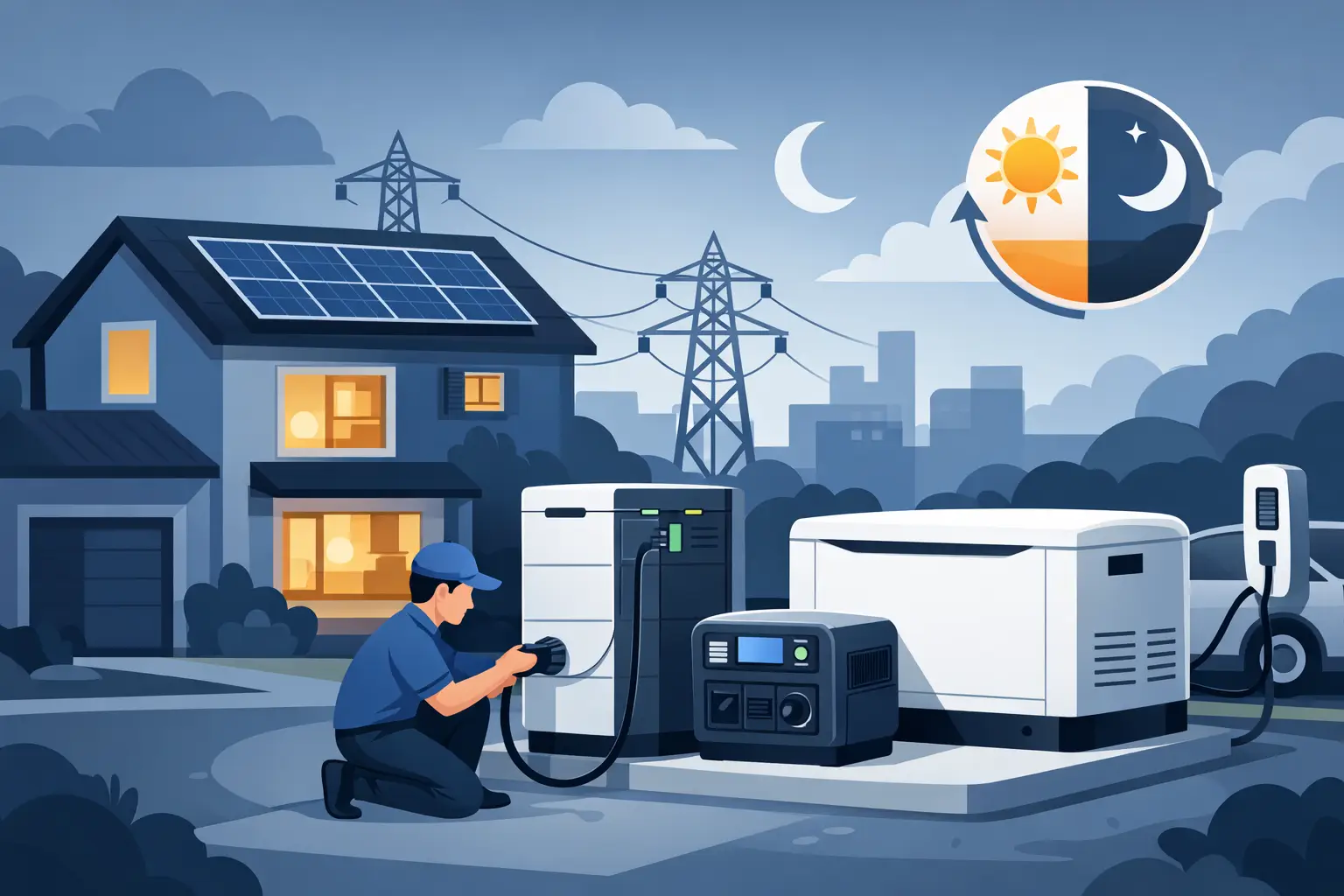
The first time your refrigerator goes quiet during an outage, backup power stops feeling optional. If you are figuring out how to setup backup power for home use, the real job is not just buying a generator. It is matching the right power source, transfer method, fuel plan, and safety setup to the way your home actually uses electricity.
A good backup power plan starts with one question: what do you need to keep running when the grid goes down? For some homeowners, that means the essentials only – refrigerator, freezer, sump pump, a few lights, phone chargers, and maybe the furnace blower. For others, it means broader comfort, including central air, well pump, microwave, internet, and more outlets. That difference determines almost everything else, from wattage and fuel type to installation cost.
Start by sizing the backup power you actually need
The most common mistake is buying too little generator, then discovering that starting watts are higher than expected. Motors need extra power at startup, especially on refrigerators, freezers, pumps, and air conditioning equipment. Running watts tell you what an appliance needs continuously. Starting watts tell you what it may briefly demand when it kicks on.
The practical way to size a system is to list the circuits or appliances you want to power during an outage. Then total their running wattage and check the startup demand of the largest motor-driven loads. A basic essentials setup might land in the 3,000 to 7,500 watt range. A larger whole-home style setup can easily move beyond 10,000 watts, especially if you want electric water heating or central air.
If you are unsure, think in layers. First layer is safety and food preservation. Second layer is comfort. Third layer is convenience. That helps keep the system realistic and affordable.
Choose the right type of backup power system
When people search how to setup backup power for home, they are usually comparing three paths: portable generator, inverter generator, or standby generator. Each one solves a different problem.
Portable generators are the most flexible starting point
A portable generator works well for homeowners who want outage protection without committing to the cost of a permanently installed standby unit. These are often the best fit when you want to run selected circuits, store the unit when not needed, and keep the upfront budget under control.
The trade-off is that portable models require manual setup. You need to move the generator outside, keep it at a safe distance from doors and windows, connect it properly, fuel it, start it, and manage loads. They also need more hands-on maintenance and weather planning.
Inverter generators are quieter and better for sensitive electronics
An inverter generator is technically a type of portable generator, but it is worth separating because the use case is different. These units generally produce cleaner power, run quieter, and improve fuel efficiency under lighter loads. That makes them attractive if you want to protect electronics, keep noise down in a neighborhood, or use the unit for both emergency backup and recreation.
The downside is output. Many inverter models are smaller than conventional portable generators, though parallel-capable models can expand capacity. For a basic emergency circuit plan, they can be a smart option. For heavier whole-home loads, many homeowners outgrow them quickly.
Standby generators are built for convenience
A standby generator is permanently installed outside the home and connected to an automatic transfer switch. When utility power fails, the system starts automatically and supplies power to selected circuits or the whole house, depending on the setup.
This is the easiest system to live with during an outage, but it comes with the highest installation cost. It also typically involves permitting, professional electrical work, and often a natural gas or propane connection. If your priority is hands-off reliability, standby is hard to beat. If your priority is flexibility and lower entry cost, portable makes more sense.
The transfer method matters as much as the generator
This is where many homeowners either create a safe setup or a dangerous one. A generator should never backfeed a home through a dryer outlet or any improvised connection. That can energize utility lines, damage equipment, and create a severe shock and fire hazard.
For most homes, there are two proper ways to connect backup power. One is a manual transfer switch, which lets you choose a set of circuits to power. The other is an interlock kit installed on the main service panel, which allows the generator breaker and main breaker to operate safely in a controlled sequence. A standby system typically uses an automatic transfer switch.
A manual transfer switch is often easier for beginners to understand because it clearly limits the backed-up circuits. An interlock can be more flexible because you can choose among panel circuits, but load management becomes more important. The best option depends on your panel, local code, and how much control you want during an outage.
Fuel choice changes real-world usability
Generator specs look good on paper, but fuel planning is what gets you through a two-day outage.
Gasoline is easy to find and common on portable generators, but it has a shorter shelf life and can be harder to obtain during major storms. Propane stores longer and burns cleaner, which appeals to many homeowners who want emergency fuel ready to go. The catch is that propane produces less power per gallon, and runtime depends heavily on tank size. Natural gas is convenient for standby systems because it avoids refueling in many locations, but it depends on an uninterrupted gas supply and is not available everywhere.
Dual-fuel and tri-fuel generators can give you more flexibility. That flexibility matters if one fuel becomes hard to get after a storm. It also helps if you want to run gasoline for portability but keep propane as a long-storage backup.
Placement and ventilation are non-negotiable
A generator belongs outdoors, never in a garage, basement, shed, or enclosed porch, even with the door open. Carbon monoxide is one of the most serious generator risks, and it can build up faster than people expect.
Place the generator on a stable, dry surface with good airflow, and keep it away from windows, doors, soffit vents, and crawlspace openings. Follow the manufacturer clearance instructions, not guesswork. If you live in a rainy area, this is where a generator tent or purpose-built cover can help, but it still must allow proper ventilation and safe exhaust dispersal.
Carbon monoxide alarms inside the home are part of the setup, not an optional add-on. Put them where people sleep and test them regularly.
A practical setup plan for most homeowners
If you want a straightforward path, begin with the loads that matter most. Figure out your essential wattage needs, then choose a generator with enough headroom for startup surges. After that, decide how you will connect it safely to the house. For many homeowners, a portable generator paired with a professionally installed transfer switch or interlock kit hits the best balance between cost and capability.
Then build the support pieces around it. You need properly rated extension cords or a power inlet box, treated fuel if you are storing gasoline, a maintenance schedule, and a test routine. Too many backup systems fail for simple reasons such as stale fuel, dead battery, or a unit that has not been exercised in months.
At TopGeneratorsOnline, one pattern shows up again and again: the best backup systems are rarely the biggest ones. They are the ones sized correctly, installed safely, and tested before bad weather arrives.
Test under realistic conditions
Once the equipment is in place, simulate an outage. Start the generator, transfer the load, and confirm that your key appliances run as expected. Pay attention to startup behavior, runtime, noise, and fuel consumption. If the generator struggles when the well pump or refrigerator starts, that is better discovered on a calm Saturday than during a winter storm.
Testing also helps you learn your load priorities. You may find that you do not need every circuit you thought you did, or that one extra appliance pushes the system too close to its limit. That kind of real-world adjustment is normal.
Know when professional help is the smart move
Some parts of this project are DIY-friendly, but not all of them. Load planning and generator shopping can absolutely be done by a careful homeowner. Transfer switch installation, panel work, gas piping, and standby installation usually belong in professional hands. Local electrical code, permitting, and utility rules can also affect your options.
That does not mean you need the most expensive setup. It just means the connection between your generator and your home should be done right the first time.
If you are still deciding how far to go, start with the outage problems you actually need to solve. A smaller, safe, well-planned setup is far more valuable than an oversized system that is difficult to use, hard to fuel, or never fully prepared when the lights go out.