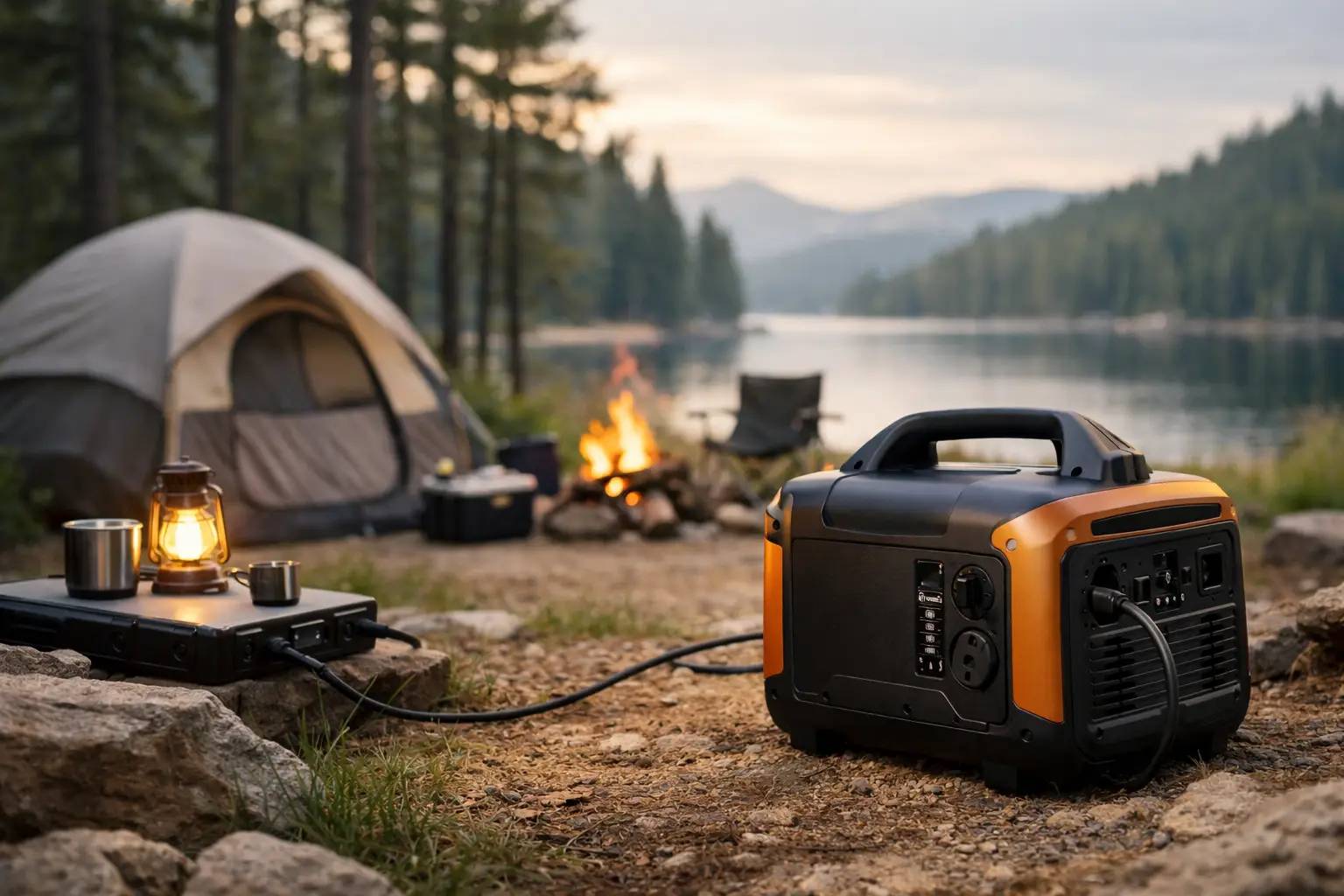
That peaceful campsite gets a lot less peaceful when your power setup is wrong. A generator that is too loud, too heavy, or too weak for your gear can turn a simple weekend outdoors into constant frustration. If you are trying to find the best generator for camping trips, the right choice usually comes down to matching your power needs, noise limits, and portability expectations before you buy.
For most campers, the answer is not the biggest machine with the highest wattage. It is usually a compact
inverter generator in the 1,000 to 2,500 running watt range, or in some cases a portable power station if you do not need fuel-powered output. The best option depends on whether you are tent camping, running an RV air conditioner, charging electronics, or preparing for longer off-grid stays.
How to choose the best generator for camping trips
Camping generators are all about compromise. More power usually means more weight. Longer runtime can mean a larger fuel tank. Lower cost may bring more noise, fewer outlets, or less stable power delivery.
That is why inverter generators tend to be the top choice for camping. Compared with traditional open-frame models, they are quieter, more fuel-efficient, and much safer for sensitive electronics like phones, laptops, CPAP machines, and camera chargers. If you are camping near other people, noise alone is often enough reason to skip a conventional generator.
A good starting point is to ask what you actually plan to run. If your list is limited to lights, small fans, device charging, and a coffee maker, you probably do not need a large unit. If you want to run a travel trailer air conditioner, microwave, or electric griddle at the same time, your power requirements rise quickly.
Start with wattage, not brand names
Many shoppers begin by comparing popular models from Honda, Yamaha, Champion, Westinghouse, and Predator. Brand matters, but not before you know your wattage needs.
Running watts tell you how much power a generator can supply continuously. Starting watts matter for equipment with motors or compressors, such as RV air conditioners and some refrigerators. A campsite setup that looks light on paper can still overwhelm a generator if two appliances cycle on at once.
For simple camping use, 1,000 to 1,500 running watts often covers the basics. This range works well for charging batteries, powering LED lights, running a small cooler, and handling low-draw electronics. If you want more flexibility for cooking appliances or an RV without air conditioning, 2,000 to 2,500 running watts is a better fit. If an RV air conditioner is part of the plan, many buyers should look at 3,000 watts or more, or a soft-start equipped air conditioner paired with a capable inverter generator.
This is where people often overspend. Buying far above your real power needs adds weight and cost, and you may end up carrying a machine that is harder to transport than it is worth.
Noise matters more than most buyers expect
Noise is one of the biggest deal-breakers in camping use. A generator may look excellent on a spec sheet and still be miserable to own if it dominates the campsite all evening.
Inverter models are preferred because they adjust engine speed to match load, which helps keep sound levels down. A quality inverter generator may operate in the low-to-mid 50 dB range at lighter loads, while louder conventional units can be far more intrusive. Even a few extra decibels can feel significant in a quiet campground.
Check campground rules before buying. Many public campgrounds have strict quiet hours, and some restrict generator use altogether. If your camping style includes dispersed or off-grid sites, you have more flexibility, but quieter operation is still easier on everyone around you.
Fuel type and runtime change the ownership experience
Gasoline remains the most common choice for camping generators because it is widely available and easy to understand. For occasional recreational use, a gasoline inverter generator is often the most practical option.
Dual-fuel models deserve serious attention, though. A unit that can run on gasoline or propane gives you flexibility that matters in the real world. Propane burns cleaner, stores better over time, and can be convenient if you already carry propane for cooking. The trade-off is that power output on propane is usually slightly lower than on gasoline.
Runtime depends on tank size, load, and eco mode behavior. A generator advertised at 10 or 12 hours usually reaches that figure at a very light load, not while running demanding appliances continuously. Buyers should view runtime claims as a comparison tool, not a guarantee of all-day full-power performance.
Portability is not just about weight
The best generator for camping trips needs to be manageable from vehicle to campsite, not just light on paper. A 50-pound inverter generator can still feel awkward if it lacks a well-designed handle. A larger 90-pound model with wheels may be easier to move at an RV site but less practical for tent camping.
Think through your actual setup. If you camp close to the car, a heavier unit may be fine. If you regularly carry gear across uneven ground, compact dimensions and balanced handling become much more important. This is one reason smaller 2,000-watt class inverter generators are so popular. They hit a useful middle ground between power and portability.
The best generator for camping trips by camping style
The right category depends heavily on how you camp.
For tent campers and weekend users, a small inverter generator around 1,000 to 2,000 watts is usually the sweet spot. Models in this class are easier to store, easier to transport, and quiet enough for more considerate campsite use. A Honda EU2200i or Champion 2000-class inverter model fits this role well.
For RV campers without heavy air conditioning demands, a 2,000 to 2,500 watt inverter generator is often enough. It gives you more headroom for battery charging, kitchen devices, and occasional appliance use without jumping into much heavier equipment.
For RV campers who need to run a 13,500 BTU air conditioner, the conversation changes. You may need a 3,000-watt inverter generator such as the Honda EU3000iS, a comparable Champion or Yamaha unit, or two parallel-capable smaller inverter generators. Parallel setups are attractive because they let you bring one generator for lighter trips and combine two when more power is needed.
For ultra-quiet, fuel-free camping, a power station may be a better fit than a gas generator. This is especially true for tent campers who only need to charge electronics, run lights, or power a CPAP overnight. The limitation is output and recharge strategy. If you need sustained high wattage for cooking or climate control, battery-only solutions can become expensive fast.
Features worth paying for
Some generator features are marketing fluff. Others make ownership easier from day one.
Parallel capability is one of the most useful features for camping buyers because it gives you room to expand later. CO shutoff is also valuable, although it should never replace proper outdoor use. Low-oil shutdown helps protect the engine, and fuel gauges are more useful than many buyers realize during overnight or multi-day trips.
Outlet layout matters too. If you plan to connect an RV, make sure the generator supports the correct receptacle or can safely work with
the adapter you intend to use. USB ports are nice but not essential, since many users already bring charging blocks or
power strips.
Safety is part of buying the right generator
A generator that fits your camping needs also needs to fit safe operating practices. It should always be used outdoors, well away from tents, RV windows, doors, and enclosed spaces. Carbon monoxide risk is serious, and every year people underestimate it.
You should also consider grounding guidance, local campground rules, and whether your equipment has any special bonding or adapter requirements. This matters more if you are connecting an RV, transfer equipment, or specific sensitive devices. TopGeneratorsOnline often emphasizes this point because a technically compatible generator can still create problems if the connection setup is wrong.
Weather protection matters as well. Portable generators should not be operated in rain without an appropriate protective setup designed for safe ventilation. A cheap cover draped over a running unit is not a safe workaround.
Common mistakes buyers make
The most common mistake is buying too much generator for too little need. The second is buying too little generator for a motor-driven appliance and then wondering why startup trips the overload protection.
Another mistake is ignoring sound levels and dry weight. A generator that looks great online may become a burden after the second trip if it is too noisy or too hard to move. Finally, many shoppers focus on price alone and skip over support, replacement parts, warranty reputation, and real-world reliability. A bargain generator is not a bargain if it struggles to start after one season of storage.
If you want the safest bet for most campers, start with a quiet inverter generator from a proven brand and size it honestly to your use case. That approach costs a little more up front, but it tends to deliver fewer surprises at the campsite and a lot less buyer’s remorse.
The best camping generator is the one that disappears into the background – quiet enough not to annoy, strong enough not to quit, and simple enough that you can spend more time outdoors than troubleshooting your power setup.
CHECK OUT THE BEST GENERATORS FOR CAMPING AT THE BEST PRICE ON AMAZON 🛒