As an Amazon Associate I earn from qualifying purchases.
Power outages, RV trips, camping weekends, tailgating, and remote jobs all have one thing in common: you need dependable electricity without putting up with the noise of a traditional portable generator.
The good news is that today’s quiet portable generators are considerably easier to live with. Inverter technology allows the engine to adjust its speed according to the electrical load, while enclosed designs, acoustic insulation, and improved mufflers help reduce operating noise.
For 2026, the best options range from lightweight generators designed for camping to larger dual-fuel inverter models capable of running an RV air conditioner or supplying essential appliances during a power outage.
One important point before comparing models: a gasoline or propane generator is never truly silent. When manufacturers advertise a generator as “super quiet,” they are comparing it with conventional open-frame generators. Noise ratings also depend on the load, measurement distance, and testing conditions, so a small difference in published dBA numbers should not be treated as an exact real-world comparison.
Best Quiet Portable Generators for 2026
| Generator | Starting / Running Watts | Noise Rating | Fuel | Best For |
|---|---|---|---|---|
| Westinghouse iGen4000DFc | 4,000 / 3,300 W gas | 52 dBA | Gas/Propane | RVs and versatile backup |
| Champion 4000W Inverter | 4,000 / 3,000 W | 64 dBA | Gasoline | Lightweight 4,000W class |
| WEN 56235i | 2,350 / 1,900 W | 51 dBA | Gasoline | Camping and light backup |
| WEN DF680iX | 6,800 / 5,100 W gas | 64 dBA | Gas/Propane | Higher-output backup |
| Westinghouse iGen5000DFc | 5,000 / 3,900 W gas | As low as 52 dBA | Gas/Propane | RVs and larger loads |
1. Westinghouse iGen4000DFc Dual Fuel Inverter Generator
Check Amazon Price Click Here!
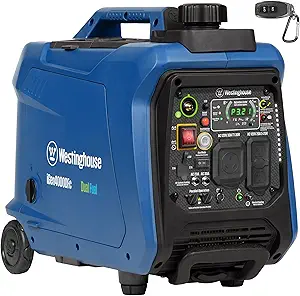
The Westinghouse iGen4000DFc is one of the most versatile choices in the 4,000-watt inverter class. It combines a relatively low noise rating with dual-fuel capability, remote starting, an RV-ready TT-30R outlet, and enough output for considerably more than basic camping loads.
Westinghouse rates the generator at 4,000 peak watts and 3,300 running watts on gasoline. On propane, output drops to 3,600 peak watts and 2,970 running watts. The published noise rating is 52 dBA.
Specifications
- Gasoline Output: 4,000 peak / 3,300 running watts
- Propane Output: 3,600 peak / 2,970 running watts
- Noise Level: 52 dBA
- Fuel: Gasoline and propane
- Weight: 62.8 lbs
- Starting: Electric, remote, and recoil
- RV Outlet: 120V TT-30R
- CO Protection: Automatic CO shutdown
- Parallel Capable: Yes
- THD: ≤3%
The iGen4000DFc also includes an LED data center that displays information such as runtime, fuel level, output, voltage, and operating hours. Its variable engine speed helps reduce fuel consumption and noise when the electrical load is low.
For RV owners, the TT-30R outlet is particularly useful because it allows the generator to connect directly to many 30-amp RV setups.
The combination of 52 dBA operation, dual-fuel flexibility, remote start, and manageable weight makes this a strong all-around choice for buyers who want more power than a small 2,000-watt camping generator can provide.
Westinghouse lists the model with a three-year residential limited warranty and a carbon monoxide sensor with automatic shutdown.
2. Champion 4000-Watt Portable Inverter Generator
Check Amazon Price Click Here!
Champion’s 4000-watt inverter generator takes a different approach from the larger models on this list. Instead of adding substantial weight and a large fuel tank, it focuses on keeping the generator relatively compact and easy to carry.
The current Champion 4000W inverter is rated at 4,000 starting watts and 3,000 running watts. Champion lists its operating noise at 64 dBA from 23 feet.
Specifications
- Starting Power: 4,000 watts
- Running Power: 3,000 watts
- Fuel: Gasoline
- Noise Level: 64 dBA
- Weight: About 48 lbs
- Runtime: Up to 10 hours at 25% load
- RV Outlet: TT-30R
- Parallel Capable: Yes
- CO Protection: CO Shield
- THD: Less than 3%
This is a particularly interesting option for campers and RV users who need more output than a typical 2,000-watt suitcase generator but don’t want to carry a 100-pound machine.
Champion’s Economy Mode automatically adjusts engine speed according to electrical demand, helping reduce fuel consumption and operating noise when the generator is not heavily loaded.
The generator also produces clean inverter power for electronics and includes a TT-30R RV outlet.
One important distinction is that 64 dBA is not exceptionally quiet compared with the quietest inverter generators in the 2026 market. Its advantage is the combination of relatively high output and low weight rather than class-leading noise performance.
Champion also offers current 4000-watt dual-fuel versions with electric start, making them worth considering if gasoline-and-propane flexibility is more important to you.
3. WEN 56235i Super Quiet 2350-Watt Inverter Generator
Check Amazon Price Click Here!
If your priority is a lightweight generator for camping, tailgating, hunting, or basic emergency backup, the WEN 56235i is much easier to transport than the larger generators in this guide.
WEN rates this inverter generator at 2,350 surge watts and 1,900 rated watts. At a quarter load, its published noise level is 51 dB.
Specifications
- Surge Power: 2,350 watts
- Rated Power: 1,900 watts
- Noise Level: 51 dB at quarter load
- Fuel: Gasoline
- Engine: 79cc four-stroke OHV
- Weight: Lightweight portable design
- Fuel Shutoff: Yes
- USB Ports: Yes
- Inverter Technology: Yes
The 51 dB rating makes the WEN considerably more appealing for situations where generator noise matters, especially at a campsite.
It also features a fuel shutoff system designed to use the remaining fuel in the carburetor before shutdown. That can help reduce problems associated with stale fuel during storage.
The trade-off is power. With 1,900 rated watts, this generator is not designed to run multiple high-draw appliances at the same time. It is better suited to electronics, lights, small appliances, chargers, and other moderate loads.
For campers who value portability and lower noise more than maximum output, this size class makes much more sense than buying a 5,000- or 6,000-watt generator.
Important: The affiliate URL supplied in the original article is the same URL used for the Champion 4000W listing above. Verify this Amazon link before publishing.
4. WEN DF680iX 6800-Watt Dual Fuel Inverter Generator
Check Amazon Price Click Here!
The WEN DF680iX is designed for buyers who need substantially more power while still wanting the benefits of inverter technology.
Unlike the smaller generators in this guide, this model can provide 240V output and is designed for larger electrical loads. It can operate on gasoline or propane and includes a bonded-neutral configuration that WEN says supports low-power Level 2 EV charging.
Specifications
- Gasoline Output: 6,800 surge / 5,100 rated watts
- Propane Output: 6,000 surge / 4,500 rated watts
- Noise Level: 64 dB at quarter load
- Fuel: Gasoline and propane
- Engine: 224cc
- RV Outlet: TT-30R
- 240V Outlet: L14-30R
- CO Protection: WEN Watchdog
- Electric Start: Yes
- Parallel Capability: Yes, with compatible 240V connection
- Warranty: 3 years
The DF680iX uses a 2.9-gallon fuel tank and is rated for up to 6.1 hours at half load on gasoline, or approximately 9 hours at half load on a 20-pound propane tank.
One of its most useful features for home backup is the 120/240V L14-30R outlet. Depending on your home’s electrical configuration, this can make the generator more useful for transfer-switch applications.
The generator also produces low-THD inverter power, and WEN states that its total harmonic distortion is under 0.3% at no load and under 1.2% at full load.
However, this is not the generator to buy if your primary goal is the lowest possible noise. At 64 dB at quarter load, it is noticeably louder than the smaller 51–52 dB models.
Its strength is higher power with inverter technology and dual-fuel flexibility.
5. Westinghouse iGen5000DFc Dual Fuel Inverter Generator
Check Amazon Price Click Here!
For RV owners and homeowners who need more capacity than a 4,000-watt generator can provide, the Westinghouse iGen5000DFc is a compelling step up.
The generator provides 5,000 peak watts and 3,900 running watts on gasoline, with propane output rated at 4,500 peak watts and 3,500 running watts.
Specifications
- Gasoline Output: 5,000 peak / 3,900 running watts
- Propane Output: 4,500 peak / 3,500 running watts
- Noise Level: As low as 52 dBA
- Fuel: Gasoline and propane
- Weight: Approximately 105.8 lbs
- RV Outlet: TT-30R
- Starting: Electric and remote
- CO Protection: Automatic CO shutdown
- Display: LED data center
- Parallel Capable: Yes
Westinghouse uses an enclosed design with acoustic insulation, cooling fans, and low-tone muffler technology to reduce operating noise.
It can run for up to 18 hours at 25% load on gasoline according to the manufacturer’s published specifications, giving it considerably more endurance than small suitcase-style generators.
The downside is portability. At more than 100 pounds, this is a generator you move with its wheels and telescoping handle rather than one you casually pick up and carry.
For larger RVs, extended outages, and buyers who want dual-fuel flexibility without moving to a conventional open-frame generator, this is a much better fit.
What Makes a Portable Generator Quiet?
Not every generator marketed as “quiet” is equally quiet.
The biggest factors are:
Inverter Technology
Inverter generators can adjust engine speed according to electrical demand. When you’re running only a few small devices, the engine doesn’t need to operate at maximum speed.
That can reduce both fuel consumption and noise.
Enclosed Engine Design
An enclosed inverter generator generally does a better job of containing engine and exhaust noise than an open-frame generator.
Muffler and Cooling Design
Mufflers, airflow paths, acoustic insulation, and cooling fans all affect the sound produced by a generator.
Electrical Load
A generator running a refrigerator compressor or RV air conditioner will generally make more noise than the same generator powering a phone charger.
This is why you should treat a published dBA number as a useful reference rather than an absolute guarantee of how loud the generator will sound in your particular situation.
How Quiet Is 50 to 60 dBA?
For everyday comparison:
- Around 50 dBA: Similar to a relatively quiet conversation or background indoor noise.
- Around 55 dBA: Noticeable but generally manageable in many outdoor settings.
- Around 60 dBA: Comparable to normal conversation in many environments.
- Around 65 dBA: Clearly audible and less suitable for quiet campsites or close residential use.
- 70+ dBA: Considerably more noticeable, especially during nighttime operation.
Keep in mind that decibels are logarithmic, and generator manufacturers may use different testing conditions.
For that reason, don’t choose a generator solely because its specification sheet says 51 dBA instead of 52 dBA.
How to Choose the Best Quiet Portable Generator
1. Determine Your Running Wattage
Start by listing everything you want to power simultaneously.
For example, you might need:
- Refrigerator
- Lights
- Wi-Fi router
- Television
- Phone chargers
- Small appliances
- CPAP machine
- RV appliances
Add their running wattages together.
Then leave additional capacity for appliances that require a higher starting surge.
2. Don’t Ignore Starting Watts
Motors and compressors can briefly require substantially more electricity when they start.
Refrigerators, freezers, sump pumps, well pumps, and RV air conditioners are common examples.
A generator that has enough continuous wattage may still struggle if its starting capacity is too low.
3. Choose the Right Fuel
Gasoline is widely available and typically provides the higher output specified by dual-fuel generators.
Propane is convenient for long-term storage and gives you another fuel option during an extended outage.
Dual-fuel generators are particularly useful for emergency preparedness because you aren’t dependent on only one fuel source.
4. Check the Noise Rating
If you’re buying primarily for camping, look closely at the published dBA rating.
Models around the low-50-dBA range are much more attractive for quiet outdoor environments than generators rated in the mid-60s or higher.
5. Consider Weight
A 2,000- to 2,500-watt suitcase-style generator may weigh around 40 pounds.
Larger 5,000- to 7,000-watt models can weigh well over 100 pounds.
Think about where you will store it and how you will move it before choosing a high-output generator.
6. Look for CO Protection
Modern portable generators increasingly include automatic carbon monoxide shutoff systems.
This is an important safety feature, but it does not make indoor operation safe.
The CDC recommends operating portable generators outdoors and at least 20 feet from doors, windows, and vents. CPSC gives the same basic guidance and recommends directing exhaust away from the home.
7. Check RV Compatibility
If you’re buying a generator for an RV, look for the correct outlet.
A TT-30R outlet is useful for many 30-amp RV applications.
However, don’t assume that a generator’s peak wattage automatically means it can run your RV’s air conditioner. Check the air conditioner’s starting and running requirements.
8. Consider Parallel Capability
Some inverter generators can be connected to another compatible generator using a parallel kit.
This can be useful if you want a small generator for everyday camping but occasionally need more power.
Always use the manufacturer’s approved parallel equipment and compatible models.
Quiet Generator Sizes for Different Uses
| Typical Use | Generator Class to Consider |
|---|---|
| Phones, lights, electronics | 1,500–2,000W |
| Camping and tailgating | 2,000–2,500W |
| Refrigerator + essential electronics | 2,500–3,500W |
| RV with higher electrical demand | 3,500–5,000W |
| Larger home backup loads | 5,000–7,000W+ |
These are starting points rather than universal recommendations. Your actual requirements depend on the starting wattage of the appliances you intend to operate.
Quiet Portable Generator Safety
A quiet generator is still a combustion engine and must be treated accordingly.
Never operate a gasoline or propane portable generator inside your home, garage, basement, shed, or other enclosed space.
Opening a garage door or window does not make indoor operation safe.
The CDC recommends keeping portable generators at least 20 feet from doors, windows, and vents, while CPSC also recommends directing the exhaust away from the home.
Other important practices include:
- Keep the generator outdoors.
- Keep it away from windows and ventilation openings.
- Point exhaust away from buildings.
- Use a working carbon monoxide alarm inside the home.
- Follow the manufacturer’s instructions.
- Allow the generator to cool before refueling.
- Keep fuel stored safely according to local requirements.
- Do not operate the generator when wet unless the manufacturer specifically provides instructions and equipment for safe operation.
- Use appropriately rated outdoor extension cords when applicable.
- Never connect a generator directly to household wiring unless the installation uses a properly installed transfer switch or other code-compliant system.
A built-in CO shutdown system adds another layer of protection, but it should never be treated as permission to operate the generator in an enclosed or improperly positioned area.
Quiet Portable Generators: Quick Comparison
| Generator | Noise | Gasoline Running Watts | Propane Running Watts | Fuel | Best Use |
|---|---|---|---|---|---|
| Westinghouse iGen4000DFc | 52 dBA | 3,300W | 2,970W | Dual Fuel | RV and general backup |
| Champion 4000W | 64 dBA | 3,000W | — | Gasoline | Lightweight higher-output use |
| WEN 56235i | 51 dBA | 1,900W | — | Gasoline | Camping and light loads |
| WEN DF680iX | 64 dB | 5,100W | 4,500W | Dual Fuel | Larger backup loads |
| Westinghouse iGen5000DFc | As low as 52 dBA | 3,900W | 3,500W | Dual Fuel | RV and larger backup |
Frequently Asked Questions
What is the quietest portable generator?
The quietest option depends on generator size and how the manufacturer measures sound. Smaller inverter generators can operate around the low-50-dBA range, while larger models generally become louder under higher loads. The Honda EU2200i, WEN 56235i, and Westinghouse iGen4000DFc are examples of models that compete in the quieter end of the portable-generator market.
What is a good dB level for a quiet generator?
For a portable gasoline generator, a published rating around 50–55 dBA is a strong target when low noise is important. However, check the conditions behind the rating because manufacturers may measure noise at different loads or distances.
Are inverter generators quieter than conventional generators?
Generally, yes. Inverter generators can reduce engine speed when the electrical demand is low, and many use enclosed designs that help contain mechanical and exhaust noise. Conventional open-frame generators tend to be louder, particularly under load.
Can I run a quiet generator inside my garage?
No. A quiet generator is still capable of producing dangerous carbon monoxide. The CDC and CPSC recommend using portable generators outdoors and at least 20 feet away from doors, windows, and vents.
Is a dual-fuel generator worth buying?
For many buyers, yes. Dual-fuel capability provides flexibility because you can use gasoline when maximum output is important and propane when storage or fuel availability makes it more convenient. The exact power output and runtime will vary between fuels and generator models.
Can a quiet portable generator power an entire house?
Usually not by simply plugging appliances into the generator. Larger portable generators can support selected household circuits when paired with an appropriately installed transfer switch or other code-compliant connection. The generator must also have enough running and starting wattage for the loads you intend to operate.
Are quiet generators good for RVs?
Yes. Inverter generators are popular for RV use because they can provide cleaner electrical power and lower noise than many conventional generators. If you have a 30-amp RV, look for a generator with an appropriate TT-30R outlet and enough capacity for your air conditioner and other loads.
Final Thoughts
The best quiet portable generator for 2026 depends more on how you plan to use it than on the highest wattage printed on the box.
For camping and light-duty applications, a compact inverter such as the WEN 56235i makes more sense because it is lightweight and designed around low-noise operation.
For RV owners and buyers who want gasoline-and-propane flexibility, the Westinghouse iGen4000DFc offers a useful combination of 52 dBA operation, 3,300 running watts on gasoline, remote starting, and an RV-ready outlet.
If you need substantially more capacity, the WEN DF680iX moves into a different class with 5,100 rated watts on gasoline and 4,500 watts on propane, while the Westinghouse iGen5000DFc provides another higher-capacity dual-fuel option.
The important thing is to match the generator to your actual electrical requirements. Calculate both running and starting wattage, consider fuel availability, check the noise rating under realistic conditions, and pay close attention to CO safety.
A generator doesn’t have to be completely silent to be comfortable to use. The goal is to find a model that gives you the power you need while keeping noise, fuel consumption, weight, and safety under control.