As an Amazon Associate I earn from qualifying purchases.
A generator that cranks normally but starts hard, surges at idle, or uses more fuel than usual may not need a major repair. Often, it is time to replace generator spark plug. This small maintenance item has a direct effect on starting reliability, fuel combustion, and how confidently your generator will perform when a storm, work deadline, or camping trip leaves no room for guesswork.
A spark plug is inexpensive, but the wrong replacement, incorrect gap, or overtightened installation can create a new problem. The goal is not simply to install any plug that fits the hole. It is to install the plug specified for your generator engine, inspect what the old plug reveals, and put the generator back into service safely.
When Should You Replace a Generator Spark Plug?
Most portable generator manufacturers recommend inspecting the spark plug at regular service intervals and replacing it according to the owner’s manual. For many consumer generators, inspection happens around every 100 hours of use, while replacement may fall between 200 and 300 hours. Some inverter generators and larger open-frame units have different schedules, so the manual for your exact model should take priority.
Hours are not the only factor. Replace the plug sooner if the generator is difficult to start after fresh fuel and proper choke use, misfires under load, runs roughly, or stalls when you connect a demanding appliance such as a well pump. A plug can also foul after extended low-load operation, especially on a generator that spends much of its time charging batteries or powering a few small electronics.
Age matters for emergency equipment. A homeowner may run a backup generator only a few hours per year, but a five-year-old plug can still corrode, develop deposits, or be past the manufacturer’s suggested calendar-based service interval. Inspecting it before hurricane season or winter outages is a practical habit.
Choose the Correct Replacement Plug First
The safest choice is the exact spark plug part number listed in the generator owner’s manual or on the manufacturer’s service chart. Major engine brands and generator makers often specify plugs from NGK, Champion, Torch, or equivalent lines. A plug that looks nearly identical can have the wrong heat range, reach, terminal style, or electrode design.
The heat range is especially easy to overlook. A plug that runs too hot may contribute to pre-ignition or electrode wear. One that runs too cold may foul more readily. Do not select a plug by brand preference alone.
Check these details before buying:
- The manufacturer’s recommended part number and approved equivalents
- Thread diameter and thread reach
- Required electrode gap
- Whether the plug has a removable terminal nut or a fixed terminal
- Whether the manual permits an iridium or platinum upgrade
An iridium plug can offer longer service life and consistent ignition, but it is not automatically necessary. For a lightly used conventional portable generator, the standard specified plug is usually the best value. For an RV generator or work unit that accumulates many hours, an approved long-life plug may be worthwhile. Never alter the gap on a fine-wire iridium plug unless its instructions specifically allow it.
Tools and Safety Checks Before You Start
You will usually need a spark plug socket in the correct size, a ratchet, a gap gauge, a clean rag, and possibly a torque wrench. A small amount of dielectric grease can be used inside the spark plug boot, but it should not be applied to the threads or electrode.
Move the generator outdoors to a dry, well-ventilated work area. Turn the engine off, close the fuel valve if equipped, and let the engine cool completely. A hot cylinder head can burn your hand and can damage threads more easily during removal. Set the fuel selector to off on dual-fuel models and disconnect the battery negative cable on electric-start units if the manual recommends it.
Keep the generator disconnected from the house. If your unit feeds an inlet box through a generator cord and transfer equipment, unplug the cord first. Spark plug service is engine maintenance, not a reason to leave a generator connected to household circuits.
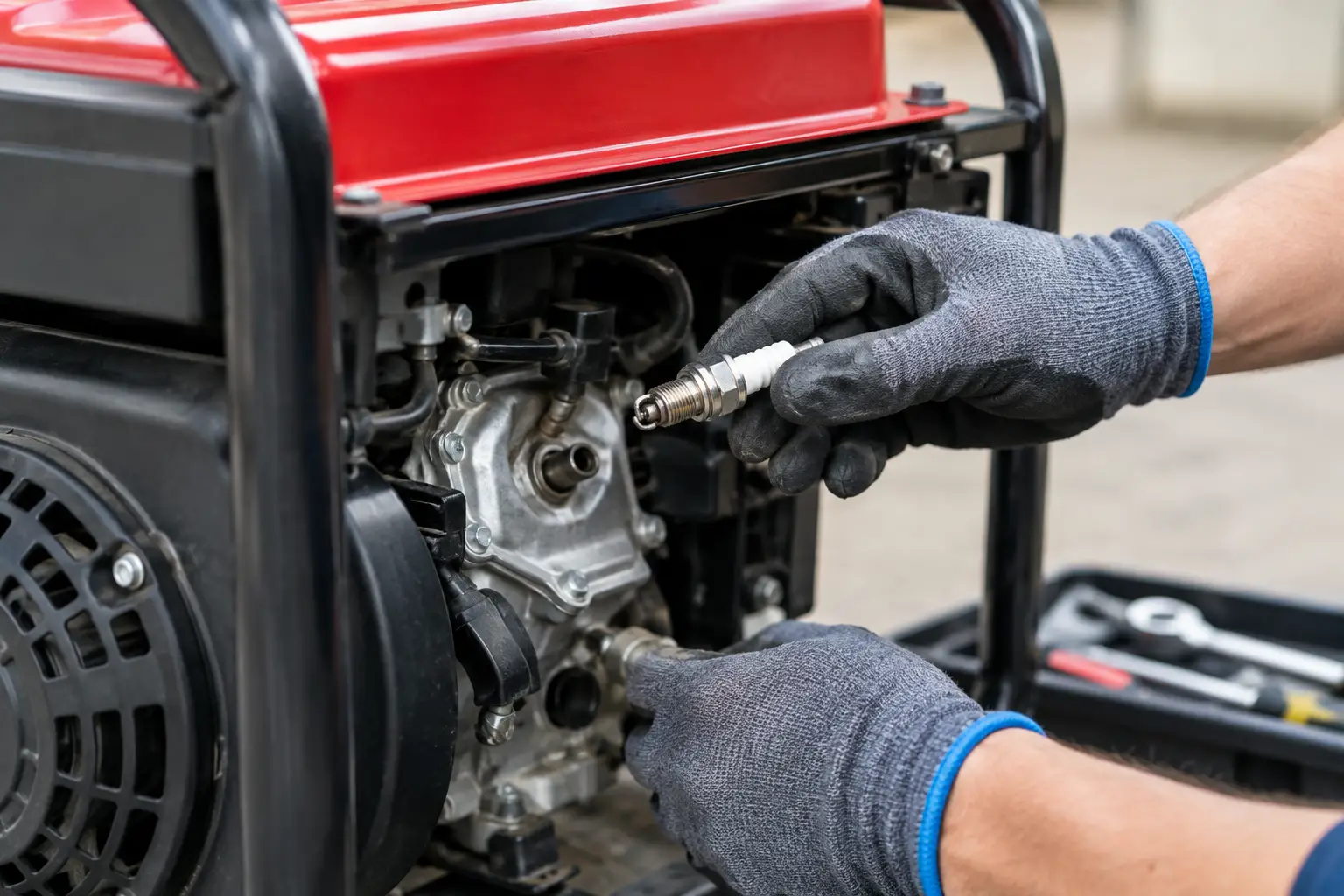
How to Replace Generator Spark Plug Step by Step
1. Find and clean around the plug
Locate the spark plug wire, usually on the side or top of the engine cylinder head. Pull the boot straight off by gripping the boot itself, not the wire. Before removing the plug, brush or wipe away dust, grass, and debris around the opening. Dirt that falls into the cylinder can cause unnecessary wear.
2. Remove the old spark plug carefully
Fit the spark plug socket squarely over the plug and loosen it counterclockwise. If it feels unusually tight, do not force it with a long breaker bar. Confirm the socket is fully seated and work gradually. Once loose, unthread the plug by hand or lift it out with the socket’s rubber insert.
Inspect the old plug before throwing it away. A light tan or gray electrode is generally normal. Dry black soot often points to a rich fuel mixture, excessive idling, or a dirty air filter. A wet plug may indicate flooding, while oily deposits can suggest an engine issue that a new plug will not solve. If a fresh plug quickly fouls again, address the underlying fuel, air, or mechanical problem.
3. Verify the gap on the new plug
Even a plug sold as pre-gapped should be checked against your generator manual. Slide the specified wire or blade gauge between the center and ground electrodes. The gauge should pass with a light, even drag.
If adjustment is allowed, bend only the ground electrode in very small increments. Do not pry against the center electrode. A gap that is too wide can make starting difficult, while a gap that is too narrow can weaken the spark and affect combustion under load.
4. Thread the new plug by hand
Start the plug in the cylinder head using your fingers or a short piece of rubber hose over the plug’s terminal. This helps prevent cross-threading. The plug should turn smoothly for several full turns. If it resists immediately, stop, remove it, and start again.
Cross-threading an aluminum cylinder head can turn a simple maintenance job into a costly repair. This is the step worth taking slowly.
5. Tighten to the proper specification
Use the torque value in the manual whenever possible. If no torque wrench is available, follow the plug maker’s seating guidance for a new gasketed plug, but avoid overtightening. Too loose can cause poor heat transfer and compression leakage. Too tight can damage the threads or make the next service difficult.
Reconnect the spark plug boot firmly until it seats. Reconnect the battery if you disconnected it, open the fuel valve, and start the generator outdoors. Let it warm up, then test it with a sensible load such as a refrigerator, RV air conditioner where capacity allows, or jobsite tool. A load test tells you more than a brief no-load idle.
Common Mistakes That Shorten Plug Life
The most common mistake is installing a plug based on appearance rather than the engine specification. The second is skipping the gap check. Both can lead to hard starts that make owners suspect the carburetor, battery, or ignition coil when the plug choice is the actual issue.
Another problem is replacing a fouled plug without checking the air filter and fuel condition. Old gasoline, a restricted air filter, or a carburetor that has varnished during storage can foul the new plug as well. If the generator has been sitting, inspect the fuel system and use fresh, properly stored fuel before judging the repair.
Do not wash the generator with a pressure washer near the ignition area. Moisture trapped in the plug boot can cause intermittent misfires. Likewise, avoid running a generator for only a few minutes month after month. Follow the manufacturer’s exercise guidance and periodically operate it under a meaningful load.
Keep a Plug Ready With Your Power Gear
For a portable emergency generator, keeping one correct spare spark plug in the maintenance kit is inexpensive preparedness. Store it with the socket, gap gauge, oil, air filter, and the generator’s manual. If you rely on a generator for a sump pump, well pump, medical equipment, or an RV trip, this small kit can save a frustrating delay.
A new spark plug cannot correct every running issue, but it is one of the simplest ways to protect dependable starting and clean engine performance. Replace it on schedule, use the exact specification, and test the generator before you need it – not after the lights go out.