As an Amazon Associate I earn from qualifying purchases.
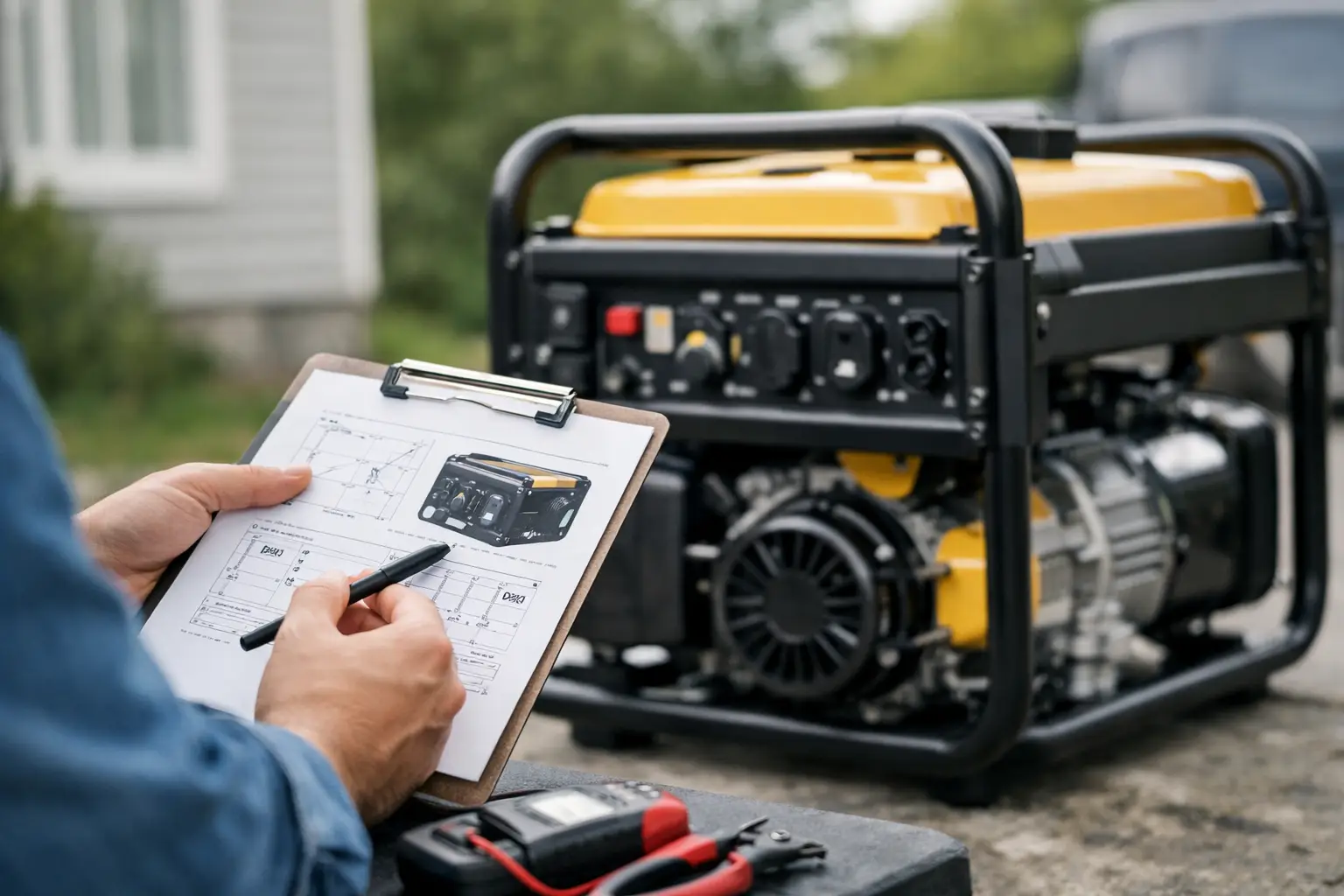
When you need backup power for a few essential devices, a full-size standby generator can be more than you need. Permanently installed natural gas generators are excellent for whole-home backup, but they require installation, a fuel connection, space, and a larger upfront investment.
For camping, tailgating, RV use, small home essentials, and short power outages, a small portable gas generator can be a much more practical option.
The important distinction is that the generators in this guide are not natural gas generators. They run primarily on gasoline, while one of the larger options also supports propane. They are better viewed as portable alternatives when you want smaller, movable power instead of a permanently installed natural gas system.
I looked at the power output, portability, fuel options, noise, inverter technology, and intended use of the models below to help you find a generator that fits your actual needs in 2026.
Best Small Gas Generators for 2026
| Generator | Power Output | Fuel | Weight | Best For |
|---|---|---|---|---|
| PowerSmart 1200W Portable Generator | 1,200W peak / 900W running | Gasoline | Lightweight | Basic emergency and outdoor power |
| PowerSmart PS50 1200W Generator | 1,200W starting / 900W running | Gasoline | 33.95 lb | Camping and small essentials |
| ERAYAK 2400P Inverter Generator | 2,400W peak / 1,800W running | Gasoline | 42 lb | Camping, RVs and small backup loads |
| Champion 4000W Inverter Generator | 4,000W starting / 3,000W running | Gasoline | <49 lb | RVs, camping and backup essentials |
| WEN DF680iX Dual-Fuel Inverter Generator | 6,800W surge / 5,100W rated on gas | Gasoline / Propane | 94.8 lb | Higher-power backup and RV use |
Note: These are portable gasoline or dual-fuel generators, not natural gas generators. If you specifically need a generator that connects directly to a home’s natural gas line, you should look at a tri-fuel or permanently installed natural gas system instead.
PowerSmart Gas Powered 1200W Portable Generator
Check Amazon Price Click Here!
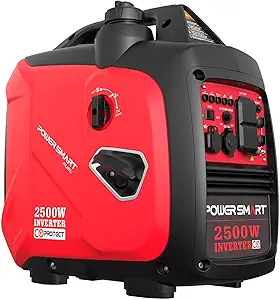
The PowerSmart 1200W Portable Generator is designed for situations where portability matters more than maximum power. With 1,200 watts of peak output and 900 watts of running power, it is better suited to small electrical loads than large appliances.
This type of generator can be useful for camping, tailgating, emergency lighting, phone charging, small fans, and other basic equipment. It is not intended to replace a whole-house backup generator.
The compact size is one of its main advantages. If your goal is to keep a small emergency generator in a garage, vehicle, RV, or storage area, a model in this power range is easier to handle than a 3,000- or 5,000-watt machine.
Key Features
- Peak Output: 1,200 watts
- Running Output: 900 watts
- Fuel: Gasoline
- Engine: 2-stroke
- Design: Compact and portable
- Best For: Basic emergency power, camping and tailgating
The main limitation is its relatively low running wattage. Before buying, add the running watts of the devices you plan to use and account for the higher starting wattage required by equipment with motors or compressors.
PowerSmart 1200-Watt Portable Generator PS50
Check Amazon Price Click Here!
The PowerSmart PS50 is another compact 1,200-watt gasoline generator aimed at buyers who need simple portable power rather than a large backup system.
The PS50 produces 1,200 watts of starting power and 900 watts of running power. Lowe’s currently lists the PS50 at approximately 33.95 pounds, which puts it firmly in the portable category.
Its size makes it suitable for applications such as camping, tailgating, small tools, lighting, charging electronics, and limited emergency backup.
Key Features
- Starting Power: 1,200 watts
- Running Power: 900 watts
- Fuel: Gasoline
- Model: PS50
- Weight: Approximately 33.95 lb
- Best For: Camping, tailgating and small electrical loads
The biggest thing to understand about the PS50 is that 900 running watts is not much power compared with larger portable generators. It can handle basic necessities, but it is not the right choice if you need to run a refrigerator, microwave, sump pump, air conditioner, or several high-draw appliances at the same time.
For shoppers who need only a small amount of electricity and want a compact gasoline generator, however, this type of unit can make sense.
ERAYAK 2400P Portable Inverter Generator
Check Amazon Price Click Here!
If 900 running watts is not enough, the ERAYAK 2400P provides a useful step up without moving into the size of a large conventional generator.
The current ERAYAK specifications list 2,400 watts of peak power and 1,800 watts of running power. The generator weighs about 42 pounds, making it considerably easier to move than many larger generators. ERAYAK also positions the 2400P for camping, tailgating, charging devices, routers, lights, compatible CPAP machines, and other smaller loads.
Because it uses inverter technology, it is designed to provide cleaner electrical output for electronics compared with many conventional open-frame generators.
The current manufacturer information lists noise around 55 dB in tested use, although actual sound levels can vary depending on load and testing conditions.
Key Features
- Peak Power: 2,400 watts
- Running Power: 1,800 watts
- Fuel: Gasoline
- Weight: 42 lb
- Technology: Inverter
- Noise: About 55 dB according to current manufacturer information
- Best For: Camping, RV use, tailgating and small emergency loads
The ERAYAK is a better fit than a 1,200-watt generator if you expect to run several small devices at once. However, 1,800 running watts is still not enough for many large household appliances.
For example, a refrigerator may have a relatively modest running requirement but a substantially higher starting surge. Always check the manufacturer’s wattage requirements for your specific appliance before connecting it.
Champion Power Equipment 4000-Watt Inverter Generator
Check Amazon Price Click Here!
The Champion Power Equipment 4000-Watt Inverter Generator is a significant jump in capability while remaining relatively portable.
Champion lists 4,000 starting watts and 3,000 running watts from its 149cc gasoline engine. The generator weighs less than 49 pounds and operates at approximately 64 dBA from 23 feet. Champion also lists up to 10 hours of runtime at 25% load with its 1.54-gallon gasoline tank.
This makes it particularly interesting for RV owners, campers, tailgaters, and homeowners who want enough power for several basic loads without purchasing a much heavier generator.
Key Features
- Starting Power: 4,000 watts
- Running Power: 3,000 watts
- Fuel: Gasoline
- Engine: 149cc, 4-stroke
- Weight: Less than 49 lb
- Noise: 64 dBA at 23 feet
- Runtime: Up to 10 hours at 25% load
- Technology: Inverter
- CO Protection: CO Shield automatic shutoff
- Parallel Capability: Yes
The inverter produces clean electricity with less than 3% total harmonic distortion, according to Champion’s specifications. It also includes a 120V 25A TT-30R outlet for RV applications.
Another useful feature is the ability to connect it in parallel with another compatible Champion inverter using the optional parallel kit.
For many buyers, this is a more versatile power range than the 1,200- and 2,400-watt options. You get considerably more capacity without immediately moving to a generator weighing 100 pounds or more.
WEN Quiet 6800-Watt Dual Fuel Inverter Generator DF680iX
Check Amazon Price Click Here!
The WEN DF680iX is the largest generator in this guide, so it is not a small generator in the same sense as the PowerSmart or ERAYAK models.
However, it belongs here because it offers an important alternative for shoppers who want portable power with considerably more capacity than a compact camping generator.
The WEN DF680iX produces 6,800 surge watts and 5,100 rated watts on gasoline. On propane, it produces 6,000 surge watts and 4,500 rated watts. It uses a 224cc dual-fuel engine and supports both 120V and 240V output.
The generator weighs approximately 94.8 pounds, so it is portable but not something most people will want to carry long distances. It includes wheels and a telescoping handle to make moving it easier.
Key Features
- Gasoline Output: 6,800W surge / 5,100W rated
- Propane Output: 6,000W surge / 4,500W rated
- Fuel: Gasoline and propane
- Engine: 224cc
- Weight: Approximately 94.8 lb
- Fuel Tank: 2.9 gallons
- Voltage: 120V / 240V
- Technology: Inverter
- Start: Electric start with recoil backup
- CO Protection: WEN Watchdog
- Fuel Shutoff: Yes
WEN also lists a 64 dB operating level at quarter load, although sound levels vary according to load and measurement conditions.
One of its more useful features is the fuel-shutoff system, which allows remaining fuel in the carburetor to be consumed before shutdown. The unit also includes an L14-30R 120V/240V receptacle, RV-ready TT-30R outlet, USB ports, and a 12V DC outlet.
The major drawback is simple: this is considerably larger and heavier than the other generators in this article.
It makes more sense for buyers who need higher output during an outage, for RV applications, or for demanding outdoor work than for someone looking for a lightweight camping generator.
How to Choose a Small Gas Generator
Choosing a generator based only on its peak wattage can lead to disappointment. The most important number for continuous use is the running or rated wattage.
1. Calculate Your Running Wattage
Start by adding the running wattage of the devices you want to operate simultaneously.
For example, your intended load might include:
- Refrigerator
- Several LED lights
- Wi-Fi router
- Phone chargers
- Television
- Small fan
The total must remain below the generator’s rated running wattage.
You should also account for starting watts. Appliances with motors and compressors can temporarily require substantially more power when they start.
2. Consider How Portable You Need the Generator to Be
Weight makes a major difference.
A 33- to 42-pound generator is relatively easy to move around a campsite or load into a vehicle. A generator approaching 100 pounds is still portable, but you will rely much more on wheels and handles.
If you plan to carry the generator frequently, buying more wattage than you actually need may make the generator unnecessarily difficult to use.
3. Decide Whether You Need an Inverter Generator
Inverter generators are popular for camping, RVs, and electronics because they regulate their electrical output differently from traditional generators.
The Champion and WEN models in this guide use inverter technology. The ERAYAK 2400P is also an inverter generator.
If you plan to power laptops, televisions, networking equipment, chargers, or other sensitive electronics, look for a model with manufacturer-documented clean power specifications.
4. Think About Fuel Storage
Gasoline is widely available, which makes gasoline generators convenient during many emergencies.
However, gasoline requires appropriate storage and handling. It should never be stored casually inside a living area, and you should follow local regulations and the generator manufacturer’s instructions.
A dual-fuel generator gives you another option. The WEN DF680iX can operate on gasoline or propane, giving users additional fuel flexibility.
5. Pay Attention to Noise
Noise matters much more at a campground or residential property than it does at a remote jobsite.
Do not compare decibel numbers without checking the testing distance and load. A generator listed at 55 dB under one testing condition cannot automatically be considered quieter than another generator measured at a different load or distance.
What Can a Small Generator Actually Power?
A generator’s wattage determines what you can reasonably connect to it.
Around 900 Running Watts
Best suited to:
- LED lights
- Phones and tablets
- Small fans
- Routers
- Small electronics
- Limited charging needs
Around 1,800 Running Watts
Can provide more flexibility for:
- Refrigerators, depending on startup requirements
- Lights
- Electronics
- Small appliances
- Fans
- Chargers
- Selected camping equipment
Around 3,000 Running Watts
A 3,000-watt generator provides substantially more flexibility and can be appropriate for:
- RV equipment
- Refrigerators
- Multiple lights
- Electronics
- Small appliances
- Some power tools
- Selected emergency loads
The exact combination depends on starting wattage and the specifications of each appliance.
Around 5,000 Running Watts
At this level, a portable generator can support considerably more equipment, but you still need to calculate the load carefully.
The WEN DF680iX provides 5,100 rated watts on gasoline, making it a very different class of generator from the compact 900- and 1,800-watt models.
Small Gas Generator vs. Natural Gas Generator
This distinction is important because the terms are sometimes used interchangeably online.
A small gasoline generator is generally portable. You fill it with gasoline and move it wherever you need power.
A natural gas generator is designed to use natural gas supplied through a compatible gas line. Many natural gas systems are permanently installed and intended for automatic whole-home backup.
There is also a middle ground: tri-fuel portable generators that can use gasoline, propane, and natural gas. These are larger than the compact generators in this guide but can provide greater fuel flexibility.
So if you searched for a small natural gas generator because you want something portable, make sure you check the actual fuel options before purchasing. A gasoline generator cannot simply be connected to a home’s natural gas line unless the manufacturer specifically designs and approves it for that fuel.
Portable Generator Safety in 2026
Generator safety should never be treated as an optional feature.
Portable gasoline and propane generators produce carbon monoxide (CO), a colorless and odorless gas that can become deadly quickly.
The CDC recommends operating portable generators outside and at least 20 feet away from doors, windows, and vents.
The CPSC likewise advises keeping portable generators outdoors, at least 20 feet from the home, with the exhaust directed away from the house. A generator should never be operated inside a home, garage, basement, shed, or other enclosed space, even if doors or windows are open.
Follow these basic rules:
- Never operate a portable generator indoors.
- Never run one inside a garage, even with the garage door open.
- Keep it at least 20 feet from the home.
- Point the exhaust away from windows, doors, and vents.
- Use a working carbon monoxide detector inside your home.
- Keep the generator dry and follow the manufacturer’s instructions for wet-weather operation.
- Refuel only after the generator has been shut down and cooled according to the owner’s manual.
- Use properly rated outdoor extension cords when appropriate.
- Never connect a portable generator directly to household wiring unless the system has been professionally installed with the appropriate transfer equipment.
A CO shutoff system is another useful safety feature. For example, Champion’s 4000-watt model includes CO Shield, while the WEN DF680iX uses its Watchdog CO shutdown system.
These systems add protection, but they do not make indoor generator operation safe.
Which Size Generator Makes Sense for You?
If you mainly need a generator for phone charging, lights, small electronics, and very basic emergency loads, a 1,200-watt model may be sufficient.
If you want something for camping, RV use, and several small devices, moving up to a model such as the ERAYAK 2400P gives you considerably more running capacity while remaining relatively easy to transport.
If you need 3,000 running watts without carrying a very large generator, the Champion 4000W inverter is an interesting middle-ground option. It provides 3,000 running watts while weighing less than 49 pounds.
If you need more than 5,000 running watts and want gasoline/propane flexibility, the WEN DF680iX moves into a much more capable class, although its approximately 95-pound weight makes it less convenient for frequent carrying.
Final Thoughts on Small Gas Generators for 2026
The right portable generator depends less on the biggest wattage number and more on what you actually need to power.
The PowerSmart 1200W models make sense for basic, lightweight power requirements. The ERAYAK 2400P offers a useful balance between portability and output for camping, RVs, and small emergency loads. The Champion 4000W inverter provides considerably more capacity without crossing the 50-pound mark. And the WEN DF680iX is the option for buyers who need substantially more power and want gasoline/propane flexibility.
None of these should be confused with a dedicated natural gas whole-home generator. If your goal is automatic backup for a house, a permanently installed standby generator or a properly configured tri-fuel system may be more appropriate.
For portable power, however, a properly sized gasoline or dual-fuel generator can be a practical way to keep essential equipment running during an outage or provide electricity when you’re away from the grid.
Before purchasing, check the generator’s running watts, starting watts, weight, noise rating, fuel type, outlets, CO safety features, and intended use. Most importantly, follow the manufacturer’s operating instructions and current generator safety guidance.
When you match the generator to the actual load instead of simply buying the highest wattage available, you can get the power you need without carrying more generator than necessary.