As an Amazon Associate I earn from qualifying purchases.
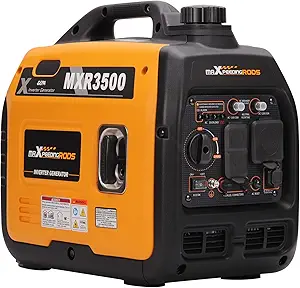
A 3500 watt inverter generator can be a practical middle ground for people who need more power than a small camping generator but do not want the size and fuel consumption of a large conventional portable generator. In 2026, this power class is especially popular for home emergency backup, RV travel, camping, tailgating, and outdoor work.
One important detail is easy to miss when comparing generators: the advertised wattage is often the starting or peak output, not the amount of power the generator can continuously produce. For example, the Champion 3500-Watt inverter generator produces 3,500 starting watts but 2,300 running watts. Other models in this class offer around 3,000 to 3,200 running watts, while some 4,000-watt-class inverter generators provide even more headroom.
That difference matters when you are trying to run a refrigerator, sump pump, microwave, RV air conditioner, or several appliances at the same time.
In this guide, we look at several 3500-watt and closely related inverter generators available for the U.S. market, including the models from the original article. We also explain what to look for in 2026 so you can compare running power, starting power, fuel type, noise, runtime, portability, RV compatibility, and safety features before buying.
3500 Watt Inverter Generator Comparison
| Generator | Starting Watts | Running Watts | Fuel | Approx. Weight | Notable Features |
|---|---|---|---|---|---|
| MaXpeedingrods 3500W | 3,500W | 3,000W | Gasoline | 47 lbs | Lightweight, 30A RV outlet, Eco mode |
| Champion 100571 | 3,500W | 2,300W | Gasoline | 57.8 lbs | CO Shield, 58 dBA, parallel capable |
| Pulsar PGD40ISCO | 4,000W | 3,200W | Gasoline | About 47–51 lbs | Quiet operation, 30A RV outlet |
| Generac iQ3500 | 3,500W class | 3,000W | Gasoline | 109.1 lbs | Electric start, COsense, 30A twist-lock |
| GENMAX GM3500iAED | 3,500W gas | 3,200W gas | Gasoline/Propane | 56.2 lbs | Dual fuel, remote start, CO Alert |
| WEN DF360iX | 3,600W gas | 2,900W gas | Gasoline/Propane | — | Dual fuel, CO Watchdog, TT-30R |
| Westinghouse iGen4000DFc | 4,000W gas | 3,300W gas | Gasoline/Propane | 62.8 lbs | Remote start, 52 dBA, RV ready |
The exact specifications can vary by configuration and manufacturer update, so always verify the current product listing and owner’s manual before purchasing.
Why Choose a 3500 Watt Inverter Generator?
The appeal of this category is its combination of usable power and portability.
A smaller 2,000-watt inverter generator may be excellent for lights, electronics, a refrigerator, or basic camping equipment, but it can run out of capacity quickly when a motor-driven appliance starts. Moving into the 3,000-watt running-power range gives you more room for appliances with higher startup demands.
Current 2026 comparisons also show that buyers looking above the 3,000-watt range are often looking for enough capacity to handle combinations such as a refrigerator plus a pump, additional appliances, or an RV air conditioner.
Running Watts vs. Starting Watts
This is one of the most important specifications to understand.
Running watts are the amount of electricity a generator can continuously produce.
Starting watts, sometimes called surge or peak watts, are the additional short-term power available when an appliance with a motor starts.
For example, a refrigerator may use considerably less power once it is running than it needs for a brief startup surge. The same principle applies to pumps, compressors, air conditioners, and some power tools.
Because of this, don’t choose a generator based only on the largest number printed in the product name.
If your appliances require 2,800 running watts continuously, a generator advertised as “3500 watts” with only 2,300 running watts would not be sufficient, even though its peak rating is higher.
What Can a 3500 Watt Inverter Generator Run?
A generator in this class can be useful for a wide range of smaller emergency and recreational loads.
Depending on the specific model and the starting requirements of your appliances, you may be able to operate combinations such as:
- Refrigerator
- Freezer
- LED lights
- Television
- Wi-Fi router
- Laptop and phone chargers
- Microwave
- Coffee maker
- Small kitchen appliances
- Sump pump
- Battery chargers
- Selected power tools
- RV appliances
- Some RV air conditioners
The key is to calculate the running watts and starting watts of the appliances you want to use at the same time.
Do not assume that a 3500-watt generator can run an entire home. Central air conditioning, electric water heaters, electric ranges, large well pumps, electric dryers, and other high-demand equipment can quickly exceed the capacity of a portable inverter generator.
For whole-home backup, you may need a larger generator or a professionally designed standby-generator system.
1. MaXpeedingrods 3500 Watt Portable Inverter Generator
The MaXpeedingrods 3500 Watt Portable Inverter Generator remains an interesting option for buyers who prioritize portability and usable output.
The model is commonly listed with 3,500 starting watts and 3,000 running watts, while its approximately 47-pound weight makes it significantly easier to move than many larger inverter generators.
That combination is particularly useful for camping and RV owners who need more than a compact 2,000-watt generator but don’t want to transport an extremely heavy unit.
Its inverter design provides clean power for common electronics, while Eco mode can reduce engine speed when electrical demand is lower. The generator also includes a 30-amp RV connection, which makes it more practical for recreational use.
One trade-off is that lightweight generators generally have smaller fuel tanks than heavier models. That means maximum runtime depends heavily on the electrical load.
For someone comparing generators primarily around portability, the 47-pound design is one of its most noticeable advantages. Current 2026 RV-focused comparisons continue to list this model among the generators competing in the 3500-watt class.
Best suited for: camping, RV travel, emergency essentials, and buyers who want a relatively lightweight generator.
2. Champion Power Equipment 3500-Watt Portable Inverter Generator
The Champion Power Equipment 100571 is a good example of why shoppers should look beyond the “3500-watt” name.
It produces 3,500 starting watts but 2,300 running watts. The generator uses gasoline and has a 1.2-gallon fuel tank, with Champion listing up to 10 hours of runtime at 25% load. It also operates at approximately 58 dBA from 23 feet.
One of its main features is CO Shield, which automatically shuts down the generator when dangerous carbon monoxide levels are detected around the unit. Champion also includes an EZ Start Dial, Economy Mode, low-oil shutdown, and less-than-3% THD clean power.
The generator is parallel capable with the appropriate Champion parallel kit, giving users the option to combine compatible units when more capacity is needed.
The main limitation is its 2,300-watt running capacity. Although the 3,500-watt starting figure sounds impressive, buyers with heavier continuous loads should compare the running-watt rating against their actual requirements.
Best suited for: camping, tailgating, basic RV power, and essential home backup where 2,300 running watts is enough.
3. Pulsar PGD40ISCO Ultra Light Quiet 4000W Inverter Generator
The Pulsar PGD40ISCO sits slightly above the traditional 3500-watt category, but it is worth including because its output is closely aligned with what many shoppers are actually looking for when they search for a higher-output inverter generator.
The PGD40ISCO is rated at 4,000 starting watts and 3,200 running watts on gasoline. Consumer Reports also lists the model at 3,200 watts for gasoline and reports strong power delivery and clean power quality in its testing.
This extra running capacity can make a meaningful difference if you need to operate several appliances at once.
It is also designed with portability in mind, making it more practical for RV use, camping, and other situations where moving a large generator is inconvenient.
One thing to keep in mind is that the 4,000-watt label refers to peak output. Its 3,200-watt running rating is the number that matters when calculating the continuous load you can place on the generator.
The manufacturer manual also emphasizes that generators must be used outdoors and that users should follow all operating and safety instructions.
Best suited for: RVs, camping, home emergency loads, and buyers who want more continuous power than a typical 2,300-watt inverter generator.
4. Generac iQ3500 Portable Inverter Generator
Generac’s iQ3500 takes a different approach from some lightweight suitcase-style generators.
The unit provides approximately 3,000 running watts, uses a 2.6-gallon fuel tank, and features electric start. Generac lists up to 8.9 hours of runtime at 50% load.
It also features COsense technology, which is designed to provide carbon monoxide protection, along with an LCD display that can show information such as wattage, remaining runtime, fuel level, generator status, and operating hours.
The iQ3500 also has a 30A twist-lock outlet and parallel capability, allowing two compatible units to be connected using the appropriate kit.
The biggest consideration is weight. At approximately 109 pounds, this generator is much heavier than the 47-pound MaXpeedingrods or 56.2-pound GENMAX.
That makes it less attractive if you regularly carry your generator by yourself, but the larger physical design and feature set may appeal to users who prioritize electric starting, monitoring, and a more substantial portable unit.
Best suited for: home backup, jobsites, RV use, and buyers who prioritize electric start and generator monitoring over minimum weight.
5. GENMAX GM3500iAED Dual-Fuel Inverter Generator
The GENMAX GM3500iAED is one of the more flexible options in this group because it can operate on gasoline or propane.
On gasoline, GENMAX lists 3,500 starting watts and 3,200 running watts. On propane, output drops to 3,100 starting watts and 2,800 running watts. The unit weighs approximately 56.2 pounds and uses a 1.7-gallon gasoline tank.
It also includes electric and recoil starting, remote start, an LCD control center, CO Alert, and parallel capability.
The dual-fuel design is particularly useful for emergency preparedness. Gasoline can provide the higher output, while propane gives you another fuel option when gasoline availability becomes an issue.
GENMAX also lists the generator as capable of connecting two compatible GM3500iAED units together, potentially providing up to 7,000 peak watts and 6,400 running watts when configured correctly.
One important point is that this particular model is listed by GENMAX as EPA certified but not CARB compliant, so California buyers should verify applicable requirements before purchasing.
Best suited for: emergency backup, RV use, camping, and buyers who want gasoline/propane flexibility.
Two More 2026 Alternatives Worth Considering
The 3500-watt category has become broader than it was when the original article was written. Some newer models don’t have exactly “3500 watts” in the product name but are close enough in output to deserve consideration.
WEN DF360iX
The WEN DF360iX is a dual-fuel inverter generator designed for RV and outdoor use.
On gasoline, it produces 3,600 surge watts and 2,900 rated watts. On propane, it provides 3,500 surge watts and 2,600 rated watts.
WEN also includes a TT-30R RV receptacle, CO Watchdog shutdown protection, fuel shutoff, two 120V receptacles, USB ports, and a three-year warranty. WEN lists noise at approximately 65 dBA at quarter load.
This makes it particularly interesting for RV owners who want dual-fuel capability without moving into a much larger generator.
Westinghouse iGen4000DFc
If you need more continuous capacity, the Westinghouse iGen4000DFc moves into the 4,000-watt class.
It produces 4,000 peak/3,300 running watts on gasoline and 3,600 peak/2,970 running watts on propane. It also includes remote and electric start, a TT-30R RV outlet, CO shutdown, and a digital display.
Westinghouse lists noise as low as 52 dBA, along with up to seven hours of gasoline runtime at 25% load. The unit weighs approximately 62.8 pounds.
For buyers who initially search for a 3500-watt generator because they want more power than a small inverter, this type of 4,000-watt-class model can be worth comparing.
How to Choose the Right 3500 Watt Inverter Generator
Before buying, focus on these specifications rather than the wattage printed in the product name.
1. Check Running Watts First
Running watts determine how much power the generator can continuously supply.
Make a list of everything you want to run simultaneously and add the running wattage.
Then account for the startup surge of motor-driven appliances.
2. Check Starting Watts
Refrigerators, freezers, pumps, air conditioners, and power tools may require additional starting power.
A generator with 3,500 peak watts and 2,300 running watts is not equivalent to one producing 3,500 running watts.
3. Consider Dual Fuel
A gasoline-only generator can be perfectly practical, but a dual-fuel model gives you another option.
Propane is particularly useful for emergency preparedness because you can store propane cylinders for extended periods without relying solely on fresh gasoline.
The trade-off is that propane typically produces less power than gasoline on the same dual-fuel generator.
4. Look for an RV-Ready Outlet
If you’re buying for an RV, check the outlet configuration.
A TT-30R 30-amp RV outlet can be much more convenient than relying on adapters. Not every 3500-watt inverter generator includes one, so this should be checked before purchase.
5. Compare Noise Ratings Carefully
Noise measurements are only useful when you know the testing conditions.
A generator advertised at 52 or 58 dBA may be measured at a particular distance and load. Actual sound levels can increase as the generator works harder.
If you’re camping, staying in an RV park, or using the generator near neighbors, also check the campground or community’s generator operating rules.
6. Consider Weight
A 47-pound generator and a 109-pound generator may have similar marketing wattage but provide very different ownership experiences.
If you expect to load the generator into a truck, move it around a campsite, or set it up alone, weight becomes an important factor.
7. Check CO Safety Features
A carbon monoxide shutdown system is a useful safety feature, but it does not make indoor generator operation safe.
CPSC and CDC guidance remains clear: portable generators should be operated outdoors and at least 20 feet from the home, with exhaust directed away from doors, windows, and vents.
Are 3500 Watt Inverter Generators Good for Home Backup?
They can be very useful for essential-load backup, but expectations need to be realistic.
A 3500-watt-class inverter generator can potentially keep a refrigerator, lights, internet equipment, television, chargers, and selected small appliances operating, provided their combined running and starting requirements remain within the generator’s limits.
It is not automatically capable of powering every electrical circuit in a typical American home.
If you want to connect a portable generator to household wiring, use the equipment and installation method specified by the manufacturer and applicable local electrical requirements. A properly installed transfer switch or other approved connection method may be necessary. Never attempt to backfeed a home’s electrical system through a standard wall outlet.
For larger homes or high-demand electrical loads, a higher-output portable generator or permanently installed standby system may be more appropriate.
Are 3500 Watt Inverter Generators Good for RVs?
This is one of the strongest use cases for this size category.
An inverter generator around 3,000 running watts can provide enough capacity for many RV setups, but the answer depends heavily on the RV’s air conditioner and other appliances.
For example, an RV air conditioner can create a substantial startup surge. If you’re also running a microwave, refrigerator, converter, or coffee maker, the combined load may approach the generator’s limit.
That’s why running watts, starting watts, and the RV outlet configuration should all be checked before choosing a model.
A TT-30R outlet can also make an RV-ready generator much more convenient than one designed primarily around standard household receptacles.
Safety Tips for Using a Portable Inverter Generator
Carbon monoxide is one of the most important safety concerns with gasoline and propane generators.
Follow these basic rules every time you use one:
- Operate the generator outdoors only.
- Keep it at least 20 feet away from the home and other occupied buildings.
- Point the exhaust away from doors, windows, and vents.
- Never operate a portable generator inside a house, garage, basement, shed, or other enclosed space.
- Do not assume opening a garage door or window makes generator operation safe.
- Install working carbon monoxide alarms in your home.
- Never refuel a hot or running generator.
- Keep fuel away from ignition sources and follow the manufacturer’s storage instructions.
- Keep the generator dry and follow the manufacturer’s instructions for wet-weather operation.
- Read the owner’s manual before the first use.
The CDC specifically recommends operating generators more than 20 feet from windows, doors, and vents, while CPSC also warns against using portable generators on porches or in carports because they can be too close to the home.
A CO shutdown system such as Champion CO Shield, Generac COsense, or GENMAX CO Alert adds another layer of protection, but it should never be treated as permission to operate the generator indoors.
Maintenance Tips for a 3500 Watt Inverter Generator
A generator that sits unused for months still needs maintenance.
Follow the maintenance intervals in the manufacturer’s owner’s manual, paying particular attention to:
Change the Oil as Recommended
Engine oil protects the internal components and should be changed according to the manufacturer’s hours-based schedule.
The correct oil type can also vary by model and operating temperature.
Manage Stored Fuel
Gasoline can deteriorate during long-term storage. If the generator will sit unused for an extended period, follow the manufacturer’s fuel-storage procedure and use fuel stabilizer when recommended.
Inspect the Air Filter
A dirty air filter can reduce engine performance and increase fuel consumption.
Inspect it periodically and clean or replace it according to the manual.
Check the Spark Plug
A worn or fouled spark plug can cause hard starting and poor engine performance.
Include it in your regular maintenance routine.
Test the Generator Before an Emergency
Don’t wait until the power goes out to discover that the battery is dead, fuel is stale, or the generator won’t start.
Periodic testing gives you an opportunity to identify problems while there is still time to fix them.
Final Thoughts
A 3500 watt inverter generator can be an excellent choice when you need a balance between portable size and useful electrical output. But the number printed on the generator is only part of the story.
For 2026, shoppers should compare running watts, starting watts, fuel type, noise level, runtime, weight, RV compatibility, CO protection, and starting method rather than choosing a generator based solely on its advertised peak wattage.
The MaXpeedingrods model stands out for its relatively low weight and 3,000-watt running capacity, while the Champion 100571 emphasizes quiet operation and CO Shield safety. The Generac iQ3500 provides electric start and a 3,000-watt running rating, while the GENMAX GM3500iAED adds dual-fuel flexibility with up to 3,200 running watts on gasoline. The Pulsar PGD40ISCO and newer 4,000-watt-class options provide additional headroom for buyers who need more continuous power.
For RV owners, the presence of a 30-amp RV outlet can be just as important as the wattage rating. For emergency preparedness, dual-fuel capability can provide additional flexibility. And for any gasoline or propane generator, safe outdoor placement remains non-negotiable.
Most importantly, calculate your actual electrical load before buying. A properly sized inverter generator should provide enough running power for your essential equipment while leaving sufficient capacity for startup surges. That approach will give you a much more realistic idea of which generator fits your home, RV, camping setup, or emergency backup needs in 2026.