As an Amazon Associate I earn from qualifying purchases.
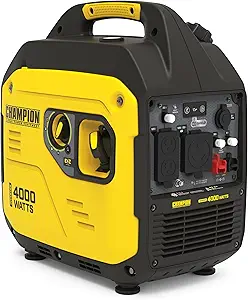
When you need portable power for an RV, campsite, tailgate, workshop, or a few essential appliances during a power outage, a 4000 watt inverter generator can be a very useful middle ground.
These generators are generally easier to transport than larger open-frame units, while inverter technology provides stable power for electronics such as laptops, televisions, chargers, and other sensitive equipment. Depending on the model, you can also get features such as dual-fuel operation, RV-ready outlets, CO shutoff protection, parallel capability, remote start, and economy modes.
One important detail is easy to overlook: a generator advertised as a 4000 watt generator does not necessarily provide 4,000 watts continuously. In this class, 4,000 watts is often the starting or peak rating, while the continuous output may be closer to 3,000–3,500 watts.
That difference matters when you’re deciding whether a generator can run an RV air conditioner, refrigerator, microwave, power tools, or several household appliances at the same time.
Below are five 4000-watt inverter generators from the models in the original list, followed by a practical buying guide to help you choose the right type for your needs.
Top 4000-Watt Inverter Generators for 2026
| Generator | Fuel | Approx. Running Output | Best For |
|---|---|---|---|
| Champion 4000W RV Ready Inverter | Gasoline | Model-dependent | RVs and portable power |
| Champion 4000W Dual Fuel Inverter | Gasoline/Propane | Model-dependent | Fuel flexibility |
| Pulsar PGD40iSCO | Gasoline | 3,200W | Lightweight RV and camping use |
| Pulsar GD400BN | Gasoline/Propane | 3,200W gas | Compact dual-fuel power |
| Westinghouse 4000W Dual Fuel Inverter | Gasoline/Propane | Up to 3,300W gas | Remote start and convenience |
Important: Generator specifications can change between model revisions and Amazon listings. Always verify the exact model number, running watts, outlet configuration, and current specifications before purchasing.
Champion 4000W RV Ready Inverter Generator
Check Amazon Price Click Here!
The Champion 4000W RV Ready Inverter Generator is designed for people who want a relatively compact inverter generator with an RV-friendly configuration and enough output for common camping, tailgating, and emergency-power applications.
One of the most important things to check before buying is the distinction between starting watts and running watts. Champion’s current 4000-watt inverter models can be rated at 4,000 starting watts and 3,000 running watts, rather than 4,000 watts continuously.
That makes the generator better suited to moderate electrical loads than to trying to power an entire house.
Key Features
- Up to 4,000 starting watts, depending on the exact model
- Around 3,000 running watts on current 4000W inverter configurations
- 120V RV-ready TT-30R outlet
- Less than 3% THD on applicable Champion inverter models
- Parallel capability on compatible models
- Economy mode for reduced fuel consumption and noise
- CO protection on current CO Shield-equipped versions
- 3-year limited warranty on the current Champion 100809 configuration
Why Consider It?
This type of Champion inverter generator makes sense for an RV owner, camper, or homeowner who needs portable power for a limited number of essential loads.
The built-in TT-30R outlet is particularly useful for RV owners because it allows a compatible RV to connect directly without relying on an adapter.
However, don’t assume that a 4,000-watt label means you can operate every appliance simultaneously. A rooftop air conditioner, microwave, refrigerator, coffee maker, and other loads can quickly approach the generator’s continuous capacity.
Champion 4000W Dual Fuel Inverter Generator
Check Amazon Price Click Here!
A dual-fuel 4000 watt inverter generator gives you an advantage that gasoline-only models cannot: you can choose between gasoline and propane depending on availability and the situation.
That can be especially useful during extended power outages. Gasoline is convenient when you need maximum output and quick refueling, while propane can be stored for longer periods when properly handled.
Champion currently offers several 4000-watt dual-fuel inverter configurations, so specifications vary by model. For example, Champion’s model 201422 is rated at 4,000 starting/3,000 running watts on gasoline and 4,000 starting/2,700 running watts on propane.
Key Features to Look For
- Gasoline and propane operation
- Inverter technology
- RV-ready configurations on compatible models
- Parallel capability on compatible models
- CO protection on applicable versions
- Low-oil shutdown
- Less than 3% THD on compatible inverter models
- 3-year limited warranty on many current Champion portable generators
Why Consider It?
The biggest advantage is fuel flexibility.
If you’re building an emergency-power setup, having two fuel options can be more practical than relying entirely on gasoline. Propane also has a longer storage life than gasoline when stored correctly.
Keep in mind that propane normally produces less running wattage than gasoline on many portable dual-fuel generators. That means you should use the propane rating—not the gasoline rating—when calculating the load you intend to operate.
Pulsar PGD40iSCO 4000-Watt Inverter Generator
Check Amazon Price Click Here!
The Pulsar PGD40iSCO is one of the most interesting options in this group if portability is a major concern.
Pulsar lists the generator at 4,000 peak watts and 3,200 rated watts, with a 145cc engine, a one-gallon fuel tank, and a weight of approximately 47 pounds. It also includes a 120V 30A RV outlet and two 120V 20A outlets.
The compact design makes it considerably easier to move than many larger portable generators.
Key Features
- 4,000 peak watts
- 3,200 rated watts
- 145cc four-stroke OHV engine
- Gasoline operation
- Approximately 47 pounds
- 1-gallon fuel tank
- Up to 4.5 hours at 50% load
- 120V 30A RV outlet
- Two 120V 20A outlets
- CO shutdown protection
- Parallel capability
- Approximately 59–60 dB depending on the published specification/version
- 3-year limited warranty
Why Consider It?
If you want a 4000 watt inverter generator that is easier to move, the Pulsar is worth considering.
At roughly 47 pounds, it is considerably more manageable than many traditional open-frame generators. That’s useful when you’re loading equipment into an RV, moving the generator around a campsite, or storing it between uses.
Its 3,200-watt rated output is also important. The generator has more continuous capacity than models that advertise 4,000 peak watts but provide only 3,000 running watts.
For RV use, however, you should still calculate the starting and running requirements of your air conditioner and other appliances before relying on it.
Pulsar GD400BN Dual Fuel Inverter Generator
Check Amazon Price Click Here!
The Pulsar GD400BN takes the compact format of a small inverter generator and adds gasoline and propane capability.
Pulsar rates the GD400BN at 4,000 peak watts and 3,200 running watts on gasoline. On propane, the published rating is 3,700 peak watts and 3,000 running watts. It uses a one-gallon gasoline tank and weighs about 47 pounds.
Key Features
- 4,000 peak watts on gasoline
- 3,200 running watts on gasoline
- 3,700 peak watts on propane
- 3,000 running watts on propane
- Gasoline and propane operation
- 145cc four-stroke OHV engine
- Recoil start
- 1-gallon fuel tank
- Approximately 47 pounds
- 120V operation
- RV-ready configuration
- Parallel capable
- Automatic low-oil shutdown
- 3-year warranty
Why Consider It?
This model is particularly interesting for buyers who want dual fuel without moving up to a much larger generator.
The 47-pound weight is a major advantage for camping and RV use. The compact dimensions also make storage easier when garage or RV storage space is limited.
One thing to remember is the noise specification. Pulsar lists the GD400BN at approximately 68 dB at full load, so it should not automatically be considered one of the quietest 4000-watt generators simply because it uses inverter technology.
For buyers who prioritize portability and fuel flexibility over ultra-quiet operation, this can be a practical option.
Westinghouse 4000W Dual Fuel Inverter Generator
Check Amazon Price Click Here!
The Westinghouse 4000W Dual Fuel Inverter Generator is aimed at buyers who want more convenience features in addition to portable inverter power.
The current Westinghouse iGen4000DFc configuration provides 4,000 peak watts and 3,300 running watts on gasoline, while propane output is rated at 3,600 peak watts and 2,970 running watts. It also includes dual-fuel capability, remote start, push-button start, an LED data center, and a TT-30R RV outlet.
Key Features
- 4,000 peak watts on gasoline
- 3,300 running watts on gasoline
- 3,600 peak watts on propane
- 2,970 running watts on propane
- Gasoline or propane
- Remote key-fob start
- Push-button electric start
- TT-30R RV-ready outlet
- Two 120V 20A household outlets
- USB ports
- LED data center
- Less than 3% THD
- Automatic low-oil shutdown
- Automatic CO shutdown
- Wheels and telescoping handle
- Approximately 62.8 pounds
- 3-year limited warranty
Why Consider It?
The main reason to choose this Westinghouse is convenience.
The remote start can be useful when the generator is positioned outside during an outage or when you don’t want to walk outside every time you need to start it.
The LED display is also helpful because it can provide information such as output, voltage, fuel level, runtime, and accumulated operating hours.
The tradeoff is weight. At roughly 63 pounds, it is significantly heavier than the two compact Pulsar models.
What Can a 4000-Watt Inverter Generator Actually Run?
This is one of the most important questions to answer before buying.
A generator’s running wattage tells you how much electrical load it can continuously support. The starting or surge wattage is available for a short period to help motors and compressors start.
A small 4000-watt inverter generator may be capable of running combinations such as:
- Refrigerator
- Freezer
- LED lights
- Television
- Wi-Fi router
- Laptop
- Phone chargers
- Small microwave
- Coffee maker
- Small power tools
- Some RV appliances
- One RV air conditioner, depending on its starting requirements
You cannot simply add the wattage printed on every appliance and assume the generator will handle everything simultaneously.
Motors and compressors can require significantly more power during startup.
For example, an RV air conditioner may have a moderate running load but require a substantially higher startup surge. A soft-start device can reduce startup demand on some air-conditioning systems, but compatibility should always be checked before installation.
Can a 4000-Watt Inverter Generator Run an RV Air Conditioner?
In many cases, yes—but the answer depends on the air conditioner and the generator’s running and starting wattage.
A 13,500 BTU RV air conditioner is generally easier to start than a larger 15,000 BTU unit, but the actual electrical requirements vary by manufacturer and model.
You should check:
- The air conditioner’s running amps.
- Its starting requirements.
- The generator’s rated running watts.
- The generator’s peak starting watts.
- What other appliances will be running at the same time.
- Whether an approved soft-start system is installed.
The goal is to leave enough capacity for startup surges instead of running the generator at its maximum continuously.
4000 Starting Watts vs. 4000 Running Watts
This distinction deserves special attention.
Starting watts are the extra watts available for a short period when equipment with electric motors starts.
Running watts are the amount of power the generator is designed to provide continuously.
For example, a generator rated:
- 4,000 starting watts
- 3,000 running watts
should be treated as a 3,000-watt continuous generator, not a 4,000-watt continuous generator.
This is why comparing only the large number on the product title can lead to the wrong purchase.
If your appliances require 3,200 watts continuously, a generator rated at 4,000 peak/3,000 running watts is not large enough, even though the product is marketed as a “4000 watt generator.”
How Much Noise Should You Expect?
Noise is another major difference between generator models.
A generator’s noise rating should always be considered alongside the measurement distance and operating load.
For example, Champion lists 64 dBA at 23 feet for its current 4000W inverter configuration, while Pulsar lists the PGD40iSCO around 59–60 dB depending on the published specification. The Pulsar GD400BN is listed at 68 dB at full load.
Also remember that a generator normally becomes louder as the electrical load increases.
If you are using a generator in an RV campground, quiet operation can be nearly as important as wattage.
Gasoline vs. Dual Fuel: Which Is Better?
There isn’t one answer for everyone.
Gasoline
Gasoline makes sense when:
- You need the highest available output.
- Gasoline is easy to obtain locally.
- You frequently use the generator.
- You want simple fuel management.
Propane
Propane can make sense when:
- You already store propane at home.
- You want fuel with a longer storage life.
- You’re preparing for extended outages.
- You prefer having an alternative to gasoline.
Dual Fuel
A dual-fuel inverter generator gives you the most flexibility because you can choose between gasoline and propane.
The important catch is that propane output is often lower than gasoline output. Always use the manufacturer’s propane running-watt rating when planning your electrical loads.
Why Inverter Technology Matters
Traditional generators and inverter generators are not the same.
An inverter generator produces electricity through an electronic inverter system that helps provide stable output. This makes inverter generators particularly attractive for modern electronics.
Many current models in this category advertise less than 3% THD, making them suitable for electronics such as:
- Laptops
- Televisions
- Phones
- Tablets
- Routers
- Battery chargers
Inverter generators also commonly use an economy mode that adjusts engine speed according to electrical demand.
That can reduce fuel consumption and noise when the generator isn’t operating under a heavy load.
What About Parallel Capability?
Some 4000-watt inverter generators can be connected to another compatible generator using a parallel kit.
This can be useful when your power requirements grow beyond the capacity of a single unit.
However, parallel capability does not mean you can automatically connect any two inverter generators.
The generators and parallel kit must be compatible with each other, and you should follow the manufacturer’s instructions.
For occasional RV use, one generator may be enough. For higher loads, parallel-capable models give you a potential upgrade path.
Important Safety Considerations
Portable generators produce carbon monoxide, an invisible and potentially fatal gas.
Never operate a gasoline or propane generator inside a house, garage, basement, shed, RV, or other enclosed or partially enclosed space.
Do not place the generator near doors, windows, or ventilation openings where exhaust could enter the building.
Modern models may include automatic CO shutdown systems, such as Champion CO Shield or Westinghouse CO protection. These features provide an additional safety measure, but they do not make indoor operation safe.
When using a generator for home backup, have any permanent connection installed according to local electrical requirements by a qualified professional. Do not attempt to backfeed a home through a standard wall outlet.
How to Choose the Right 4000-Watt Inverter Generator
Before buying, consider these factors.
1. Running Watts
Start with running watts, not the large peak number in the product title.
Determine the continuous wattage of the appliances you actually plan to operate.
2. Starting Watts
Add the startup requirements of refrigerators, freezers, pumps, compressors, air conditioners, and power tools.
3. Fuel Type
If you want maximum flexibility, consider dual fuel.
If simplicity and lower weight are more important, a gasoline-only model may be enough.
4. RV Outlet
For RV use, look for a built-in TT-30R 30-amp outlet.
This can be much more convenient than using adapters.
5. Noise
Check the manufacturer’s dBA rating and, importantly, the distance used for the measurement.
6. Weight
If you need to load the generator into a truck or move it around a campsite by yourself, weight matters.
The Pulsar models in this list are around 47 pounds, while the Westinghouse iGen4000DFc is around 63 pounds.
7. CO Protection
Look for a generator with an automatic carbon monoxide shutdown system.
8. Warranty and Support
A portable generator contains an engine and electrical components, so warranty coverage and access to technical support are worth considering before purchase.
Frequently Asked Questions
Is a 4000-watt inverter generator enough for a house?
Usually not for the entire house. A generator in this class is better suited to essential loads, such as a refrigerator, freezer, lights, internet equipment, television, and selected small appliances.
You need to calculate your actual running and starting loads before deciding what can operate simultaneously.
Can a 4000-watt inverter generator run a refrigerator?
Yes. Most refrigerators use relatively modest running power, but the compressor can require additional starting power.
You should still account for the refrigerator’s startup demand when other appliances are connected.
Can a 4000-watt generator run a microwave?
In many cases, yes. However, microwave ovens can use substantial electrical power, so you should consider what else is running at the same time.
A microwave plus an RV air conditioner, refrigerator, and other loads may exceed the generator’s continuous capacity.
Can a 4000-watt generator run a 15,000 BTU RV AC?
It depends on the specific air conditioner and its startup requirements.
A generator with 4,000 peak watts and only 3,000 running watts may have limited headroom. A soft-start device may reduce the startup demand on compatible AC systems.
Always compare the AC manufacturer’s electrical specifications with the generator’s ratings.
Are inverter generators quieter than conventional generators?
Generally, inverter generators are designed to operate more efficiently and can be quieter, especially at lighter loads.
However, not every inverter generator is equally quiet. Always compare the manufacturer’s dBA rating and the conditions under which it was measured.
Is dual fuel worth it on a 4000-watt inverter generator?
For many emergency-preparedness and RV users, yes.
Dual fuel gives you the option of gasoline or propane. The main disadvantage is that propane usually produces slightly less power than gasoline, so check both ratings before buying.
How long will a 4000-watt inverter generator run?
Runtime depends on the fuel tank size, fuel type, generator model, and electrical load.
Manufacturer runtime figures are commonly measured at a relatively low load, such as 25% or 50%. Running a generator near its maximum output will reduce runtime considerably.
Can I connect a 4000-watt inverter generator to my house?
You should never connect a portable generator to a home’s electrical system by plugging it into a wall outlet.
A properly installed transfer switch or other code-compliant connection method may be used for home backup, depending on the generator and local electrical requirements. Have the installation handled by a qualified electrician.
Final Thoughts on 4000-Watt Inverter Generators in 2026
A 4000 watt inverter generator can be an excellent choice when you need more capability than a small camping generator but don’t want the size and weight of a large open-frame unit.
For RV owners, the most important features are usually a 30-amp TT-30R outlet, adequate running watts, manageable weight, and enough starting capacity for the air conditioner.
For emergency preparedness, dual fuel can be particularly useful because it gives you gasoline and propane as fuel options.
For campers and tailgaters, weight and noise may matter more than maximum output.
The Pulsar PGD40iSCO stands out for its compact approximately 47-pound design and 3,200-watt rated output. The Pulsar GD400BN adds dual-fuel capability while maintaining a similar compact footprint.
The Champion options are worth considering when RV compatibility, parallel capability, CO protection, and established support are priorities. Current Champion 4000W inverter specifications show why it’s important to look at running watts rather than relying only on the 4,000-watt headline figure.
The Westinghouse option is particularly appealing if you value dual fuel, remote start, an LED data center, and RV-ready connectivity in one package.
Before purchasing, don’t simply choose the generator with the largest number on the box. Make a list of the appliances you actually need to run, calculate both running watts and starting watts, check the outlet configuration, and consider fuel availability, noise, weight, and CO safety features.
That approach will give you a much better chance of choosing a 4000-watt inverter generator that actually fits the way you plan to use it in 2026.