As an Amazon Associate I earn from qualifying purchases.
If you’re looking for a fuel injected generator in 2026, there is an important detail to understand before you buy: not every generator advertised as a premium, fuel-efficient, or advanced model actually uses electronic fuel injection (EFI).
Fuel injection is still relatively uncommon in portable gasoline generators, especially compared with traditional carbureted engines. The technology can offer easier starting, eliminate the need for a manual choke, and reduce some of the fuel-related problems associated with carburetors. However, EFI also tends to come with a higher purchase price and does not automatically make a generator the best choice for every application.
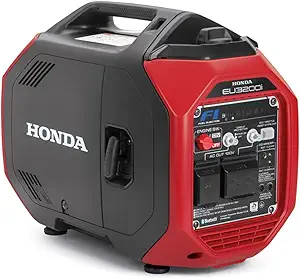
Among portable generators, the Honda EU3200i stands out as a genuine fuel-injected inverter generator. Honda also offers the larger EU7000iS, which combines electronic fuel injection with inverter technology and 120/240V output.
The other generators included in this guide are worth considering because they offer substantially more power, dual- or tri-fuel flexibility, and strong home-backup features—but they should not be confused with fuel-injected models.
If your priority is specifically EFI, start with the Honda models. If your priority is maximum wattage, multiple fuel options, or whole-home backup capability, a conventional carbureted generator may actually make more sense.
Quick Comparison: Fuel-Injected and High-Power Alternatives
| Generator | Fuel System | Power | Fuel Type | Best For |
|---|---|---|---|---|
| Honda EU3200i | EFI | 3,200W max / 2,600W rated | Gasoline | RVs, camping, quiet backup |
| Honda EU7000iS | EFI | 7,000W max / 5,500W rated | Gasoline | Larger backup loads |
| WEN DF680iX | Carbureted | 6,800W max | Gasoline / Propane | RV and home backup |
| Westinghouse 14,500W Tri-Fuel | Carbureted | 14,500W peak | Gas / Propane / Natural Gas | Large-home backup |
| WEN TF1450X | Carbureted | 14,500W peak | Gas / Propane / Natural Gas | High-output backup |
| Westinghouse 13,500W Dual Fuel | Carbureted | 13,500W peak | Gasoline / Propane | Home backup |
Important: Fuel injection is only one part of generator performance. Rated wattage, starting wattage, voltage, fuel availability, noise, runtime, CO protection, and intended application are equally important.
1. Honda EU3200i: Best Compact Fuel-Injected Generator
Check Amazon Price Click Here!
The Honda EU3200i is one of the most compelling choices if you specifically want a compact generator with electronic fuel injection.
Its Honda GX130 engine uses EFI instead of a conventional carburetor. Honda says the system eliminates the need for a choke and helps reduce fuel-related carburetor problems. The generator also uses Honda inverter technology, making it suitable for electronics and other equipment that benefits from stable power.
Key Features
- Maximum output: 3,200 watts
- Rated output: 2,600 watts
- Engine: Honda GX130
- Fuel system: Electronic fuel injection
- Fuel: Gasoline
- Voltage: 120V
- Fuel tank: 1.2 gallons
- Runtime: Up to 8.6 hours at 1/4 load
- Noise: 54 dB(A) at 1/4 load; 58 dB(A) at rated load
- Weight: 59.1 pounds
- Starting: Recoil
- CO protection: CO-MINDER
- Technology: Honda inverter technology
- Connectivity: Honda My Generator app with Bluetooth
Honda’s published specifications confirm the 3,200-watt maximum output, 2,600-watt rated output, 59.1-pound dry weight, 1.2-gallon tank, and 8.6-hour runtime at 1/4 load.
Why the EU3200i Stands Out
The biggest advantage isn’t simply fuel economy. It’s the combination of EFI, inverter technology, compact size, quiet operation, and easy starting.
Because there is no conventional carburetor and no manual choke, the starting procedure is simpler. This can be particularly useful for RV owners and homeowners who keep a generator stored for emergency use.
The EU3200i also produces enough power to handle many RV air-conditioning applications, although you should always verify the starting and running wattage of your particular equipment.
Best For
- RV owners
- Camping
- Tailgating
- Emergency essentials
- Electronics
- Smaller home backup loads
- Buyers who specifically want EFI
The Main Drawback
The biggest disadvantage is price. Honda generators command a premium, and the EU3200i does not provide the same raw output as the large 10,000- to 15,000-watt generators in this guide.
If you need 240V power or want to run several large household loads simultaneously, you’ll need to look at a larger generator.
2. Honda EU7000iS: Best Fuel-Injected Generator for Larger Loads
If you want the advantages of fuel injection but need substantially more power than the EU3200i provides, the Honda EU7000iS deserves serious consideration.
Honda’s EU-series documentation identifies both the EU3200i and EU7000iS as fuel-injected models. The EU7000iS combines EFI with inverter technology, electric start, Eco Throttle, and 120/240V capability.
Key Features
- Maximum output: 7,000 watts
- Rated output: 5,500 watts
- Fuel system: Electronic fuel injection
- Fuel: Gasoline
- Voltage: 120/240V
- Starting: Electric start
- Runtime: Up to 16 hours
- Noise: Approximately 52–58 dB(A)
- Technology: Inverter
- CO protection: CO-MINDER
- Connectivity: Honda My Generator app
The EU7000iS is much larger and heavier than the EU3200i, but it fills an important gap for buyers who want EFI without moving to a large conventional generator.
Why Choose the EU7000iS?
The EU7000iS makes more sense when your power requirements extend beyond camping and basic RV loads.
It can be a strong choice for:
- Home backup
- Larger RVs
- Refrigerators and freezers
- Sump pumps
- Selected HVAC loads
- Tools and equipment
- Sensitive electronics
- Backup applications where quiet operation matters
Its 120/240V output also makes it considerably more versatile for home-backup applications than a small 120V-only inverter generator.
Best For
Homeowners who want fuel injection, inverter power, quiet operation, and substantially more capacity than the EU3200i.
The downside is straightforward: it is expensive, heavy, and still limited compared with the largest 12,000- to 15,000-watt conventional generators.
3. WEN DF680iX: Best Budget High-Power Alternative
Check Amazon Price Click Here!
The WEN DF680iX is an important alternative if you want more power and dual-fuel capability but don’t necessarily require EFI.
Despite the original version of this article listing it as fuel injected, the DF680iX uses a carburetor. WEN sells a replacement carburetor specifically for this model.
That distinction matters because someone searching specifically for a fuel-injected generator should not purchase this model expecting EFI technology.
Key Features
- Maximum output: Up to 6,800 watts
- Fuel: Gasoline or propane
- Type: Inverter generator
- Starting: Electric start
- Application: RV and backup power
- Safety: CO Watchdog
- Design: Portable
Why Consider It?
The DF680iX makes sense for buyers whose priorities are power, dual-fuel flexibility, and inverter technology rather than fuel injection.
Having gasoline and propane available gives you additional flexibility during extended outages. Propane can also be attractive for long-term storage because it doesn’t deteriorate in the same way gasoline can.
Best For
- RV owners
- Home backup
- Emergency preparedness
- Buyers who want dual fuel
- People who need more power than a 3,200-watt inverter
Why It Isn’t a Fuel-Injected Generator
This is where the original article needed a major correction.
The DF680iX should be considered a carbureted dual-fuel inverter generator, not an EFI generator.
If fuel injection is your primary buying criterion, choose an actual EFI model such as the Honda EU3200i instead.
4. Westinghouse 14,500W Tri-Fuel Generator: Best for Maximum Fuel Flexibility
Check Amazon Price Click Here!
This Westinghouse generator is aimed at a completely different buyer from the Honda EU3200i.
The linked product is a 14,500-watt peak tri-fuel generator that can operate on gasoline, propane, or natural gas. Amazon currently identifies it as a Westinghouse 14,500 Peak Watt Tri-Fuel Home Backup Portable Generator with remote electric start and transfer-switch readiness.
It is not an EFI generator, so it should not be selected if electronic fuel injection is the deciding factor.
Key Features
- Peak output: Up to 14,500 watts
- Fuel: Gasoline, propane, and natural gas
- Type: Conventional portable generator
- Starting: Electric and remote start
- Output: 120/240V
- Application: Home backup
- Transfer-switch ready: Yes
Why It Stands Out
Its biggest advantage is fuel flexibility.
During a prolonged outage, being able to use natural gas from an existing household supply can be a major advantage. Gasoline provides high output and portability, while propane gives you another readily stored fuel option.
For homeowners trying to cover major household loads, this type of generator can make much more sense than a small EFI inverter.
Best For
- Large homes
- Extended outages
- Emergency backup
- Natural gas users
- Whole-home backup systems
- Buyers who need high wattage
The Trade-Off
This type of generator is substantially larger, heavier, and louder than a Honda inverter generator.
It also uses a carbureted engine, so it doesn’t offer the same EFI-specific advantages as the Honda models.
5. WEN TF1450X: Best High-Output Tri-Fuel Option
Check Amazon Price Click Here!
The WEN TF1450X is another high-output generator that should not be classified as fuel injected.
The current WEN documentation lists a carburetor assembly for the TF1450X, and the owner’s manual includes procedures for draining the carburetor before storage.
That makes it a carbureted tri-fuel generator, not an EFI model.
Key Features
- Gasoline: 14,500 peak / 11,500 running watts
- Propane: 12,500 peak / 10,300 running watts
- Natural gas: 10,500 peak / 8,750 running watts
- Voltage: 120/240V
- Engine: 500cc 4-stroke OHV
- Fuel: Gasoline, propane, natural gas
- Starting: Electric start
- Safety: CO Watchdog
- Transfer switch: Ready
- Fuel tank: 8.2 gallons
WEN’s current specifications confirm the different output levels depending on fuel type.
Why Consider It?
The TF1450X is about raw backup capacity and fuel flexibility, not EFI.
If you need enough output for multiple major appliances, a transfer-switch installation, or a large home during an outage, its 120/240V output and tri-fuel capability can be much more useful than a compact fuel-injected inverter.
Best For
- Large-home backup
- Farms
- Workshops
- Job sites
- Extended outages
- Buyers with access to natural gas
- High-wattage applications
Important Storage Consideration
Because this generator uses a carburetor, proper fuel-storage practices matter.
WEN specifically recommends draining the carburetor after use and before long-term storage to help prevent buildup and blockages from stagnant gasoline.
6. Westinghouse 13,500W Dual-Fuel Generator
Check Amazon Price Click Here!
The linked Westinghouse 13,500 Peak Watt Dual Fuel Home Backup Portable Generator is designed for homeowners who need considerably more power than a compact inverter generator can provide.
The current Amazon listing identifies it as a gasoline-and-propane generator with remote electric start and transfer-switch-ready capability.
Key Features
- Peak gasoline output: 13,500 watts
- Running gasoline output: 10,500 watts
- Peak propane output: 12,500 watts
- Running propane output: 9,500 watts
- Fuel: Gasoline and propane
- Starting: Electric and remote
- Voltage: 120/240V
- Transfer-switch ready: Yes
- CO protection: CO sensor with automatic shutdown
Why It Stands Out
This model occupies a useful middle ground between a small portable inverter and a permanently installed standby generator.
Its 13,500-watt peak gasoline output gives it enough capacity for many large backup-power applications, while dual-fuel capability provides additional flexibility.
Best For
- Home backup
- HVAC loads
- Refrigerators and freezers
- Sump pumps
- Large appliances
- Emergency preparedness
- Buyers who want gasoline and propane
What You Give Up
Again, this is not a fuel-injected generator.
It is also substantially louder and heavier than a compact inverter generator, making it less attractive for camping or quiet recreational use.
EFI vs. Carbureted Generators: What’s the Difference?
This is one of the most important questions to answer before buying.
Fuel Injection
A fuel-injected engine uses electronic controls to meter fuel into the engine.
The main advantages can include:
- Easier starting
- No traditional choke
- More consistent fuel delivery
- Reduced carburetor-related fuel problems
- Better adaptation to changing operating conditions
- Less concern about stale gasoline clogging a carburetor
Honda specifically states that the EU3200i’s fuel injection eliminates the need for a choke and reduces fuel-related carburetor problems.
However, EFI does not eliminate maintenance. You still need to change the oil, maintain the air filter, inspect the spark plug, maintain the battery where applicable, and follow the manufacturer’s service schedule.
Carburetors
Carburetors remain extremely common in portable generators.
They are mechanically simple and can help manufacturers keep prices lower. The disadvantage is that gasoline can cause problems when a carbureted generator is stored for long periods without proper preparation.
This is especially important for emergency generators that may sit unused for months.
The WEN TF1450X manual, for example, specifically provides instructions for draining the carburetor before long-term storage.
Is a Fuel-Injected Generator Worth It in 2026?
For some buyers, absolutely.
EFI is particularly attractive if your generator is used frequently, stored for long periods, or needs to start reliably without dealing with a traditional choke.
It is also appealing when you value a cleaner ownership experience and don’t mind paying more upfront.
But EFI is not automatically the best choice.
If your main goal is to power a large house during an extended outage, a 13,000- or 14,000-watt tri-fuel generator may be more useful than a 3,200-watt EFI inverter.
The key is to match the generator to the job.
How Much Generator Power Do You Need?
Don’t choose a generator based only on its peak wattage.
Start by listing the appliances and equipment you want to operate simultaneously.
For example:
| Equipment | Typical Consideration |
|---|---|
| Refrigerator | Running watts + startup surge |
| Freezer | Running watts + startup surge |
| Furnace blower | Startup surge matters |
| Sump pump | Startup surge matters |
| Microwave | Significant running load |
| Window A/C | Startup surge can be substantial |
| Central HVAC | May require considerably more capacity |
| Power tools | Motor startup can increase demand |
| Lights and electronics | Usually smaller continuous loads |
Use the actual wattage information on your equipment whenever possible.
Your generator’s rated/running watts are more important for continuous loads than its peak number.
Starting watts are available for short periods to handle motor startup and other temporary surges.
Inverter vs. Conventional Generator
Fuel injection and inverter technology are two different things.
A generator can be:
- Fuel injected and inverter-based
- Fuel injected and conventional
- Carbureted and inverter-based
- Carbureted and conventional
The Honda EU3200i is an example of a generator combining EFI and inverter technology. The WEN DF680iX is an example of a carbureted inverter generator.
This distinction is important because buyers sometimes assume that EFI automatically means inverter power.
It doesn’t.
Inverter Generators
Inverter generators are generally attractive when you need:
- Lower noise
- Portable power
- Stable power for electronics
- Better efficiency at lighter loads
- Recreational or RV use
Conventional Generators
Conventional generators are often more practical when you need:
- High wattage
- 120/240V output
- Large home backup
- Jobsite power
- Multiple major appliances
- Tri-fuel capability
Fuel Flexibility: Gasoline vs. Propane vs. Natural Gas
For emergency preparedness, fuel availability can matter as much as generator efficiency.
Gasoline
Gasoline typically provides strong output and is widely available, but it requires proper storage and fuel-management practices.
Propane
Propane is convenient for long-term storage and can be useful during outages when gasoline is difficult to obtain.
Natural Gas
Natural gas is particularly attractive for stationary home-backup applications because you don’t have to store large quantities of fuel on site.
However, natural gas generators generally produce less power than they do on gasoline, so always check the manufacturer’s specifications for the exact fuel you intend to use.
Generator Safety in 2026
No generator should be considered safe simply because it has a CO sensor.
Portable fuel-burning generators produce carbon monoxide, and CO can kill quickly.
The CDC recommends operating portable generators outside and more than 20 feet away from windows, doors, and vents. Never operate one inside a home, garage, basement, or other enclosed space.
The CPSC also recommends operating portable generators outdoors at least 20 feet from homes and buildings, directing exhaust away from windows, doors, and vents, and looking for models with CO shut-off technology.
Follow these basic rules:
- Never run a portable generator inside a home or garage.
- Keep it at least 20 feet away from the house.
- Point exhaust away from doors, windows, and vents.
- Keep the generator dry and follow the manufacturer’s wet-weather instructions.
- Never refuel a running or hot generator.
- Use properly rated outdoor extension cords.
- Install working CO detectors in your home.
- Follow the owner’s manual.
- Use a properly installed transfer switch or other approved connection method when connecting generator power to a home’s electrical system.
A generator with CO shutoff technology is an additional safety feature, not a substitute for proper placement.
Fuel Injected Generator Maintenance Tips
One of the reasons buyers choose EFI is to reduce some of the problems associated with carburetors.
But fuel injection does not mean maintenance-free.
For the best long-term reliability:
1. Follow the Oil Change Schedule
Use the oil type and change interval specified by the manufacturer.
2. Keep the Air Filter Clean
A restricted air filter can affect engine performance and fuel consumption.
3. Use Fresh Fuel
Fuel quality matters even when the generator uses EFI.
4. Store the Generator Properly
Follow the manufacturer’s storage procedure instead of simply leaving fuel in the tank for months.
5. Test the Generator Before an Emergency
Do not wait for a hurricane, winter storm, or grid failure to discover a problem.
6. Maintain Batteries on Electric-Start Models
A generator can have a perfectly healthy engine and still fail to start if its starting battery is discharged.
Which Fuel-Injected Generator Should You Buy?
The answer depends on how you plan to use it.
Best Fuel-Injected Generator for RVs
Honda EU3200i
Its combination of 3,200 watts, inverter technology, compact dimensions, quiet operation, and EFI makes it one of the strongest choices for RV and recreational applications.
Best Fuel-Injected Generator for Larger Backup Loads
Honda EU7000iS
If you want EFI but need substantially more output and 120/240V capability, the EU7000iS is the more capable choice.
Best High-Power Alternative
Westinghouse 14,500W Tri-Fuel
If raw power and fuel flexibility matter more than EFI, the Westinghouse tri-fuel model offers a completely different value proposition.
Best High-Output WEN Option
WEN TF1450X
Its tri-fuel design and 14,500-watt gasoline peak output make it attractive for large backup applications where EFI isn’t a requirement.
Best Dual-Fuel Alternative
Westinghouse 13,500W Dual Fuel
This model is worth considering when you want substantial home-backup capacity with gasoline and propane flexibility.
Final Verdict: The Best Fuel Injection Generators for 2026
| Best For | Recommended Model |
|---|---|
| Best Compact Fuel-Injected Generator | Honda EU3200i |
| Best Larger Fuel-Injected Generator | Honda EU7000iS |
| Best Dual-Fuel Inverter Alternative | WEN DF680iX |
| Best High-Power Tri-Fuel Alternative | Westinghouse 14,500W Tri-Fuel |
| Best High-Output WEN Generator | WEN TF1450X |
| Best Large Dual-Fuel Alternative | Westinghouse 13,500W Dual Fuel |
Bottom Line
The biggest lesson when shopping for a fuel injected generator in 2026 is to look beyond marketing language and verify the actual engine technology.
The Honda EU3200i is a genuine EFI inverter generator and remains an excellent choice for buyers who prioritize quiet operation, portability, easy starting, and reliable power in a compact package. Honda’s larger EU7000iS takes the same basic EFI philosophy into a much higher power class.
The WEN and Westinghouse models in this guide serve a different purpose. They are not fuel-injected generators, but they can offer significantly more power, dual- or tri-fuel capability, 120/240V output, and better value when the goal is serious home backup.
So don’t choose based on EFI alone.
Choose based on power requirements, fuel availability, noise, portability, runtime, voltage, safety features, and how often you expect to use the generator.
For a compact EFI generator, start with the Honda EU3200i.
For a larger EFI option, consider the Honda EU7000iS.
For maximum wattage and fuel flexibility, the high-output Westinghouse and WEN models may be the better fit—even though they use carbureted engines.
The right generator isn’t necessarily the most technologically advanced one. It’s the one that will provide the amount of power you actually need, start when you need it, and fit the way you plan to use it.