As an Amazon Associate I earn from qualifying purchases.
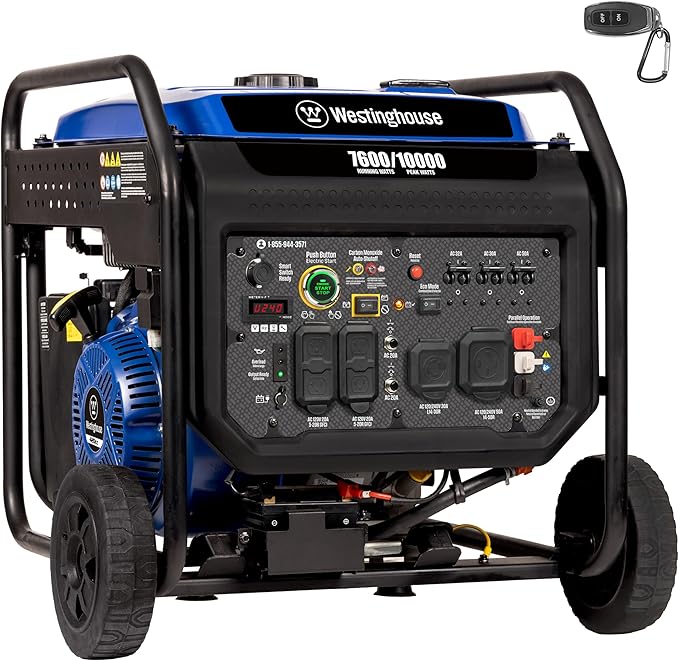
When you need more power than a typical portable inverter generator can provide, the 10,000-watt class is worth a closer look. These high-output machines can handle demanding household loads, large appliances, power tools, RV equipment, and other equipment that would overwhelm smaller generators.
The important thing to understand, however, is that a generator advertised as “10,000 watts” may not actually provide 10,000 watts continuously. Some models reach 10,000 watts only as peak or starting power, while their continuous output is considerably lower.
For 2026, the category also includes several generators above the traditional 10,000-watt mark. Models such as the DuroMax XP11000iH provide 11,000 peak watts and 9,000 running watts while using inverter technology, making them relevant alternatives for shoppers searching for a high-output 10,000-watt inverter generator.
This guide explains what to look for, which specifications matter most, and how the current high-output inverter options compare for home backup, job sites, RV use, and emergency power.
Best 10,000-Watt Inverter Generators for 2026
| Generator | Peak Output | Running Output | Fuel | Inverter |
|---|---|---|---|---|
| Westinghouse ecoGen10000 | 10,000W | 7,600W | Gasoline | Yes |
| DuroMax XP11000iH | 11,000W | 9,000W | Gasoline/Propane | Yes |
| Westinghouse iGen12000TFc | 12,000W | 9,000W gasoline | Gas/Propane/Natural Gas | Yes |
| WEN DF1100T | 11,000W | 8,300W | Gasoline/Propane | No |
| Westinghouse 12,500W Dual Fuel | 12,500W | 9,500W gasoline | Gasoline/Propane | Conventional |
| Champion 12,500W Tri-Fuel | 12,500W | 10,000W gasoline | Gas/Propane/Natural Gas | Conventional |
The distinction between inverter and conventional generators is important. The WEN DF1100T, for example, produces 11,000 surge watts and 8,300 running watts on gasoline, but WEN classifies it as a portable dual-fuel generator rather than an inverter model.
What Is a 10,000-Watt Inverter Generator?
A 10,000-watt inverter generator is a high-output portable generator that uses inverter technology to produce a more stable electrical waveform than a typical conventional portable generator.
An inverter generator first produces electricity internally, converts it to DC, and then uses an inverter to create AC power. This design allows the generator to regulate its output more precisely and adjust engine speed according to electrical demand.
That can result in several practical advantages:
- Cleaner electrical output
- Better fuel efficiency at lighter loads
- Lower operating noise compared with similarly sized conventional generators
- Better compatibility with sensitive electronics
- More precise engine control
However, high-output inverter generators are not small camping generators. Once you move into the 9,000- to 12,000-watt range, these machines become substantially heavier and more expensive.
For example, the DuroMax XP11000iH is designed as a large home-backup inverter generator rather than a lightweight recreational unit. The manufacturer lists 11,000 watts of inverter power, dual-fuel operation, a 50-amp outlet, parallel capability, and home-backup compatibility.
Running Watts vs. Peak Watts
One of the biggest mistakes when shopping for a generator is focusing only on the largest wattage number in the product title.
Generators normally have two important power ratings:
Running watts are the amount of power the generator can continuously produce.
Peak or starting watts are the additional power available for a short period when equipment with electric motors starts.
Refrigerators, well pumps, sump pumps, air conditioners, compressors, and some power tools can require significantly more electricity during startup than they consume once running.
For example, the Westinghouse ecoGen10000 is rated at 7,600 running watts and 10,000 peak watts. Therefore, calling it a “10,000-watt generator” is technically accurate for its peak rating, but it does not continuously supply 10,000 watts.
This is why your expected running load and starting load are more important than the number printed in the product name.
What to Look for in a High-Output Inverter Generator
1. Running Wattage
Start with the continuous wattage requirement of the equipment you expect to operate at the same time.
For home backup, common loads can include:
- Refrigerator
- Freezer
- Furnace blower
- Sump pump
- Well pump
- Lights
- Internet equipment
- Television
- Microwave
- Garage-door opener
- Portable air conditioner
- Selected power tools
You should not assume that a 10,000-watt generator can run every appliance in your house simultaneously. Large central air-conditioning systems, electric water heaters, electric ranges, dryers, and other high-demand appliances can consume a substantial portion of the available capacity.
2. Starting Wattage
Check the starting requirements of equipment with electric motors.
A generator with 9,000 running watts and 11,000 peak watts may be a better fit for a particular household than a generator with a higher advertised peak rating but insufficient continuous output.
When calculating your requirements, concentrate on the equipment you actually expect to run simultaneously.
3. Fuel Type
Gasoline remains the most common fuel for portable generators, but dual-fuel and tri-fuel models provide additional flexibility.
Gasoline is widely available and usually provides strong output.
Propane has a long shelf life and can be convenient for emergency preparedness.
Natural gas can be especially useful for home backup when a suitable permanent gas connection is available.
The tradeoff is that generator output normally changes depending on the fuel being used.
For example, Westinghouse’s iGen12000TFc is rated at 9,000 running watts on gasoline, 8,100 watts on propane, and 7,200 watts on natural gas. Its peak ratings are 12,000, 11,000, and 9,800 watts respectively.
4. Inverter Technology and THD
If you are specifically shopping for an inverter generator, look for published information about total harmonic distortion, commonly called THD.
A low-THD output can be useful when powering electronics and equipment containing sensitive control boards.
The Westinghouse iGen12000TFc, for example, specifies THD of 3% or less.
You should still follow the recommendations in the owner’s manual for sensitive equipment rather than assuming that every device is automatically protected simply because a generator uses inverter technology.
5. 120/240-Volt Capability
For serious home backup, 120/240V output can be more important than simply having a high wattage number.
Many larger appliances and household systems use 240V, including certain well pumps, air-conditioning equipment, electric water heaters, and other high-demand loads.
A generator intended for home backup should therefore be evaluated for its voltage configuration, outlet type, amperage, and compatibility with the transfer equipment in your home.
6. Transfer Switch or Interlock Compatibility
A large generator should never be connected to household wiring through an improvised connection.
If you want to power selected circuits through your home’s electrical panel, use the appropriate transfer switch or approved interlock equipment installed according to local electrical requirements.
The DuroMax XP11000iH, for example, includes a 50-amp outlet and is designed for use with generator interlocks or transfer switches.
7. Carbon Monoxide Protection
CO protection is one of the most important safety features on a modern portable generator.
A CO sensor can monitor dangerous carbon monoxide levels and shut the generator down when hazardous conditions are detected.
This feature does not make indoor operation safe. Portable fuel-burning generators must be operated outdoors in a properly ventilated location and positioned away from doors, windows, and other openings.
Westinghouse’s documentation for its inverter generators specifically warns that the unit must be operated outdoors and away from doors, windows, and vents.
8. Weight and Portability
High-output inverter generators can be extremely heavy.
The DuroMax XP11000iH, for example, is around 216 pounds according to current product specifications and third-party testing information.
That makes wheels and a folding handle much more important than they would be on a small 2,000-watt inverter generator.
Before buying, consider where you will store the generator and how you will move it during an emergency.
Best High-Output Inverter Generators for 2026
Westinghouse ecoGen10000 Portable Inverter Generator
Check the Westinghouse 10,000 Peak Watt Generator on Amazon
The Westinghouse ecoGen10000 remains relevant for shoppers specifically searching for a 10,000-peak-watt inverter generator.
Its most important specification is the difference between peak and continuous output: it produces 10,000 peak watts and 7,600 running watts. Westinghouse’s documentation also lists a 420cc engine, a 5.28-gallon fuel tank, and THD of 3% or less.
Key specifications:
- 10,000 peak watts
- 7,600 running watts
- 420cc engine
- Gasoline powered
- Inverter technology
- THD ≤3%
- 5.28-gallon fuel tank
This model makes the most sense when the goal is clean inverter power with a 10,000-watt peak rating rather than 10,000 watts of continuous output.
DuroMax XP11000iH Dual-Fuel Inverter Generator
Check the DuroMax XP11000iH on Amazon
The DuroMax XP11000iH is one of the most relevant models for the 2026 high-output inverter-generator market.
It produces 11,000 peak watts and 9,000 running watts on gasoline. On propane, output is lower, but the ability to switch fuels gives homeowners another option during extended outages.
DuroMax lists a 50-amp outlet, electric start, remote control, CO Alert, parallel capability, and a digital control center.
Key specifications:
- 11,000 peak watts
- 9,000 running watts on gasoline
- Dual-fuel operation
- Gasoline and propane
- 50-amp outlet
- Electric push-button start
- Remote control
- CO Alert
- Parallel capability
- Low-THD inverter output
One of its biggest advantages is that it combines high output with inverter technology. The tradeoff is its size and weight.
For homeowners who need substantial emergency power but prefer inverter technology over a traditional open-frame generator, this is a particularly relevant option in the 2026 market. Independent testing and reviews have also highlighted its combination of output, relatively low noise, and dual-fuel capability.
Westinghouse iGen12000TFc Tri-Fuel Inverter Generator
The Westinghouse iGen12000TFc is another important model to consider if fuel flexibility is a priority.
Unlike a basic gasoline generator, this model supports gasoline, propane, and natural gas. Its published output is:
| Fuel | Running Watts | Peak Watts |
|---|---|---|
| Gasoline | 9,000W | 12,000W |
| Propane | 8,100W | 11,000W |
| Natural Gas | 7,200W | 9,800W |
The generator also provides 120/240V output and specifies THD of 3% or less.
The main reason to consider a tri-fuel inverter is flexibility. During a long outage, having three fuel options can make it easier to adapt to whatever fuel source is available.
Natural gas output is lower than gasoline output, so buyers should always size the generator according to the power available on the fuel they actually expect to use.
WEN DF1100T 11,000-Watt Dual-Fuel Generator
Check the WEN 11,000-Watt Dual-Fuel Generator on Amazon
The WEN DF1100T deserves a mention because it appears in many searches for 10,000- to 11,000-watt portable generators.
However, it is important not to confuse it with an inverter generator.
WEN lists the DF1100T as a 120/240V dual-fuel portable generator with electric start. It produces 11,000 surge watts and 8,300 running watts on gasoline, or 9,500 surge watts and 7,500 running watts on propane.
Key specifications:
- 11,000 surge watts on gasoline
- 8,300 running watts on gasoline
- 9,500 surge watts on propane
- 7,500 running watts on propane
- Gasoline/propane operation
- 120/240V output
- Electric start
- Wheel kit
It is therefore better viewed as a conventional high-output alternative, not as one of the article’s primary inverter selections.
That distinction matters if clean inverter power and lower operating noise are among your main reasons for buying a generator.
Westinghouse 12,500-Watt Dual-Fuel Generator
Check the Westinghouse 12,500-Watt Dual-Fuel Generator on Amazon
This Westinghouse model is another high-output alternative from the original list, but it should not be grouped with the inverter models unless the exact current product listing confirms inverter technology.
The published configuration in the original article gives it 9,500 running watts and 12,500 peak watts on gasoline, with 8,500 running watts and 11,200 peak watts on propane.
Its primary attraction is therefore capacity and dual-fuel flexibility rather than inverter operation.
If your priority is clean inverter electricity for sensitive electronics, choose a model specifically identified by the manufacturer as an inverter generator.
If your priority is simply producing substantial power for household circuits, tools, or emergency loads, conventional generators can still be worth considering.
Champion 12,500-Watt Tri-Fuel Generator
Check the Champion 12,500-Watt Tri-Fuel Generator on Amazon
The Champion 12,500-watt tri-fuel generator from the original article is also better categorized separately from the inverter models.
Its major selling point is fuel flexibility. A tri-fuel generator can operate on gasoline, propane, or natural gas, depending on the specific configuration.
The original article listed 10,000 running watts on gasoline and 12,500 peak watts.
For shoppers comparing large generators, this model can be relevant when fuel availability is more important than inverter technology.
If you specifically need inverter power, however, verify the current model specifications before purchasing because wattage alone does not indicate whether a generator uses inverter technology.
How Much Can a 10,000-Watt Generator Run?
A generator in this power class can potentially run several important household loads at the same time, but the exact combination depends on the starting and running requirements of each appliance.
A possible emergency setup could include:
- Refrigerator
- Freezer
- Several lights
- Wi-Fi router
- Television
- Furnace blower
- Sump pump
- Microwave
- Selected kitchen appliances
- Some power tools
The exact combination depends on the electrical requirements of your equipment.
Large central air conditioners, electric dryers, electric ranges, tankless electric water heaters, and other high-demand equipment can consume a large portion of the generator’s capacity.
The safest approach is to make a list of the equipment you actually need during an outage and calculate the running load plus the largest relevant startup surge.
Do not simply add every maximum wattage number together.
Is a 10,000-Watt Inverter Generator Enough for a House?
For many homes, a generator in this class can provide power to essential circuits, but it may not operate every electrical appliance simultaneously.
A 10,000-watt-class generator can be particularly useful for essential-load backup because it offers considerably more capacity than typical portable inverter generators.
However, whole-home power requirements vary considerably.
A home with gas heating and gas cooking may require much less generator capacity than a home that relies on electric heating, electric water heating, electric cooking, and central air conditioning.
If you want automatic whole-house backup with little or no manual load management, a permanently installed standby generator may be a more appropriate solution.
Are 10,000-Watt Inverter Generators Quiet?
Inverter technology can reduce noise because the engine can adjust its speed according to electrical demand instead of operating at a fixed high speed.
That does not mean a large inverter generator will be silent.
A high-output inverter generator still has a large engine and must move significant amounts of air and exhaust gases.
The DuroMax XP11000iH, for example, is marketed as a quiet, low-THD inverter generator, and third-party testing has reported approximately 61 dBA at a 25% load.
Noise ratings should always be compared carefully because manufacturers and reviewers may measure sound at different distances and loads.
Safety Tips for Using a 10,000-Watt Generator
Large portable generators require careful handling.
Always:
- Operate the generator outdoors.
- Keep it well away from doors, windows, and vents.
- Never operate it inside a house, garage, basement, or enclosed structure.
- Install working carbon monoxide alarms in the home.
- Allow the generator to cool before refueling.
- Keep gasoline and propane away from ignition sources.
- Follow the manufacturer’s grounding and connection instructions.
- Use an approved transfer switch or interlock when connecting to household circuits.
- Follow the owner’s manual for maintenance and fuel requirements.
Carbon monoxide is particularly dangerous because it is colorless and odorless. A CO detection system on the generator is an important safety feature, but it is not a substitute for proper outdoor operation.
10,000-Watt Inverter Generator vs. Conventional Generator
The choice between inverter and conventional technology depends on what matters most to you.
| Feature | Inverter Generator | Conventional Generator |
|---|---|---|
| Electrical output | Generally cleaner and more stable | Depends on model |
| Noise | Often lower | Often higher |
| Fuel efficiency at light loads | Usually better | Usually lower |
| High-output availability | More limited | Extensive |
| Weight | Can be heavy at high wattage | Varies |
| Price | Usually higher | Often lower |
| Sensitive electronics | Strong choice when specifications support it | Check THD/output specifications |
| Home backup | Excellent on suitable models | Excellent on suitable models |
The important point is that inverter technology is not automatically better for every situation.
If you need a large amount of power at the lowest possible purchase price, a conventional generator may make more sense.
If you want cleaner power, lower noise, and better fuel control, an inverter model may justify its higher price.
What Size Generator Do You Need?
Instead of starting with the generator’s advertised wattage, start with your actual electrical needs.
Make three lists:
Essential loads:
Refrigerator, freezer, furnace, sump pump, well pump, lights, internet, and other equipment you consider necessary.
Optional loads:
Television, microwave, coffee maker, additional lighting, tools, and similar equipment.
High-demand loads:
Central AC, electric range, electric dryer, electric water heater, large compressors, and other heavy electrical equipment.
Then determine the running watts and starting requirements.
This approach will give you a much better idea of whether you need an 8,000-watt, 10,000-watt, 11,000-watt, or larger generator.
Final Thoughts
The 10,000-watt generator category has changed significantly by 2026. Buyers now have more high-output inverter options, including models that exceed the traditional 10,000-watt label while still providing inverter technology.
The Westinghouse ecoGen10000 remains relevant if you specifically want a 10,000-peak-watt inverter generator, although its continuous output is 7,600 watts.
The DuroMax XP11000iH moves the category higher with 9,000 running watts and 11,000 peak watts on gasoline, dual-fuel operation, 50-amp capability, CO protection, and parallel capability.
For shoppers who want maximum fuel flexibility, the Westinghouse iGen12000TFc is another model worth considering because it supports gasoline, propane, and natural gas while maintaining inverter technology and 120/240V output.
The most important thing is not to choose a generator simply because the product title says “10,000 watts.” Check running watts, starting watts, fuel-specific output, voltage, THD, safety features, outlet configuration, weight, and your actual household load.
That information will tell you whether a particular generator can realistically provide the steady backup power you need in 2026.