As an Amazon Associate I earn from qualifying purchases.
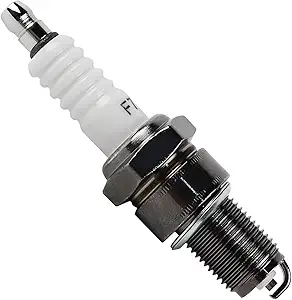
Choosing the right spark plug for a generator, powersports machine, lawnmower, or small gasoline engine is more important than simply finding a plug that threads into the cylinder head. The correct plug needs to match the engine’s specifications, including thread size, reach, heat range, electrode design, and recommended gap.
This is especially important with Honda engines and generators. A Honda GX200, for example, does not necessarily use the same spark plug as a Honda EU2200i inverter generator. Honda’s documentation specifies different plugs for these applications, so checking the owner’s manual or the exact engine model should always come before relying on a generic cross-reference.
For this 2026 update, I’ve focused on replacement spark plugs commonly used in generators, Honda-powered equipment, and other small-engine applications. The selection below includes genuine Honda parts as well as aftermarket F7TC-style replacements.
Replacement Spark Plugs for Powersports & Generators in 2026
| Spark Plug | Best Use / Application |
|---|---|
| FLYPIG F7TC Standard Powersports Spark Plug | Small engines and equipment requiring an F7TC-type plug |
| (2-Pack) Genuine OEM Honda 98056-55777 | Honda generators and engines requiring CR5HSB |
| Honda 98056-55777 CR5HSB – 2 Pack | Honda EU2000i and EU2200i applications requiring CR5HSB |
| GREPSPUD 2pcs F7TC with Boot Caps & Wrench | F7TC applications where installation accessories are useful |
| PK2 TORCH F7TC Replacement Spark Plugs | Small engines and generators specifying an F7TC-type plug |
Why the Correct Spark Plug Matters
A spark plug has a relatively simple job: it provides the electrical spark needed to ignite the air-fuel mixture inside a gasoline engine. However, the plug has to operate within the temperature range and physical specifications intended for that particular engine.
Using the wrong plug can cause starting problems, fouling, poor engine operation, or, in some cases, engine damage. Honda specifically warns that an incorrect spark plug can cause engine damage and recommends using the specified heat range for its engines.
That’s why a spark plug should not be selected solely because an online listing says it fits a particular engine family.
The most important things to verify are:
- Spark plug part number
- Thread diameter and reach
- Heat range
- Resistor or non-resistor design
- Electrode configuration
- Spark plug gap
- Engine model and, when applicable, generator model and serial number
A cross-reference can be helpful when the original plug is unavailable, but the manufacturer’s specification should take priority.
Honda GX Engines vs. Honda EU Generators
One of the easiest mistakes when shopping for a replacement spark plug is assuming that all Honda small engines use the same plug.
They don’t.
For example, Honda’s GX200 documentation specifies the NGK BPR6ES as a recommended spark plug, while the Honda EU2200i owner’s manual specifies the NGK CR5HSB.
That difference matters because the two plugs have different physical specifications and are intended for different engine applications.
Honda also maintains separate owner-manual resources for its GX engines and EU generator models, allowing owners to identify the correct manual by engine or generator model and serial number.
If you are unsure which spark plug your machine requires, identify the exact model first rather than choosing a plug based only on the engine’s horsepower or brand.
Detailed Overview of Replacement Spark Plugs
FLYPIG F7TC Standard Powersports Spark Plug
The FLYPIG F7TC is a standard-style replacement plug marketed for a wide range of small gasoline engines and powersports equipment. F7TC plugs are commonly cross-referenced with plugs such as NGK BP6ES in certain applications, but cross-reference information should always be checked against the specifications for the individual engine.
This makes the FLYPIG option more appropriate for an engine that specifically calls for an F7TC-type plug than for someone simply looking for a universal Honda replacement.
It can make sense for owners of compatible generators, lawn equipment, water pumps, tillers, go-karts, and similar small-engine equipment who want a straightforward replacement.
Key considerations:
- F7TC-style replacement
- Intended for compatible small gasoline engines
- Useful for applications that specifically specify F7TC
- Check the engine manual before installation
- Do not assume F7TC replaces every Honda GX spark plug
Genuine OEM Honda 98056-55777 Spark Plug – 2 Pack
The Honda 98056-55777 is a genuine Honda spark plug associated with the NGK CR5HSB specification. Honda’s replacement-parts documentation lists part number 98056-55777 for several generator applications, including the EU2000i and EU2200i families.
This is an important distinction from the F7TC products in this guide.
If your Honda generator calls for CR5HSB, using the corresponding genuine Honda part eliminates much of the guesswork involved with aftermarket cross-references.
The Honda EU2200i owner’s manual specifically identifies CR5HSB as the required spark plug and specifies a 0.024–0.028-inch (0.6–0.7 mm) electrode gap.
Key considerations:
- Genuine Honda replacement part
- Part number: 98056-55777
- Spark plug type: CR5HSB
- Used in several Honda generator applications
- EU2200i specification: 0.024–0.028 inch gap
- Verify your exact model before ordering
Honda 98056-55777 CR5HSB Spark Plug – 2 Pack
This two-pack is another option for owners looking specifically for the Honda 98056-55777 / CR5HSB combination.
The CR5HSB is particularly relevant to Honda’s compact inverter generators. Honda’s documentation identifies this plug for the EU2000i and EU2200i families, although owners should still verify the exact model and serial-number range before purchasing replacement parts.
For the EU2200i, Honda specifies CR5HSB and recommends a 0.6–0.7 mm gap. The manual also recommends inspecting the electrode and insulator and replacing the plug if it is worn, fouled, cracked, or damaged.
Key considerations:
- Genuine Honda part number 98056-55777
- CR5HSB specification
- Suitable for compatible Honda generator applications
- Two-plug package
- Check the owner’s manual before installation
GREPSPUD 2pcs F7TC Spark Plugs with Boot Caps & Wrench
The GREPSPUD kit combines two F7TC-style spark plugs with installation accessories, including boot caps and a spark plug wrench.
The main advantage here is convenience. If your engine specifies an F7TC-type plug, having two replacement plugs and the necessary installation accessories together can be useful for routine maintenance or keeping a spare on hand.
However, the accessories should not be the reason to choose this plug. Fitment comes first.
F7TC is used across a range of small gasoline engines, and cross-reference information connects it with plugs such as NGK BP6ES in certain applications. That does not mean an F7TC plug should automatically replace a BPR6ES, CR5HSB, or another plug simply because the engine is a Honda-powered machine.
Key considerations:
- Two F7TC-style plugs
- Includes installation accessories
- Convenient for compatible small engines
- Useful as a spare set
- Verify plug specifications before installation
PK2 TORCH F7TC Spark Plugs
The TORCH F7TC is another standard spark plug option for engines that specify this type of plug.
F7TC cross-reference information shows relationships with several commonly used small-engine spark plug specifications, including NGK BP6ES and Champion N9YC. Other aftermarket references also list BPR6ES as a replacement in certain applications. Because cross-reference databases can vary by manufacturer and application, the engine manufacturer’s specification should be used as the final check.
This makes the TORCH F7TC a practical option for compatible small gasoline engines, but it should not be treated as a universal replacement for Honda generators.
Key considerations:
- F7TC replacement plug
- Designed for compatible small gasoline engines
- Multiple cross-reference applications
- Check thread, reach, heat range, and gap
- Follow the engine manufacturer’s specification
What Spark Plug Does a Honda EU2200i Use?
The Honda EU2200i uses an NGK CR5HSB spark plug according to its owner’s manual. Honda specifies an electrode gap of 0.024–0.028 inches (0.6–0.7 mm).
The Honda replacement part associated with this plug is 98056-55777.
This is one of the cases where using the exact specified plug makes more sense than choosing a generic F7TC replacement simply because both plugs are marketed for small engines.
The same CR5HSB specification is also listed for various Honda EU2000i applications in Honda’s replacement-parts information.
What Spark Plug Does a Honda GX200 Use?
The Honda GX200 owner’s manual specifies NGK BPR6ES as a recommended spark plug. The manual lists a 0.016–0.020-inch (0.4–0.5 mm) gap in the referenced GX200 documentation.
This is a good example of why identifying the exact engine is so important.
The GX200 should not automatically be assigned the CR5HSB used in the EU2200i simply because both products are made by Honda.
Honda maintains model-specific manuals for the GX series, so owners should check the correct manual for their engine before purchasing a replacement.
F7TC vs. BPR6ES: Are They the Same?
F7TC and BPR6ES are frequently cross-referenced in aftermarket spark plug databases, but that does not mean they are universally interchangeable in every engine.
For example, cross-reference listings connect Torch F7TC with NGK BPR6ES, while other F7TC references list NGK BP6ES.
The reason this matters is that spark plug selection involves more than the number printed on the ceramic insulator. Thread dimensions, reach, heat range, resistor design, electrode configuration, and gap all need to be appropriate for the engine.
If the owner’s manual specifies BPR6ES, use that specification unless the manufacturer or a reliable parts source confirms an appropriate equivalent.
How to Choose the Right Replacement Spark Plug
Before ordering a replacement spark plug, check these specifications in your owner’s manual.
1. Identify the exact engine or generator model
Start with the model number rather than the brand alone.
For Honda equipment, the manufacturer’s manual system can be used to locate documentation based on the engine or generator model and serial-number range.
2. Match the spark plug part number
If your manual specifies CR5HSB, BPR6ES, F7TC, or another plug, use that specification as your starting point.
Do not choose a spark plug merely because an Amazon listing says it fits several Honda engines.
3. Check the heat range
Spark plug heat range determines how quickly the plug transfers heat away from the firing end.
A plug that is too hot or too cold for a particular application can create operating problems. Honda specifically cautions against using a spark plug with an improper heat range.
This is why simply choosing a “colder” plug is not automatically an upgrade.
4. Verify the electrode gap
The correct gap varies by engine.
For example, Honda specifies 0.024–0.028 inches for the EU2200i’s CR5HSB spark plug, while the GX200 documentation uses a different specification.
Always follow the specification for your exact engine.
5. Check the physical dimensions
Make sure the replacement plug has the correct:
- Thread diameter
- Thread reach
- Hex size
- Seat type
- Terminal configuration
A plug that looks similar may still be incorrect for the engine.
6. Decide between OEM and aftermarket
A genuine OEM plug can be the simplest choice when you want to follow the manufacturer’s original parts specification.
Aftermarket plugs can also be appropriate when the manufacturer or a reliable cross-reference confirms compatibility.
The important point is that “aftermarket” does not automatically mean “better,” and “OEM” does not automatically mean every product listed under a similar part number is correct.
When Should You Replace a Generator Spark Plug?
Spark plugs should be inspected according to the maintenance schedule for the engine or generator.
A plug may need replacement if the electrode is worn, the insulator is cracked or chipped, or the plug is heavily fouled. Honda’s EU2200i maintenance instructions specifically recommend inspecting these areas during spark plug service.
Common symptoms of a spark plug or ignition-related problem can include:
- Difficult starting
- Rough engine operation
- Misfiring
- Poor throttle response
- Reduced engine performance
- A plug that is visibly fouled or damaged
However, these symptoms can also be caused by fuel, ignition, air-filter, carburetor, or other engine problems. Replacing the spark plug alone will not necessarily solve every starting or running issue.
Spark Plug Maintenance Tips for Generators and Small Engines
Before removing a spark plug, allow the engine to cool completely.
Clean dirt from around the spark plug area before removing the plug so debris does not fall into the cylinder.
When installing a new plug, thread it by hand first to reduce the risk of cross-threading. Honda’s EU2200i instructions specifically recommend installing the plug by hand before tightening it.
Use the specified gap rather than assuming the plug is correctly gapped straight out of the package.
It is also worth keeping one correctly specified spare spark plug with a portable generator if the machine is used for emergency backup power. A small replacement part is much easier to store than dealing with a failed plug when the generator is needed.
Final Thoughts
The right replacement spark plug is the one that matches the engine manufacturer’s specifications—not necessarily the one with the longest compatibility list on an online marketplace.
For Honda EU2000i and EU2200i applications that specify CR5HSB, the Honda 98056-55777 is a straightforward OEM replacement. For Honda GX engines such as the GX200, the required spark plug is different, which is why checking the exact engine manual is essential.
F7TC plugs can be useful for generators, lawn equipment, and other small engines that specifically call for that type of plug. Cross-reference information can help identify alternatives, but it should be treated as a starting point rather than a substitute for the manufacturer’s specifications.
For 2026, the simplest rule remains the same: identify the exact engine, verify the spark plug number and gap, and only then order the replacement.