As an Amazon Associate I earn from qualifying purchases.
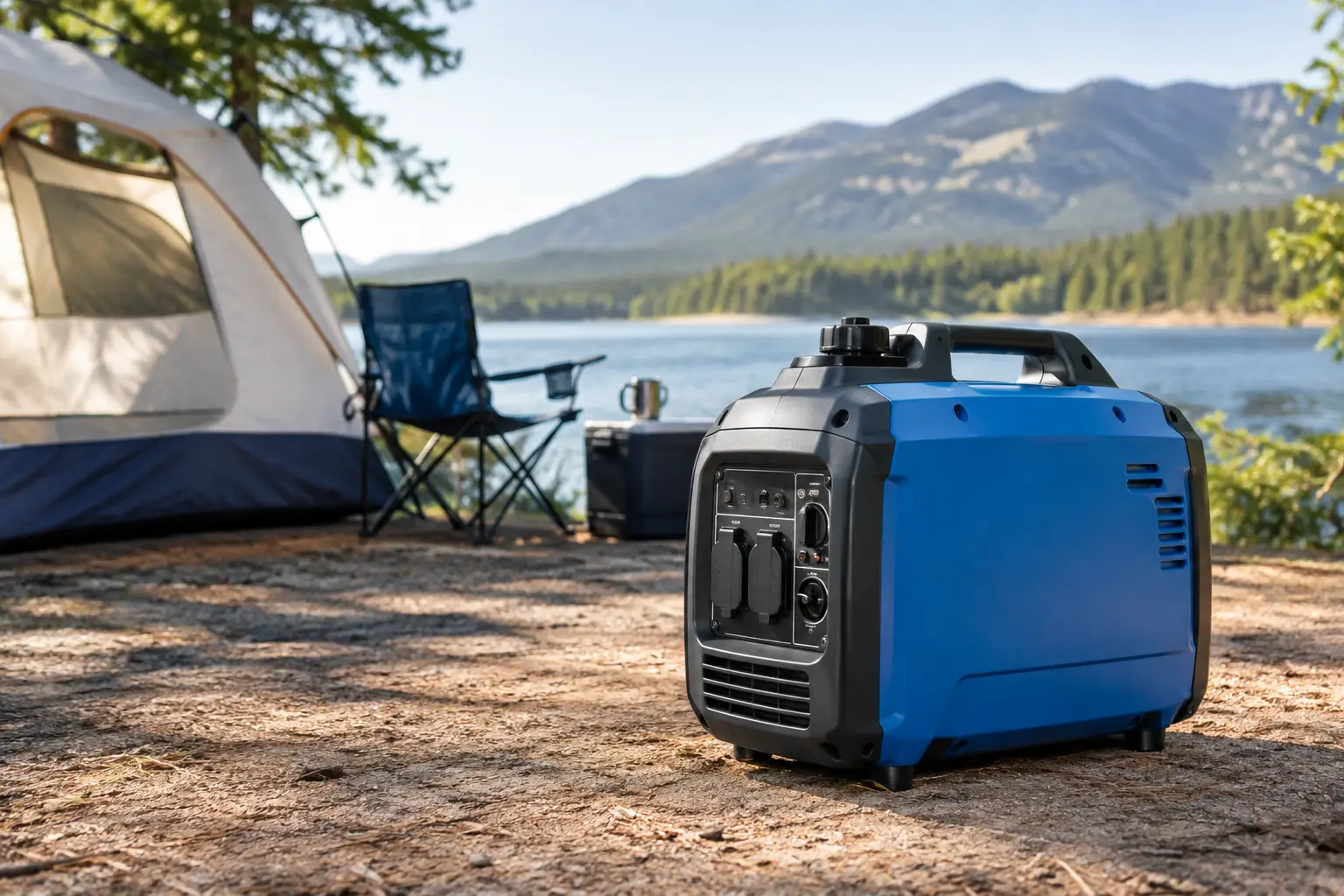
If you need backup electricity but do not want a generator that sounds like a lawn mower running outside your window, a low-noise gas generator is worth considering. Modern inverter generators are significantly quieter than many traditional open-frame models, especially when they are operating under lighter loads.
For 2026, there are several important things to look at beyond the number printed next to “dB” or “dBA.” The way a generator is measured matters, as does the load being applied during the test. A generator rated at 52 dBA at 25% load, for example, will normally become louder as you ask it to produce more power.
The right choice also depends on what you actually need to run. A compact 2,400-watt generator can be useful for camping, electronics, lights, refrigerators, and other essentials, while a larger generator is more appropriate if you need to support multiple household circuits during a power outage.
Below, I compare five portable gas generators from the models in this guide, focusing on noise, power, portability, fuel flexibility, and the situations where each one makes the most sense.
Quiet Gas Generators for 2026
| Generator | Peak/Starting Power | Running Power | Fuel | Noise | Best For |
|---|---|---|---|---|---|
| Westinghouse 4000 Peak Watt Dual Fuel | Up to 4,000W | Varies by model | Gas/Propane | Check current model specification | Home essentials, RVs, backup power |
| AMERISUN 2500-Watt Portable Inverter | 2,500W | Varies by model | Gasoline | Approx. 69 dB listed | Camping and basic portable power |
| Champion Power 4000-Watt RV Ready | 4,000W | Model-dependent | Gasoline | 68 dBA for conventional RV Ready model | RVs and portable backup |
| Westinghouse 2550 Watt Super Quiet | 2,550W | Model-dependent | Gasoline | Around 52 dBA depending on model/load | Camping and quiet outdoor use |
| ERAYAK 2400W Portable Inverter | 2,400W | 1,800W | Gasoline | About 52 dB at 25% load/7 m | Camping and small essentials |
Important: Generator noise ratings should not be treated as perfectly interchangeable. Manufacturers can use different distances, loads, and testing conditions. A lower published number is useful, but it does not automatically mean one generator will sound quieter in every real-world situation.
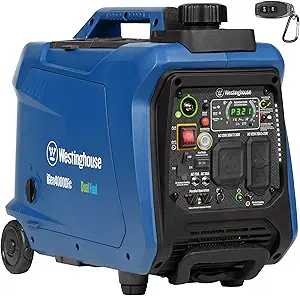
1. Westinghouse 4000 Peak Watt Dual Fuel Generator
A 4,000-watt-class dual-fuel generator is considerably more versatile than a small camping inverter. The main advantage is the ability to use either gasoline or propane, giving you another fuel option during an extended outage.
For homeowners, that flexibility can be particularly useful because gasoline and propane have different storage and availability considerations. Propane can be stored for longer periods than gasoline, while gasoline generally provides the higher output on many dual-fuel generators.
The important point is that you should check the exact model specifications before buying because Westinghouse has several generators in this power range. Noise ratings, running wattage, starting wattage, starting method, and outlet configurations can differ between models.
Key Advantages
- Dual-fuel flexibility with gasoline and propane
- Around 4,000 watts of starting capacity
- Suitable for larger loads than compact 2,000–2,500-watt generators
- Useful for home essentials and RV applications
- Better fuel flexibility for extended outages
What to Consider
A 4,000-watt generator is not automatically a whole-house backup system. Before connecting appliances, add up their running watts and account for starting surges from motors and compressors.
If quiet operation is your highest priority, pay particular attention to the manufacturer’s published dBA rating and whether the measurement was taken at a specified load.
2. AMERISUN 2500-Watt Portable Inverter Generator
The AMERISUN 2500-watt portable inverter generator is aimed more at recreational and light-duty applications than large-scale home backup.
Its size makes it easier to transport than a much larger generator, which is useful for camping, tailgating, outdoor projects, and emergency charging. It can also make sense when your priority is having a gasoline-powered source of electricity without carrying a large, heavy machine.
The original listing describes this generator as operating around 69 dB at 23 feet. That is noticeably different from the low-50-dBA ratings advertised by some enclosed inverter generators, so I would not put this model in the same noise category as the quietest generators on the market.
Key Advantages
- Portable design
- 2,500-watt class output
- Gasoline operation
- Useful for recreational power
- More compact than larger home-backup generators
What to Consider
If you are specifically shopping for the quietest generator possible, compare the AMERISUN’s actual noise rating with inverter models that publish measurements in the low-50-dBA range.
It is also important to remember that noise increases as engine load increases. A generator powering a small charger will behave differently from one running a microwave, refrigerator, or other high-demand appliance.
3. Champion Power 4000-Watt RV Ready Generator
The Champion 4000-watt RV Ready generator is a useful option when you need more portable power than a small camping inverter can provide.
There is an important correction to the original article here: not every Champion 4,000-watt model is a 64-dBA generator. Champion’s conventional 4000-watt RV Ready model is listed at 68 dBA, while Champion’s 4000-watt inverter models are rated at 64 dBA from 23 feet.
That distinction matters because inverter technology and conventional generator designs do not behave the same way acoustically.
Champion’s 4000-watt inverter models provide 4,000 starting watts and 3,000 running watts, with the manufacturer specifying 64 dBA at 23 feet. The inverter models also feature CO Shield and can be connected in parallel with another compatible inverter using the appropriate kit.
Key Advantages
- Approximately 4,000 starting watts on the inverter versions
- 3,000 running watts on Champion’s 4000-watt inverter models
- 64 dBA at 23 feet on the inverter models
- RV-ready outlet options
- CO Shield carbon monoxide auto-shutoff system
- Parallel capability on compatible models
What to Consider
Always verify the model number before purchasing. A conventional 4000-watt Champion and a 4000-watt Champion inverter are different products, and their noise specifications are not the same.
For RV use, also make sure the generator’s outlet configuration matches your trailer’s requirements and that the available running wattage is sufficient for the appliances you intend to operate.
4. Westinghouse 2550 Watt Super Quiet Generator
A 2,550-watt-class Westinghouse inverter generator is better suited to people who care more about portability and low noise than maximum electrical output.
The approximately 52-dBA figure associated with this class of Westinghouse generator is much closer to the low-noise range buyers are usually looking for when shopping for camping or neighborhood-friendly portable power.
However, there is an important detail that many generator comparison articles overlook: the published dBA figure needs context. A generator measured at 25% load will normally be quieter than the same machine operating close to its maximum rated output.
That means you should not assume that a generator advertised at approximately 52 dBA will remain at that level while running a high-demand appliance.
Key Advantages
- Low-noise inverter design
- Portable power for camping and outdoor activities
- Approximately 2,550-watt peak class
- Suitable for smaller emergency loads
- More manageable than large home-backup generators
What to Consider
A generator in this power class is better suited to essential loads than whole-home backup.
Before an outage, determine the starting and running wattage of your refrigerator, freezer, sump pump, furnace blower, lights, internet equipment, and other devices you consider essential.
5. ERAYAK 2400W Portable Inverter Generator
The ERAYAK 2400W Portable Inverter Generator is one of the more interesting options in this list for camping and small emergency loads.
According to the current manufacturer information, the 2400P produces 2,400 peak watts and 1,800 running watts. ERAYAK lists noise at approximately 52 dB at 25% load and 7 meters, while the same product information also shows that noise increases at higher loads.
The generator weighs roughly 42 pounds, making it much easier to move than larger 3,500- or 4,000-watt machines.
This is also a good example of why the phrase “quiet generator” needs context. At a light load, the ERAYAK can operate quietly enough for camping and residential outdoor use. At heavier loads, the engine has to work harder and the sound level increases.
Key Advantages
- 2,400 peak watts
- 1,800 running watts
- Approximately 52 dB at 25% load and 7 meters
- Around 42 pounds
- Compact inverter design
- Gasoline powered
- Suitable for camping, tailgating, charging and small emergency loads
What Can It Power?
The ERAYAK 2400P is best matched with relatively modest loads such as:
- Refrigerators, depending on startup requirements
- Lights
- Routers and Wi-Fi equipment
- Phones and tablets
- Laptops
- Small fans
- Compatible CPAP equipment
- Battery chargers
- Small outdoor equipment
It should not be treated as a whole-home backup generator. With 1,800 running watts, you need to pay close attention to what else is operating at the same time.
What Makes a Gas Generator Quiet?
Most of the quiet generators discussed in 2026 are inverter generators.
A conventional generator typically runs its engine at a fixed speed to maintain the required electrical frequency. An inverter generator can vary engine speed based on the electrical demand.
When the load is low, the engine can slow down. That can reduce both fuel consumption and noise.
Enclosed designs also help reduce the amount of engine and exhaust noise reaching the surrounding area.
This is why an inverter generator rated at roughly 50–60 dBA can feel dramatically more comfortable around a campsite or home than an older open-frame generator.
Still, “quiet” does not mean silent. When the generator is under heavy load, the engine has to work harder and the noise level will normally increase.
How Loud Is 50, 55, 60 or 70 dBA?
Decibels are logarithmic rather than a simple linear measurement. Consequently, a small numerical difference does not necessarily translate into an equally small difference in perceived sound.
For generator shopping, the most useful approach is to compare models measured at the same distance and, when possible, at a similar load.
A generator advertised at 52 dBA at 25% load should not be directly compared with another generator rated at 60 dBA at a much higher load without considering those differences.
This is one of the biggest weaknesses in many “quietest generator” lists: they put different manufacturer measurements into one column and treat them as if every number was produced under identical conditions.
Quiet Generator vs. Whole-Home Generator
One of the most important decisions is determining what you actually mean by “home backup.”
If you want to keep a refrigerator, internet equipment, several lights, phones, and a few other essentials operating, a compact inverter generator may be enough.
If you want to run central heating equipment, multiple refrigerators, sump pumps, well pumps, several appliances, or an air-conditioning system, you will probably need substantially more capacity.
For example, current 2026 generator guides distinguish small camping generators from larger 6,000- to 9,000-running-watt inverter generators designed for more demanding home backup applications.
Do not choose a generator based solely on its peak wattage.
The more important number for sustained operation is its running or rated wattage.
How to Calculate the Generator Size You Need
Start by making a list of the appliances you actually need during an outage.
For each appliance, find:
- Running watts
- Starting or surge watts
- Voltage requirements
- Whether the appliance has a motor or compressor
Refrigerators, freezers, sump pumps, furnaces, well pumps and air conditioners can require substantially more power when their motors start.
For example, a generator might comfortably support several smaller electronic devices but struggle when a refrigerator compressor and microwave start at the same time.
Add the running wattage of the appliances you expect to operate simultaneously, then make sure the generator has enough starting capacity for the largest surge.
When in doubt, check the appliance manufacturer’s specifications rather than relying on generic wattage estimates.
Gasoline vs. Dual Fuel
Gasoline remains convenient because it is widely available and generally allows many dual-fuel generators to produce their higher output.
Propane offers a different advantage: it can be stored for extended periods when handled correctly and gives you another fuel option during a prolonged outage.
For emergency preparedness, dual fuel can therefore be useful even if you normally run the generator on gasoline.
The tradeoff is that propane can produce less power than gasoline on many dual-fuel models. Always check the manufacturer’s gasoline and propane wattage ratings before calculating your available capacity.
What About RV Use?
For RV camping, noise is only one part of the equation.
You should also check:
- Running watts
- Starting watts
- RV outlet configuration
- 12V and USB options
- Parallel capability
- Weight
- Fuel capacity
- Runtime at a realistic load
- CO safety features
A 2,400-watt generator can be very convenient for basic RV equipment, but it may not have enough starting capacity for every RV air conditioner.
Likewise, a 4,000-watt inverter can provide considerably more headroom, but it will usually be heavier and consume more fuel when operating under substantial loads.
Generator Safety Matters More Than Noise
A quiet generator is still an engine that produces carbon monoxide.
Never operate a gasoline or propane generator inside a house, garage, basement, enclosed porch, shed, or other enclosed space.
Keep the generator outside and away from doors, windows, vents and other openings where exhaust could enter the building.
Do not attempt to make a generator quieter by placing it inside an enclosure that does not have proper ventilation and exhaust management. Blocking airflow can create serious safety hazards and may damage the generator.
Also follow the manufacturer’s instructions regarding grounding, fuel storage, oil level, extension cords, overload protection and carbon monoxide detection.
Some newer portable inverter generators, including Champion models in this category, use automatic carbon monoxide shutoff systems such as CO Shield.
That feature is valuable, but it does not make indoor generator operation safe.
Key Buying Considerations for a Low-Noise Gas Generator
1. Running Watts
This is one of the most important specifications because it tells you how much power the generator can continuously provide.
2. Starting Watts
Starting watts cover short bursts of higher demand from appliances with motors and compressors.
3. Noise Rating
Look at the actual dBA number, but also check the distance and load used for the measurement.
4. Inverter Technology
If low noise is a priority, an enclosed inverter generator is generally worth considering.
5. Fuel Type
Gasoline is widely available, while dual-fuel generators give you the option of using propane as well.
6. Runtime
A generator that can operate longer between refueling stops can be more convenient during an extended outage or overnight camping trip.
7. Portability
If you plan to move the generator frequently, weight can matter just as much as wattage.
8. RV Compatibility
If you are buying for an RV, check the exact outlet configuration and the starting requirements of your air conditioner.
9. Carbon Monoxide Protection
CO safety features are important, but they should supplement—not replace—proper outdoor operation.
10. Warranty and Support
A generator is an engine-powered machine, so warranty coverage and access to replacement parts or technical support can matter over the long term.
Which Type of Quiet Generator Makes Sense for You?
There is no single wattage that works for everyone.
For camping and tailgating, a compact inverter such as the ERAYAK 2400W can make sense when portability and low noise are more important than maximum output.
For small emergency loads, a 2,500- to 4,000-watt inverter provides considerably more flexibility while remaining portable.
For RV use, pay particular attention to the air conditioner’s starting requirements, because that initial surge can determine whether a generator works reliably.
For larger home backup, move beyond the small portable category and calculate the combined load of the circuits you actually want to keep running.
The quietest generator on paper is not necessarily the best generator for a particular household. A model that is too small will have to work harder and may not run the appliances you need, while a much larger generator can cost more, weigh more, and consume more fuel than necessary.
Final Thoughts
The best low-noise gas generator for 2026 depends on how much power you need and where you plan to use it.
The biggest improvement over the original 2025 version of this guide is recognizing that generator noise cannot be judged by a dBA number alone. The measurement distance, operating load, generator design and inverter technology all matter.
The ERAYAK 2400W stands out as a compact option for camping, tailgating and smaller emergency loads, with approximately 1,800 running watts and a published noise figure around 52 dB at 25% load and 7 meters.
The Champion 4000-watt inverter models provide substantially more output while maintaining a published 64-dBA rating at 23 feet, along with CO Shield and parallel capability on compatible models.
The Westinghouse 4000-watt dual-fuel class is worth considering when gasoline-and-propane flexibility is more important than having the smallest possible generator.
For anyone choosing a generator for home backup, however, the most important step is still the same: calculate your actual running and starting loads before buying.
A generator that is quiet, portable and fuel-efficient is useful. A generator that is quiet but too small for your refrigerator, furnace, sump pump or other essential equipment is not.
Choose the wattage first, compare noise ratings under similar conditions, and then look at fuel flexibility, portability, runtime and safety features. That approach will give you a much more realistic idea of which low-noise gas generator fits your needs in 2026.