As an Amazon Associate I earn from qualifying purchases.
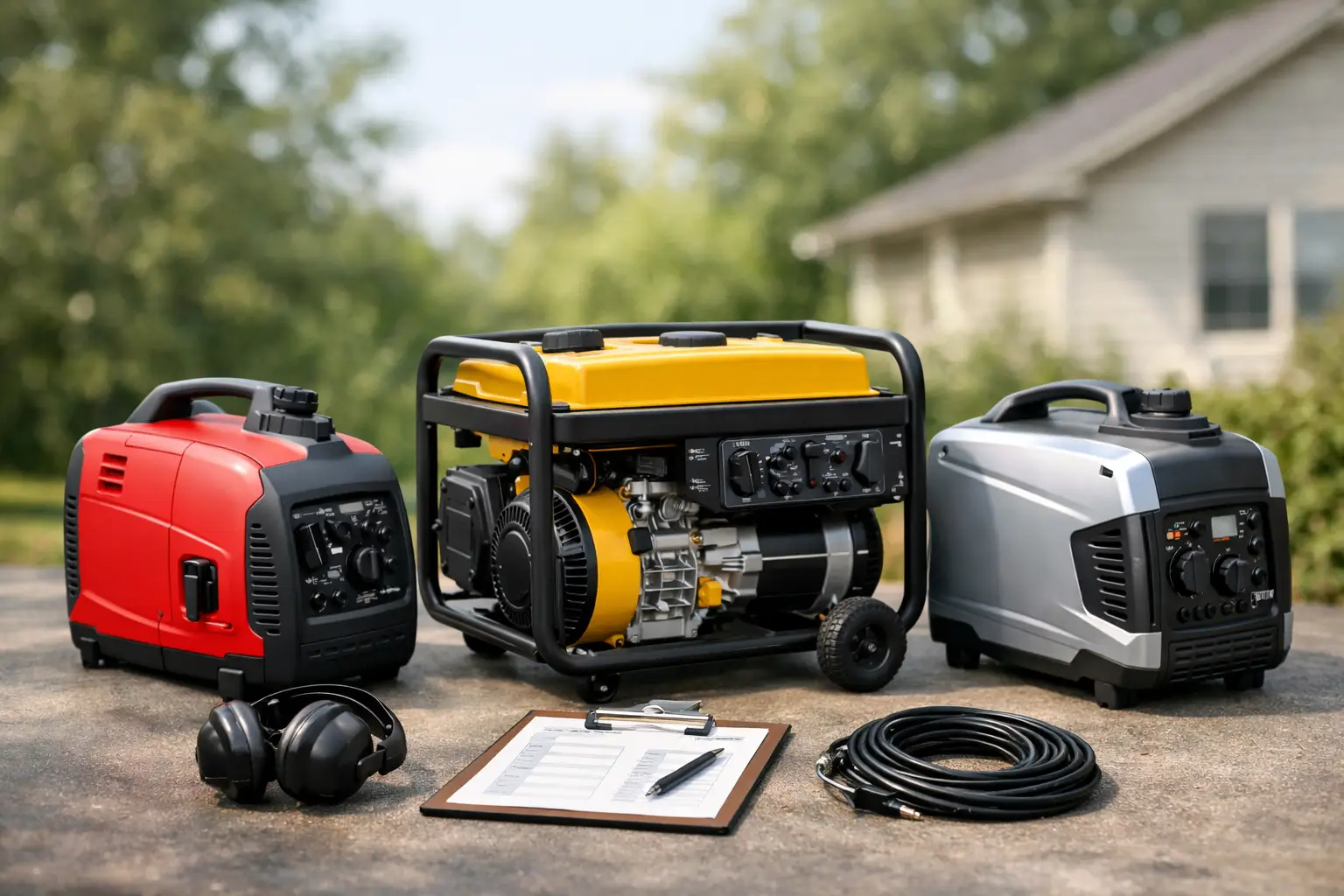
A 2,000-watt portable generator can be a practical middle ground when you need more power than a small camping generator but do not want to carry a full-size portable unit. The important detail is that the number on the box does not always represent continuous output. Many generators in this class produce around 1,600 to 1,800 running watts, with a higher starting-watt rating available for appliances with motors and compressors.
That makes this size useful for camping, tailgating, RV trips, electronics, refrigerators, lights, and limited emergency backup. However, a generator in this class is not designed to power an entire home with large electrical loads such as central air conditioning or an electric water heater.
In 2026, shoppers can choose between gasoline-powered inverter generators and battery-based portable power stations. Gas models can provide power as long as fuel is available, while battery units operate quietly and produce no exhaust during use. The right choice depends on how much power you need, how long you need it, where you will use it, and whether you can safely operate a gasoline engine outdoors.
This guide compares five portable power options, focusing on output, portability, noise, runtime or battery capacity, and the type of use each model makes the most sense for. Amazon availability and product specifications can change, so check the current listing before purchasing.
Best 2000 Watt Generators and Power Stations for 2026
| Model | Type |
|---|---|
| GENMAX 2000W Ultra Quiet Inverter Generator | Gas inverter generator |
| PowerSmart 2500W Portable Inverter Generator | Gas inverter generator |
| ERAYAK 2400W Portable Inverter Generator | Gas inverter generator |
| OUPES Mega 1 2000W LiFePO4 Battery Generator | Portable power station |
| Dabbsson DBS1000Pro 2000W Solar Generator | Portable power station |
Best 2000 Watt Portable Generators and Power Stations for 2026
1. GENMAX 2000W Ultra Quiet Inverter Generator
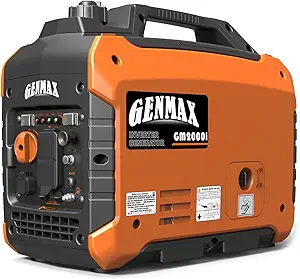
The GENMAX GM2000i is one of the lighter gasoline inverter generators in this group, weighing about 34 pounds. It produces 2,000 peak watts and 1,600 running watts, so it is better suited to smaller loads than to running several large appliances at the same time.
Its compact size makes it practical for camping, tailgating, charging electronics, running lights, and limited emergency backup. The inverter design also makes it a better fit for sensitive electronics than a conventional open-frame generator.
GENMAX documentation lists a noise level of about 58 dB at 25% load and up to 10 hours of runtime at that light load. Actual runtime will decrease as the load increases.
One important point is that this is a gasoline generator. It must be operated outdoors and well away from doors, windows, vents, and other openings. It should never be used inside a home, garage, basement, RV, or other enclosed space.
Best suited for: camping, tailgating, electronics, lights, and small emergency loads.
2. PowerSmart 2500W Portable Inverter Generator
The PowerSmart 2500W is worth considering if you want more capacity than a typical 2,000-watt-class inverter generator. It produces 2,500 starting watts and 1,900 running watts, giving it more continuous output than the GENMAX.
The unit weighs about 39.7 pounds and uses a gasoline engine with inverter technology. PowerSmart lists approximately 5.5 hours of runtime at 50% load, although lighter loads can extend runtime.
Noise also varies with the workload. Published specifications put the generator around 52 dBA at lighter loads, with higher readings as the generator is pushed harder.
The additional running capacity can be useful for a refrigerator, lights, electronics, and some higher-demand equipment. However, 1,900 running watts still does not make this a whole-home generator.
Best suited for: camping, tailgating, refrigerators, electronics, and limited emergency backup.
3. ERAYAK 2400W Portable Inverter Generator
The ERAYAK 2400P sits between a lightweight 2,000-watt-class generator and larger portable models. It provides 2,400 peak watts and 1,800 running watts, giving it enough continuous output for common small backup loads, camping equipment, electronics, lights, and selected appliances.
The generator weighs about 42 pounds and is designed around portability. ERAYAK currently lists the 2400P at around 55 dB in tested use, with runtime advertised at up to 10 hours depending on load and operating conditions.
The biggest limitation is the same one that applies to other generators in this size range: 1,800 running watts is not enough for every large appliance.
If you need to start an RV air conditioner, electric water heater, central air system, or multiple high-wattage appliances, a larger generator may be necessary.
Best suited for: camping, tailgating, small appliances, charging devices, and basic emergency power.
4. OUPES Mega 1 2000W LiFePO4 Portable Power Station
The OUPES Mega 1 is different from the gasoline generators above. It is a battery-powered portable power station with a 1,024Wh LiFePO4 battery and a 2,000W pure-sine-wave AC inverter. It can handle a 4,500W surge and supports expansion up to 5,120Wh with compatible additional batteries.
At about 27.8 pounds, it is considerably lighter than many gasoline generators in this power class. It also operates without engine noise or exhaust emissions, which makes a battery power station attractive for quiet emergency backup when the manufacturer permits that type of use.
The main limitation is runtime. A 1,024Wh battery does not provide unlimited 2,000W power. At a sustained 1,000W load, the theoretical battery runtime is roughly one hour before accounting for conversion losses. At lower loads, runtime can be substantially longer.
This makes the Mega 1 particularly useful for electronics, lights, routers, small appliances, and short-duration emergency power rather than replacing a fuel generator for multi-day outages.
Best suited for: indoor-compatible backup applications, electronics, quiet operation, camping, and short outages.
5. Dabbsson DBS1000Pro 2000W Portable Power Station
The Dabbsson DBS1000 Pro is another battery-based alternative, but it offers a different feature set from the OUPES Mega 1. It has a 1,024Wh battery and a 2,000W pure-sine-wave AC inverter, with up to 4,000W of surge capability and a 3,000W Power-Boost mode.
Dabbsson lists up to 1,200W of solar input and a 15ms EPS response. The system can also be expanded substantially with compatible additional batteries and units.
The base unit weighs about 34.4 pounds, making it portable enough for camping, emergency preparation, and mobile power applications.
Like other battery power stations, the DBS1000 Pro produces no engine exhaust during operation. That makes it useful when you need quiet backup power, but battery capacity still determines how long it can run a high-wattage load.
For extended outages, additional batteries or a reliable way to recharge the unit become important.
Best suited for: quiet emergency backup, solar charging, camping, electronics, and portable power.
How to Choose a 2000 Watt Portable Generator
1. Check Running Watts First
Running watts are more important than the headline wattage when deciding whether a generator can continuously power an appliance.
A generator advertised as 2,000 watts may provide only 1,600 or 1,700 running watts. Starting watts are the temporary surge available when a motor-driven appliance starts.
Refrigerators, freezers, pumps, compressors, and some power tools can require considerably more power for a few seconds.
Before buying, add the running wattage of the devices you expect to use at the same time and make sure the generator has enough continuous capacity.
2. Think About What You Actually Need to Run
A generator in this class can be useful for a refrigerator, lights, television, Wi-Fi router, laptop, phone chargers, small fan, coffee maker, microwave, and selected power tools, depending on their individual power requirements.
However, these devices may not all be able to run simultaneously.
A refrigerator, microwave, coffee maker, and high-powered appliance can quickly exceed the generator’s continuous output.
For emergency planning, make a list of the appliances you actually need, check their wattage labels, and calculate the combined running load before buying.
3. Compare Noise Ratings Carefully
Noise numbers are only useful when the measurement conditions are comparable. Manufacturers may specify sound levels at different loads and distances.
For example, Honda lists the EU2200i at 48 dBA at 1/4 load and 57 dBA at rated load, while Westinghouse lists the iGen2200 at as low as 52 dBA.
That is why “quiet” should not be treated as a single number. A generator that sounds quiet at 25% load can become noticeably louder when operating near maximum output.
If you plan to use a generator at a campground, tailgate, or residential property, check both the published sound rating and the conditions under which that rating was measured.
4. Decide Between Gasoline and Battery Power
Gasoline inverter generators have a major advantage during long outages: you can continue operating as long as you have an appropriate fuel supply and maintain the unit correctly.
Battery power stations are quieter and produce no exhaust while operating. However, their usable runtime depends on battery capacity and load, and they eventually need to be recharged.
For short outages, electronics, and quiet indoor-compatible applications, a battery power station can be convenient.
For longer outdoor operation, a gasoline inverter generator may provide greater flexibility because refueling is generally faster than waiting for a battery to recharge.
5. Look for CO Protection on Gas Generators
Carbon monoxide is one of the most important safety concerns with gasoline generators.
Some current models use automatic CO shutoff technology. Honda’s EU2200i, for example, uses CO-MINDER to monitor carbon monoxide levels and automatically shut the generator down when detected levels become dangerously high.
CO protection does not make a gasoline generator safe to use indoors.
Always follow the manufacturer’s outdoor-placement and clearance instructions.
6. Check Parallel Capability
Parallel capability can be useful if you eventually need more output.
Several inverter generators can be connected to a compatible second unit using the manufacturer’s approved parallel equipment. This can give you a way to increase available power without immediately purchasing a much larger generator.
However, compatibility matters. Check the owner’s manual and manufacturer’s specifications before assuming two generators can be connected together.
7. Consider Weight and Storage
A 30- to 50-pound generator is much easier to move than a full-size portable generator.
If you plan to carry the unit to a campsite, load it into an SUV, or move it during an outage, weight can matter almost as much as wattage.
Battery power stations can also become heavy as battery capacity increases, so do not assume every solar generator is lighter than a gasoline model.
What Can a 2000 Watt Generator Run?
A 2,000-watt-class generator can handle many everyday essentials, but the exact combination depends on the running and starting watt requirements of each appliance.
Typical examples can include:
- Refrigerator or freezer
- LED lights
- Wi-Fi router and modem
- Television
- Laptop and phone chargers
- Small fan
- Coffee maker, depending on its wattage
- Microwave, depending on its wattage and what else is running
- Selected power tools
- Some CPAP machines and other small medical devices, when their power requirements are within the generator’s specifications
The important limitation is that these devices may not all be able to run simultaneously.
A refrigerator may have a relatively modest running load but require additional starting power. A microwave or coffee maker can also consume a significant amount of available capacity.
For emergency planning, prioritize the appliances that matter most and avoid connecting more equipment than the generator can safely handle.
2000 Watt Generator Safety Tips
Gasoline generators produce carbon monoxide, an odorless and potentially deadly gas.
Never operate a gasoline generator inside a house, garage, basement, shed, RV, or other enclosed or partially enclosed area.
Place the generator outdoors and follow the clearance distances specified in the owner’s manual. Keep it away from doors, windows, vents, and other openings where exhaust could enter the building.
Never connect a portable generator directly to a home’s electrical wiring through a wall outlet. If you want generator power connected to household circuits, use an appropriately installed transfer switch or another approved connection method handled by a qualified electrician.
Allow a gasoline generator to cool before refueling, keep fuel away from flames and ignition sources, and follow the manufacturer’s maintenance instructions.
Battery power stations avoid gasoline exhaust during operation, but they still need to be used according to their manufacturer’s instructions. Check the manual for charging, temperature, ventilation, and indoor-use requirements.
Final Thoughts
A 2,000-watt portable generator can be a useful option when portability matters but you still need enough output for more than basic electronics.
The key is to look beyond the number in the product name and compare running watts, starting watts, noise, runtime, weight, safety features, and the type of power source.
The gasoline models in this guide are better suited to situations where you need continued power as long as fuel is available. The OUPES Mega 1 and Dabbsson DBS1000 Pro take a different approach, using rechargeable batteries for quiet, exhaust-free operation.
Before choosing one, make a list of the appliances you expect to run and check both their running and startup requirements. A portable generator that matches your actual load will be more useful than one chosen simply because its headline wattage looks impressive.
Also remember that a 2,000-watt-class generator is generally designed for limited backup and recreational use, not whole-home power. If you need to run central air conditioning, electric heating, a water heater, or several large appliances at once, moving up to a larger generator or a professionally installed home backup system may be more appropriate.